

How do we mourn for more than human deaths when all that remains of loss is empty space?
Once Was explores the hollow land left behind when glaciers melt, and the grief and guilt that coalesce in the bare earth revealed by their disappearance.
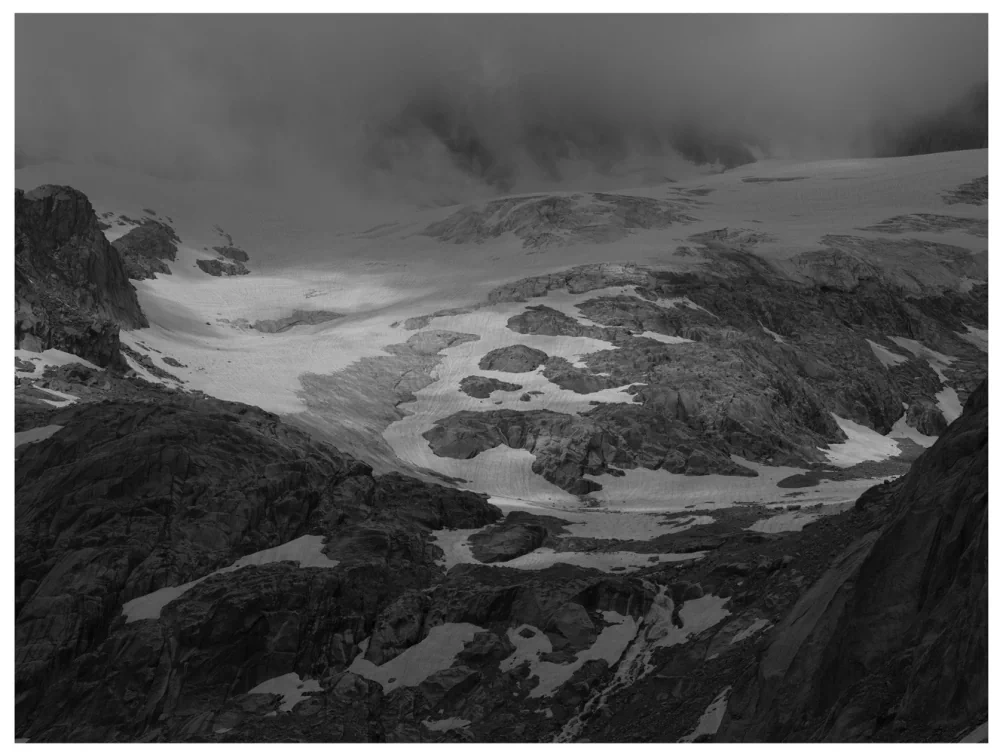
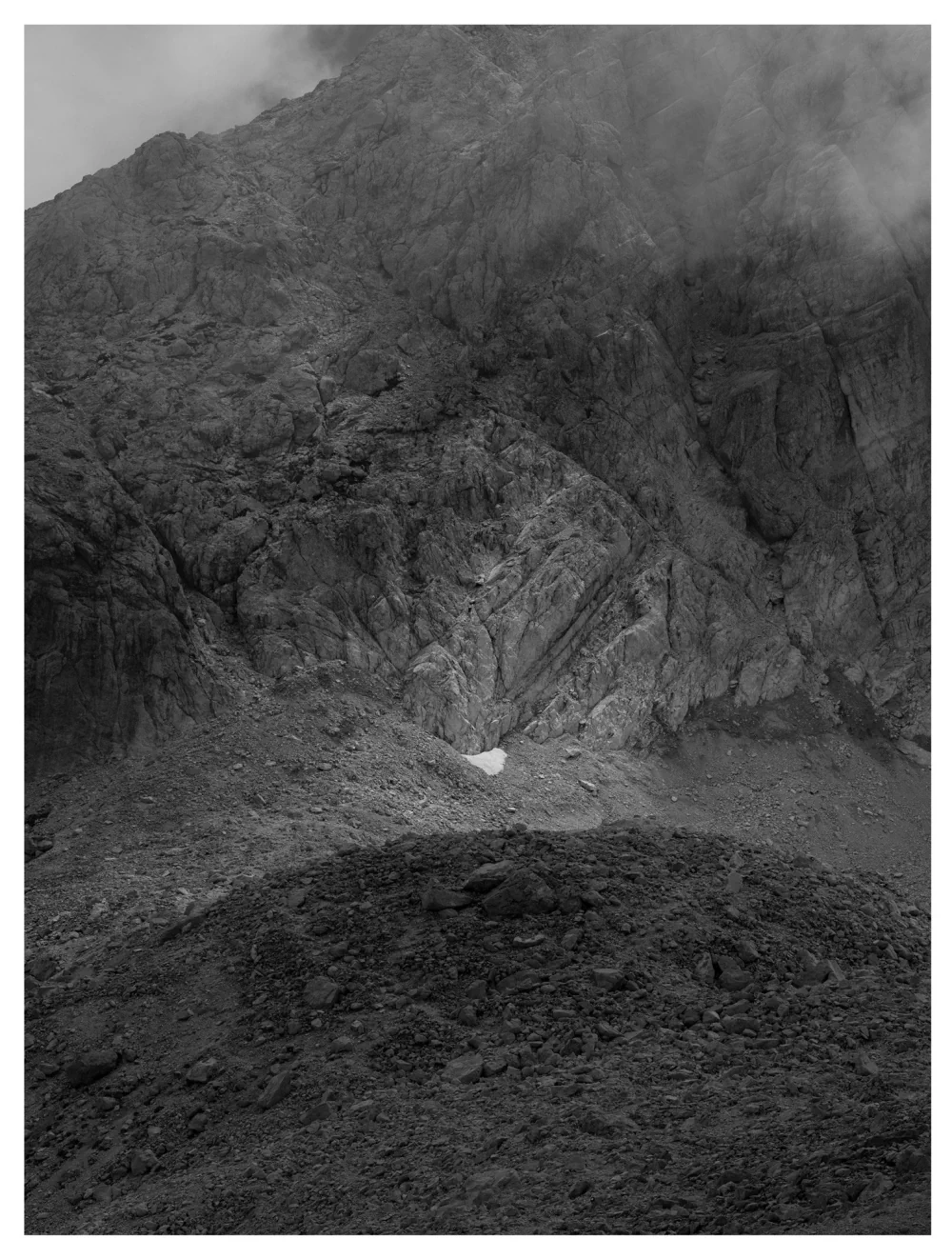
A glacier is declared “dead ice” when it can no longer move under its own weight. Motionless, it melts where it lies, revealing land that has not seen the sky for sometimes thousands of years. Photographs showing the remains of such glaciers are paired with a series of death masks made from earth, rock, and meltwater gathered at each site, and cast from a mould of the artist’s own face.
Marina Warner refers to the death mask as the “psychological precursor” to the photograph, both in form and in use. A memorial image before the invention of photography, it acts as an object of grief and remembrance, an imprint of presence in the wake of disappearance. Here, these post glacial landscapes are seen as death masks themselves, cast from the moving form of the glacier that, after death, leaves only its impression behind in the earth. By presenting the death mask as a photograph, an extension of the environment from which it was cast, the boundaries between the human body and the landscape begin to dissolve, as if the empty glacial valley were the negative mould from which the mask emerges. The Earth’s skin becomes our skin. We must grieve with rather than for, as we are bound within this fabric of undoing.
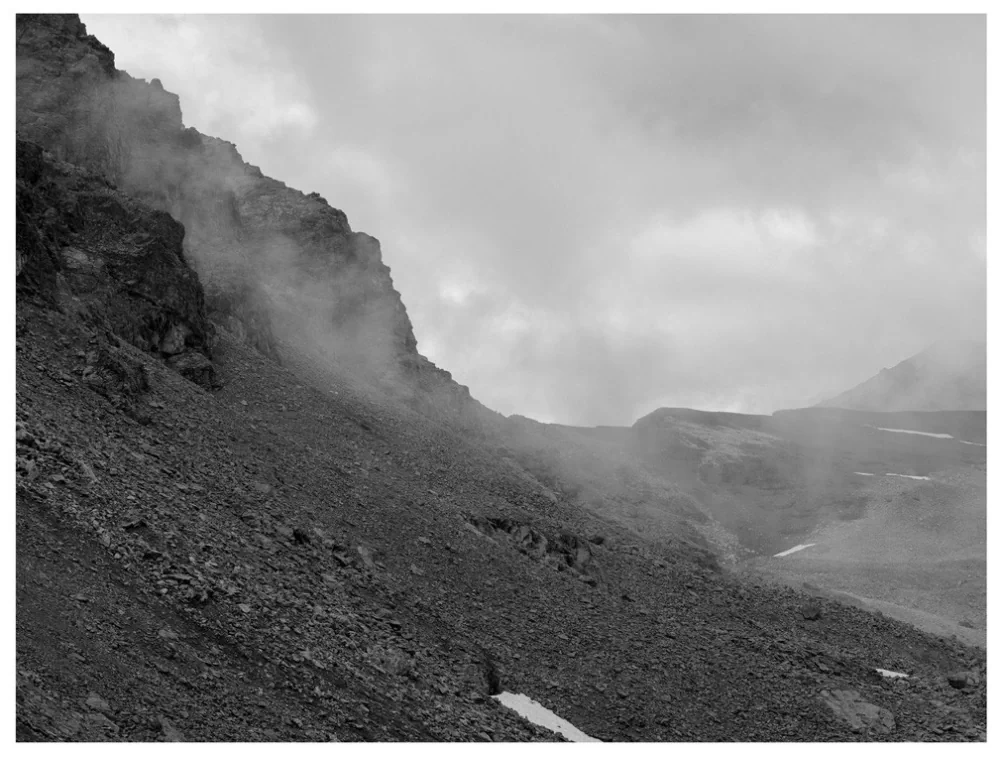
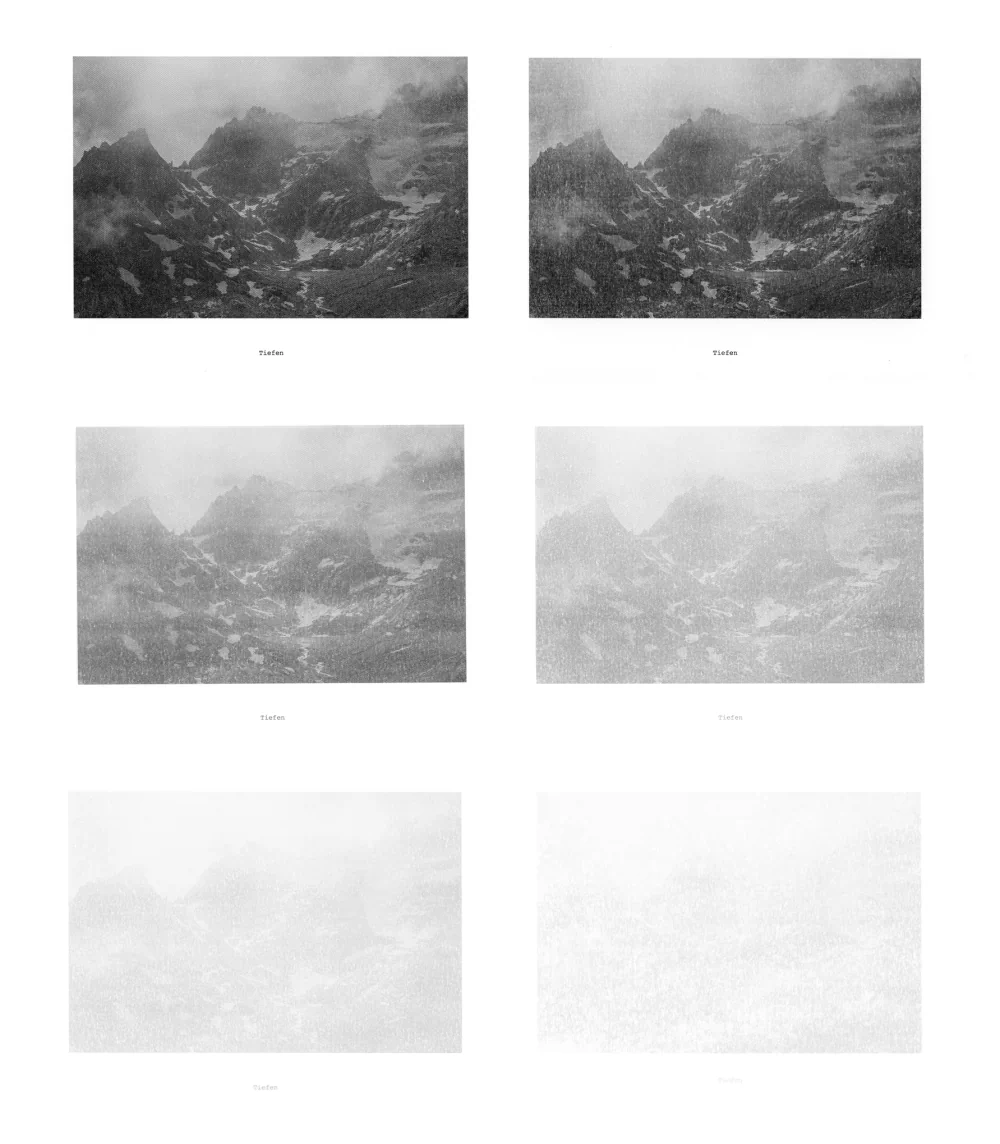
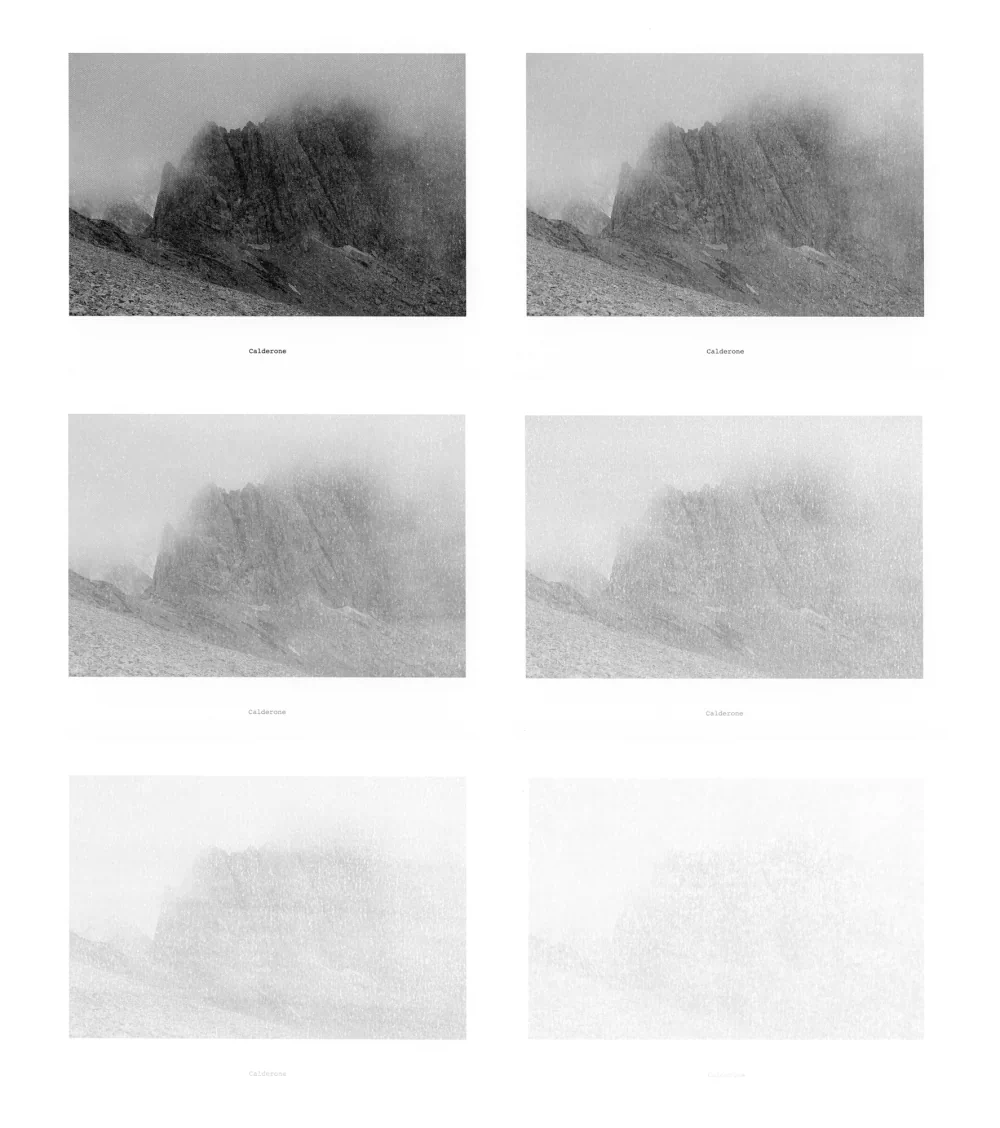
Alongside these images is a series of lithographs. The roller is inked only once at the beginning of the process and the image is printed repeatedly until the ink runs out. The landscape gradually becomes a faint echo of its previous self, as if it were a dream or memory slowly melting away. This process speaks not only to each glacier’s disappearance but also to their active erasure through human action. The surface of the images appears to disintegrate as the ink fades, creating a sense of irreversible unravelling.
A glacier remembers, across months to millions of years, an entire archive of layered histories that record and tell the story of the earth, built over centuries and now melting within decades. With the extinction of glaciers, the memories of the planet itself begin to fade with the thawing ice. Once Was explores the process of grieving as a purposeful act of sustained remembrance. It speaks to humanity’s entanglement with, and responsibility for, these sites of loss, as well as to the persistent blindness toward the consequences we create for ourselves. It is both an elegy and a prophecy.