Between 2005 and 2025, Martin Andersen photographed international dog shows across Europe and North America.
What began almost accidentally became his first serious attempt at a photographic documentary.
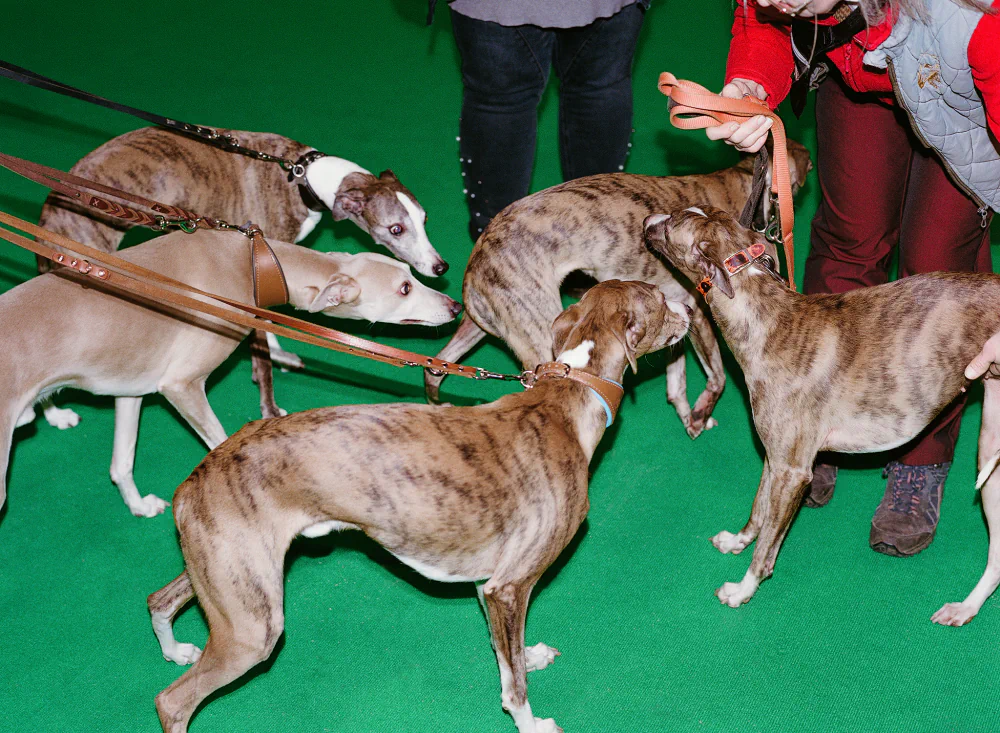
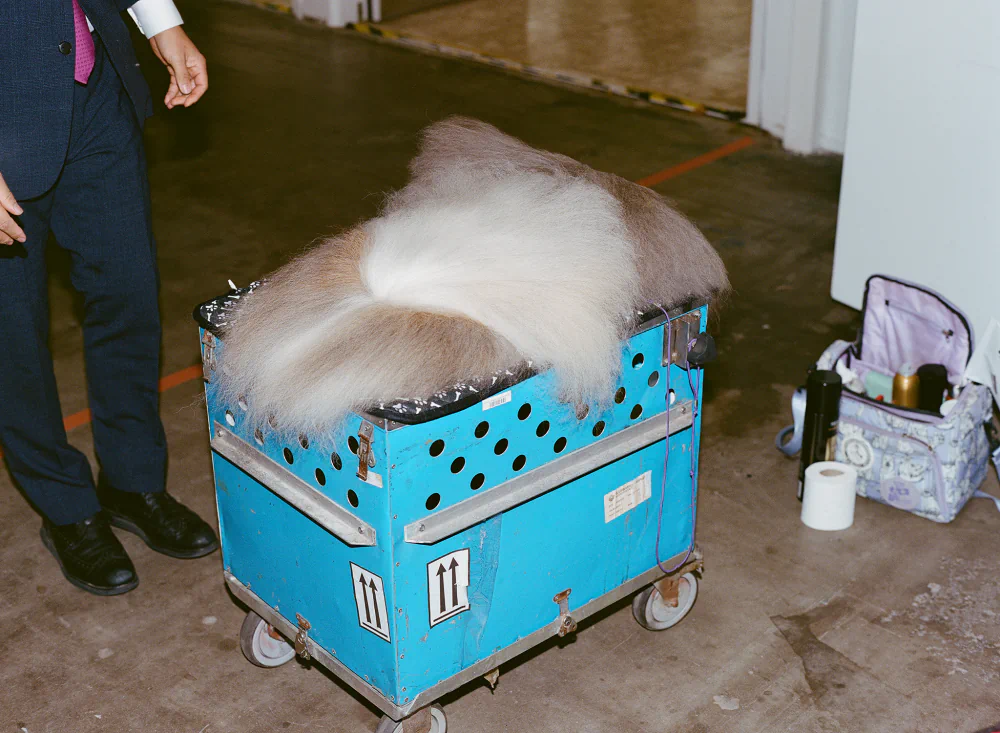
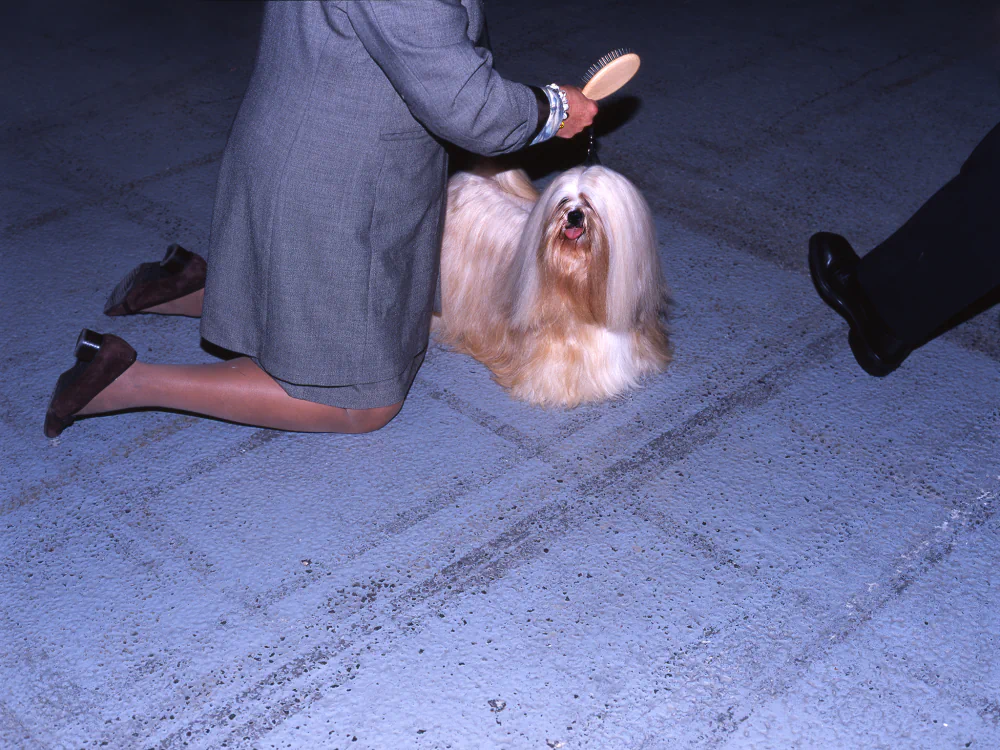
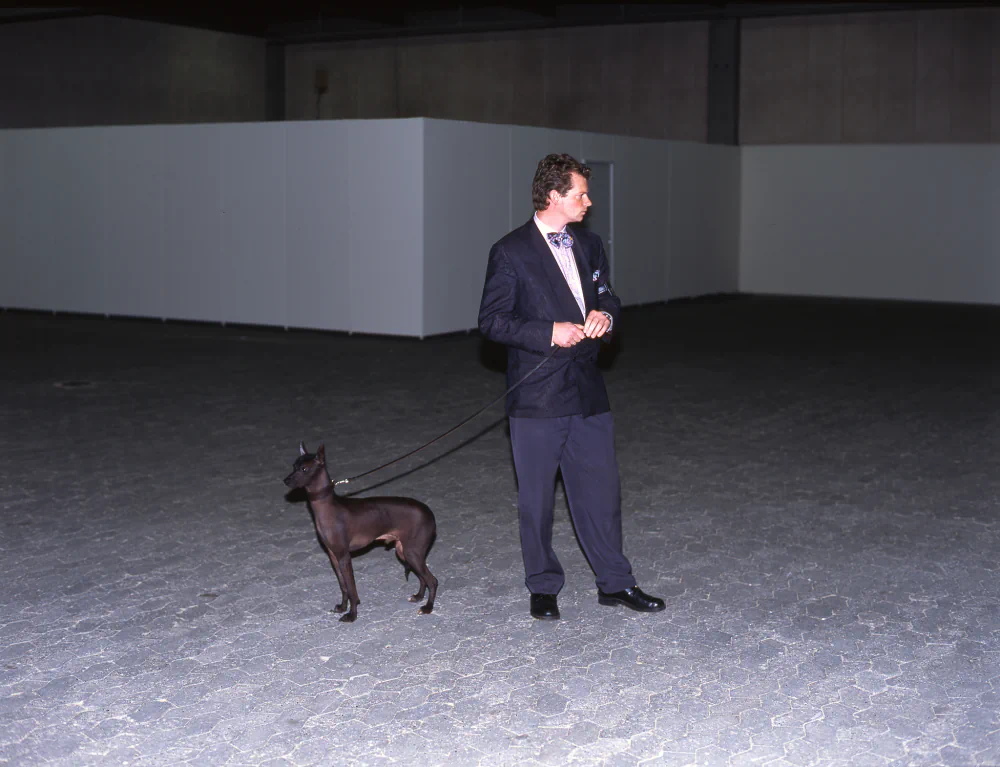
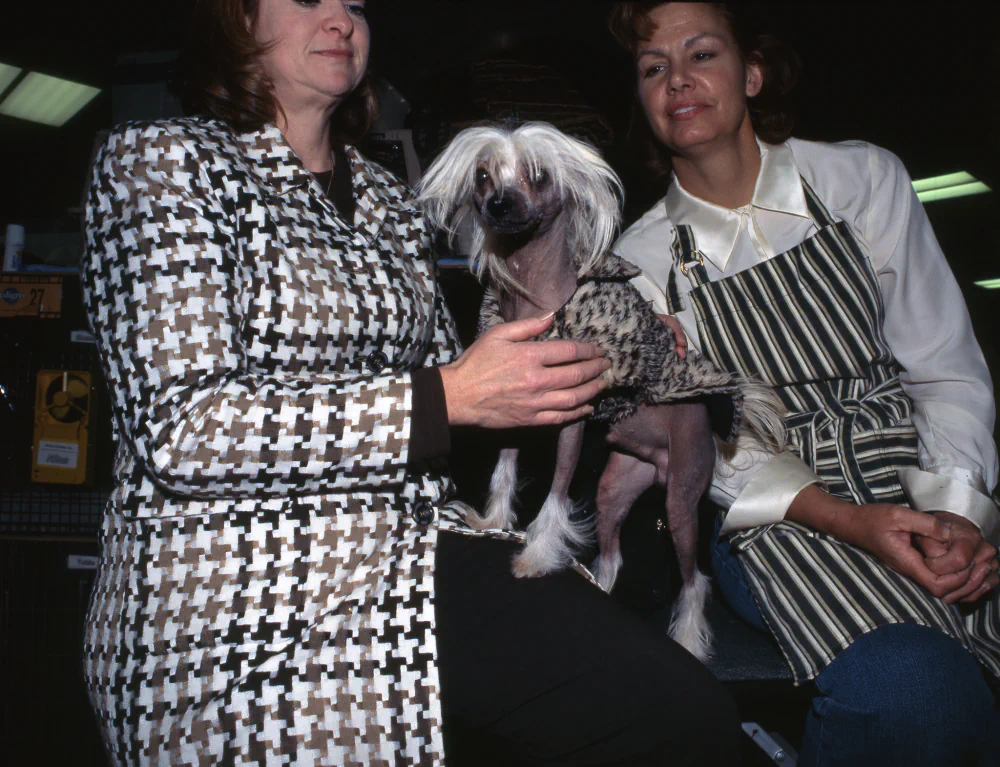
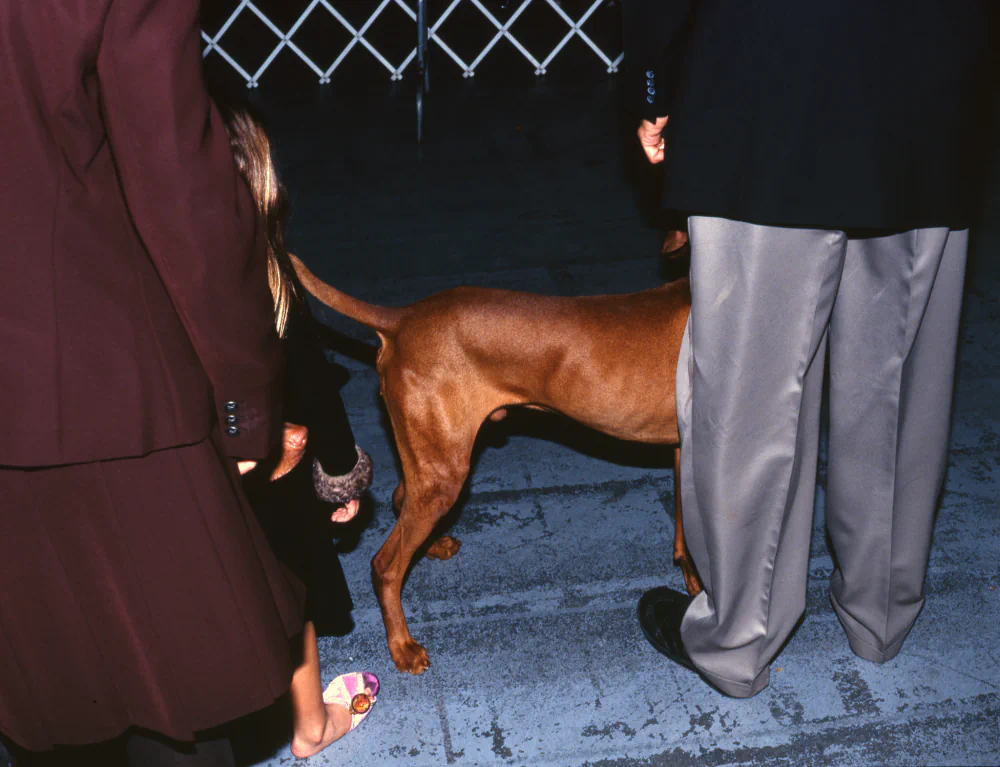
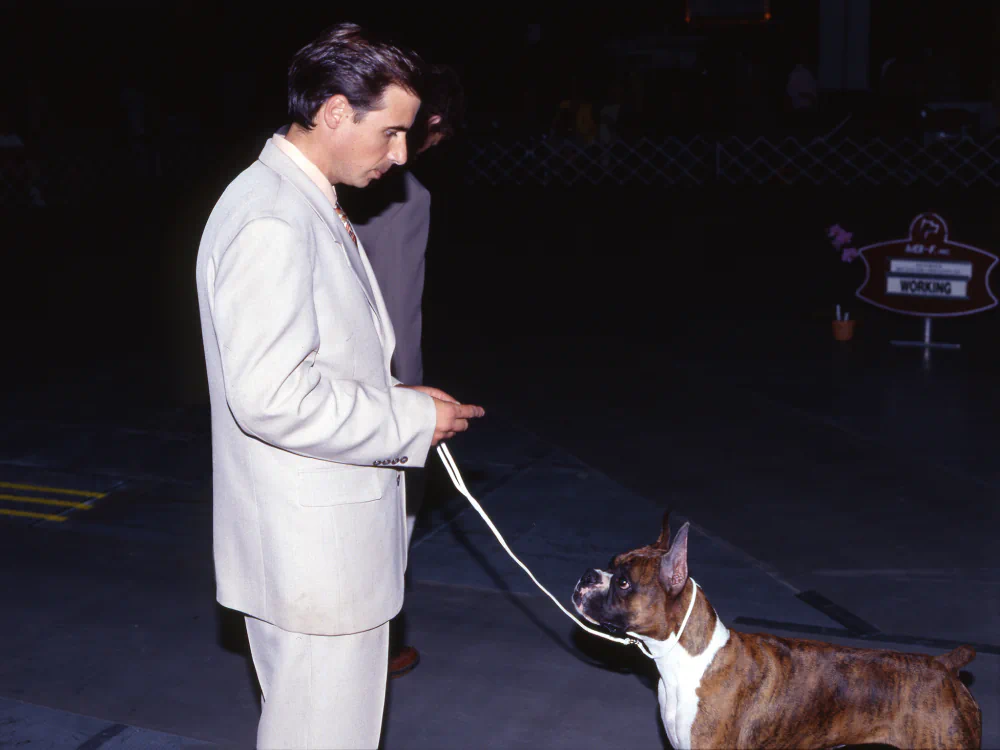
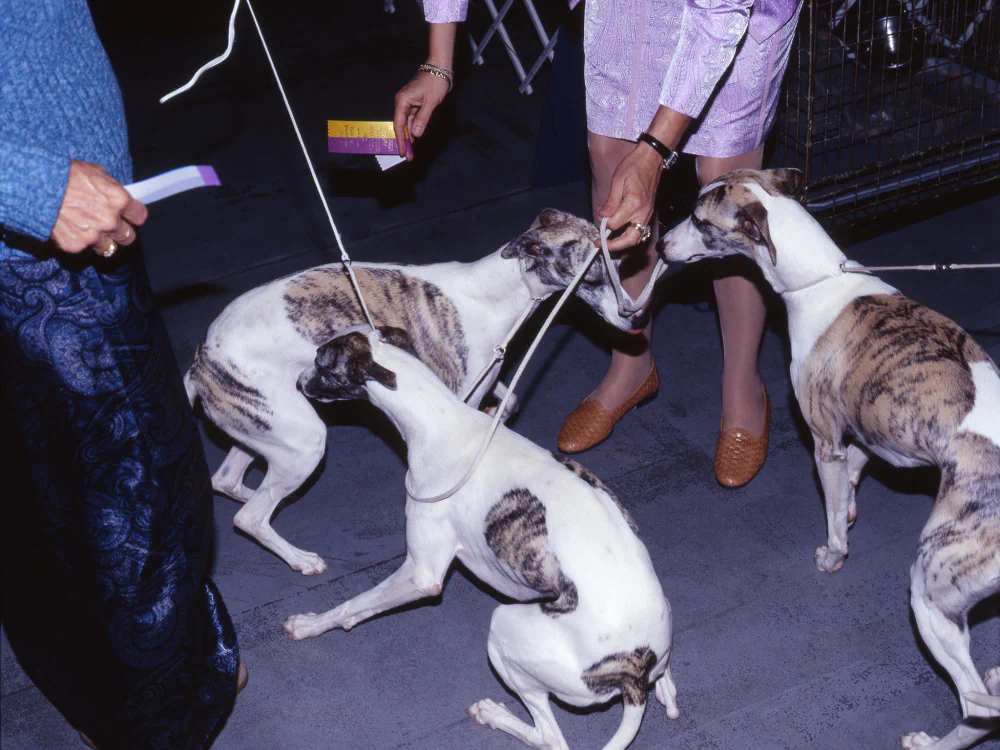
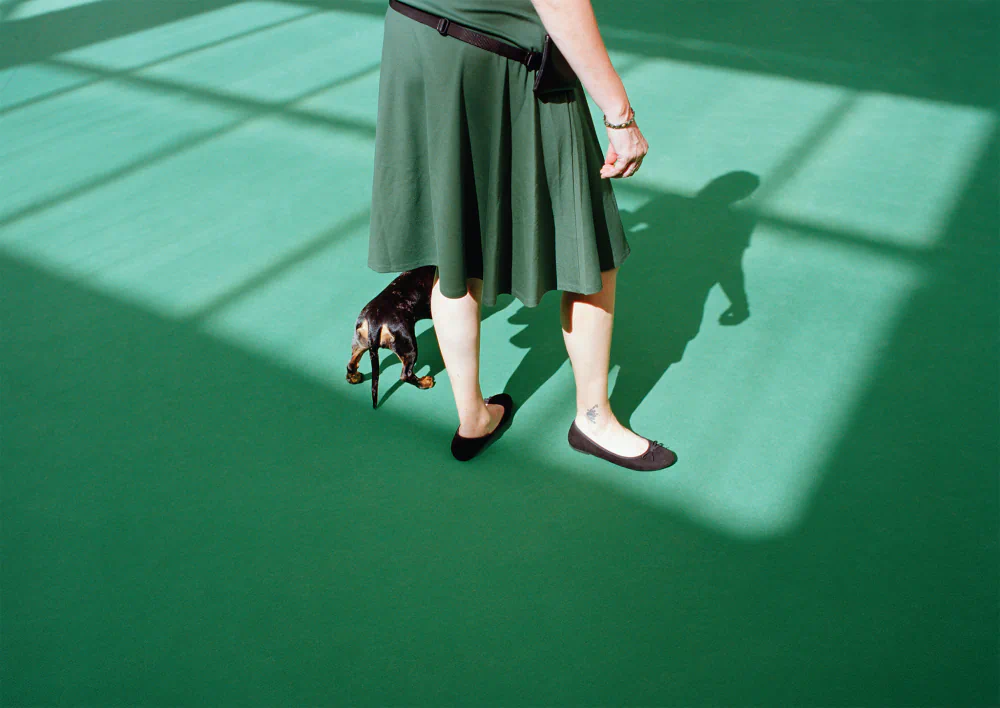
Dog Shows (2005–2025) captures the surreal and often chaotic behind the scenes moments of dog shows, focusing on obsessive competitors, unusual breeds, elaborate grooming, vibrant outfits, stylish poses, and the happenstance and odd juxtapositions that emerge within this peculiar world.
Around 2002, after working for two years with Vaughan Oliver at v23 (4AD Records), Andersen established his own studio. During this time he became increasingly interested in documentary photography, particularly the work of street photographers such as Anders Petersen, Krass Clement, Garry Winogrand, and Bruce Gilden. These photographers captured fleeting moments without elaborate preparation, producing images that felt alive because they embraced chance.
Around the same period, he encountered Jeff Mermelstein’s book No Title Here. He was fascinated by the humour and strangeness within Mermelstein’s observations of American life, including trade shows, wedding parties, cat shows, and cocktail gatherings. Mermelstein found poetry in the jarring and the disjointed, a sensibility that remained influential for Andersen.
He wanted to experiment with photographing in a similar way, which felt far removed from his commercial practice at the time, mainly focused on music photography for bands.
The project began almost unintentionally in 2004, when a close friend invited him to attend Crufts, the famous dog show in Birmingham, UK. Andersen brought his heavy Contax 645 medium format camera equipped with a flash and filled his pockets with transparency film. He had no clear plan and was simply curious.
He recalls being immediately overwhelmed by the scale of the event, the extraordinary variety of dogs, some majestic and others frankly bizarre, the meticulous grooming, the handlers’ elaborate outfits, the colours, the hairspray, and the visible nerves. The entire event felt like a theatre of devotion and spectacle.
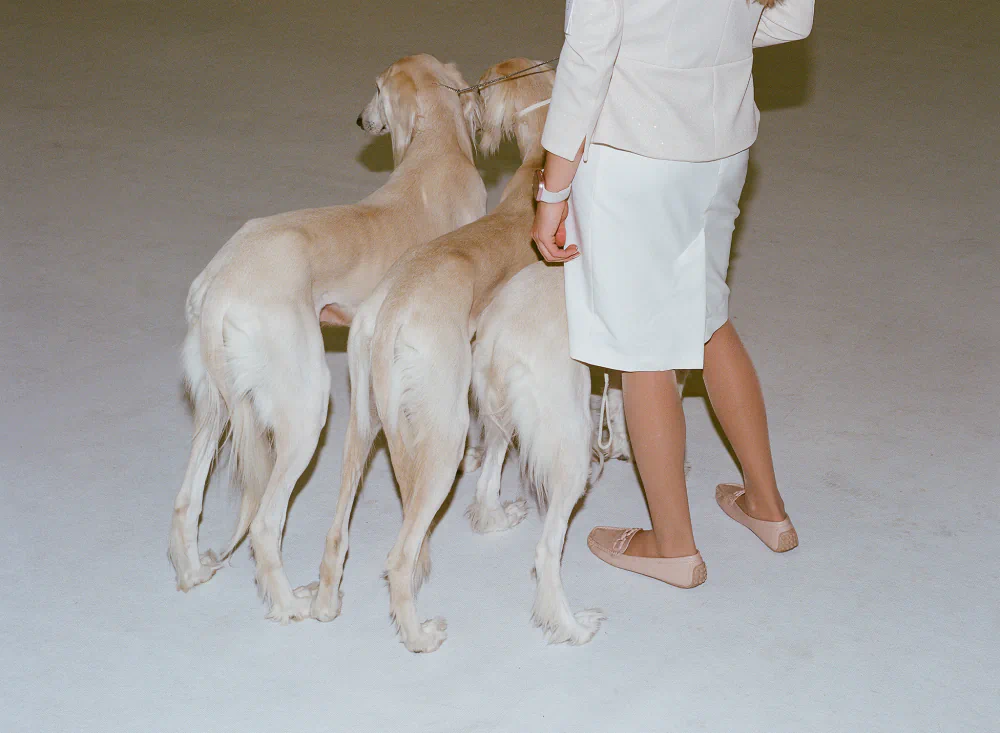
The experience was both overwhelming and exciting, and he exposed several rolls of film that day. When he later saw the developed images, he felt a strong sense of excitement. The photographs felt fresh and unpredictable, and that sense of discovery proved addictive. He soon began searching for other dog shows to photograph. What began as curiosity gradually evolved into a long term project.
Over the years Andersen travelled to events across Europe and North America. The persistence required to locate and attend new international shows each year was supported by his commercial assignments. In many ways, client work financed his independence. At the shows he was accountable to no one. There were no deadlines, no art directors, and no expectations. He was free to experiment, fail, learn, and collect images purely for himself.
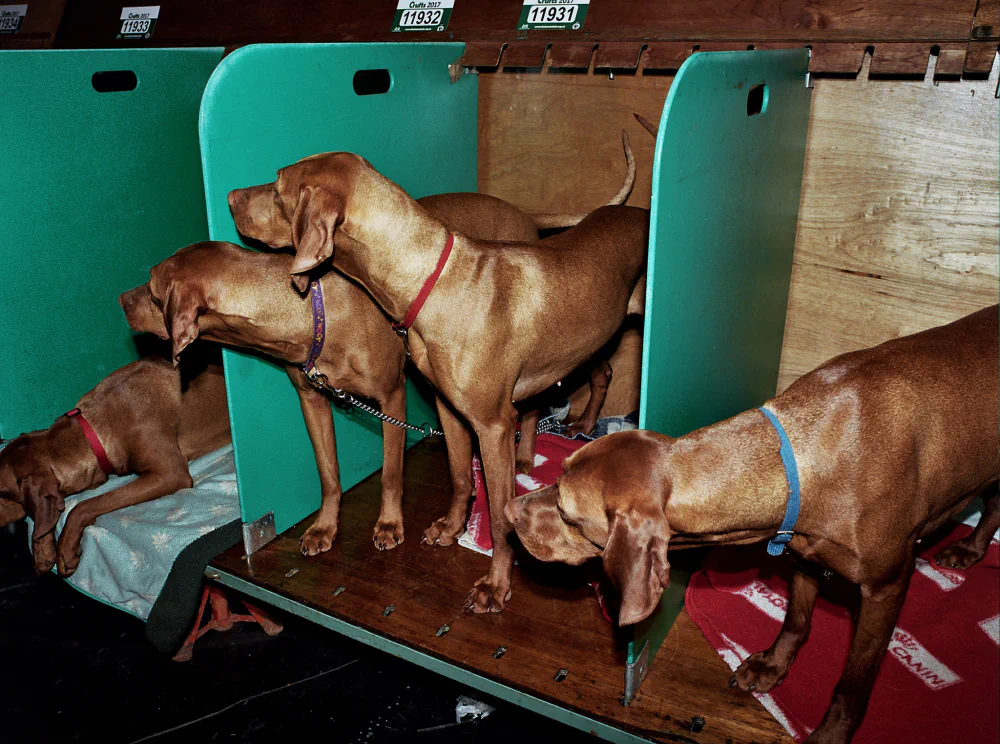
He never photographed the actual competitions in the ring. The polished and idealised presentation of the dogs held little interest for him. Traditional dog show photography tends to focus on the perfect portrait: immaculate posture, pristine fur, and controlled lighting. Andersen’s work became an antidote to that aesthetic. Instead, he gravitated toward backstage spaces, grooming areas, corridors, and quiet corners. These were the places where tension and tenderness coexisted. Moments when someone adjusted a ribbon with trembling hands, when a dog rested its head against a sequined skirt, when exhaustion and pride quietly met.
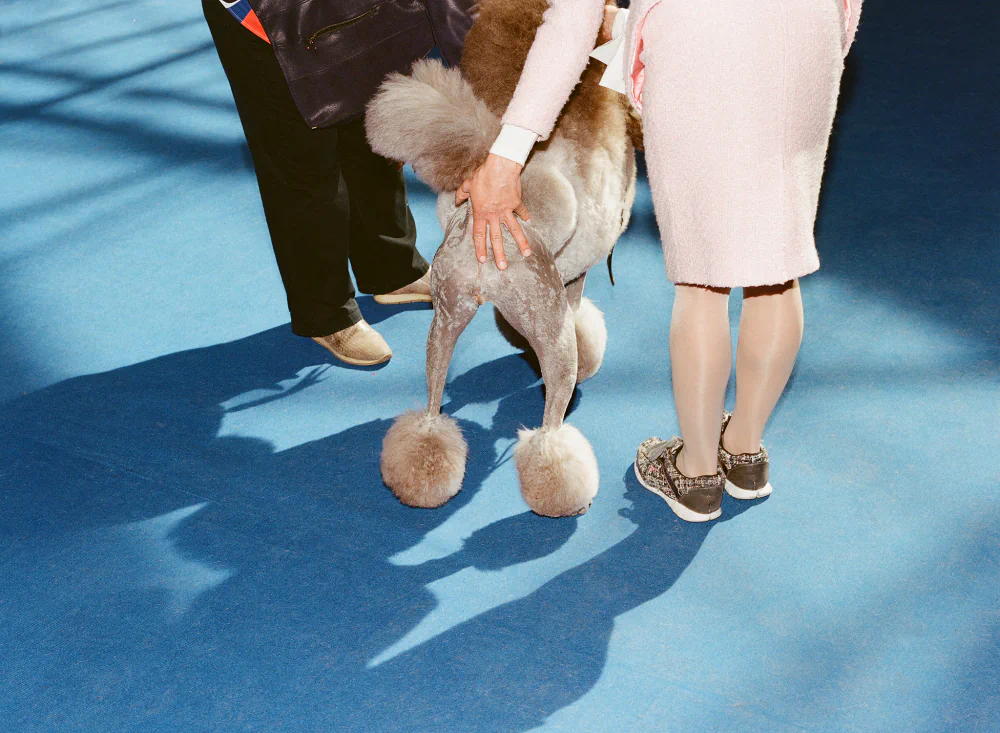
He became fascinated by happenstance and unexpected juxtapositions. A towering hairstyle echoing the sculpted fur of a poodle. A handler in leopard print standing beside a Dalmatian. Moments when leash, limb, and tail align into an accidental choreography. These small visual coincidences carried humour as well as humanity.
There was also an element of risk in the way he worked. To capture the kind of images he sought, he could not ask permission beforehand. If a subject noticed the camera before the photograph was taken, the moment would disappear. Expressions would change and spontaneity would vanish. He therefore learned to move carefully, anticipate gestures, and trust his instincts. Using a large medium format camera with flash only intensified this tension, as it was far from discreet equipment.
Looking back at the work today, Andersen recognises a certain naivety and purity in the early images. He was searching, sometimes awkwardly, for the quirky, the absurd, and the strangely lyrical. Yet he values that innocence. At the time he was not trying to prove anything. He was simply curious and excited.
The photographs also document a specific era. Fashion, hairstyles, and grooming trends subtly mark the passage of time between 2005 and 2025. The filmic quality of the transparency film, now discontinued, reinforces this sense of temporality. The saturated colours and crisp flash create a heightened, almost cinematic reality that reflects the theatrical nature of the shows.
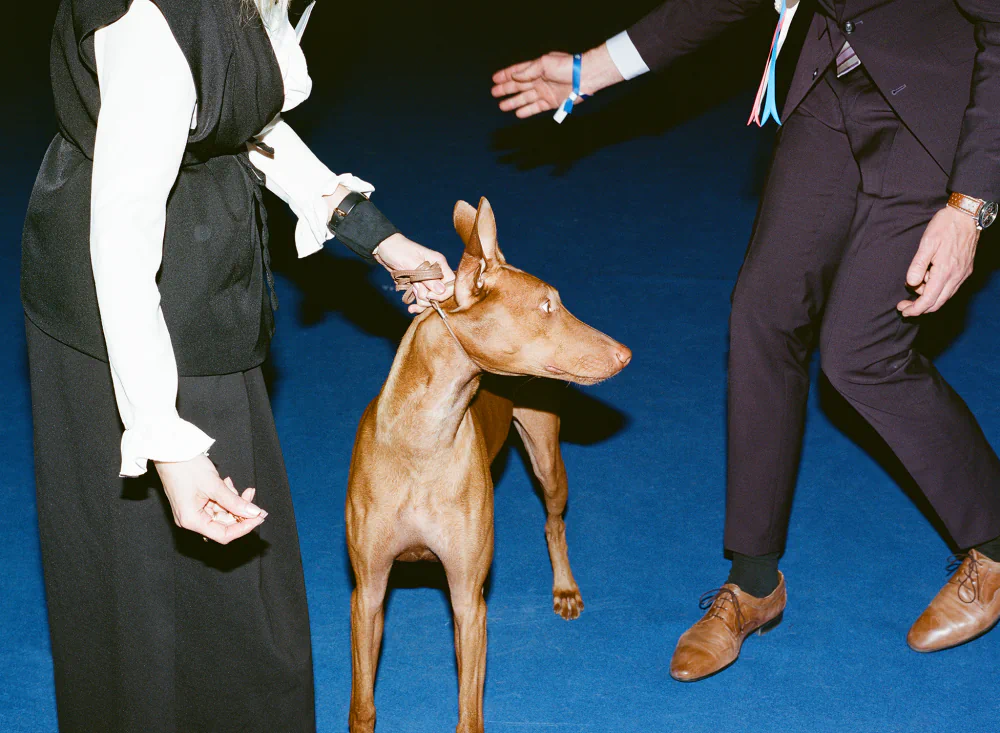
At the centre of the series, however, lies empathy. Although the images can appear humorous, they are never intended to ridicule. Andersen is interested in people’s passion and dedication. The hours of grooming, careful preparation, and emotional investment reveal the deep bonds between humans and animals. The flamboyance of the scene exists alongside genuine affection and care.
Dog Shows ultimately became the foundation of Andersen’s photographic identity. The project taught him to embrace unpredictability, accept failure, and recognise meaning within small, unplanned moments. It shifted his focus from constructing images to discovering them. It revealed that the world, when observed closely enough, already possesses a surreal quality.
What began as a casual visit to a dog show gradually developed into a twenty year exploration of devotion, spectacle, and human behaviour. These photographs transformed the way Andersen sees and works. For him, they remain a lasting reminder of the excitement of learning, of taking risks, and of following curiosity wherever it leads.
About Martin Andersen
Martin Andersen is an artist, photographer, art director, designer, and musician based in the UK, known for his long term documentary photography projects. His work includes Can’t Smile Without You, a project on Tottenham Hotspur football fans (2013–2017); Sojourn, a documentary series about holidaymakers (2012–2026); Do What You Like, a documentary about the struggles of addiction and loss in South London (2019–2023); and Dog Shows, a project documenting international dog shows in Europe and North America (2005–2025).
His photographic work has been published and exhibited internationally in China, France, Hungary, Japan, Mexico, the UK, and the USA. It is recognized for its humanistic, empathetic, observational, and often humorous approach, as well as for its artistic depth. His style is frequently candid, capturing spontaneous moments rather than staged compositions, reflecting his fascination with what he describes as the surreal within everyday life.
He studied at the Royal College of Art, where he completed an MA, before launching a successful career in visual communication. Early in his career he worked with Vaughan Oliver at v23, contributing to some of the most iconic visual imagery in contemporary popular music. He later founded his own award winning studio, Andersen M.
Andersen has directed films for Channel 4, Discovery Channel, and ITV, as well as music videos for artists such as The Breeders, Lush, Iceage, and Lowly. His film and animation work has received more than 20 international awards, and both his design and photographic work have been widely exhibited and published.
His academic career spans more than 20 years of teaching at leading design schools in the UK, where he has taught graphic design, illustration, animation, fashion styling, and filmmaking. He currently serves as Course Leader for the MA Visual Communication programmes at CSVPA (Cambridge School of Visual and Performing Arts) and also works as a private tutor for aspiring designers and photographers.
He has previously lectured at Central Saint Martins, University of the Arts London (School of Fashion), and at the University of Brighton in Visual Communication. He also served as an international jury member for Visuelt in Oslo, Norway, in 2018 and 2019.
With a career marked by exhibitions, awards, and a sustained commitment to education, Andersen continues to contribute to and shape the contemporary creative landscape through his work in photography, design, and visual communication. [Official Website]