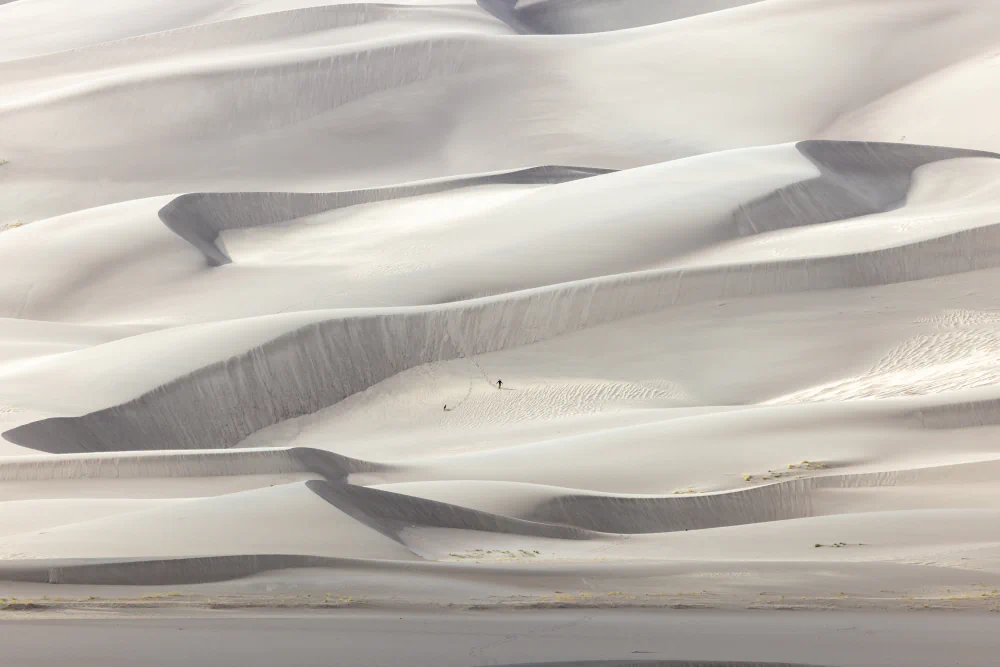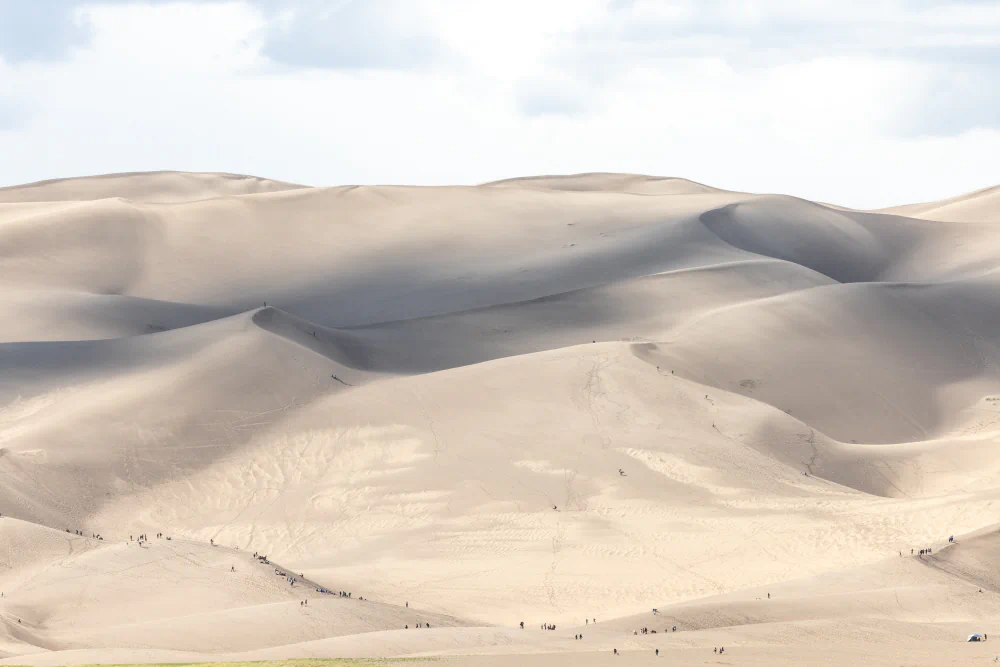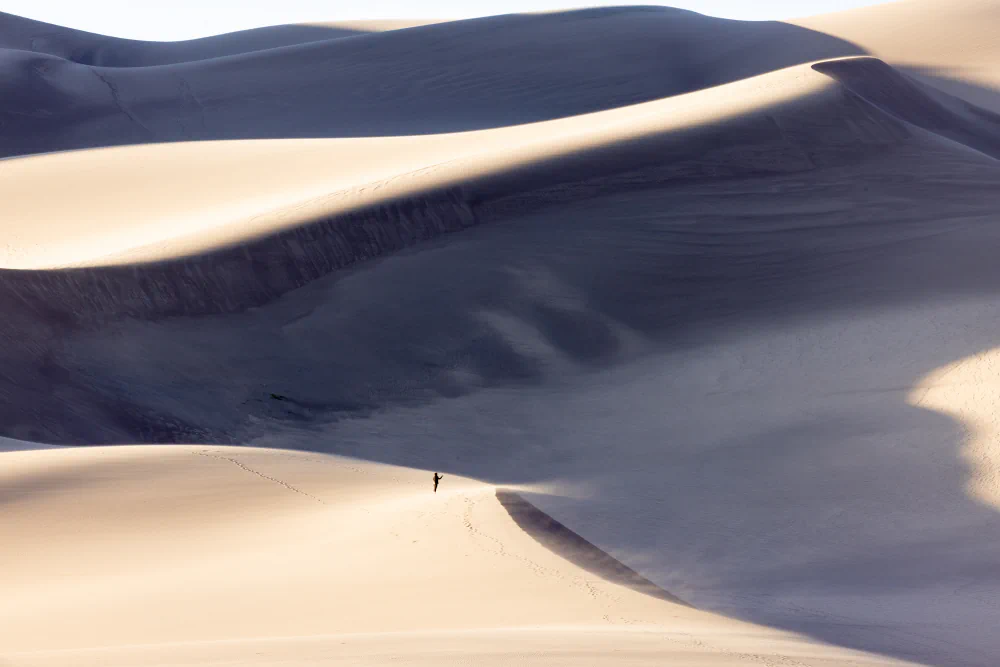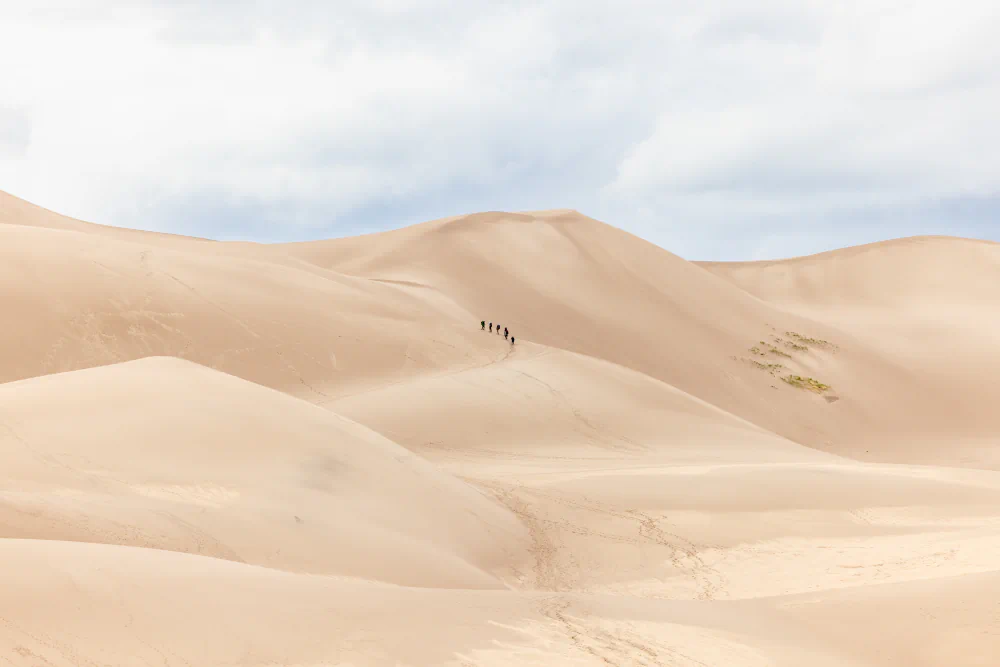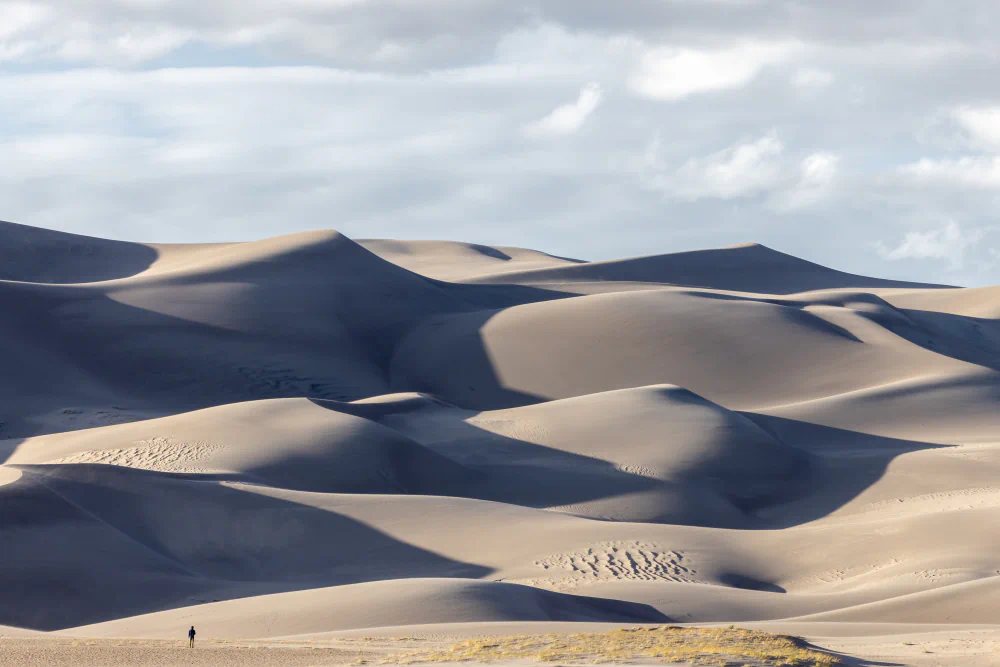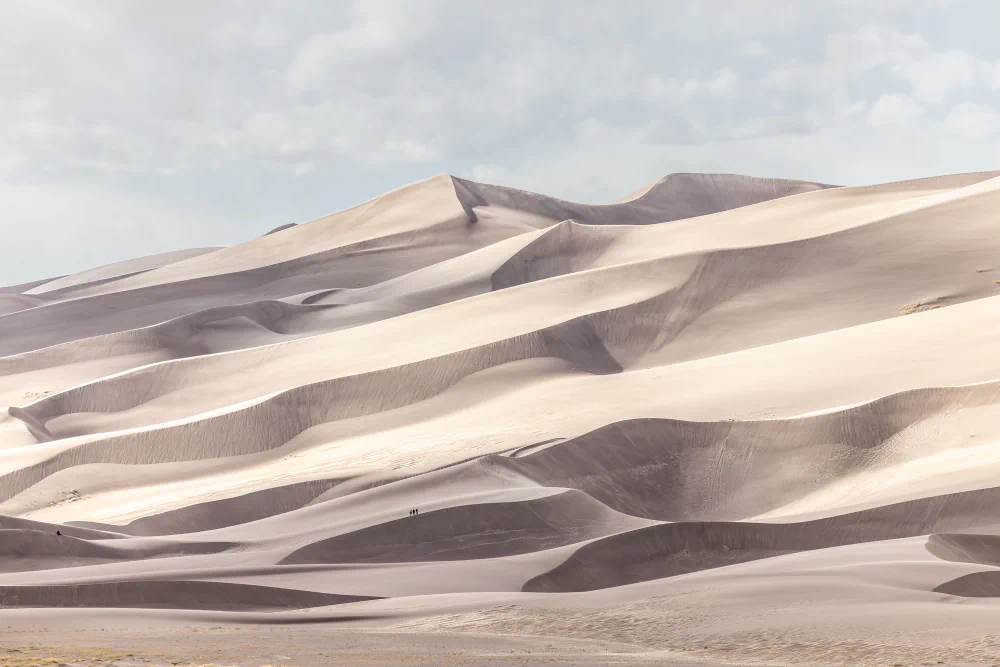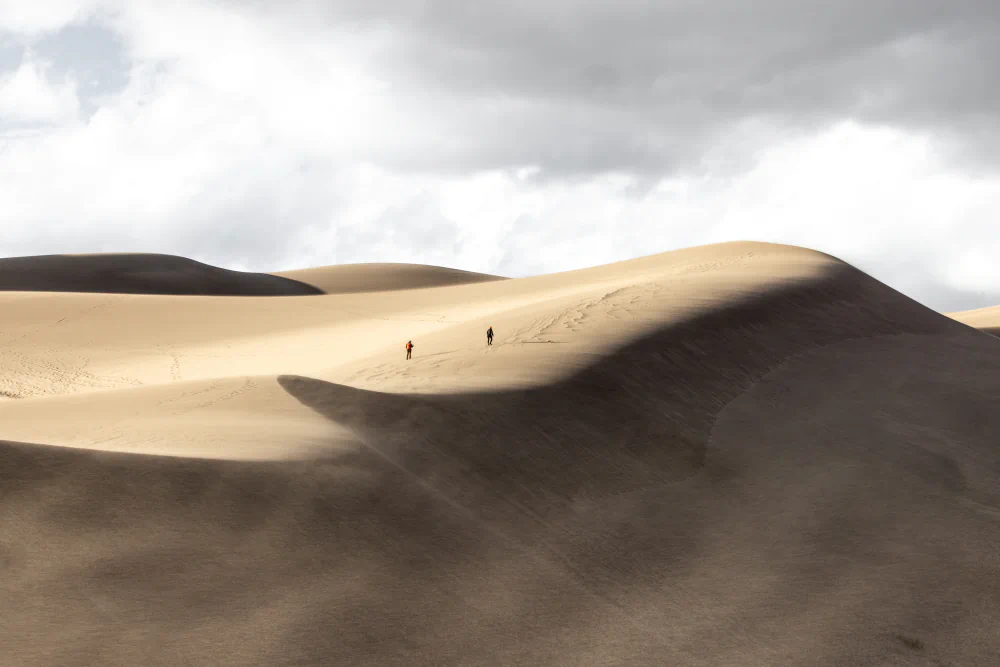

“Thresholds” is an invitation, a reminder, a celebration, and a plea. It is about salvation.
This body of work explores the relationship between humans and the natural world at a critical moment when both individual and planetary health hang in the balance.
While these images appear to be about the dunes, they are not, at least not solely. After photographing mountains, deserts, and lakes, the artist found that only the dunes dissolve place into abstraction. They become unmoored from specificity and allow for something more essential: a meditation on the human condition in relation to the natural world.
These photographs are made to honor what it has meant for her to spend time in wild, liminal places, spaces that evoke humility, reverence, and wonder. They are not backdrops; they are thresholds. In these places, people become aware of their minuteness and their impermanence. They are reminded that forces far greater than themselves shape the world. There is something sublime, even otherworldly, that arises from that recognition. For Burke, spending time in nature represents a form of salvation.

In a post pandemic world, where society has swung from isolation to overdrive, she observes a growing disconnection from one another, from community, from meaning, and especially from the natural world. This portfolio responds to that disconnection. It asks what it means to have access to spaces that humble and restore us, and what happens when that access is lost or taken for granted.
Burke expresses deep concern about rising anxiety, depression, and alienation, as well as about the disregard for protecting these sacred natural environments. The psychological and ecological crises, in her view, are inseparable. Humanity cannot heal itself without restoring its relationship with the wild places that sustain it.
She returns again and again to nature because it is there that she finds joy, meaning, and a sense of healing. Through these photographs, Burke hopes to provoke questions, stir emotion, and offer a visual space where others may experience something similar.

About Tracy Burke
Tracy Burke is a visual artist whose practice examines nature as a source of human renewal. Working primarily through photography, she explores places that remain essentially untamed despite their public accessibility, investigating human engagement with the natural world and its profoundly positive psychological, emotional, and physical effects.
Burke received her BA in History from Yale University, where she served as editor and publisher of Black and White: The Yale Undergraduate Photography Review. She later earned a master’s degree in clinical social work from Smith College.
After a transformative three month wilderness experience at the age of 22 that fundamentally shifted her understanding of what gives life meaning, Burke initially set aside photography, feeling unable to capture the profound impact of the natural world through her lens. She returned to the medium years later while documenting family outings to national parks, recognizing that these images went beyond family snapshots and became powerful artistic statements about the human connection to nature.
Burke’s work has been exhibited at the Colorado Photographic Arts Center in Denver and the Dairy Arts Center in Boulder, Colorado. Her photographs have been published in Lenscratch and included in online exhibitions with the Center for Fine Art Photography in Fort Collins, Colorado, and PhotoPlace Gallery in Vermont. Her work is held in numerous private collections.
She lives and works in Boulder, Colorado. [Official Website]