Love Your Neighbor began with a simple question: Who are the people I pass every day?
For years, Randy Bacon walked the sidewalks of Commercial Street in Springfield, Missouri, exchanging the familiar nods and brief greetings that shape everyday life in a neighborhood.
Shop owners opening their doors in the morning. Musicians carrying instruments into venues. Baristas preparing the day’s first coffee. Artists unlocking their studios. Workers, visitors, and residents simply moving through the rhythm of their lives. People recognized one another, yet recognition, as Bacon gradually realized, is not the same as truly knowing someone.
Like many communities, Commercial Street is a place where people from very different backgrounds intersect. Its history is layered with struggle, creativity, renewal, and perseverance, forces that have shaped both the character of the street and the people who inhabit it. Day after day Bacon saw the same faces, exchanged a greeting, and continued on his way. Over time, however, a deeper curiosity began to emerge. What stories existed behind those brief encounters? What experiences had shaped these lives? What fears, hopes, and dreams did people carry that remained invisible to those simply passing by?
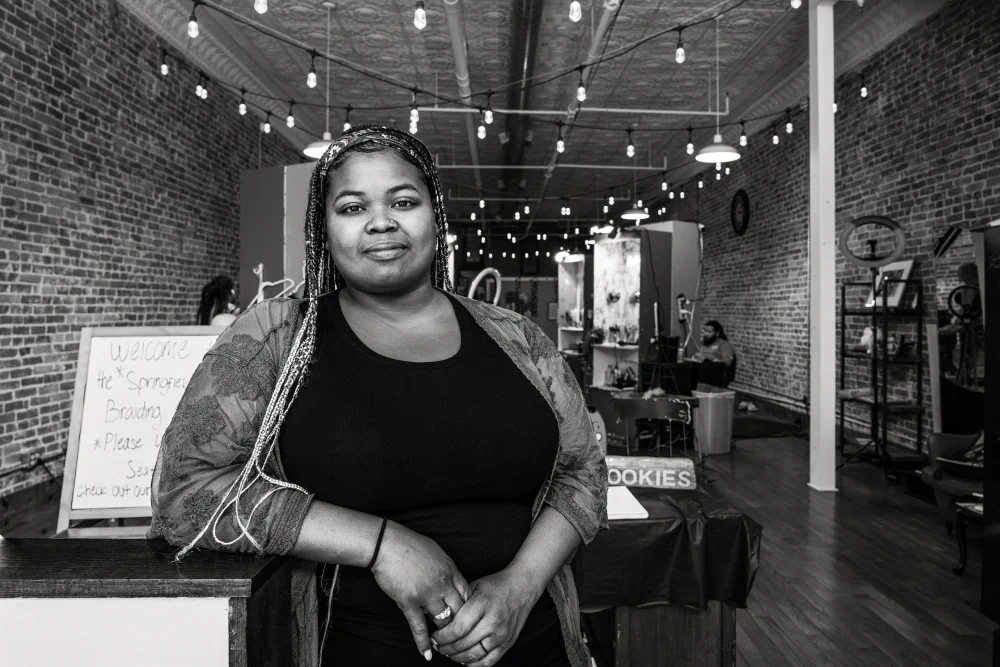
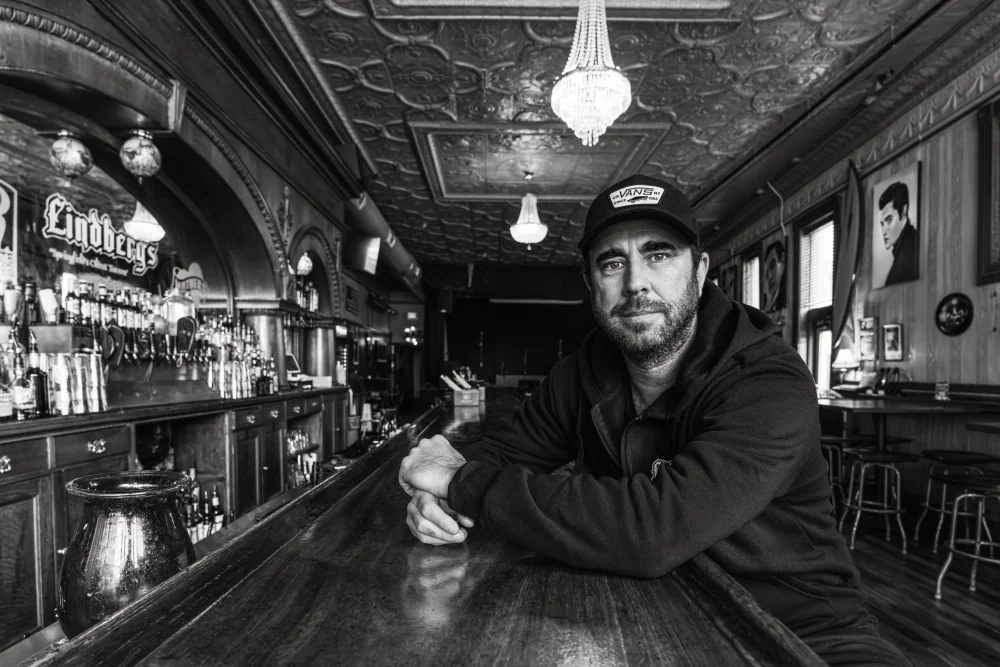
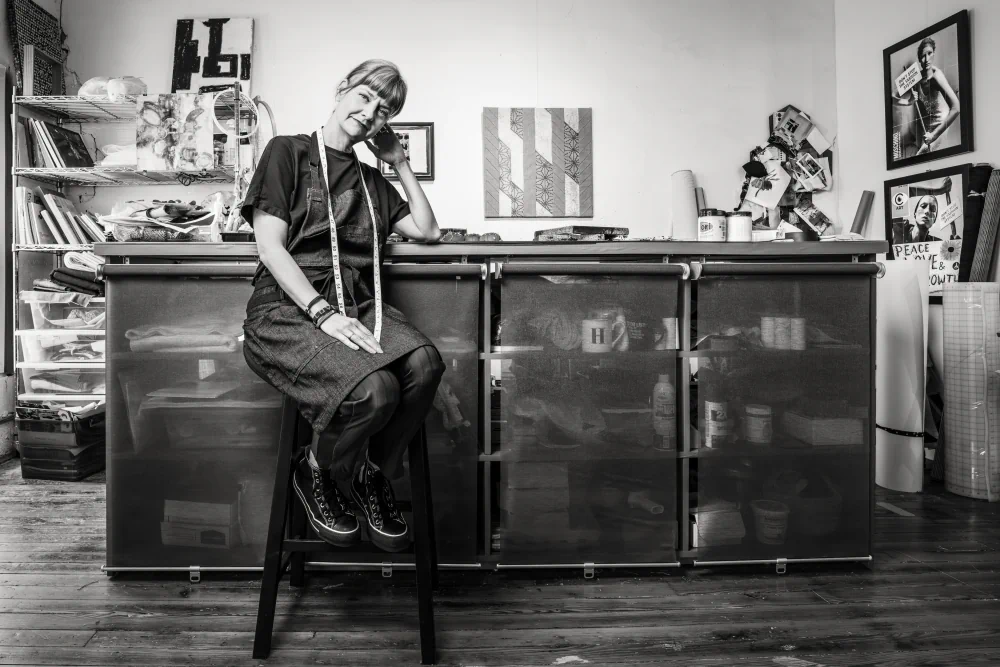
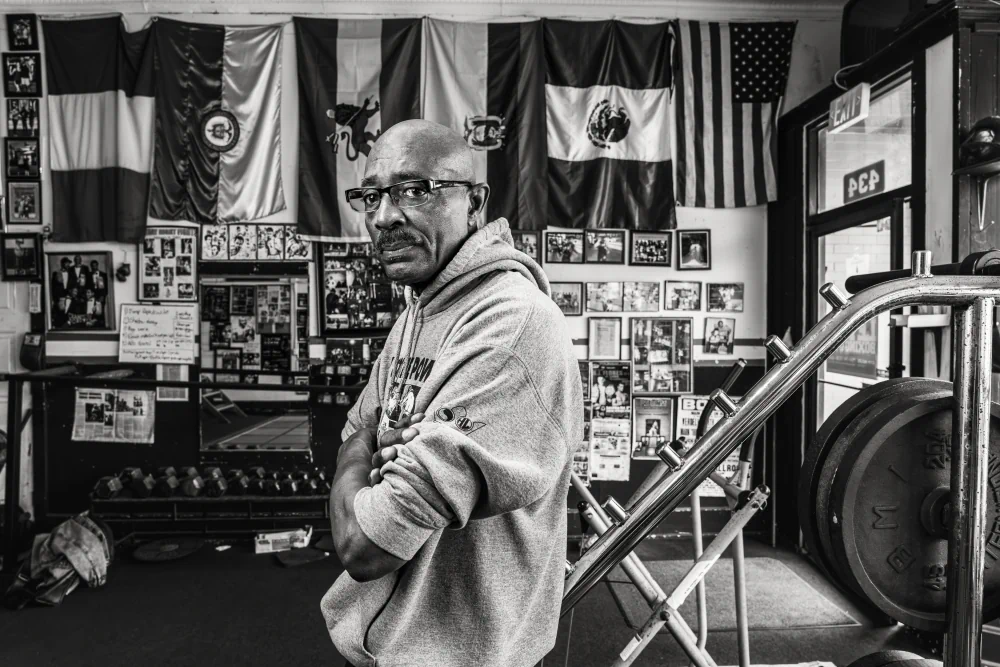
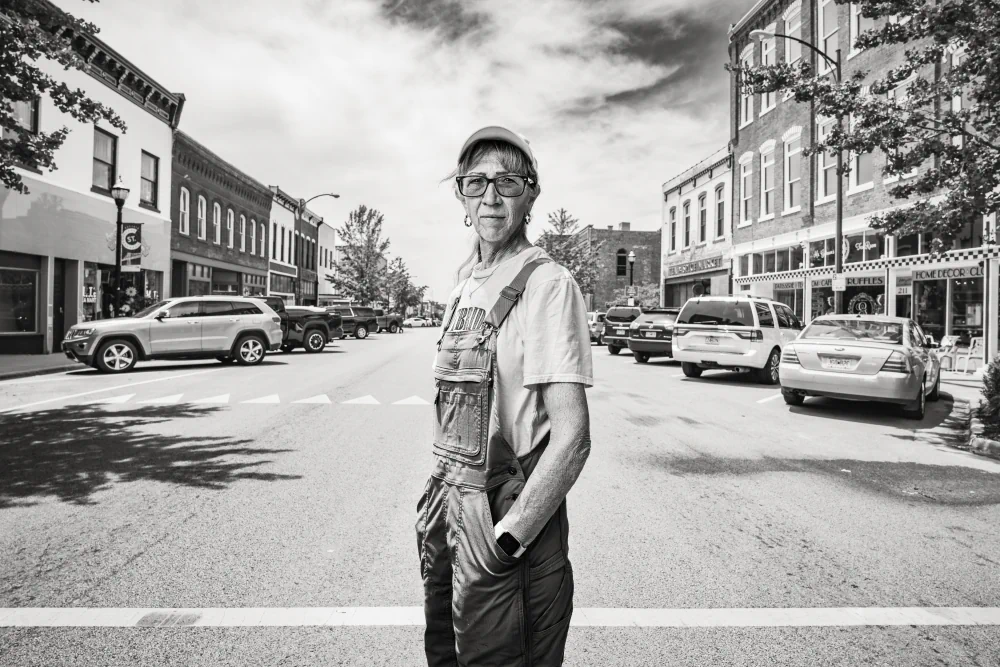
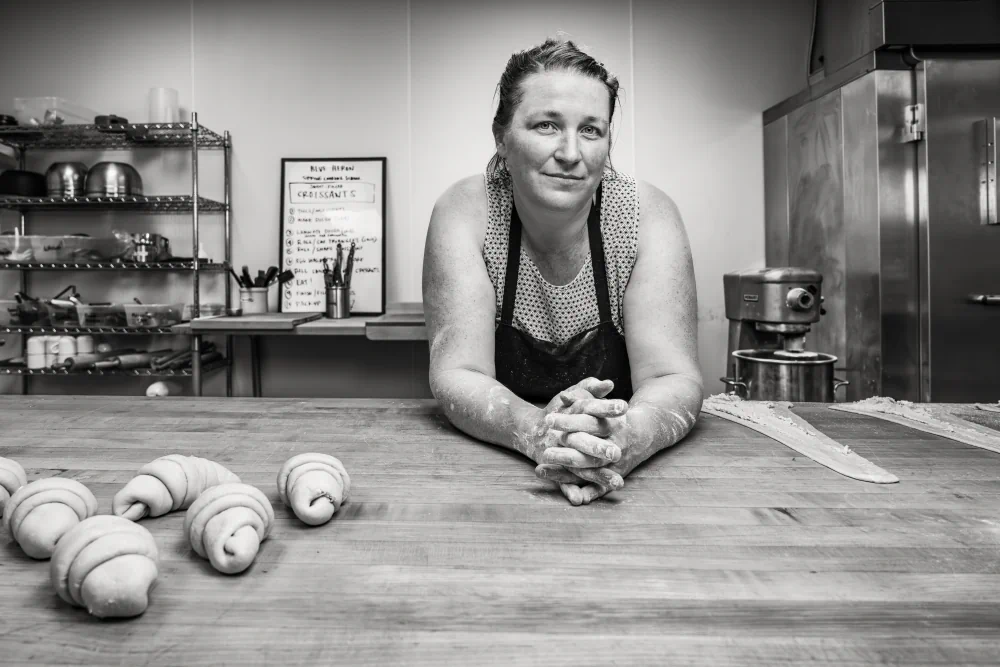
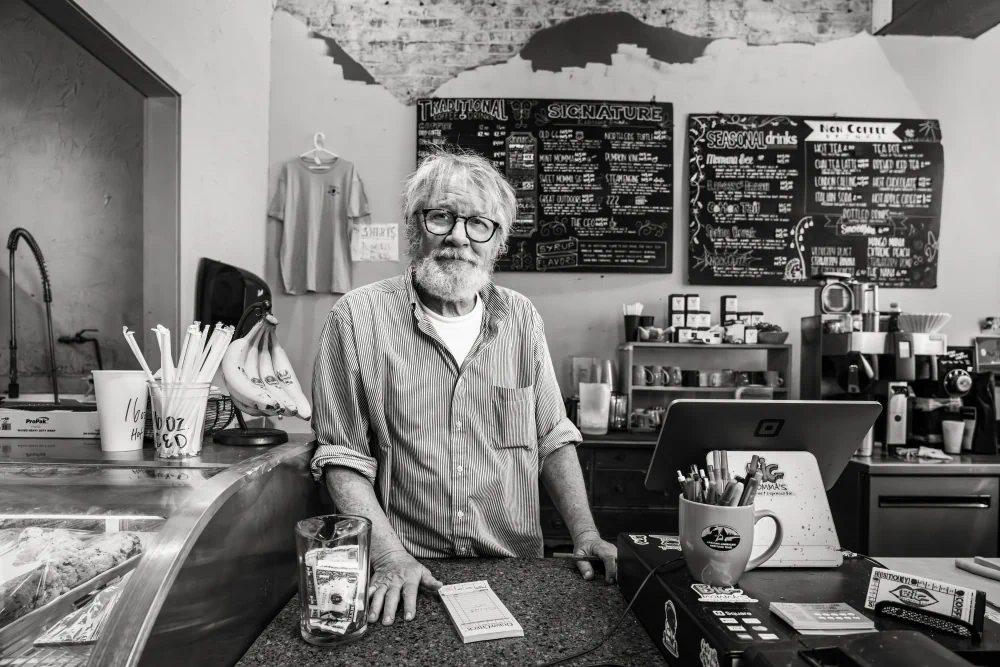
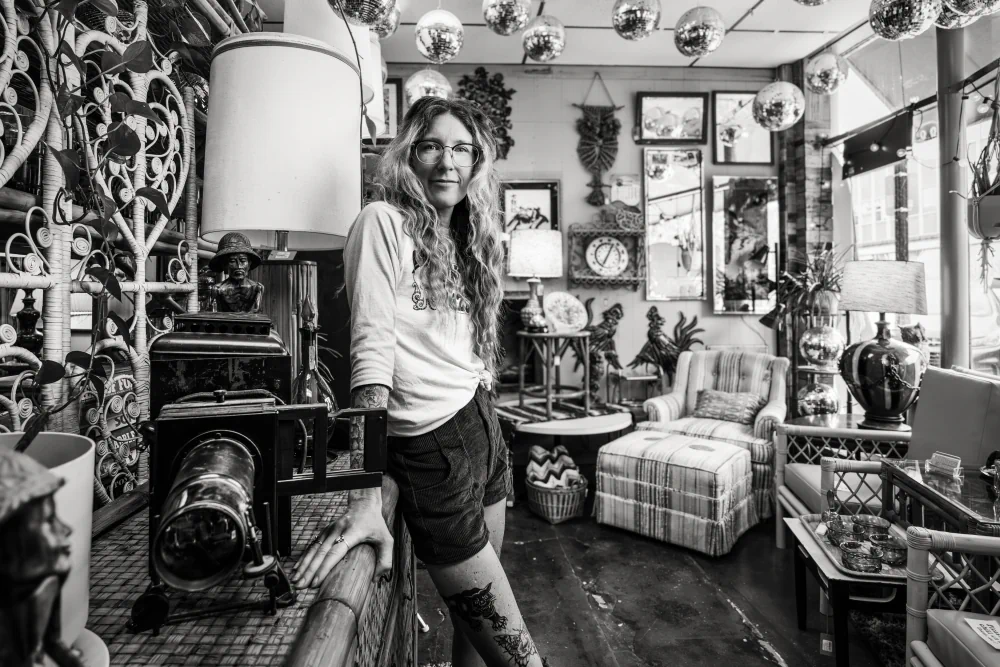
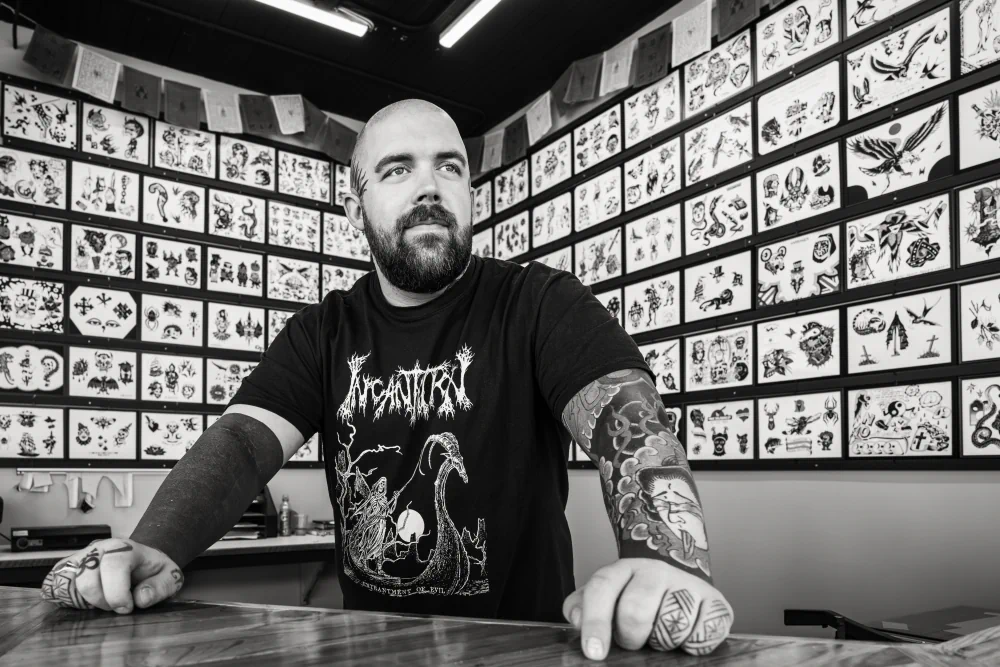
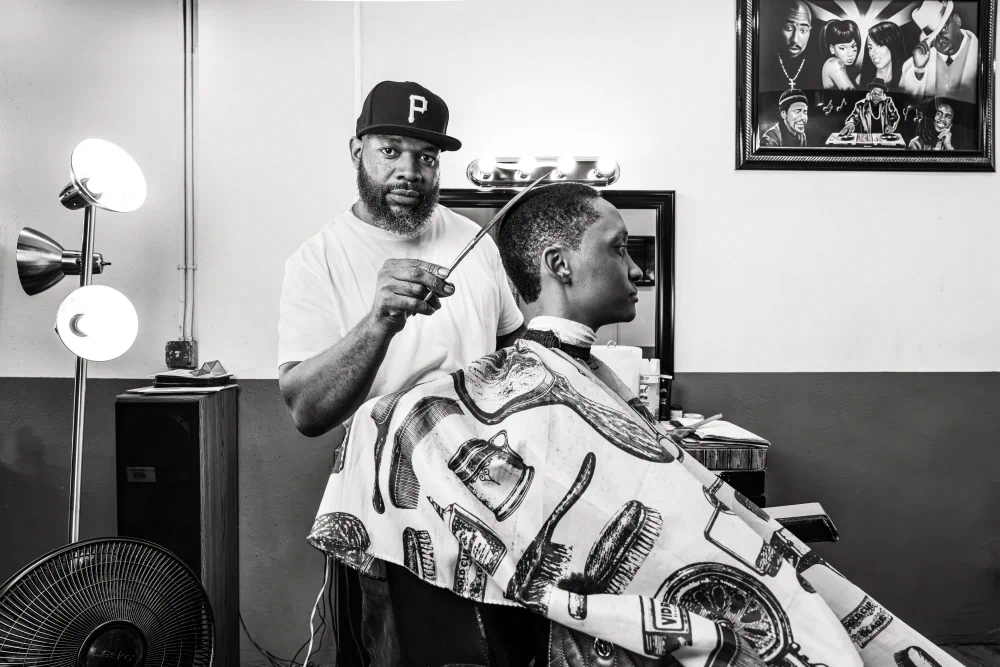
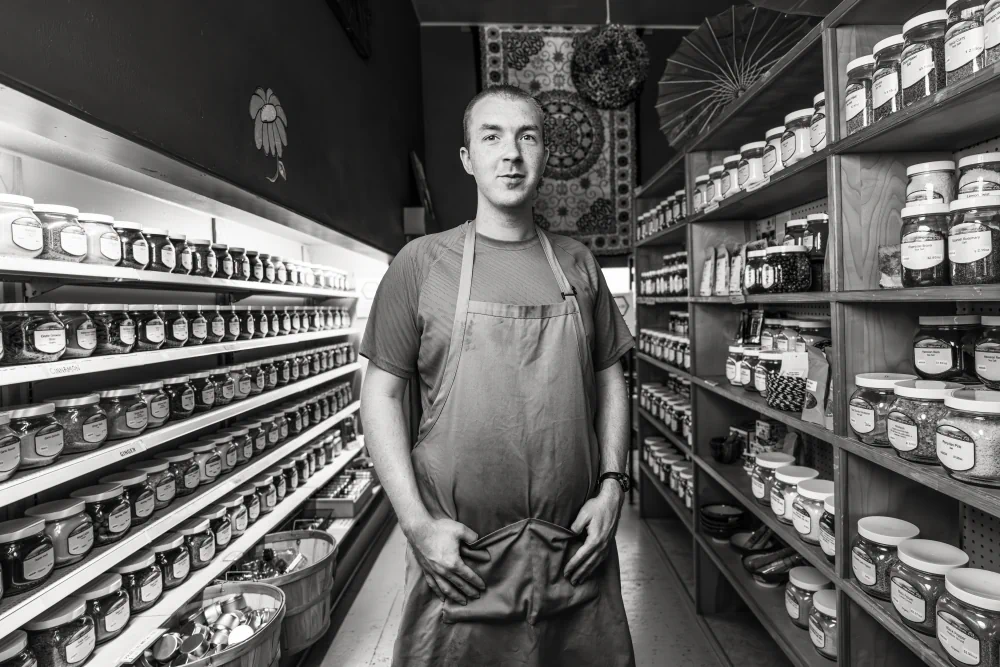
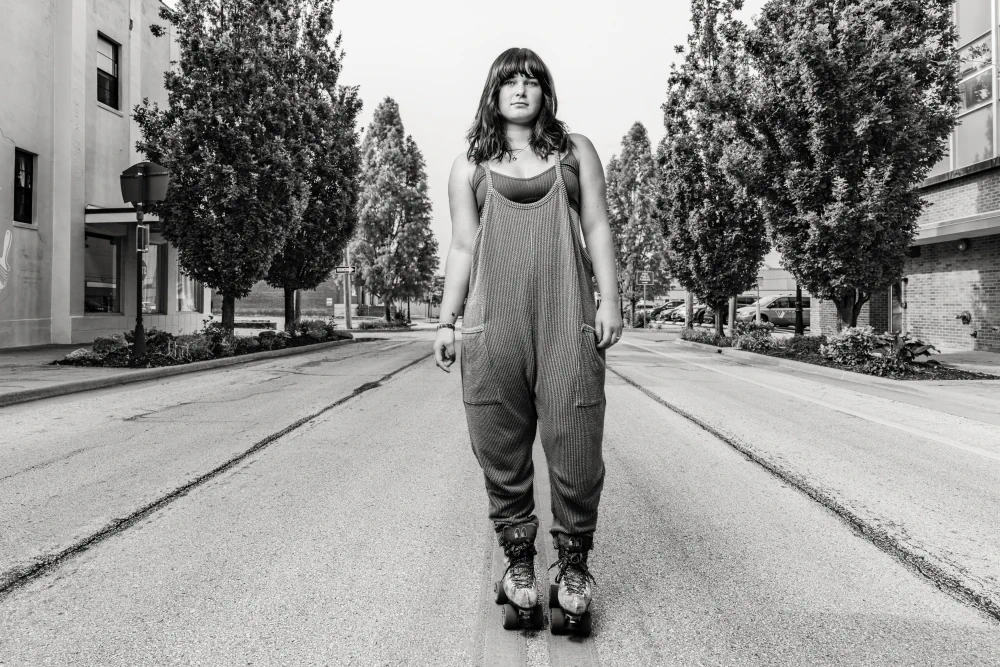
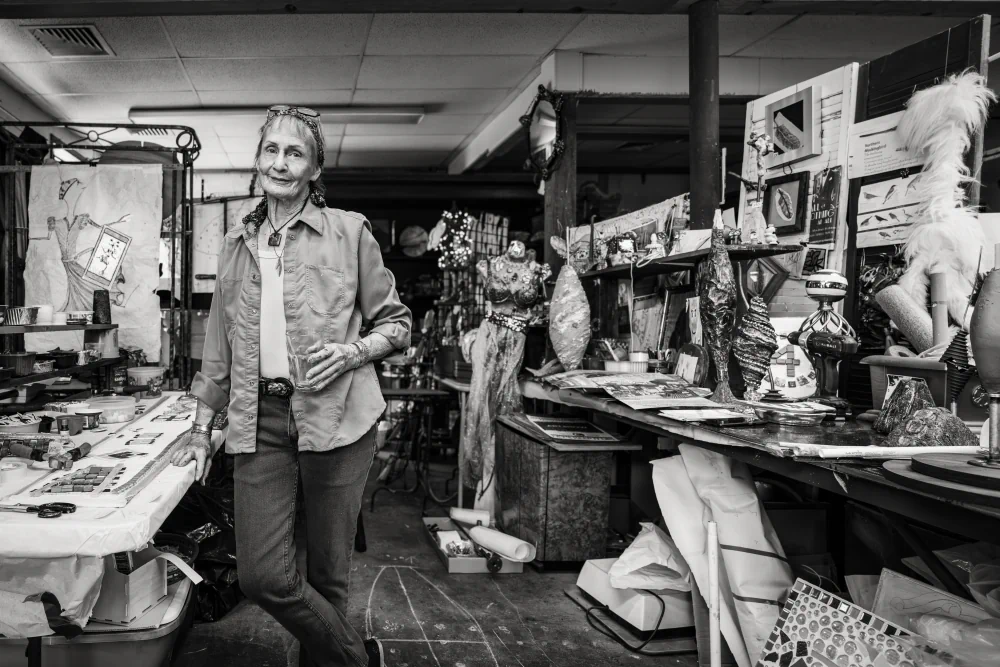
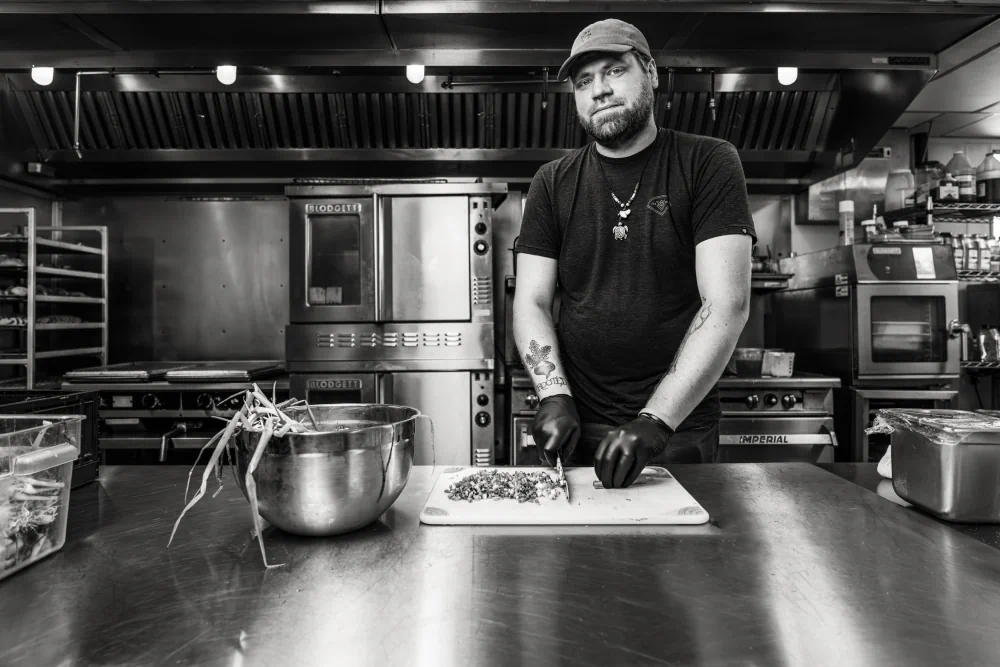
Love Your Neighbor grew from the desire to slow down and create space for genuine human connection. Bacon began inviting people who live, work, or spend time on Commercial Street to participate in a portrait and a conversation. Some were individuals he already knew well, but many were people he had only encountered in passing. Each participant was photographed in their own environment inside shops, kitchens, studios, bars, gyms, restaurants, and workplaces, or sometimes directly on the street itself.
These environments are not simply backdrops. They are part of the story. The spaces where people spend their days often reveal something essential about who they are. A baker surrounded by fresh dough and flour. A tattoo artist framed by the drawings that inspire their work. A barber standing behind a chair where conversations unfold day after day. A shop owner surrounded by objects that reflect years of passion and curiosity. In each portrait, these spaces become quiet collaborators, offering subtle clues about the rhythms and textures of a life.
The goal was never simply to photograph people, but to create portraits that felt deeply rooted in their world.
After each portrait was made, Bacon asked every participant the same series of questions about life. Questions about love, fear, purpose, hope, loss, and what truly matters to them. There was no preparation and no expectation. Participants did not know the questions in advance, and each person answered them in the same order.
This simple structure created an unexpected level of honesty.
Without time to rehearse or shape a response, people often spoke from instinct and vulnerability. What emerged from these conversations was far deeper than Bacon had imagined when the project began. Again and again, individuals opened their hearts and shared stories of resilience, grief, forgiveness, joy, and the quiet ways they try to make the world a little better.
What proved most striking was not the differences between people, but the similarities.
Despite the wide range of personalities, professions, ages, and life experiences represented in the portraits, certain themes surfaced repeatedly. People spoke about love love for family, partners, friends, and community. They spoke about the pain of loss and the courage required to keep moving forward. They talked about dreams they still hoped to pursue, fears they carried, and the desire to leave a meaningful mark on the world.
Beneath all of it lay a shared human longing to be known, to be heard, to matter, and to belong.
Gradually, this realization transformed Bacon’s understanding of the project. What began as a local exploration of a single street began to reveal something much larger.
Although every portrait in Love Your Neighbor was created along Commercial Street in Springfield, the work is not truly about that specific place. The street simply became a stage where a broader human story could unfold. The individuals photographed here reflect the unique character of this neighborhood, yet the emotional truths contained in their stories reach far beyond it.
In reality, this project could take place in almost any community in the world.
Every town, city, and neighborhood is filled with people whose lives intersect quietly every day. We share sidewalks, coffee shops, grocery stores, and public spaces without ever pausing long enough to truly understand the people around us. It is easy to assume we know someone based on a quick impression or a familiar face. Yet beneath these surface encounters exist entire universes of experience stories shaped by love, hardship, resilience, faith, humor, and hope.
For Bacon, portrait photography has always been about creating space for people to be seen beyond appearances. The camera is a powerful tool, but in projects like this it becomes something more than a device for making images. It becomes an invitation to listen.
In many ways, the photographs represent only half of the project. The conversations are equally essential. The portrait captures a moment in time, while the words reveal the inner landscape of a person’s life.
Together, the images and stories form a collective portrait not just of individuals, but of shared humanity.
At a time when it can feel easier to divide ourselves into categories of difference, Love Your Neighbor offers a quieter alternative. It suggests that the simple act of listening truly listening can become a powerful bridge between people.
The project does not attempt to solve problems or offer conclusions. Instead, it invites viewers to slow down, to look more closely, and to recognize the depth of life that exists in the people around them.
Because sometimes the most extraordinary stories are waiting just across the street.
And sometimes the person we pass every day may be carrying a story that reminds us how deeply connected we all truly are.