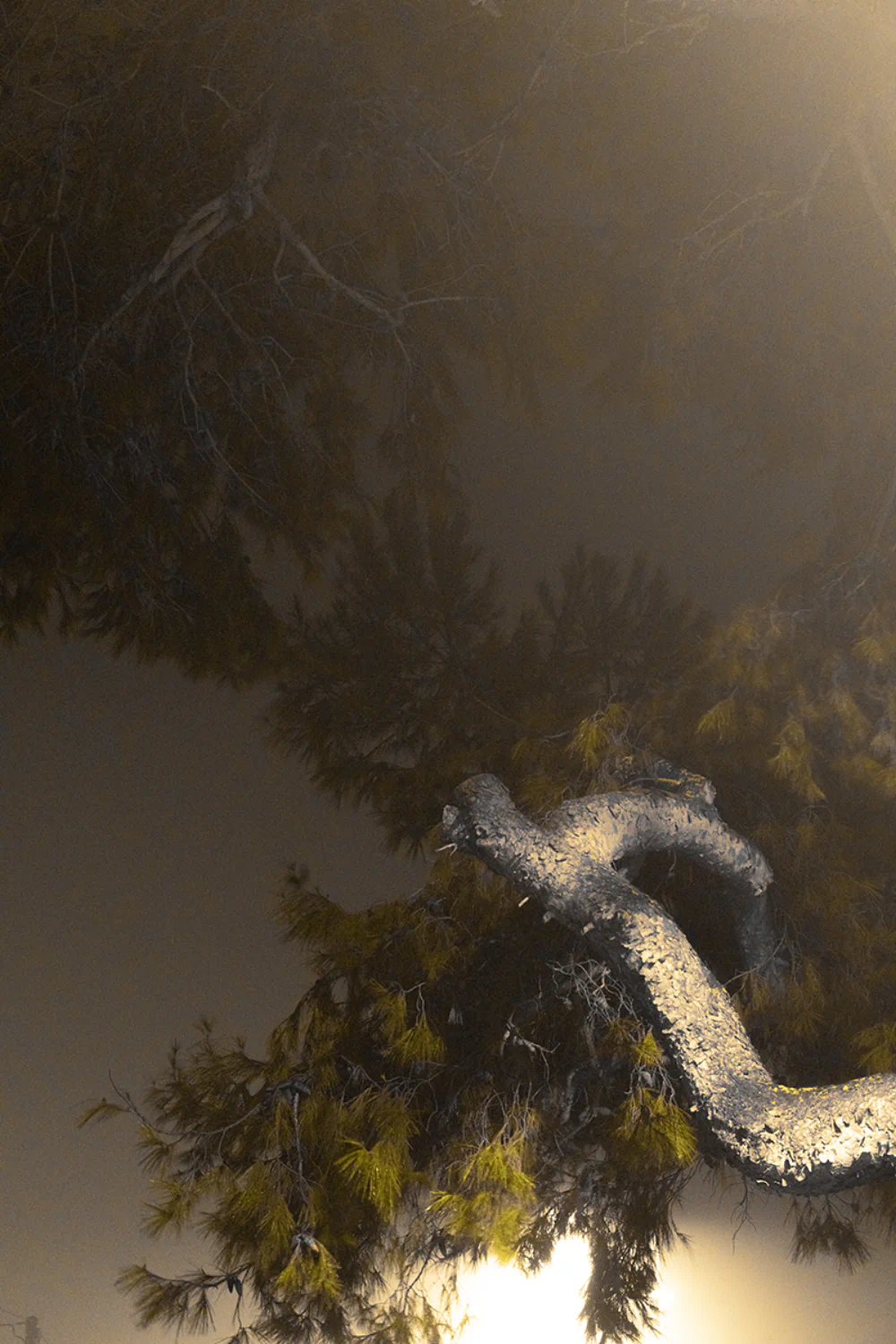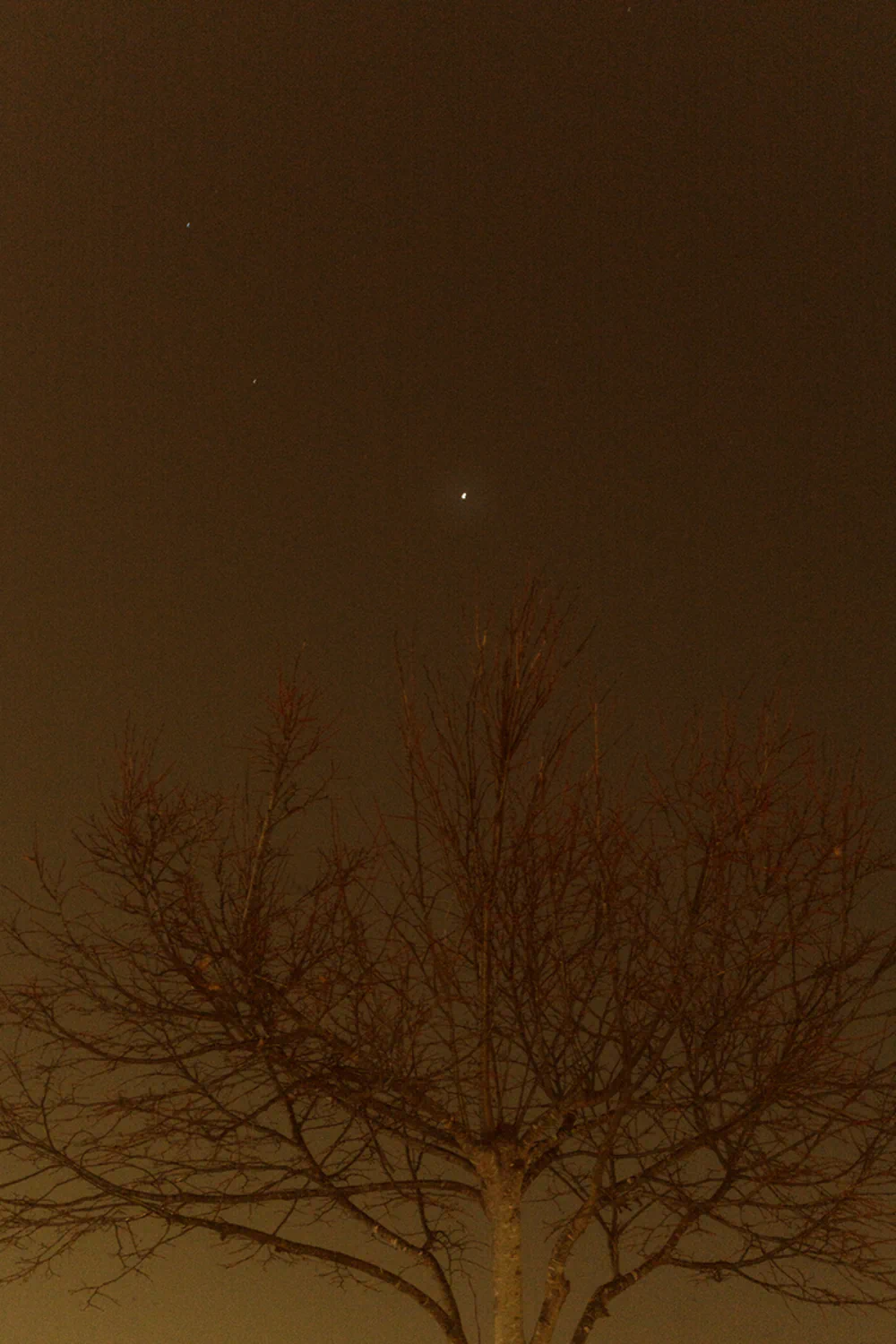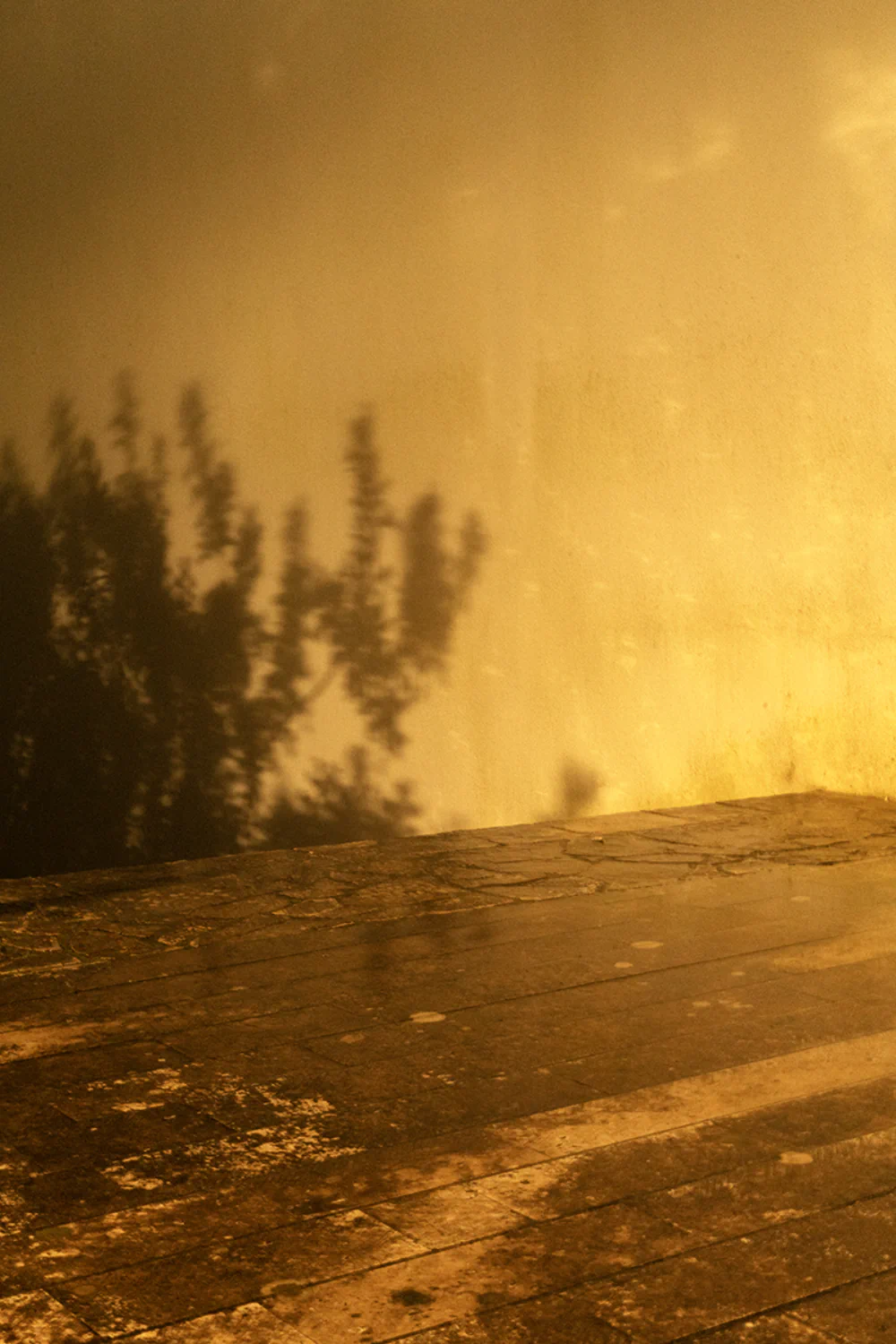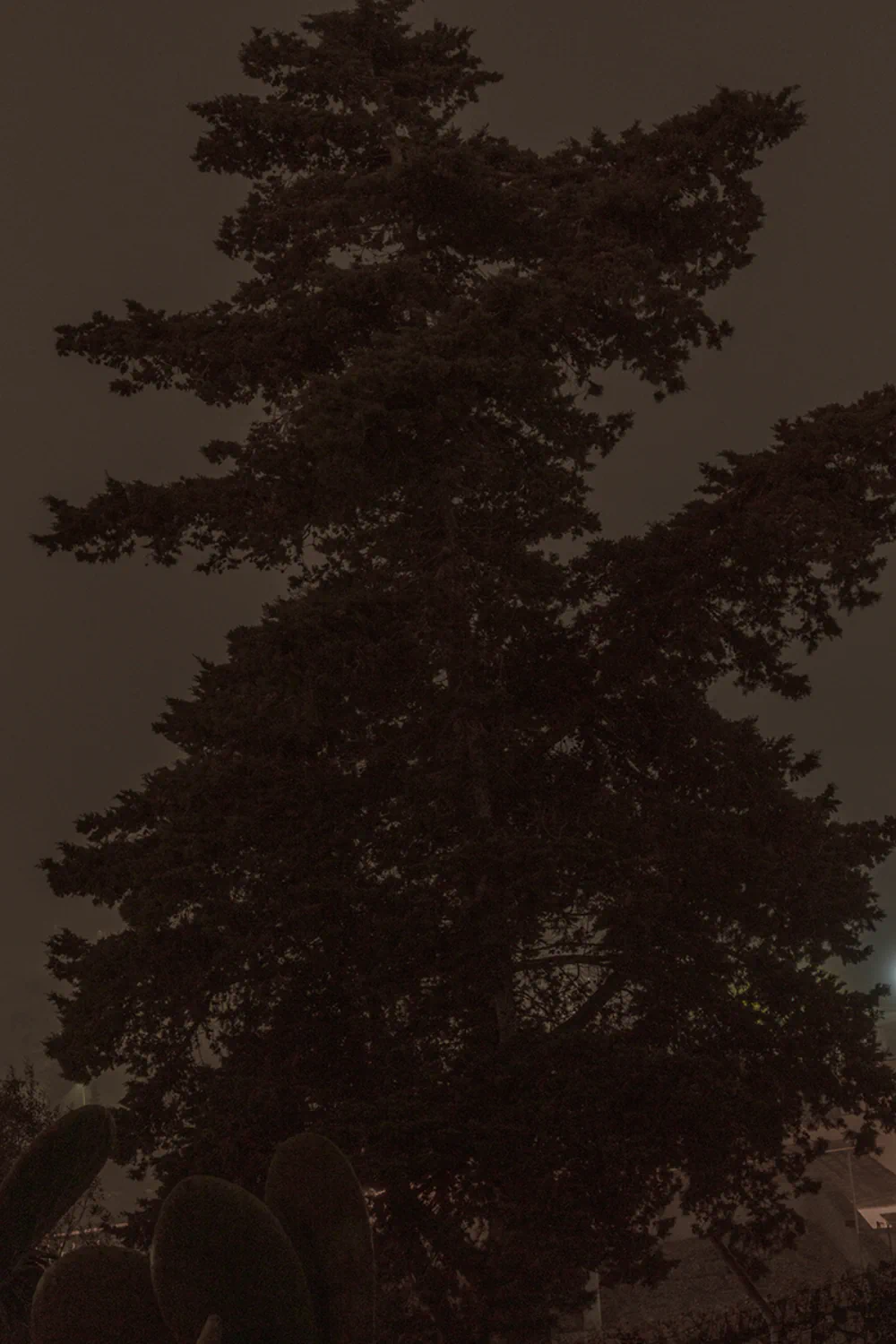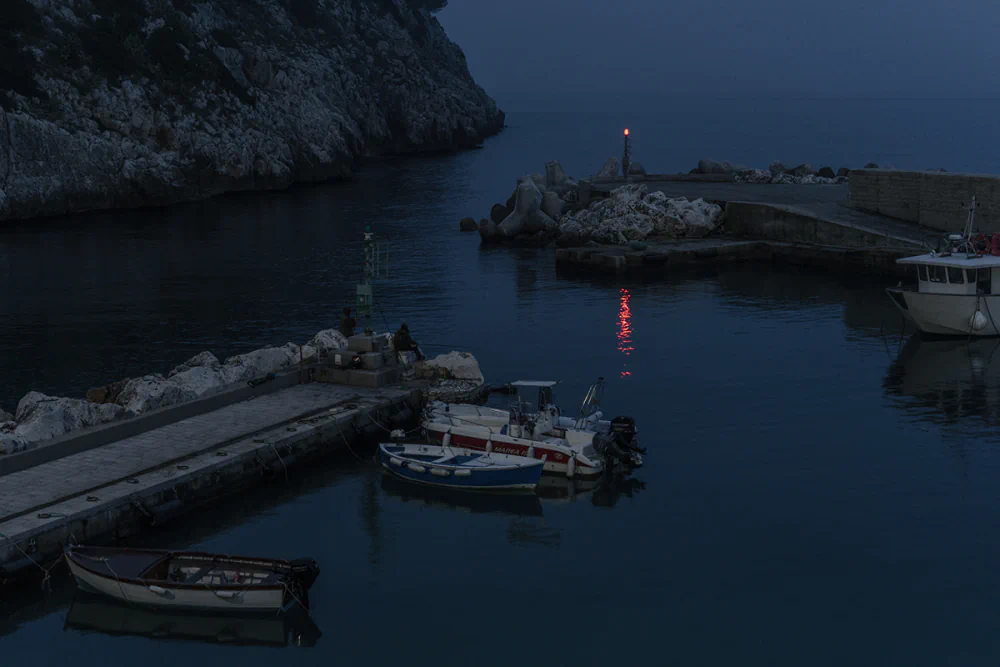
The photographs from this series were taken in a small windswept seaside town called Castro, which sits on the Adriatic coast in the southernmost part of Puglia, the southernmost region of Italy.
Castro lies only 20 miles north of the very tip of Puglia, where the Adriatic Sea and the Ionian Sea converge.
To say Castro is remote would be an overstatement, but not by much. Puglia’s main industry is the production of olive oil. Its olive trees cover the rural landscape as far as the eye can see. Nestled within the olive groves, small soft warm toned limestone buildings punctuate the green farmland.
Tourism is another important industry in Puglia. The more popular area lies west along the Gulf of Taranto, where Italians flock to the sandy, shallow beaches and the brightly colored lidos.
The coastline along the Adriatic is an altogether different story. There are few sandy beaches here, at least not like the long, shallow stretches of sand along the Gulf of Taranto. Instead, the coastline is formed from the ubiquitous limestone shaped by wind and water.
During the summer, Italians spend the hot days sunning themselves on the warm rock at the edge of the blue water, as they have done for centuries. For visitors seeing it for the first time, it may seem like a strange sight, people relaxing on hard stone. Yet once one makes their way down to the water and lies on the rock, it quickly becomes the most natural thing in the world.
As the summer months recede, the colder season arrives. Tourists leave. Businesses that depend on tourism close their doors. The Adriatic turns a deeper, colder blue. Castro’s buildings, made from the prevalent Lecce stone, seem to grow colder as well. Its inhabitants retreat indoors for warmth, and the town grows quiet.
Across much of Puglia the houses and buildings are squat and humble, subordinate to the flat countryside, the great rock cliffs, and the open sea. Storms advance across the landscape, dwarfing everything in their path. Here, weather is king.
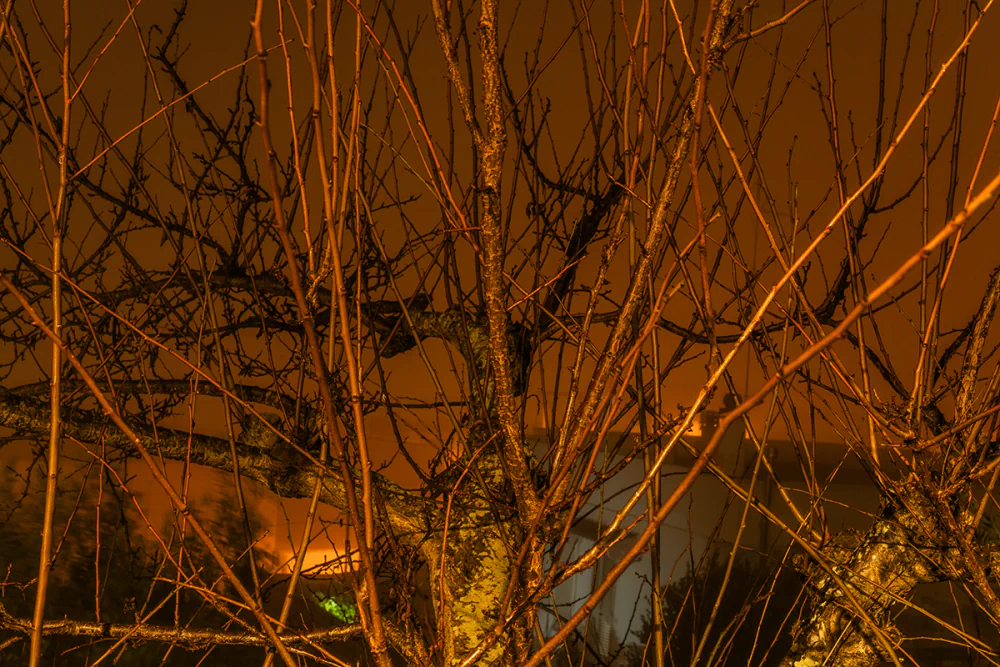
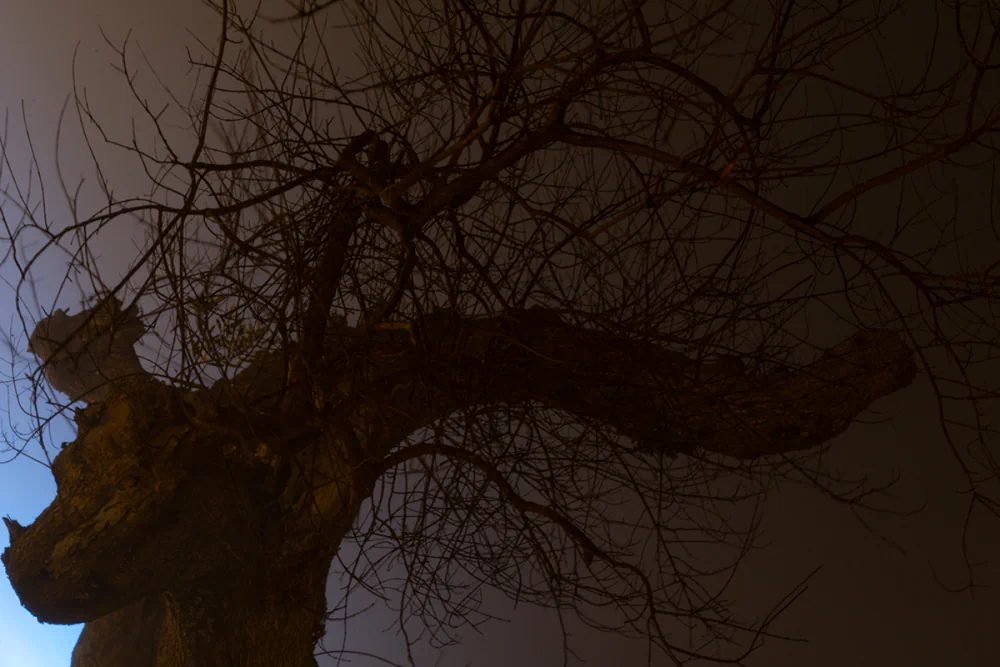
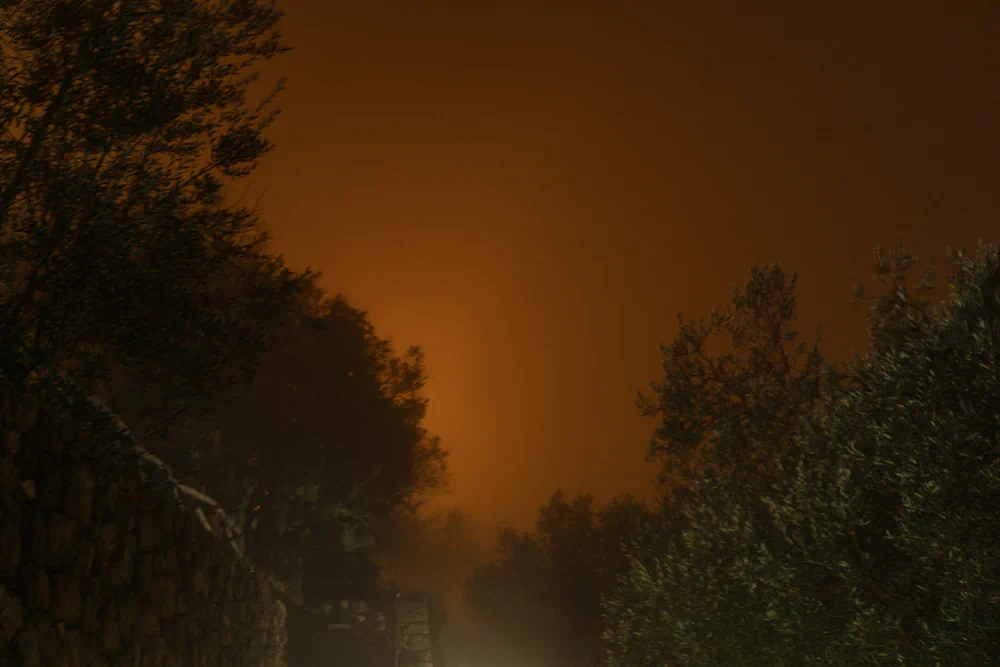
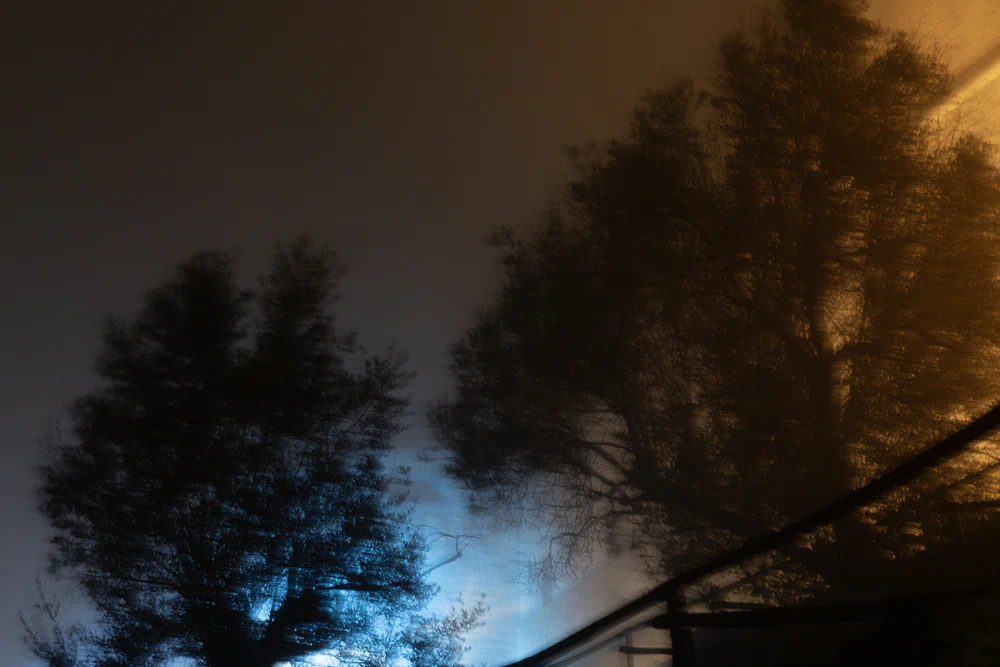
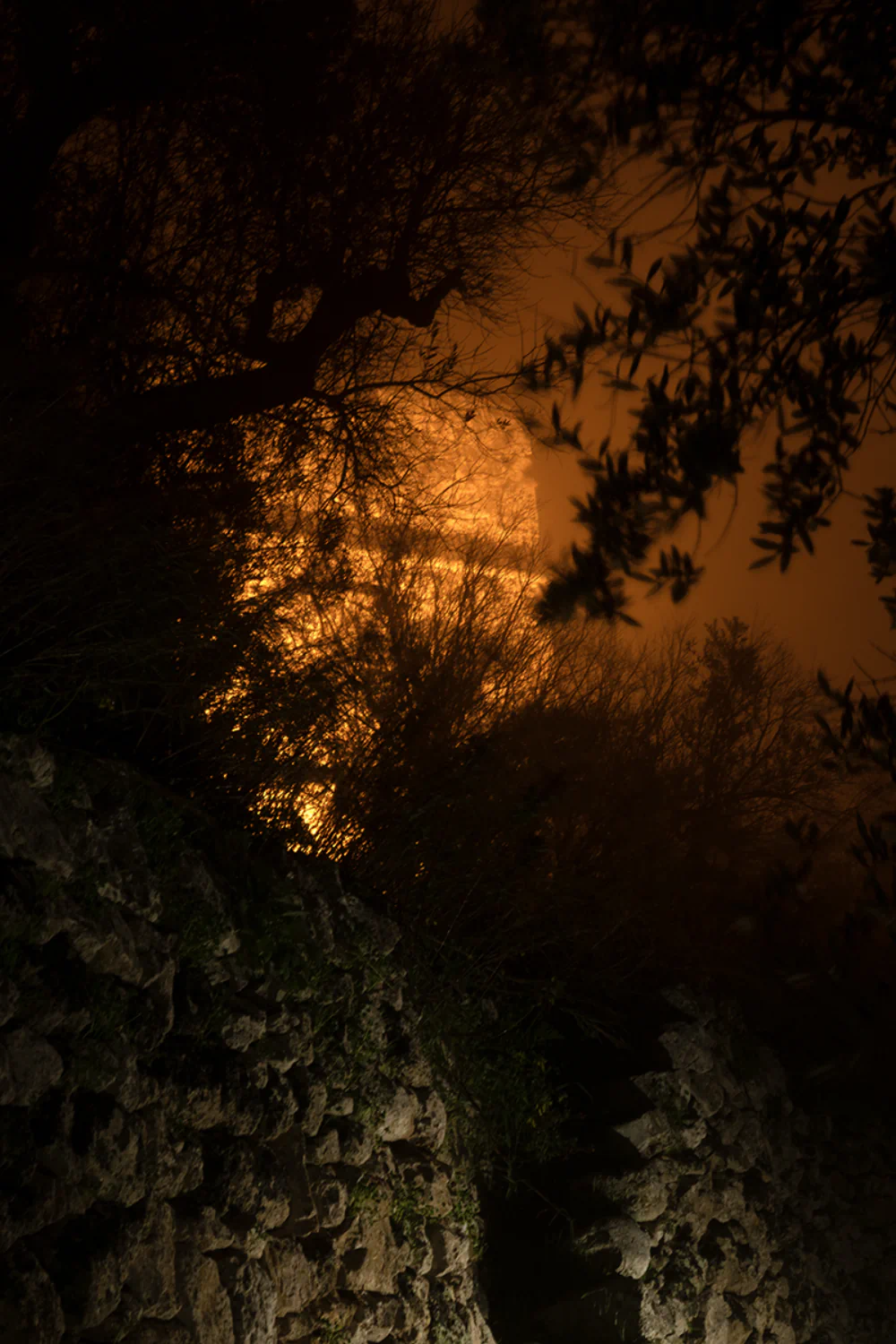
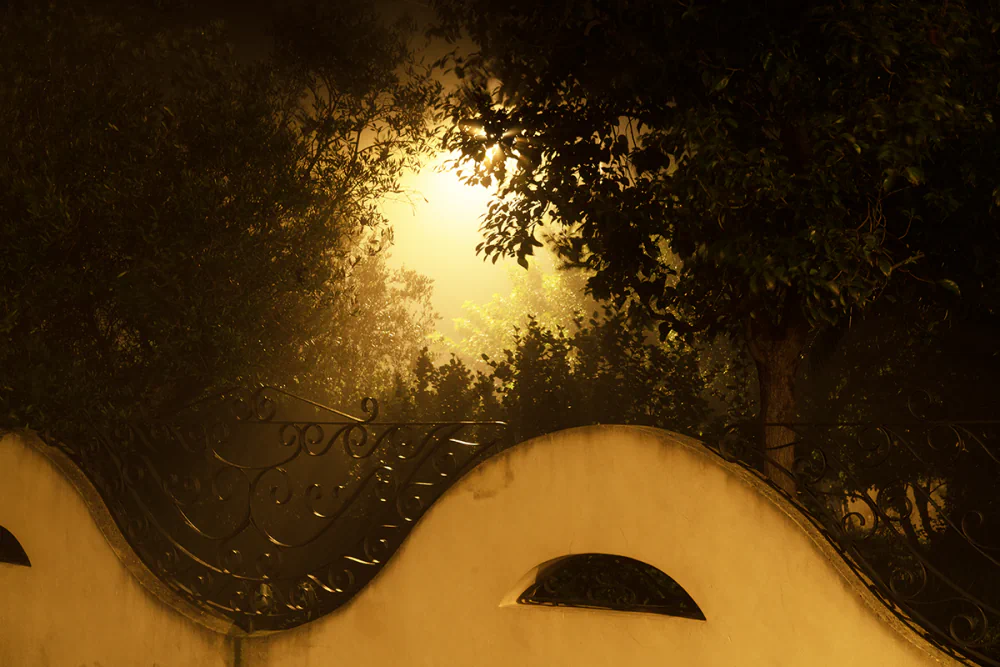
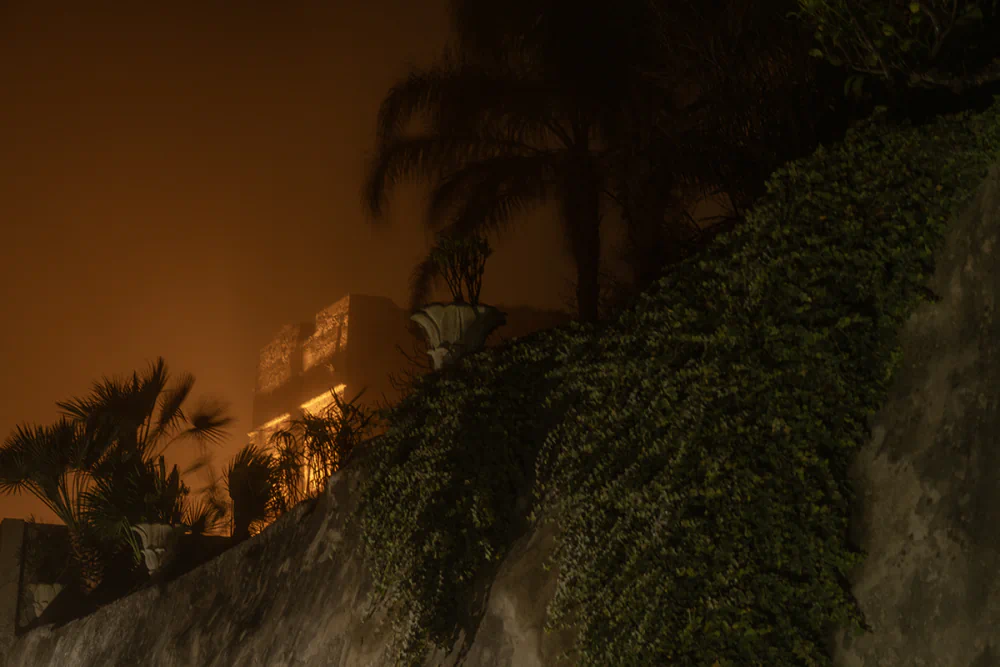
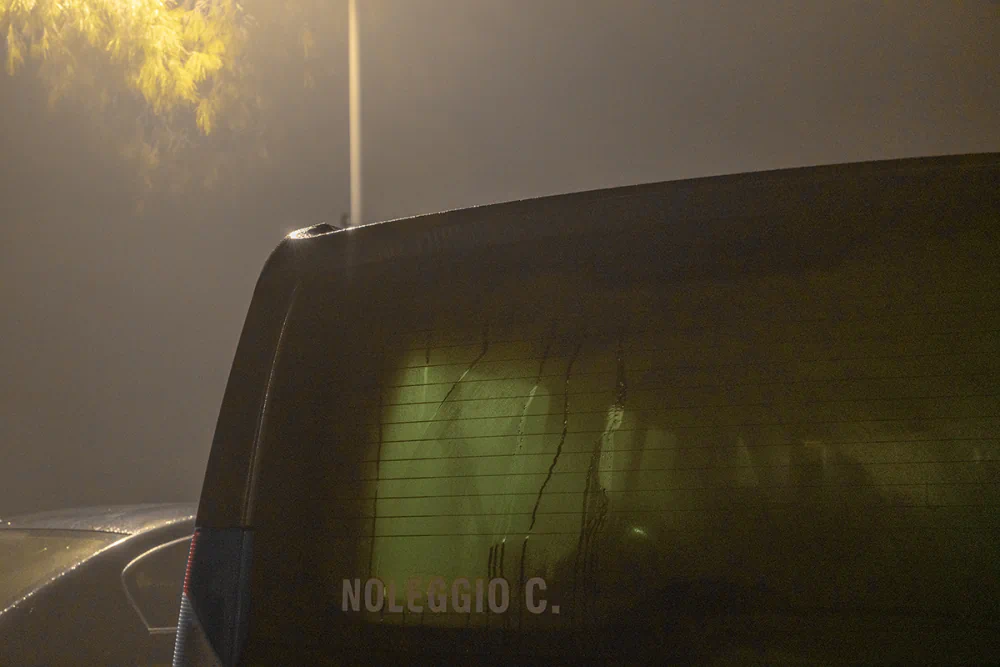
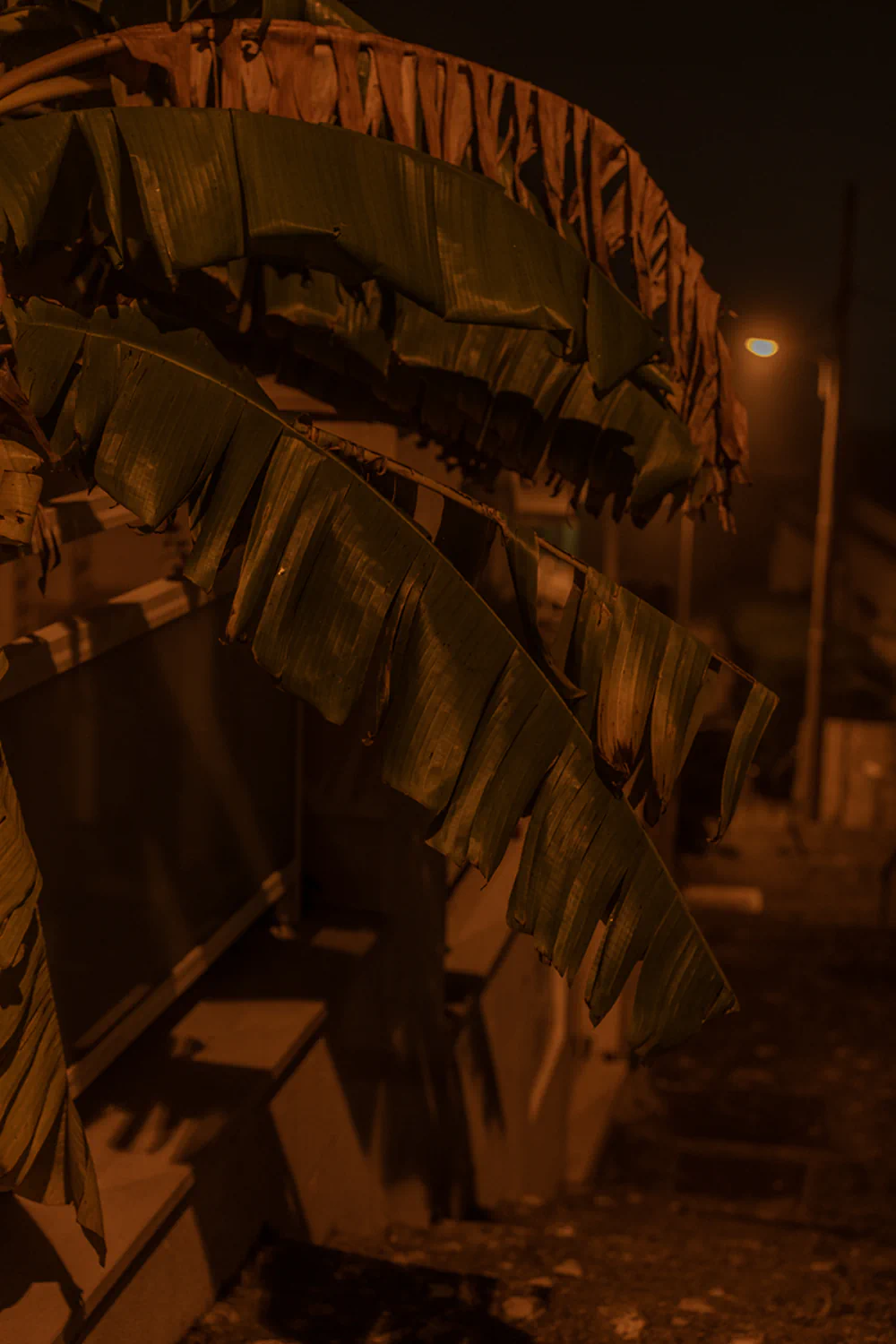
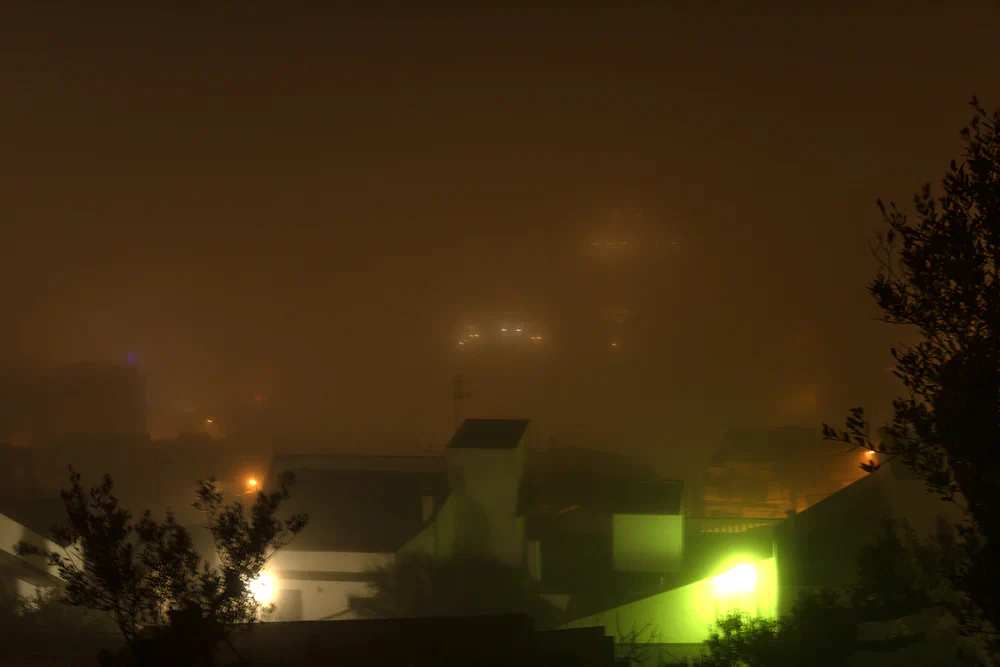
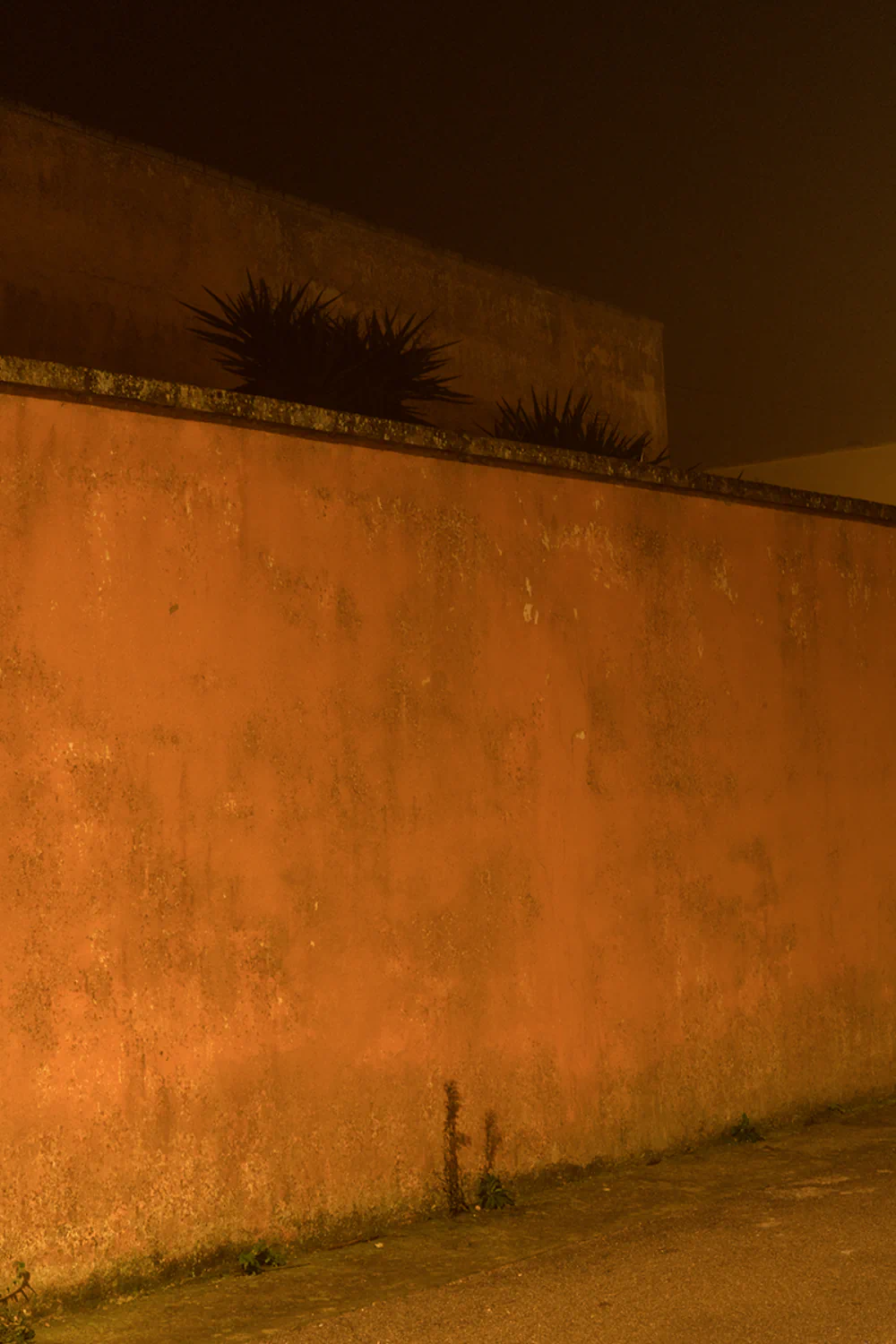
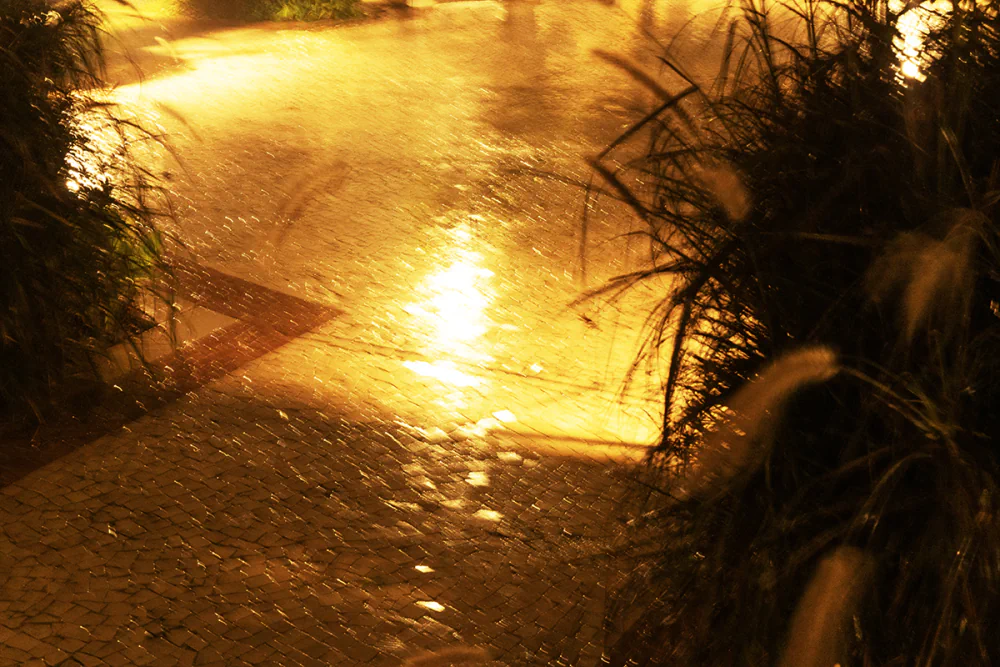
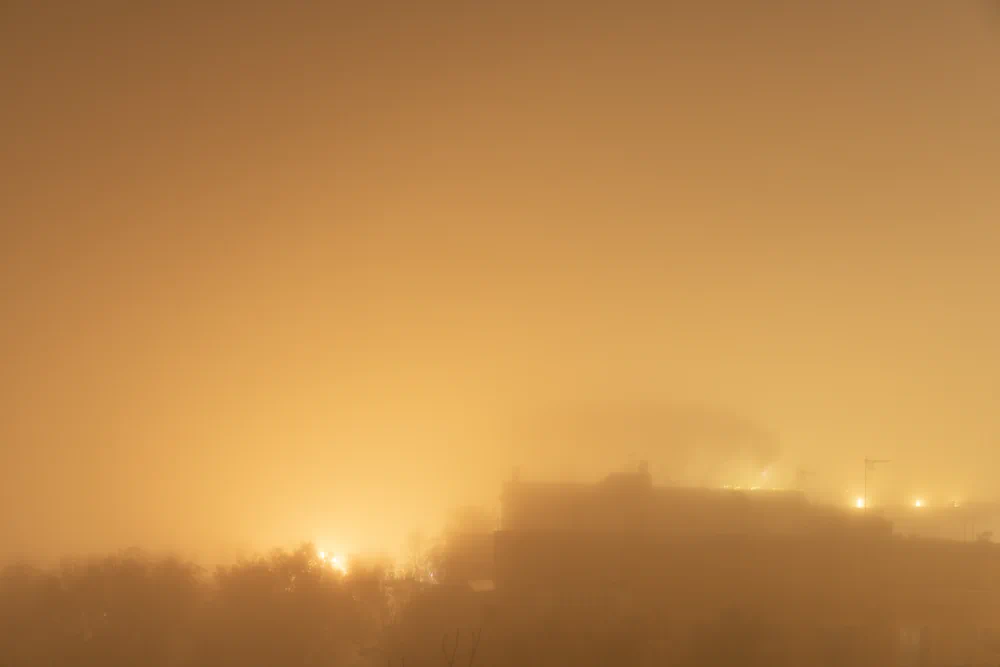
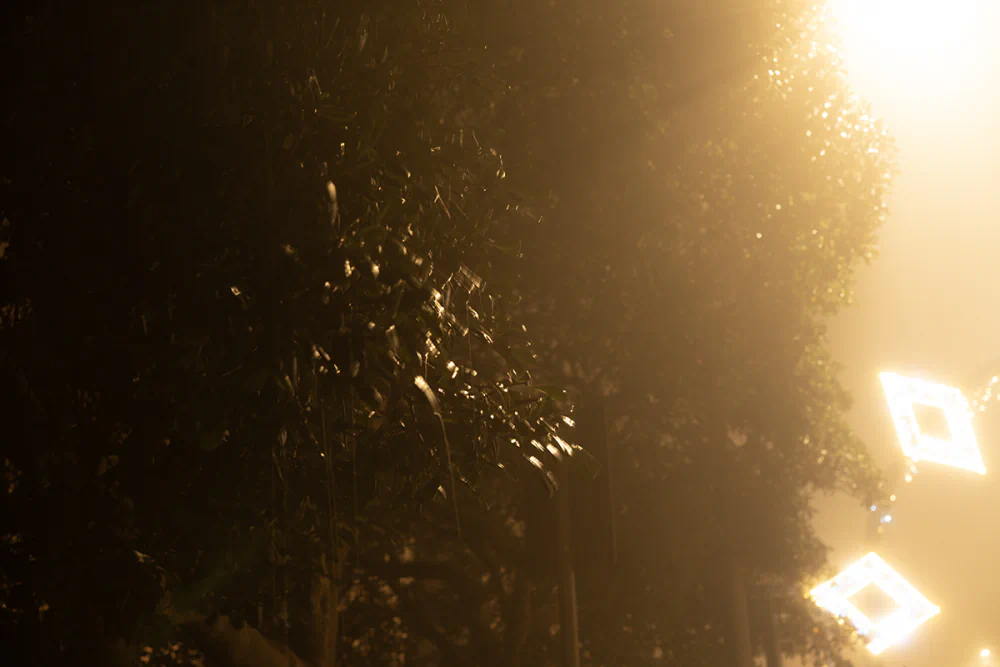
Fog behaves differently. It is a stealthy presence. It arrives during the cold winter months and moves so silently that its approach often goes unnoticed. Only when looking outside does one see the yellow sulfur glow of the street lamps cutting through the night fog. Like some great leviathan, the fog rolls in from the cold Adriatic and swallows the town whole.
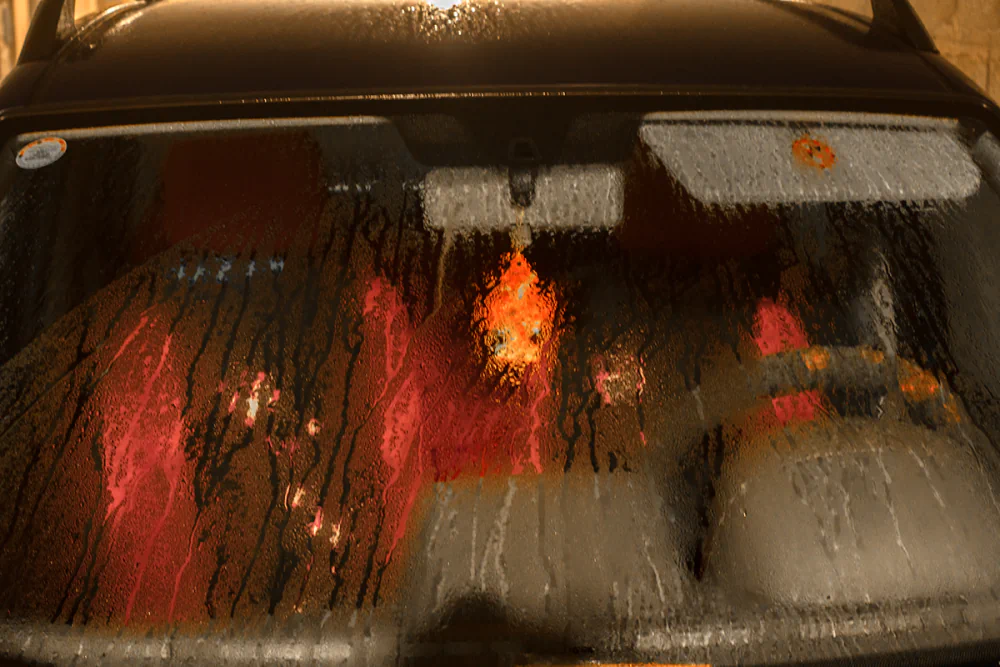
In those moments, the fog is damp and the town deserted. Although the air is cold, the sulfur street lamps cast a warm radiance. It is a curious contradiction. Produced during the month of December 2025, this series is a rendering of that contradiction.