Not every photographer needs to travel the world to build a monumental body of work.
Some find an inexhaustible universe on the corner of their own street, in the silhouette of their partner, or in the same block photographed for decades. Harry Callahan belongs to that rare lineage of artists who proved that depth does not depend on exoticism, but on the intensity of seeing.
Born in 1912 in Detroit, Callahan did not begin his career as a professional photographer. He initially worked in the industrial sector, and it was only in 1938 that he bought his first camera. He had no formal academic training in photography; what he had was obsession. The obsession to look every day. To photograph every day. To turn repetition into a permanent laboratory.
His encounter with Ansel Adams in 1941 was decisive. After attending one of his lectures, Callahan decided to devote his life entirely to photography. Yet while Adams represented technical precision and the monumentality of landscape, Callahan soon moved in a different direction. His territory was not the national park; it was the city. Not natural grandeur, but urban geometry and domestic intimacy.
In 1946 he was appointed professor at the Institute of Design in Chicago, heir to the American Bauhaus. There he shared an intellectual environment shaped by modernist experimentation. But Callahan was not a theoretical photographer in a strict sense. He was a radical practitioner. His method was simple and relentless: walk every day and photograph. Repeat the route. Return to the same frame. Explore minimal variations until the image ceased to be descriptive and became structure.
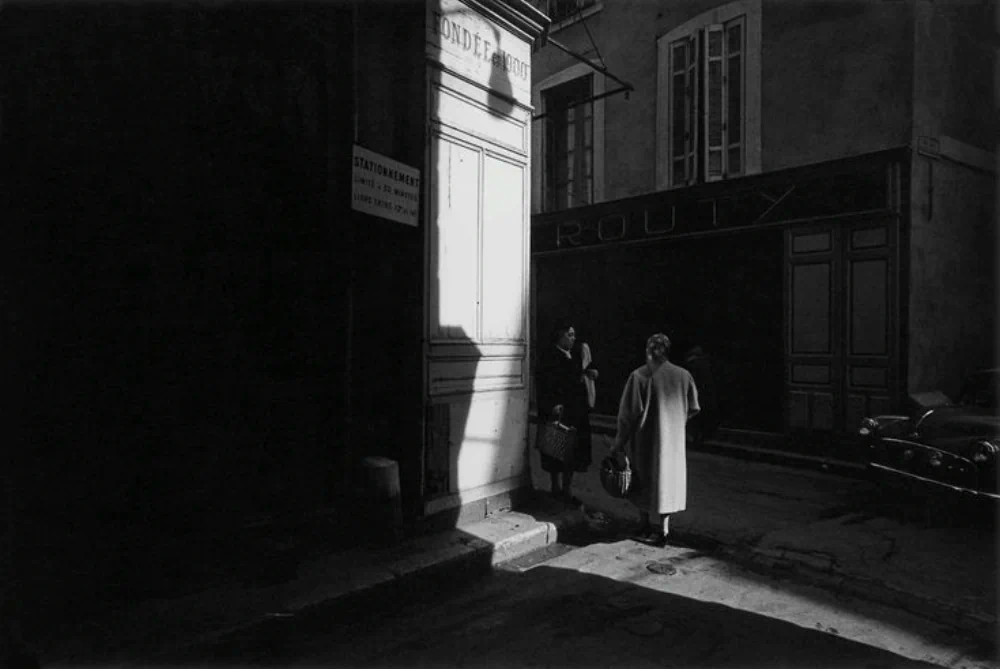
Chicago became his laboratory. Its façades, shop windows, shadows cast by skyscrapers and telephone poles turned into pure lines and visual rhythms. Callahan isolated human figures until they became small points within dominant architecture. The individual appeared almost insignificant against urban geometry. This reduction was not dehumanization; it was awareness of scale.
His work demonstrates that modernity was not merely a subject but a language. Vertical lines, repeating windows, diagonal shadows slicing through the frame. Each photograph seems constructed with the precision of an architect, yet without losing the organic vibration of the street.
Eleanor: The Portrait as Intimate Territory
Love, Repetition and the Body as Landscape
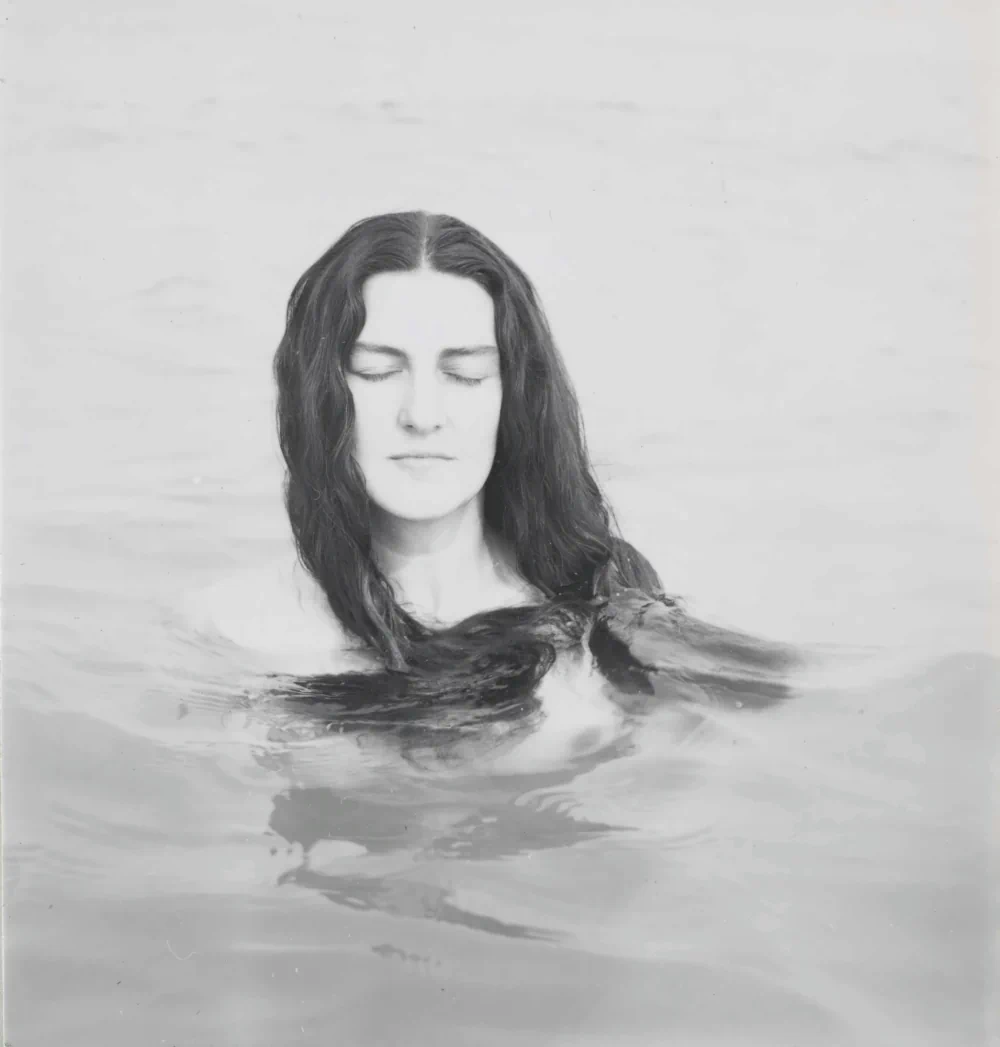
If Chicago was his formal laboratory, Eleanor was his emotional epicenter. Eleanor Knapp, his wife, is one of the most photographed figures in the history of photography. For more than twenty years, Callahan photographed her indoors, on empty beaches, clothed, nude, fragmented, distant or close.
The insistence might appear obsessive, but it was investigation. Each portrait did not attempt to define her, but to rediscover her. Repetition did not produce monotony; it produced depth.
In some images, Eleanor appears tiny against expanses of sand or sky, almost absorbed by the landscape. In others, her body occupies the frame directly, without artifice. Sometimes light carves her silhouette with sculptural delicacy; at other times extreme contrast transforms her figure into abstraction.
What is extraordinary is that Callahan does not eroticize in a conventional sense. There is no theatricality, no unnecessary dramatization. There is instead a kind of naked honesty. The body becomes both formal study and emotional bond.
In a context where the female nude was loaded with aesthetic conventions, Callahan simplified it into form and light. Eleanor is not object; she is presence. And that presence changes over time. We see youth, maturity, transformation. We see the passing of life inscribed on skin.
This temporal dimension turns the project into more than a series of portraits. It becomes a visual diary. A shared autobiography. A sustained record of intimacy across decades.
Radical Experimentation
Multiple Exposure, Abstraction and the Limits of Representation
To reduce Callahan to a photographer of intimacy would be a mistake. His formal experimentation was constant and bold. He worked with double and multiple exposures, creating images in which figures overlap and dematerialize. Exploring these techniques in the 1940s and 1950s required extreme technical precision. There was no digital margin for correction; every decision was final.
In his multiple exposures, the city becomes a ghost of itself. Figures repeat, shift, merge with their surroundings. Space loses stability. Photography ceases to be a window and becomes deliberate construction.
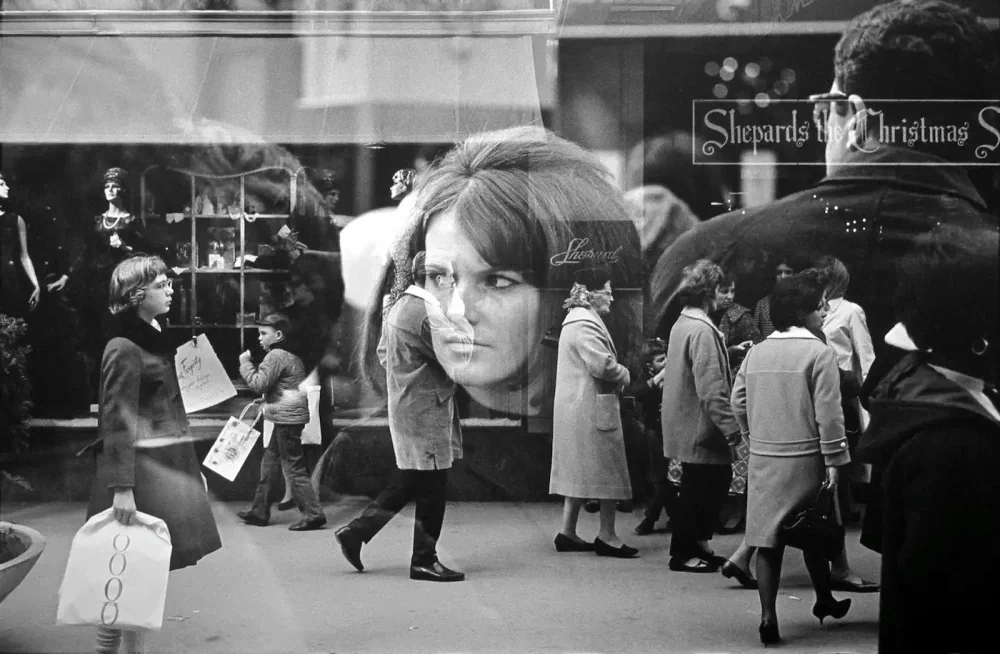
He also pushed abstraction to its limits. He photographed telephone poles against the sky until they became pure lines. In snow scenes, he reduced landscape to minimal contrasts where reference nearly disappears. Callahan understood that photography could approach painting without ceasing to be photography.
In 1961 he moved to Providence, where he taught at the Rhode Island School of Design. The geographic shift did not alter his method. He continued walking, observing, repeating. Daily discipline remained his engine.
His legacy is not only aesthetic; it is methodological. Callahan taught that photography does not depend on spectacular subjects, but on the constancy of the author. His daily practice is a blunt lesson for contemporary photographers: do not wait for the extraordinary image; build it from the ordinary.
The Silent Legacy
Minimalism, Rigor and Influence on Contemporary Photography
The influence of Harry Callahan is not measured in obvious imitations but in inherited attitudes. His minimalism, formal rigor and trust in repetition shaped generations of photographers.
In an era saturated with images, where massive production often replaces reflection, Callahan’s figure gains renewed relevance. His work reminds us that looking deeply at the same place can be more revolutionary than constant travel.
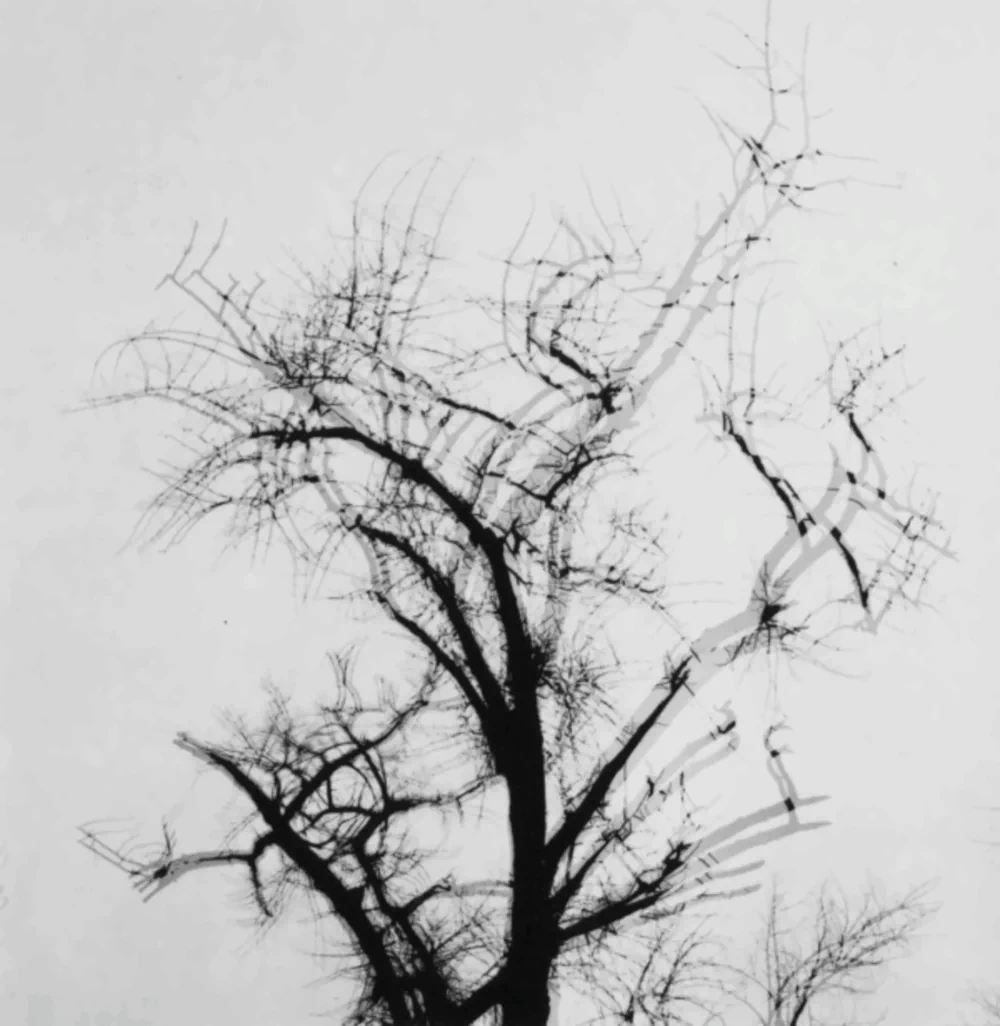
His photography is silent but not timid. Austere but not cold. Each image contains a precise tension between structure and emotion, between calculation and sensitivity.
Callahan died in 1999, but his lesson remains intact: greatness in photography does not depend on extraordinary events, but on the ability to transform the everyday into meaningful form.
To look at a photograph by Harry Callahan is to confront a simple and radical question: how many times are we willing to return to the same place until we discover something new?