

I have watched 550 Korean dramas, and I have probably cried at some point during every one.
Perhaps even more amazing to me is the fact that I am far from alone.
Since South Korea opened itself to the global market in the late 1980s, its popular culture has taken the world by storm. Though initially drawn in by the dramas, I quickly found myself captivated by South Korea more broadly. Please Come In is an invitation to experience this pull, rooted in my understanding of how South Koreans create and value community, communal pleasure, and shared emotional experience—which, for me, stands in stark contrast to the fragmented, individual-centered tendencies at the heart of contemporary American culture.
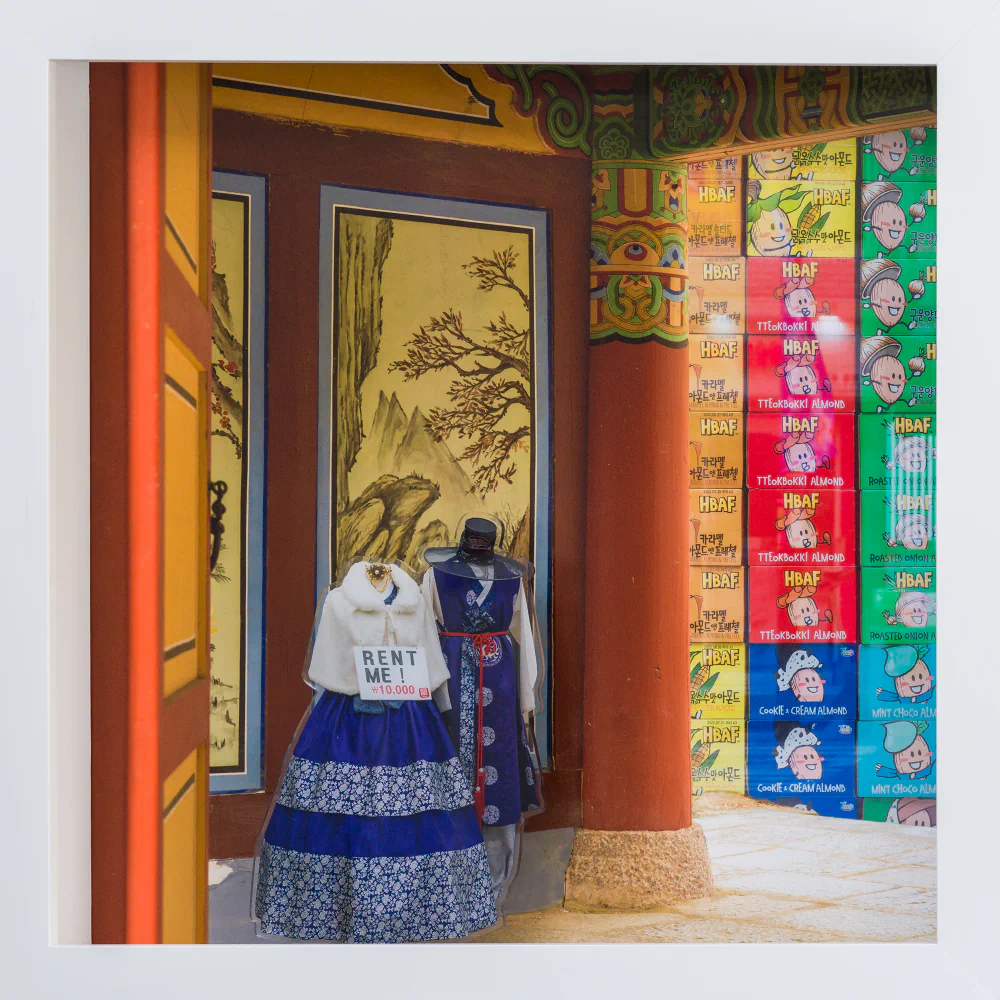
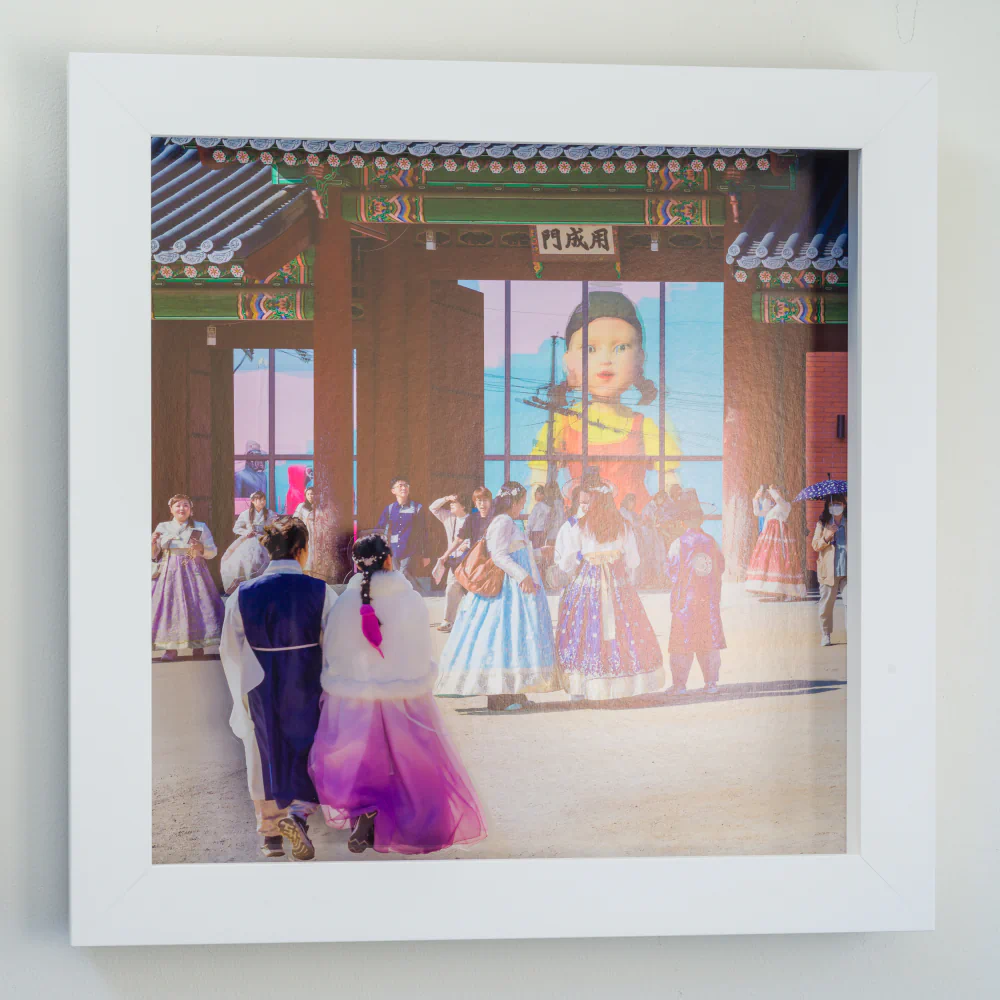
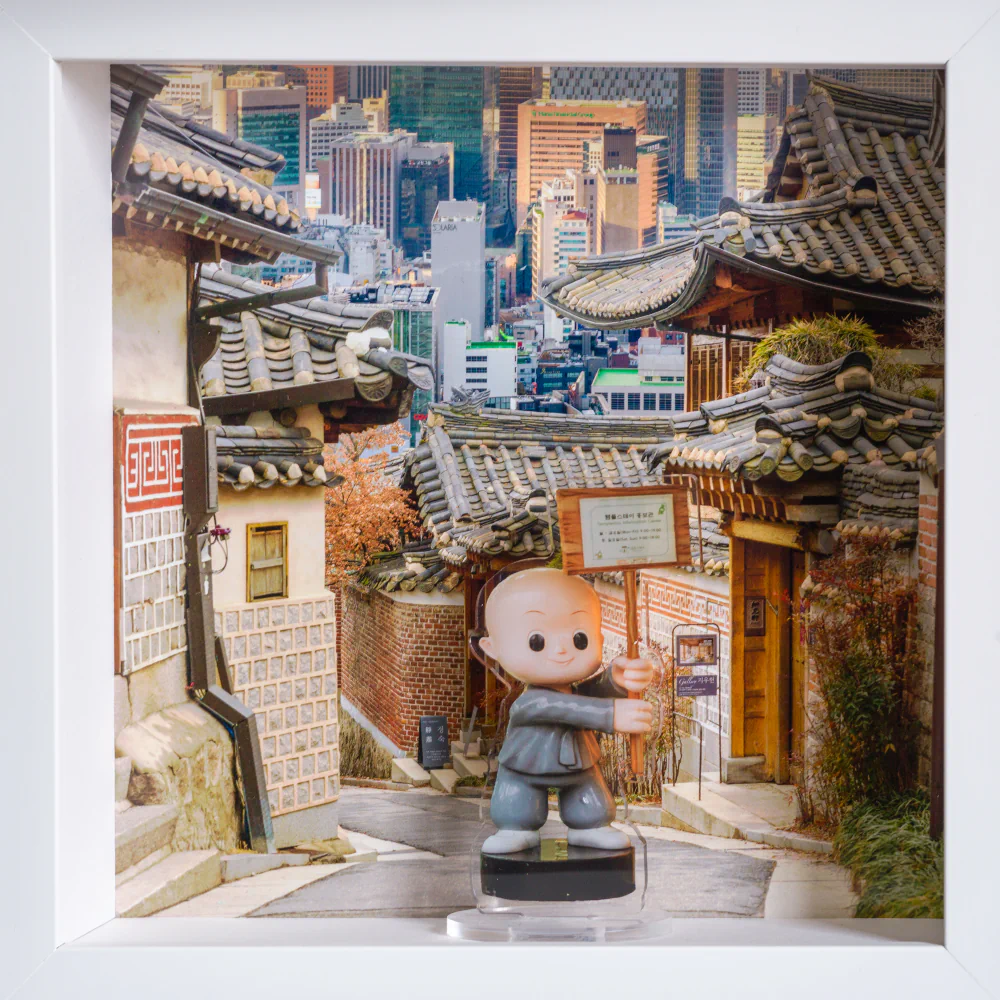
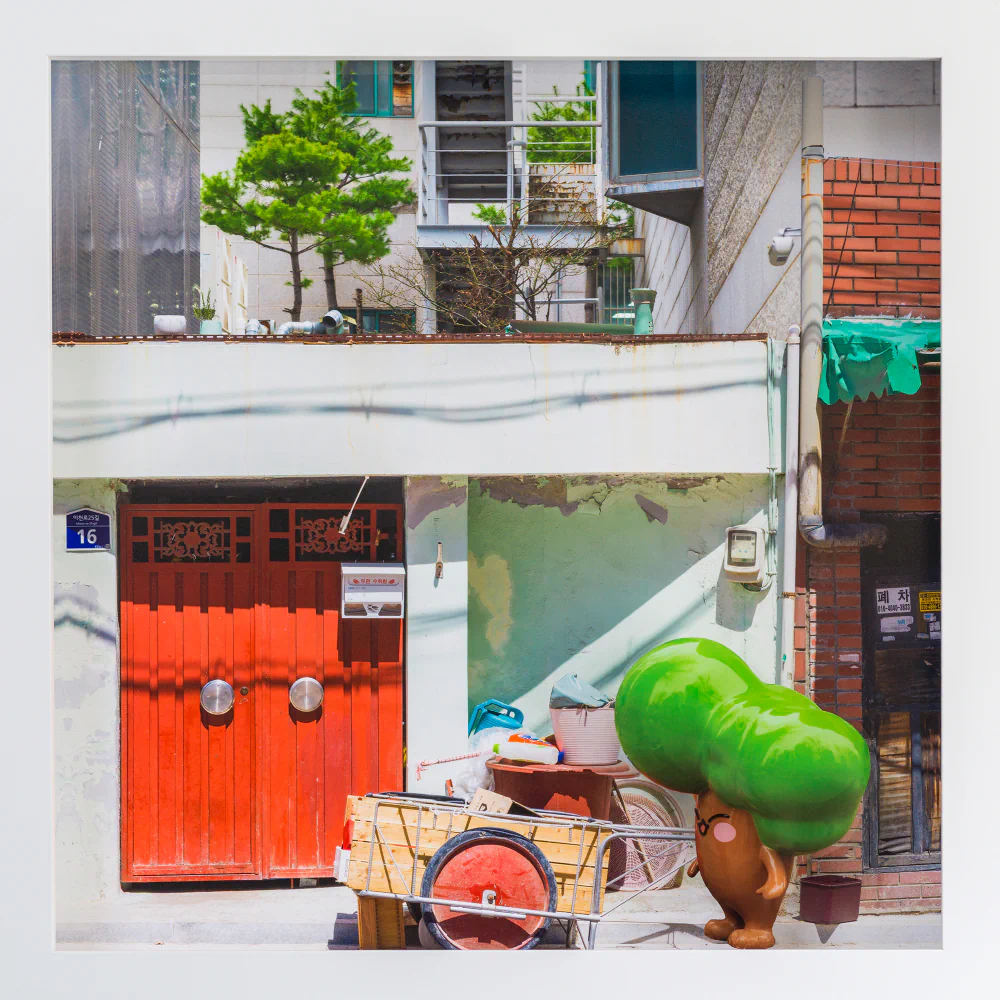
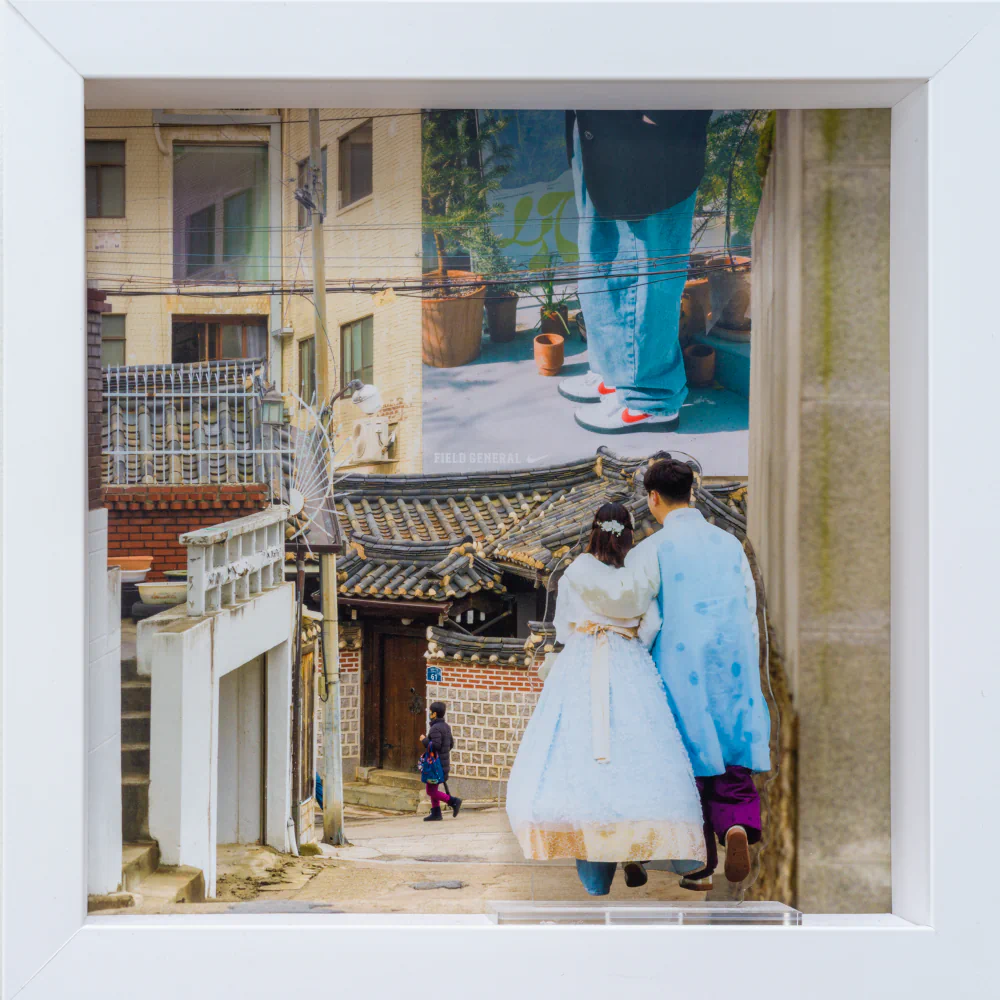
Visit Seoul, and multilingual signs inform visitors of social expectations: “Quiet. Residential neighborhood.” The request is sweetly delivered by a smiling, cartoon-like figure. “Rent Me,” reads another sign in front of a shop renting traditional Korean attire. These messages function as invitations to participate. In contrast to the rigor of Korean beauty standards and the competitive work and school environments, the imperfect nature of the city itself suggests that one can enjoy smaller pleasures and feel safe and welcome without the need for perfection.
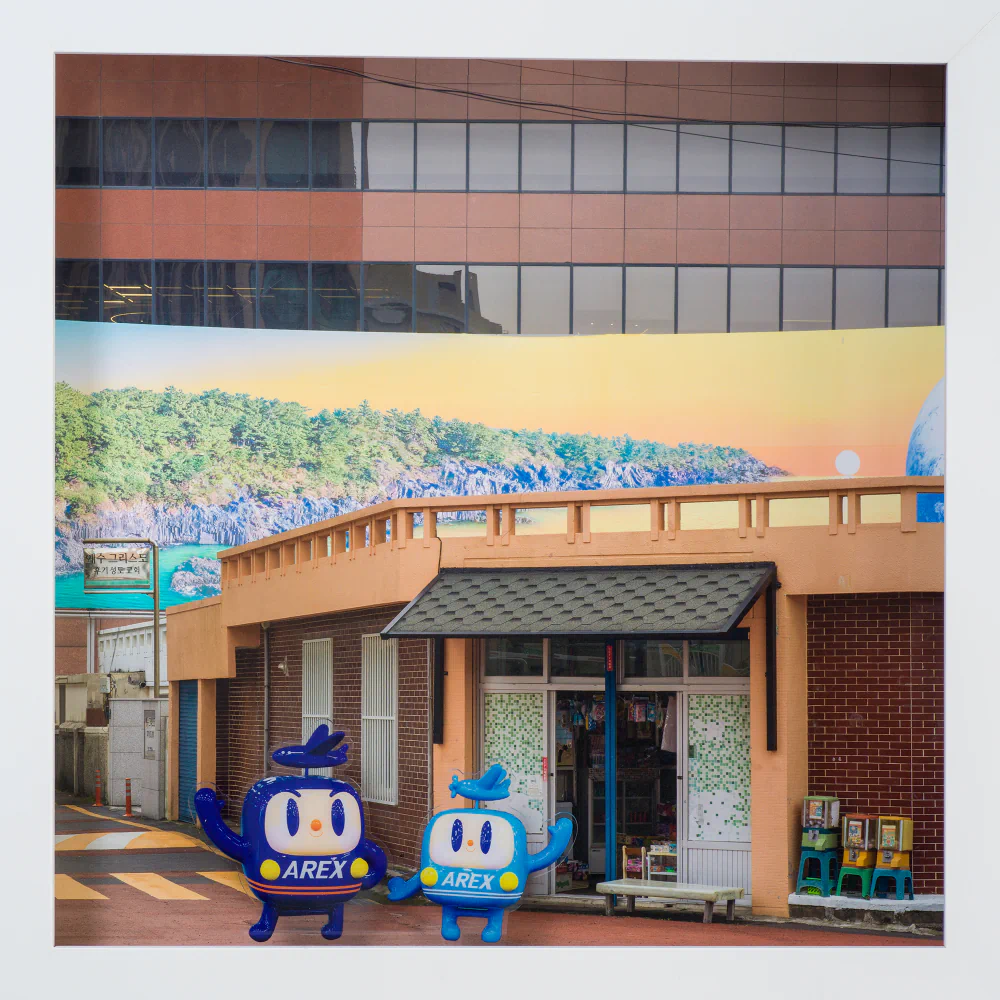
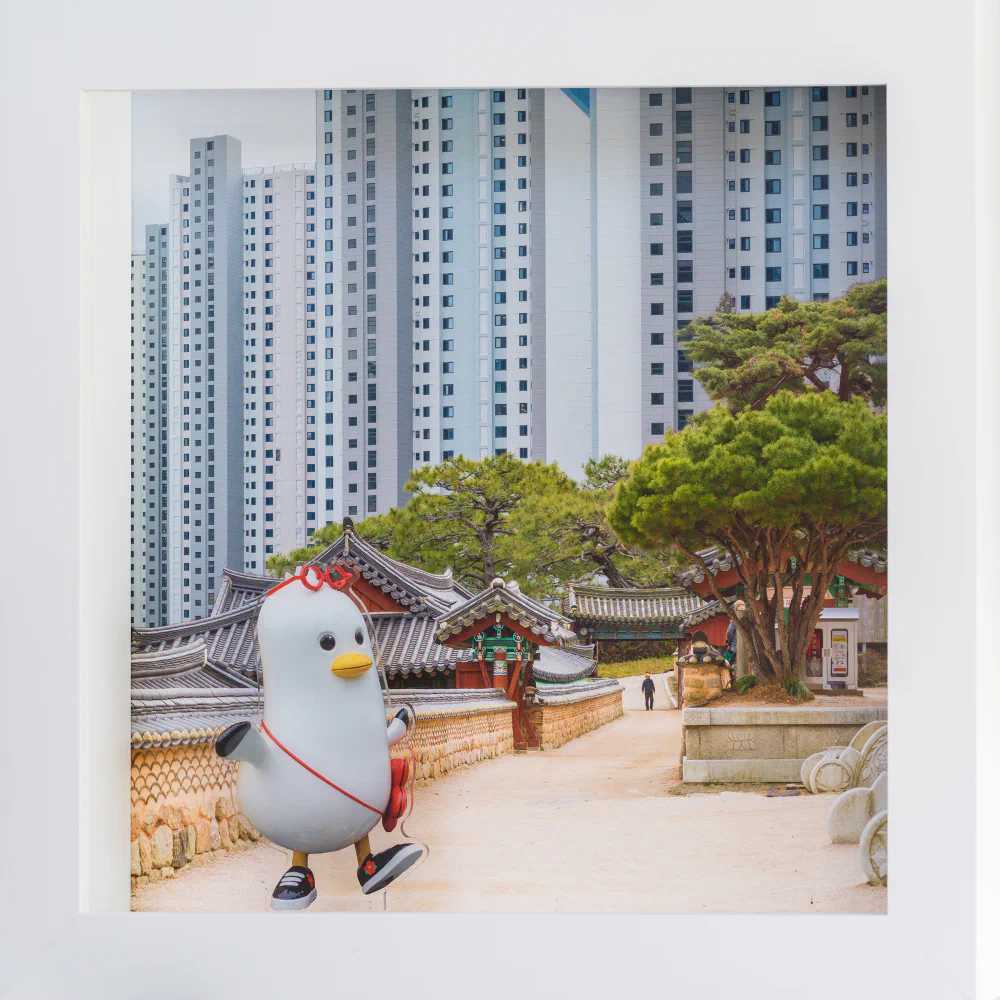
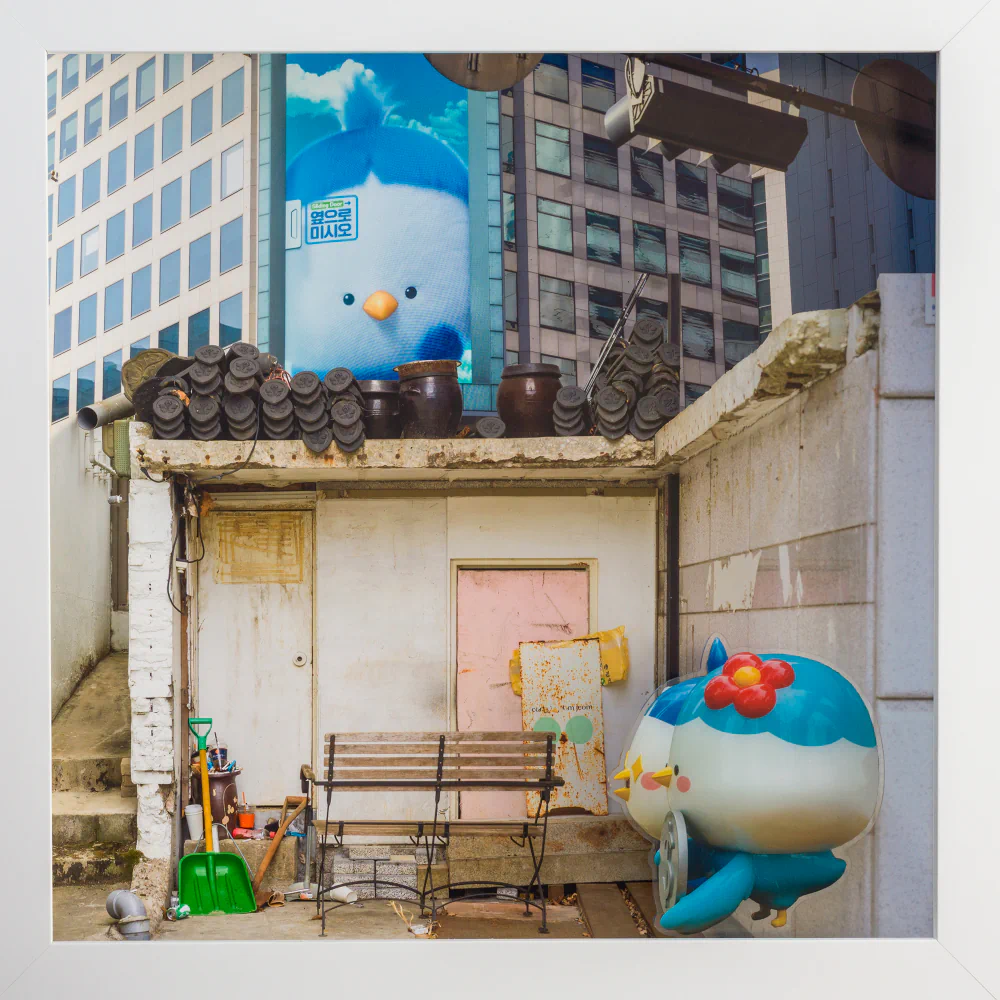
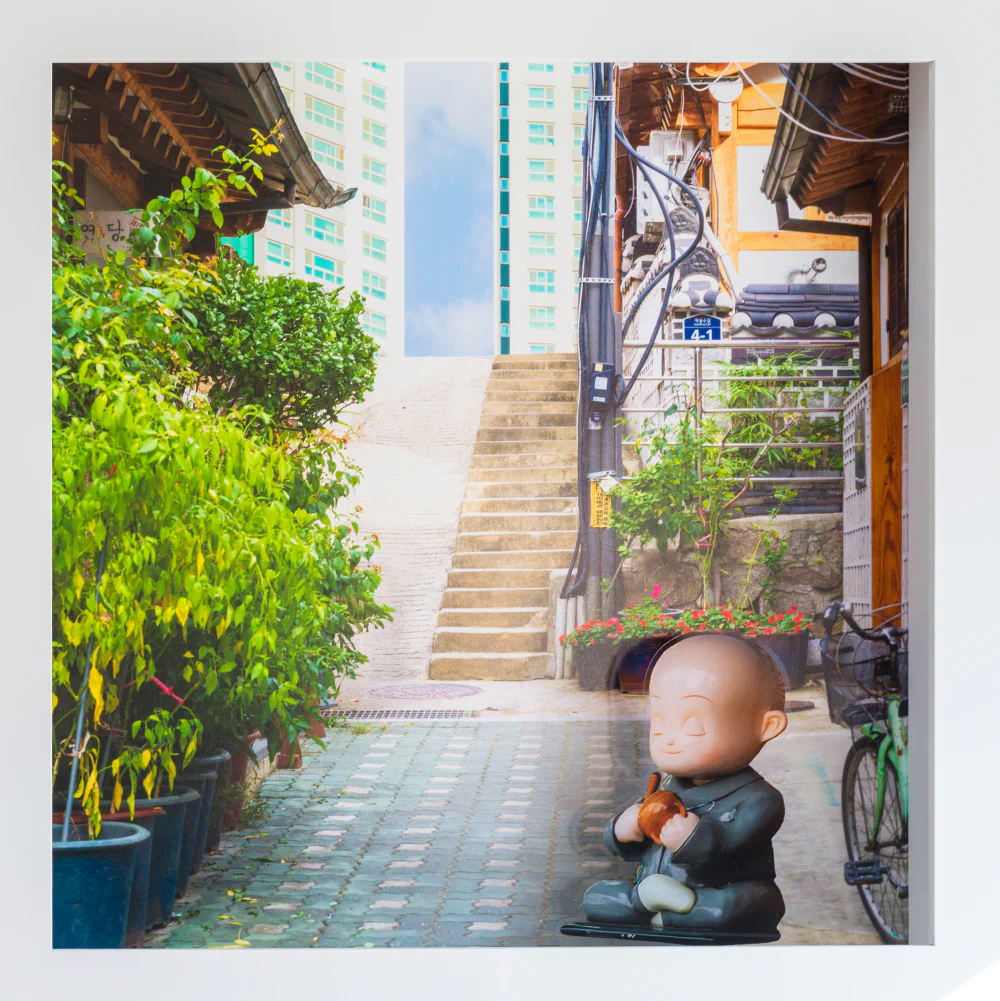
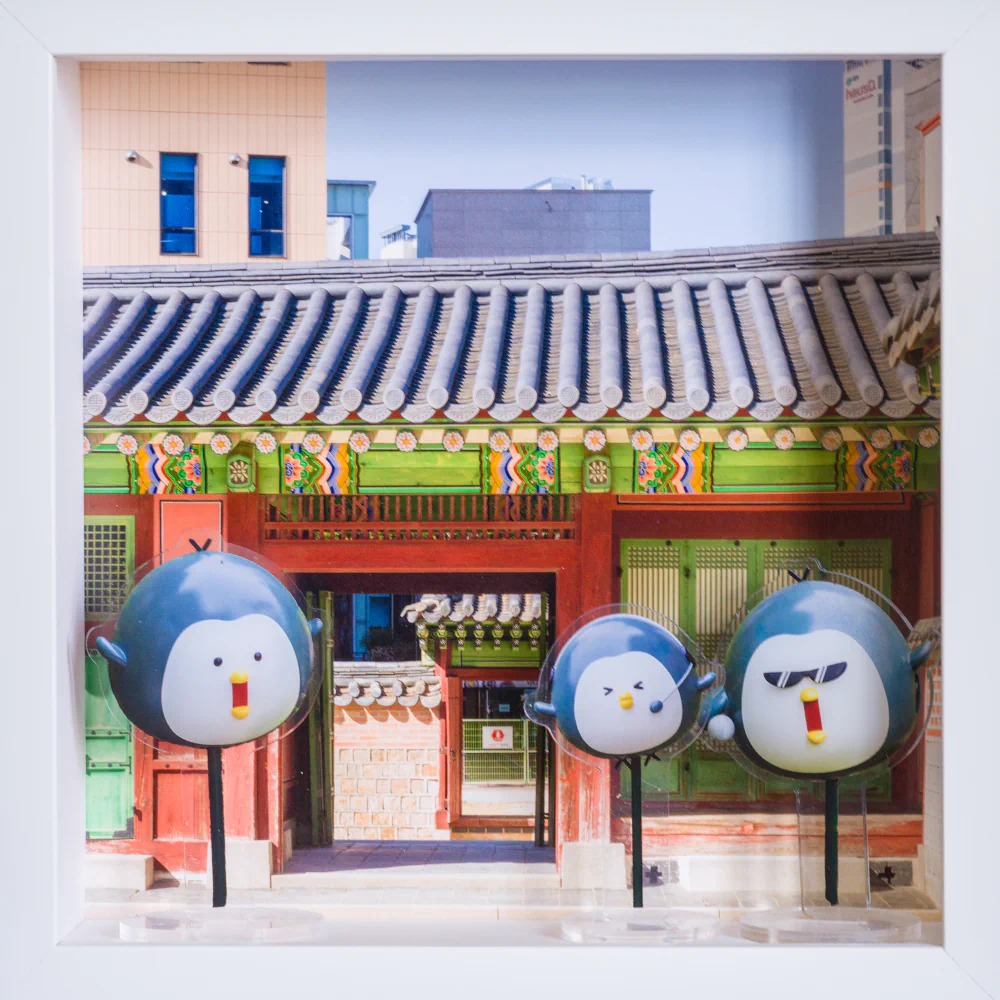
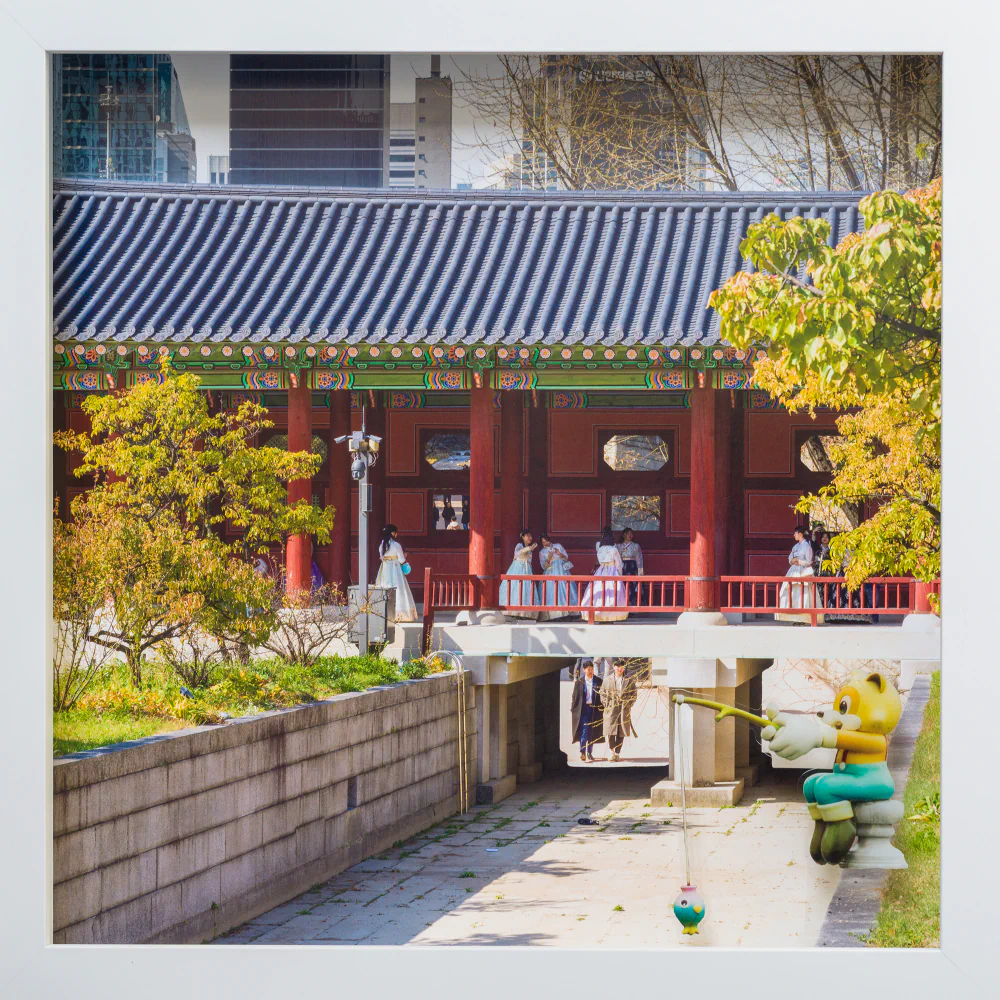
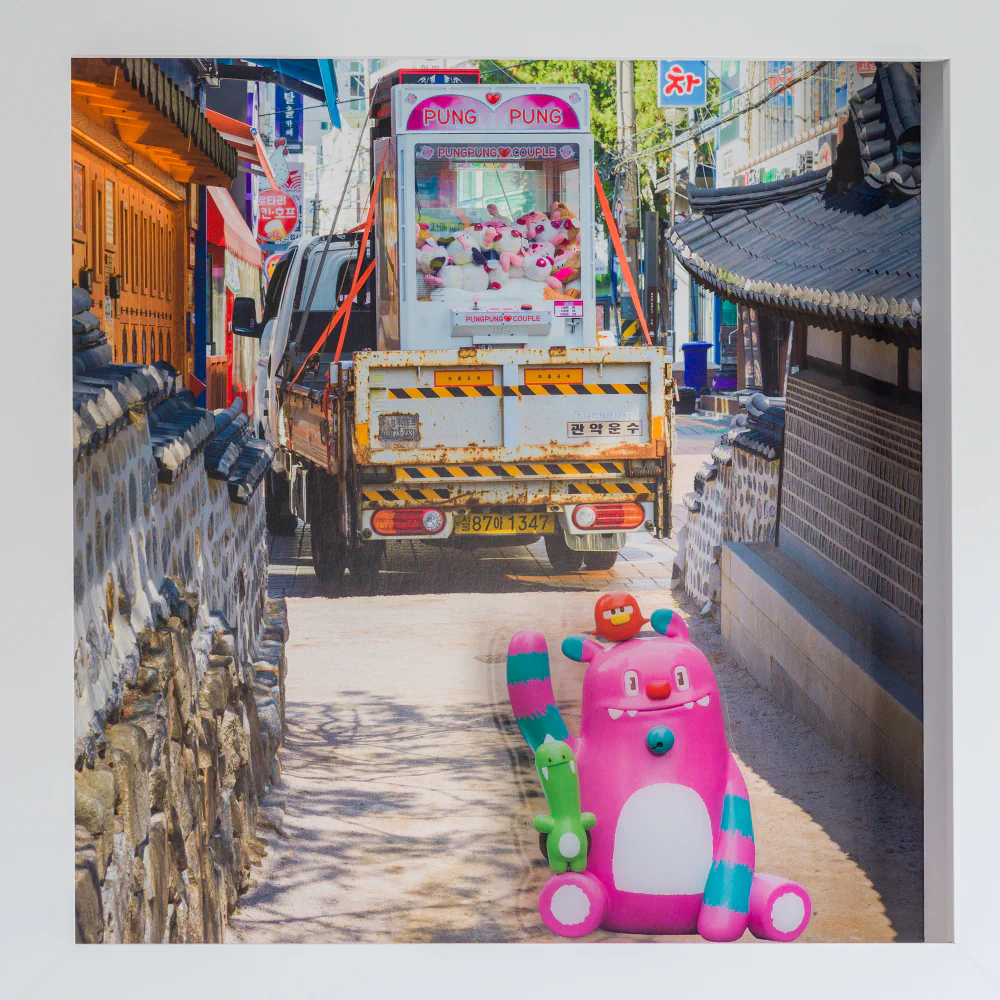
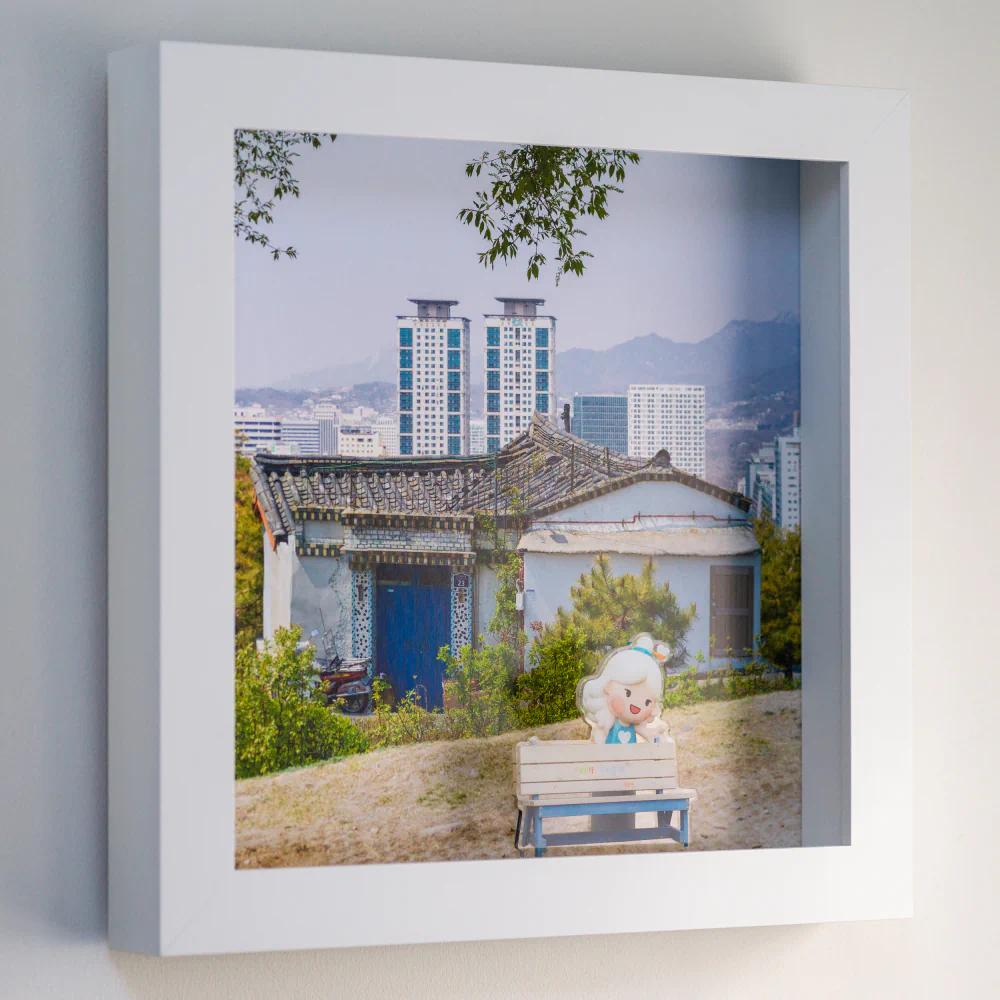
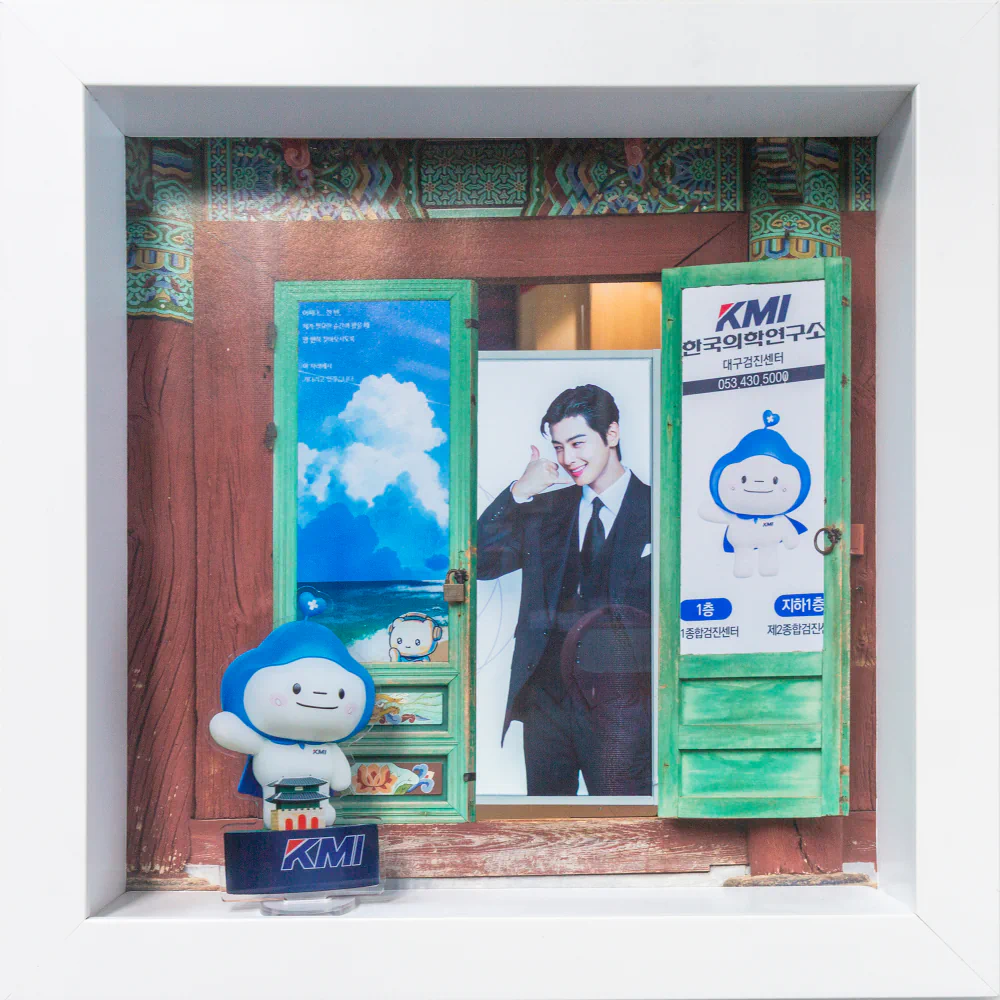
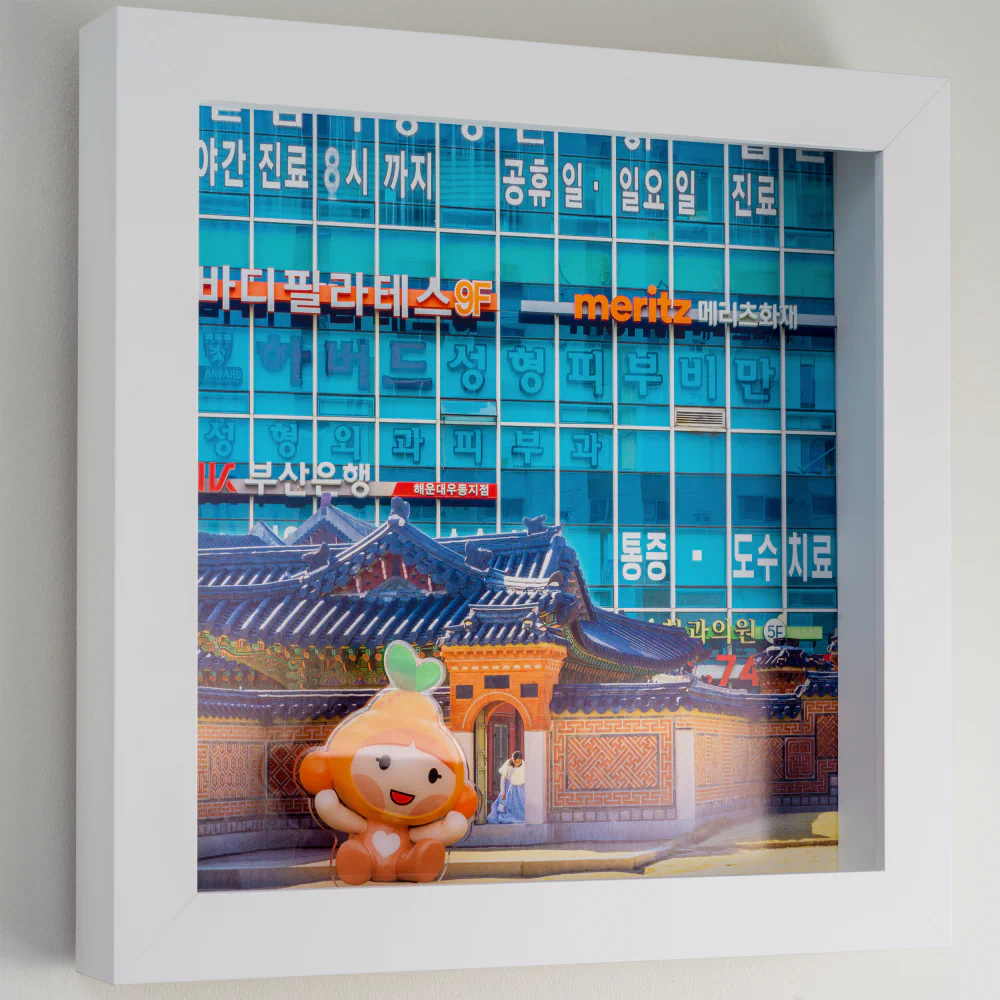
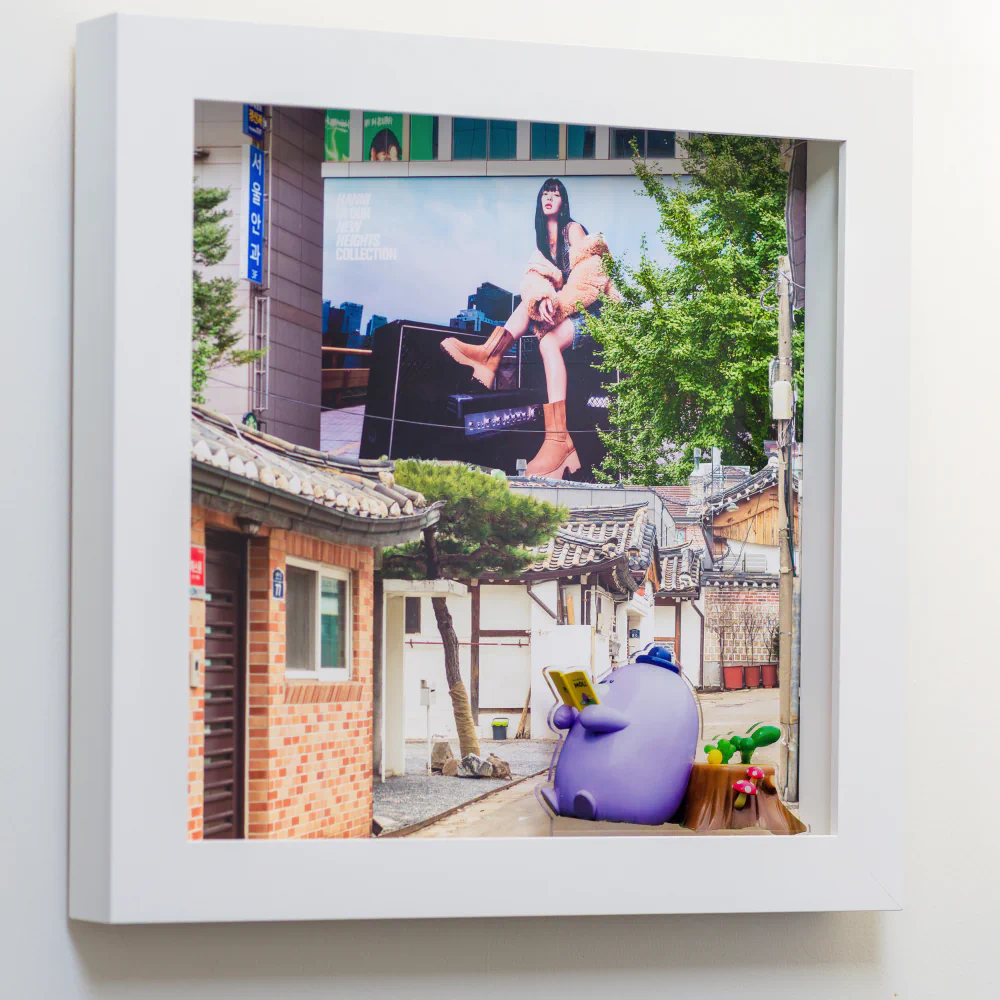
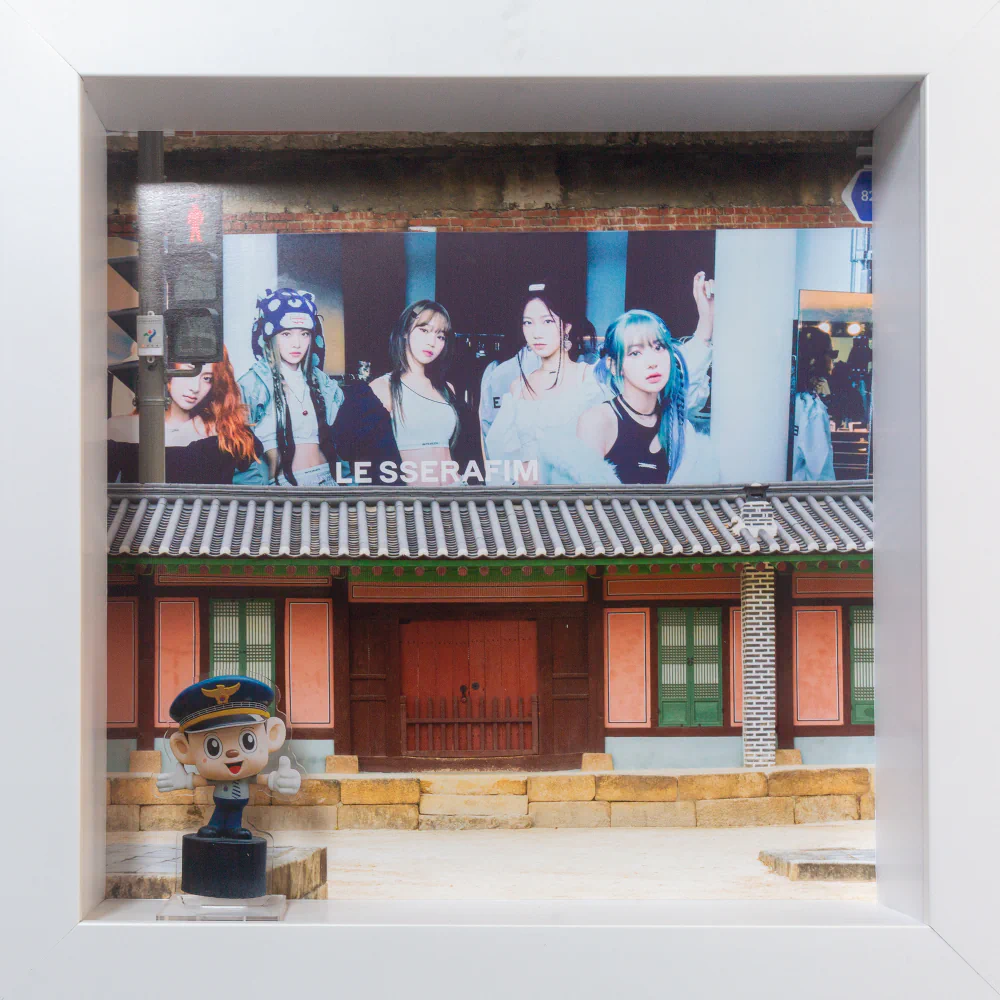
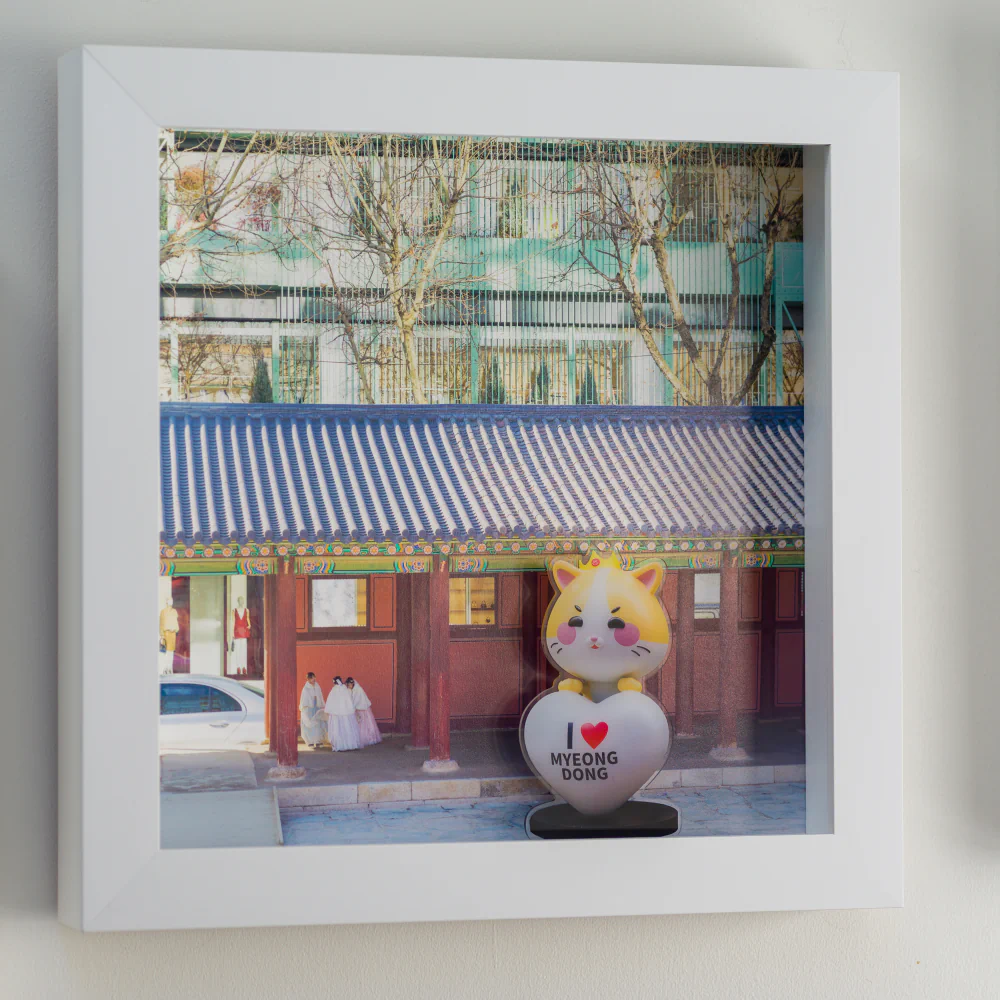
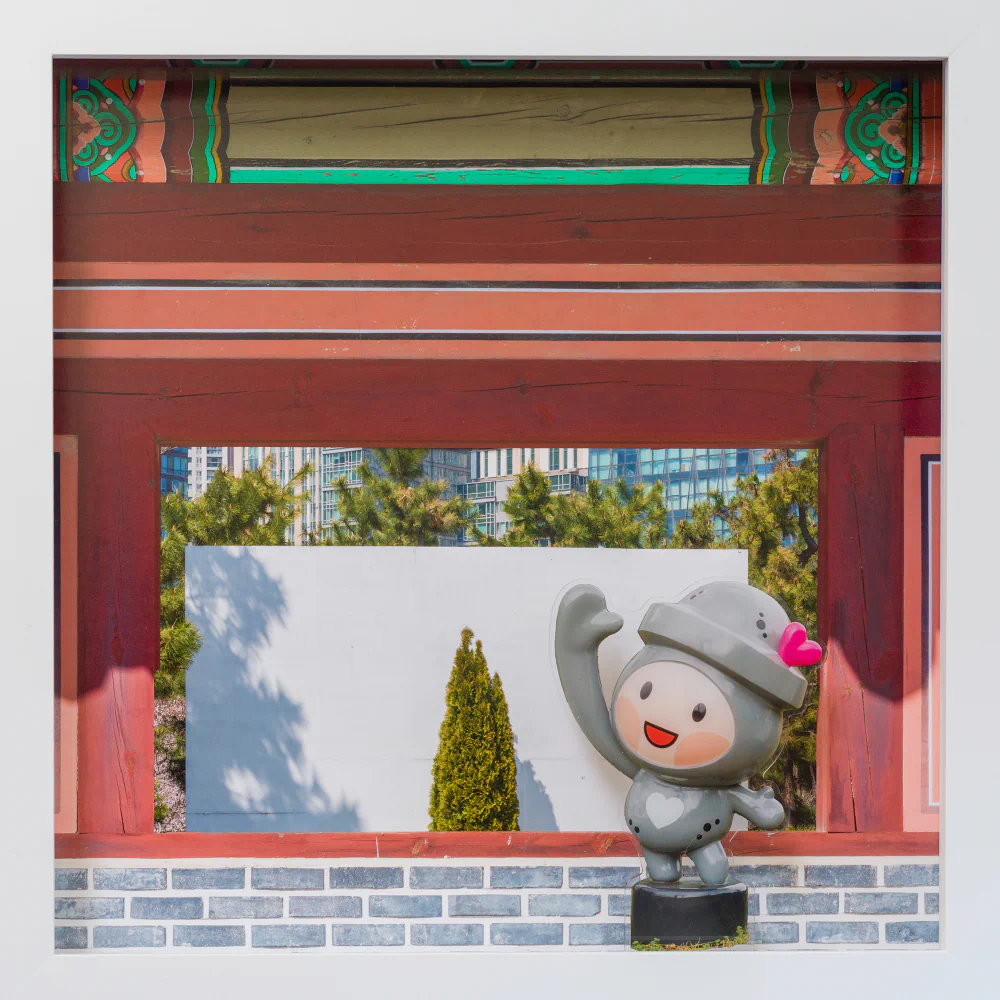
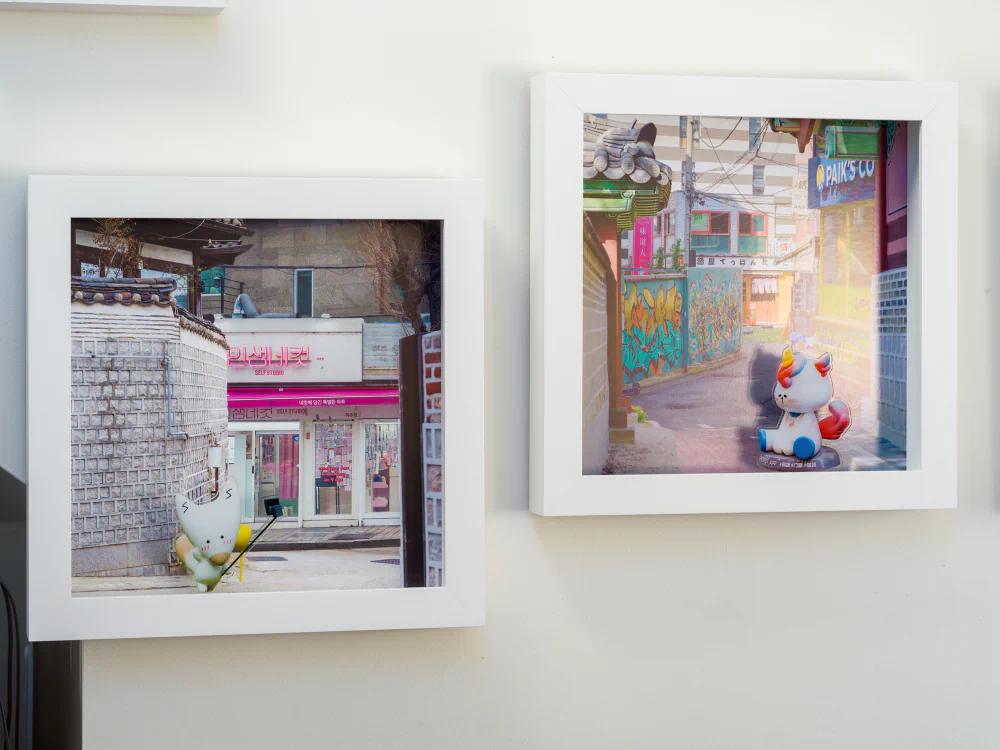
These shadow boxes serve as an entry into Korean cities as I experience them—old and new, imperfect, alive, and inviting. Each setting is a composite of two images: one reflecting tradition and living history, the other Korea’s more modern, international face. Standing in each box is an acrylic figure—either individuals dressed in hanbok or life-size statues of mascots found throughout the city. The symbols carry a warm presence and, reproduced here as inexpensive collectibles, offer viewers a bridge into the embrace of community. In American politics, life is often presented as a zero-sum game. I offer these shadow boxes as both a challenge and a question: can we find a way to cherish community and the individual simultaneously?