

By the time the Leica M4 was introduced in 1967, the essential ideas behind the Leica system were already established.
The portability of the Barnack cameras and the ergonomic clarity of the M3 had defined how photographers could work in the street. The M4 did not seek to reinvent those principles. Instead, it refined them into what many consider the most balanced mechanical Leica ever produced.
This was a camera designed not for transition, but for continuity. It absorbed more than four decades of practical experience and translated that knowledge into small but meaningful improvements that made the act of photographing smoother, faster, and more reliable under real conditions. The M4 represents Leica at its most pragmatic: less about innovation, more about perfecting use.
Subtle Changes That Made a Real Difference in Daily Practice
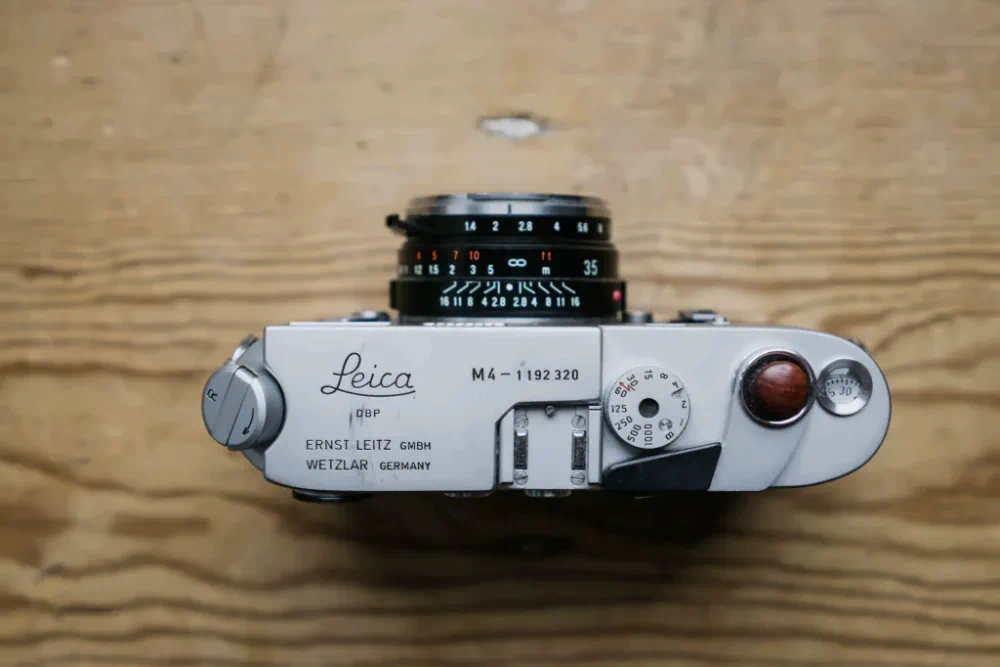
Unlike earlier models, the Leica M4 introduced a redesigned film loading system that eliminated the removable take-up spool. Film could now be inserted more quickly, reducing one of the few operational interruptions photographers faced when working on the street. The addition of a rewind crank replaced the slower rewind knob, allowing faster film changes between rolls.
These changes may seem minor on paper, but in practice they removed friction from the photographic process. The camera demanded less handling and allowed photographers to stay mentally engaged with their surroundings rather than with the mechanics of the device.
The viewfinder retained the 35 mm-friendly framelines introduced with the M2 while maintaining the bright, uncluttered clarity that had defined the M system. The result was a camera that felt immediately familiar yet noticeably more fluid in use.
A Camera Aligned With the Mature Language of Street Photography
By the late 1960s, street photography had evolved beyond its earlier search for isolated decisive moments. Photographers were increasingly interested in complexity, layering, and the descriptive richness of urban life. The Leica M4 supported this shift by being dependable, quick to handle, and unobtrusive.
The quiet shutter and compact body allowed photographers to continue working close to their subjects without altering the atmosphere of the scene. Rather than being tied to a single author, the M4 served the broader community of Leica users who relied on the rangefinder system as an extension of their movement through the city. It did not introduce a new photographic approach, but it refined an existing one by removing small mechanical obstacles from daily use.
The Last Leica Before the Era of Doubt
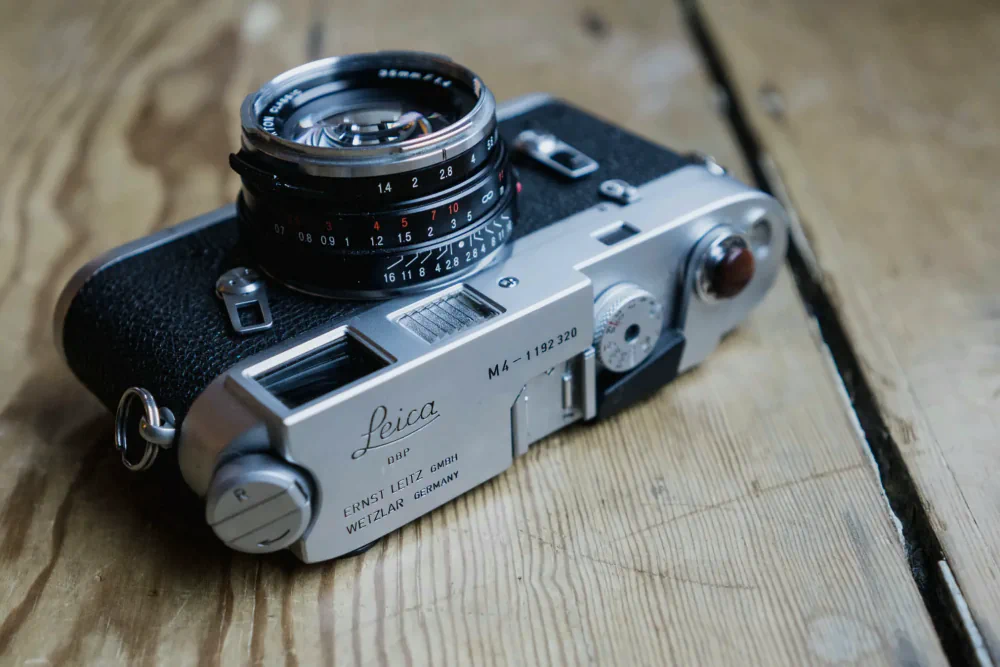
Historically, the Leica M4 occupies a significant position. It was the final M camera produced before Leica attempted a major redesign with the M5. As such, it stands as the culmination of the original M philosophy: fully mechanical, elegantly simple, and shaped entirely by the needs of photographers rather than by technological trends. Many regard the M4 as the last Leica built without compromise, a camera that refined an already mature concept instead of questioning it.
A Legacy Built on Reliability Rather Than Revolution
The Leica M4’s importance lies not in dramatic innovation but in consolidation. It demonstrated that the Leica formula, compact rangefinder, intuitive controls, and minimal mechanical resistance, could be honed into a seamless working instrument.
In the broader history of street photography, the M4 symbolizes the moment when the camera ceased to evolve conceptually and instead reached a state of operational maturity. It became less an object of technological progress and more a stable companion for photographers navigating the unpredictability of public life. Where earlier models had introduced new ideas, the M4 ensured those ideas could endure.