

For much of its history, street photography was narrated through a limited geographical lens.
Canonical accounts often centered on a handful of Western cities, presenting the genre as a product of specific cultural and historical conditions associated with Europe and North America. While these contexts undeniably shaped its early development, the expansion of photographic practice across the globe has revealed that street photography cannot be confined to a single tradition.
As cameras became more accessible and international exchange intensified, photographers in Asia, Latin America, Africa, and Eastern Europe began documenting their own urban environments with distinct visual sensibilities. These images did not simply replicate established models. They responded to local histories, social structures, and spatial dynamics, producing interpretations of public life that differed in rhythm, symbolism, and emphasis. The street, far from being a universal stage, emerged as a culturally specific space shaped by varied experiences of modernity.
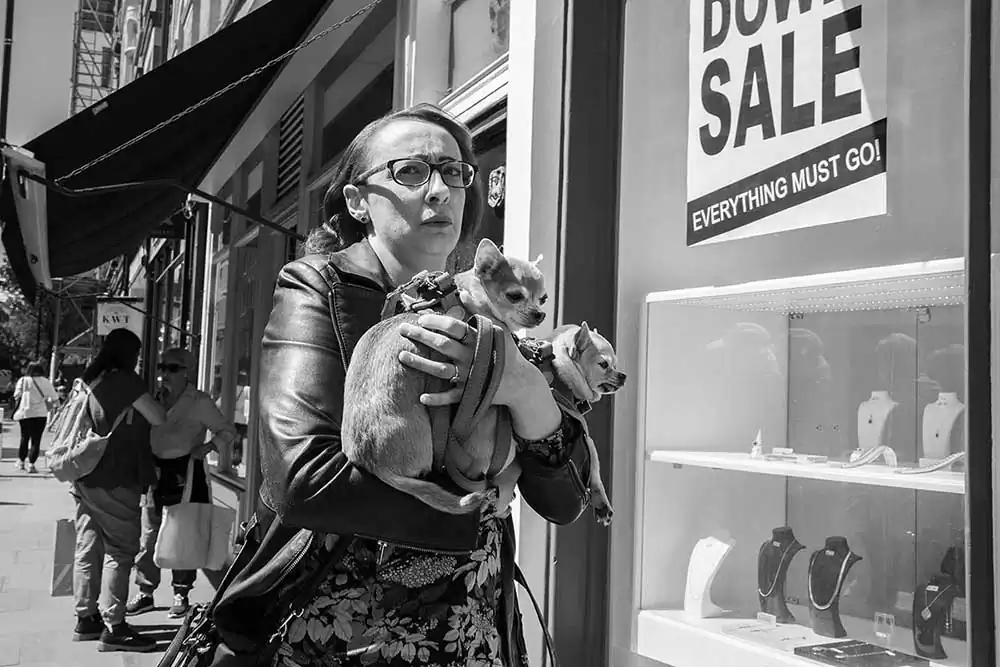
In many regions, rapid urbanization unfolded alongside strong continuities with tradition. Markets, religious practices, informal economies, and communal interactions generated visual scenes where past and present coexisted visibly. Street photographers working within these environments often addressed themes of transition, resilience, and adaptation, capturing how societies negotiate change without abandoning inherited structures.
The diversity of global street photography also introduced new aesthetic approaches. Color usage, compositional strategies, and relationships between subject and environment frequently reflected regional artistic traditions. In some contexts, dense layering and dynamic movement dominated the image; in others, stillness and minimalism conveyed a different understanding of urban space. These variations expanded the visual vocabulary of the genre, challenging assumptions about what constitutes its “authentic” form.
Globalization further accelerated dialogue among photographers. Exhibitions, publications, and digital platforms enabled practitioners to encounter work from distant locations, fostering exchange while maintaining local specificity. Rather than producing homogeneity, this circulation encouraged multiplicity. Street photography became a network of perspectives rather than a single lineage.

This shift also prompted renewed reflection on representation. Photographers working across cultural boundaries must confront questions of context, interpretation, and responsibility. The act of photographing in unfamiliar environments carries implications that extend beyond aesthetics, requiring sensitivity to social meaning and historical complexity.
Today, street photography functions as a global conversation shaped by diverse voices. Its vitality lies in this plurality, demonstrating that the genre is not tied to one city, one method, or one cultural framework. Instead, it adapts continuously, reflecting how different societies inhabit and understand public space.
By moving beyond a Western-centered narrative, street photography reveals itself as a flexible practice capable of articulating multiple urban realities. Each photograph becomes both local and interconnected, contributing to a broader understanding of how human life unfolds in the streets of the world.