
For decades, the idea of the “decisive moment” has been closely associated with street photography.
The phrase suggested that a photograph reaches significance when form, content, and timing converge in a single instant of clarity. This concept helped define much of twentieth-century photographic practice, emphasizing precision, balance, and the photographer’s ability to anticipate the exact fraction of a second in which meaning appears most complete.
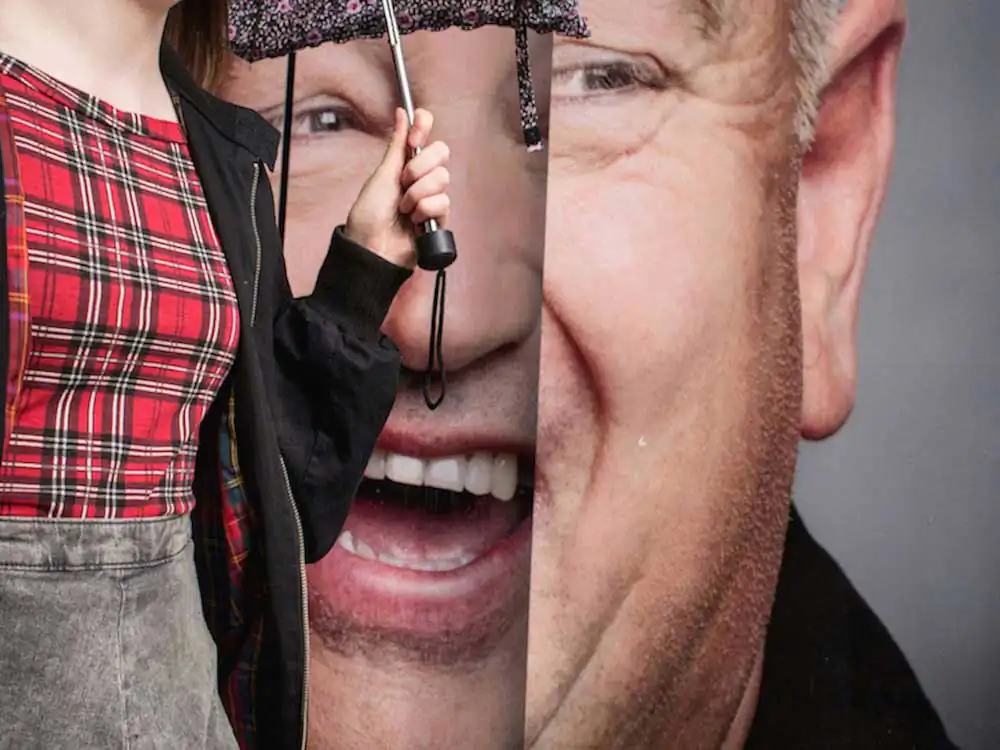
Yet contemporary street photography increasingly questions this notion of resolution. Rather than seeking perfect alignment, many photographers explore images that remain open, fragmented, or ambiguous. The street is no longer approached solely as a place where moments crystallize into harmony, but also as a space of uncertainty, interruption, and incomplete narratives. In this shift, the photograph becomes less a conclusion and more a proposition.
Urban experience itself has changed. Cities today are saturated with images, signals, and overlapping forms of attention. Movement is faster, distractions are constant, and perception is often partial. Photographers working in these environments respond not by simplifying complexity, but by acknowledging it. Blur, obstruction, layered reflections, and unconventional framing appear not as technical flaws, but as ways of expressing the instability of contemporary perception.
This evolution does not reject earlier traditions. Instead, it expands them. The decisive moment remains one possible approach among many, but it no longer defines the genre. Street photography now accommodates images where the subject is only partially visible, where relationships between elements resist immediate interpretation, or where meaning emerges gradually rather than instantaneously. These photographs invite viewers to spend time with uncertainty rather than recognize an instant solution.
The role of the photographer correspondingly shifts. Instead of acting as a hunter of perfect instants, the practitioner becomes an interpreter of environments that resist coherence. Attention is directed toward atmosphere, rhythm, and spatial tension rather than singular climaxes. The emphasis moves from capturing a peak moment to understanding the continuous flow from which any image is extracted.
Technological developments have reinforced this transformation. Digital tools allow for greater experimentation with sequencing, repetition, and variation. Photographers can work in sustained series, examining how similar spaces produce different visual outcomes over time. The image becomes part of a broader exploration rather than a self-contained revelation.
This expanded understanding reflects a broader cultural change in how reality is perceived. Contemporary life is rarely experienced as a sequence of decisive instants; it is encountered as accumulation, overlap, and transition. Street photography mirrors this condition by embracing forms that resist closure, suggesting that meaning in urban environments is always provisional.
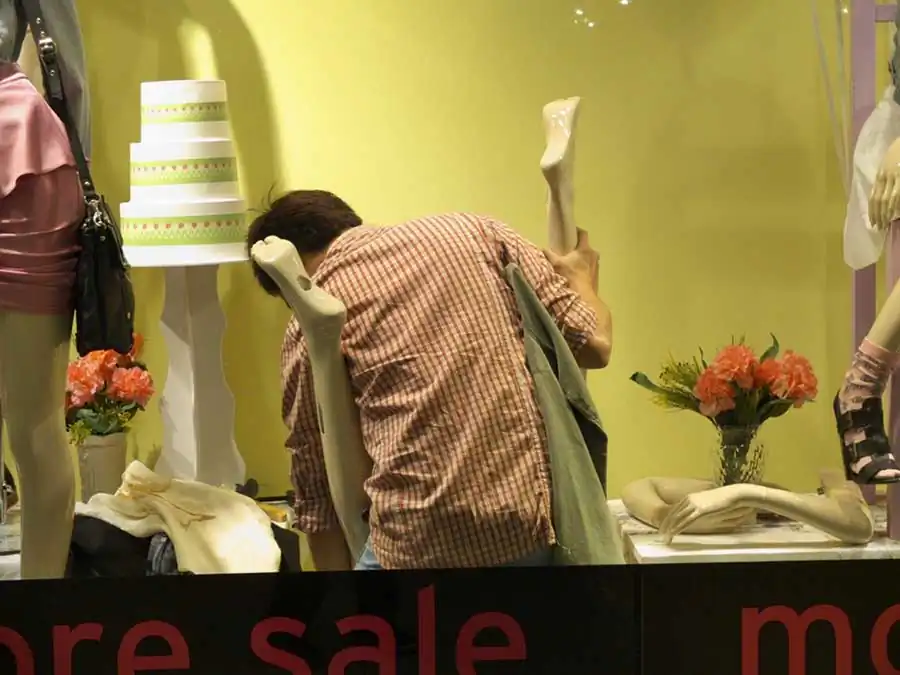
By moving beyond the decisive moment, the genre acknowledges that cities are not composed solely of perfect alignments. They are built from interruptions, ambiguities, and fleeting encounters that do not resolve into clear narratives. Photography, in turn, adapts by recording not only moments of clarity, but also the complexity of seeing itself.
Street photography today therefore exists along a spectrum between precision and openness. Some images still achieve the classical balance celebrated in earlier decades, while others deliberately suspend resolution. Together, they demonstrate that the genre is not fixed in a single methodology, but continues to evolve alongside the changing nature of urban experience.