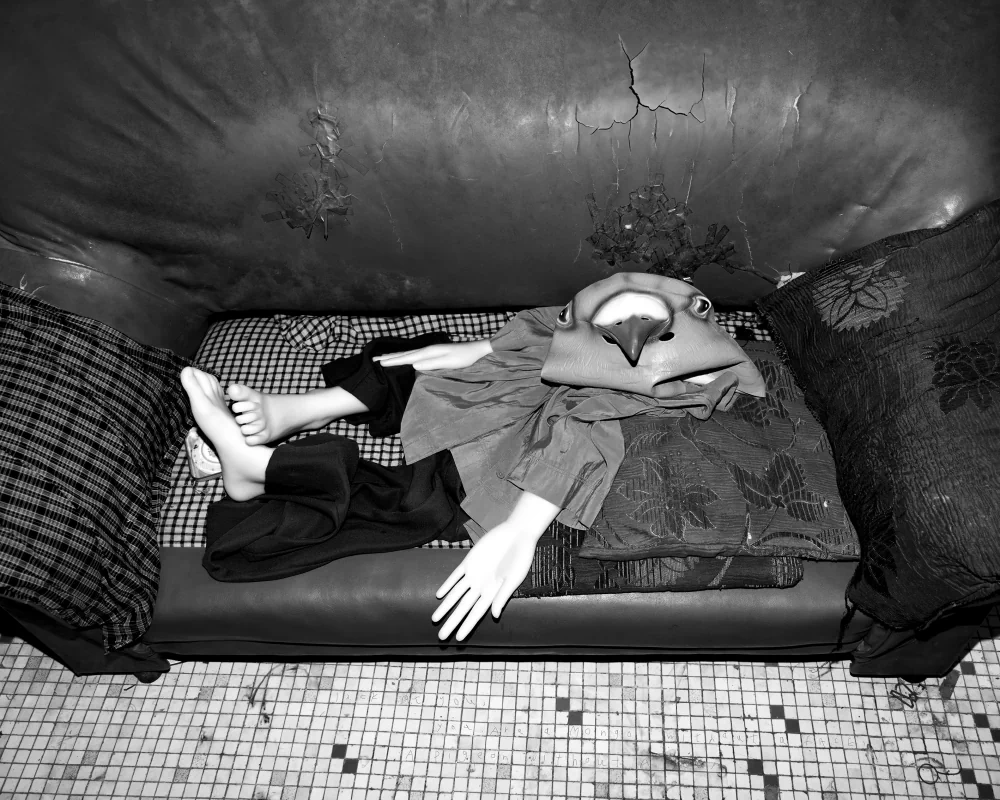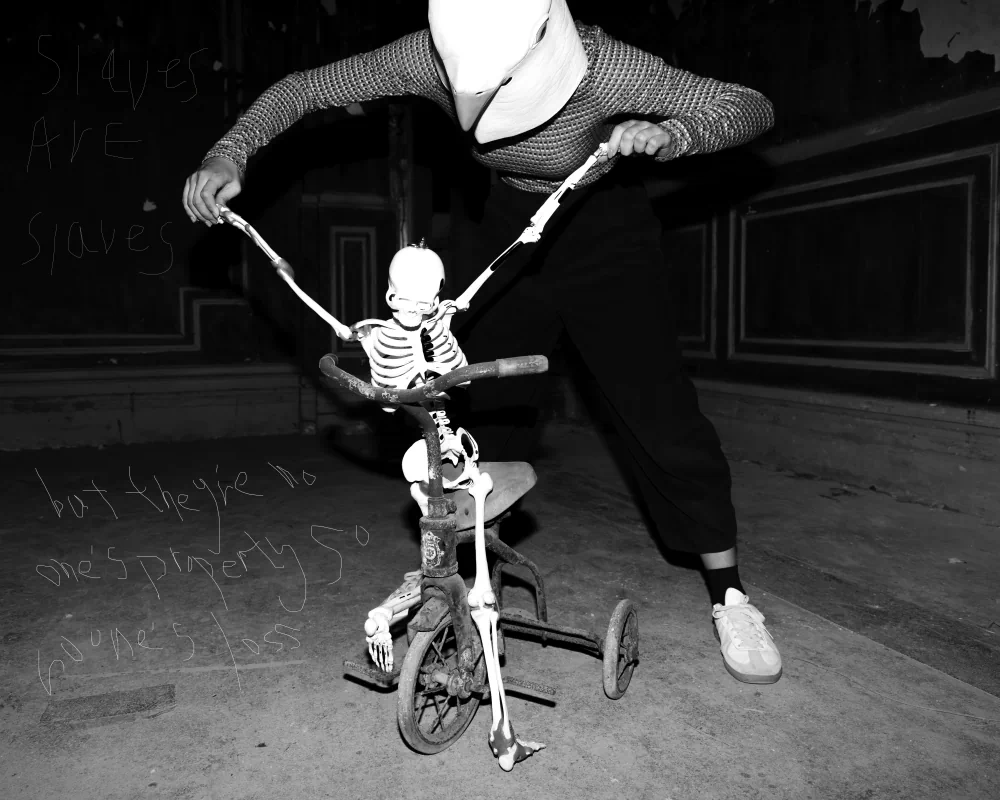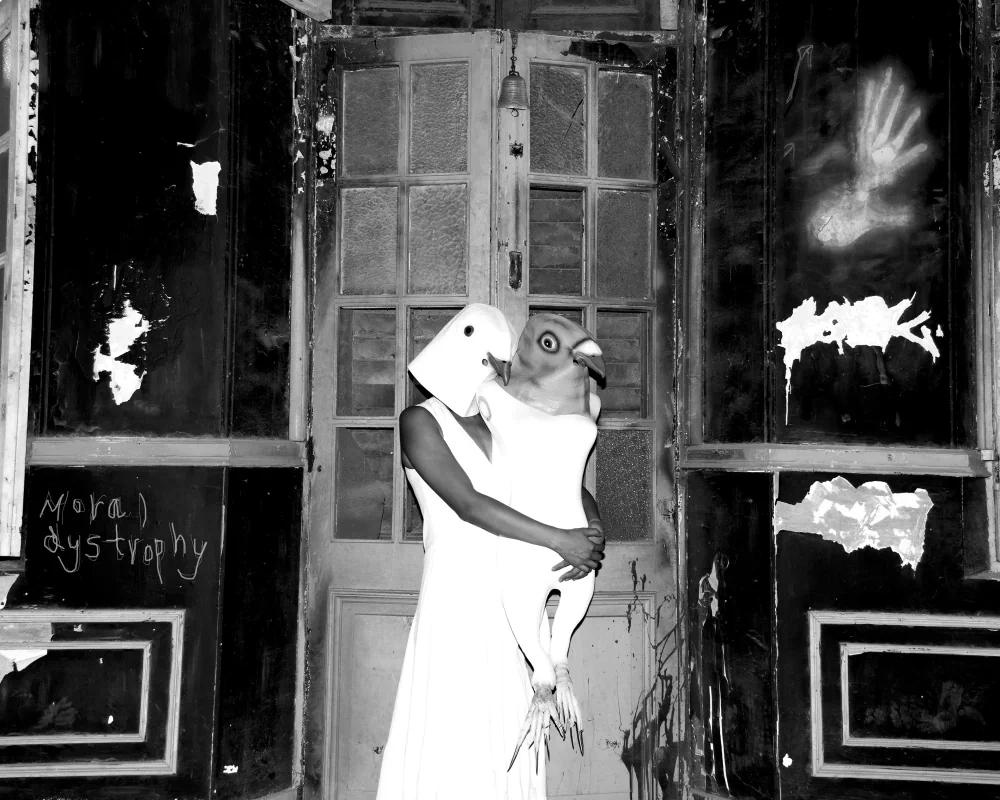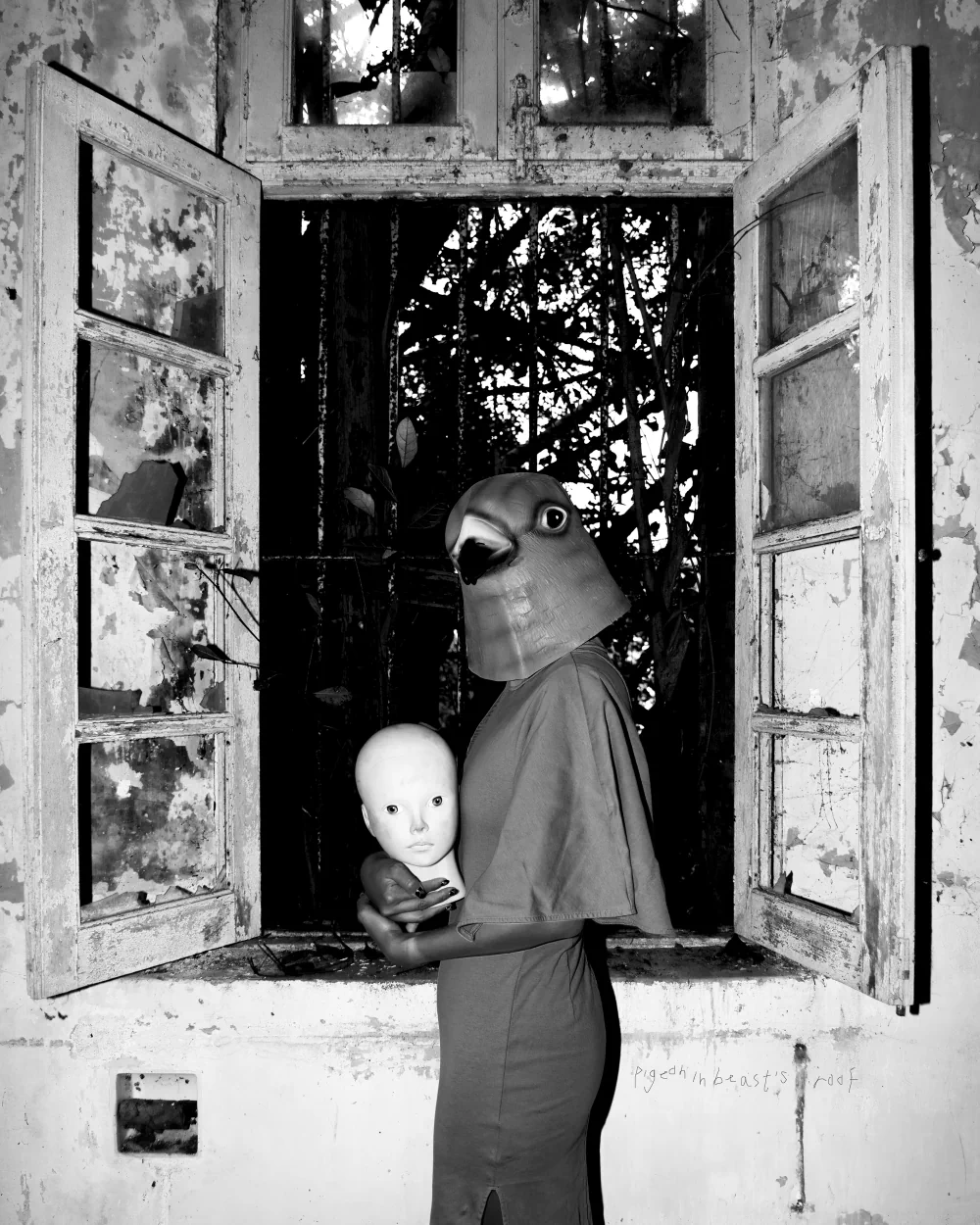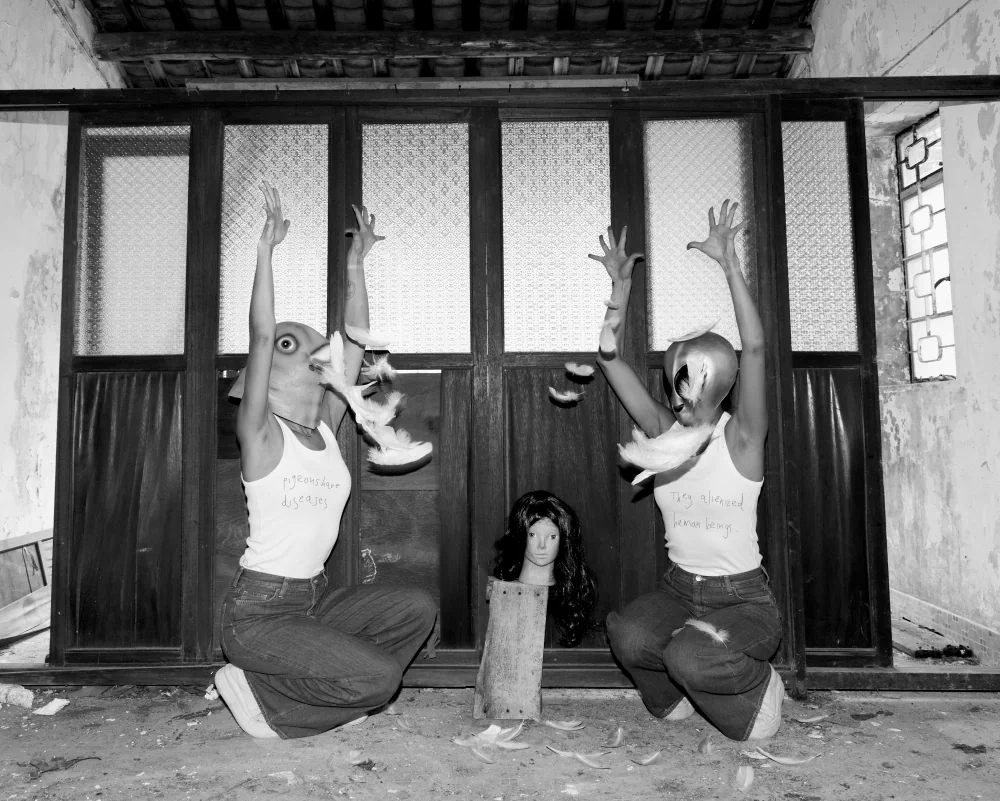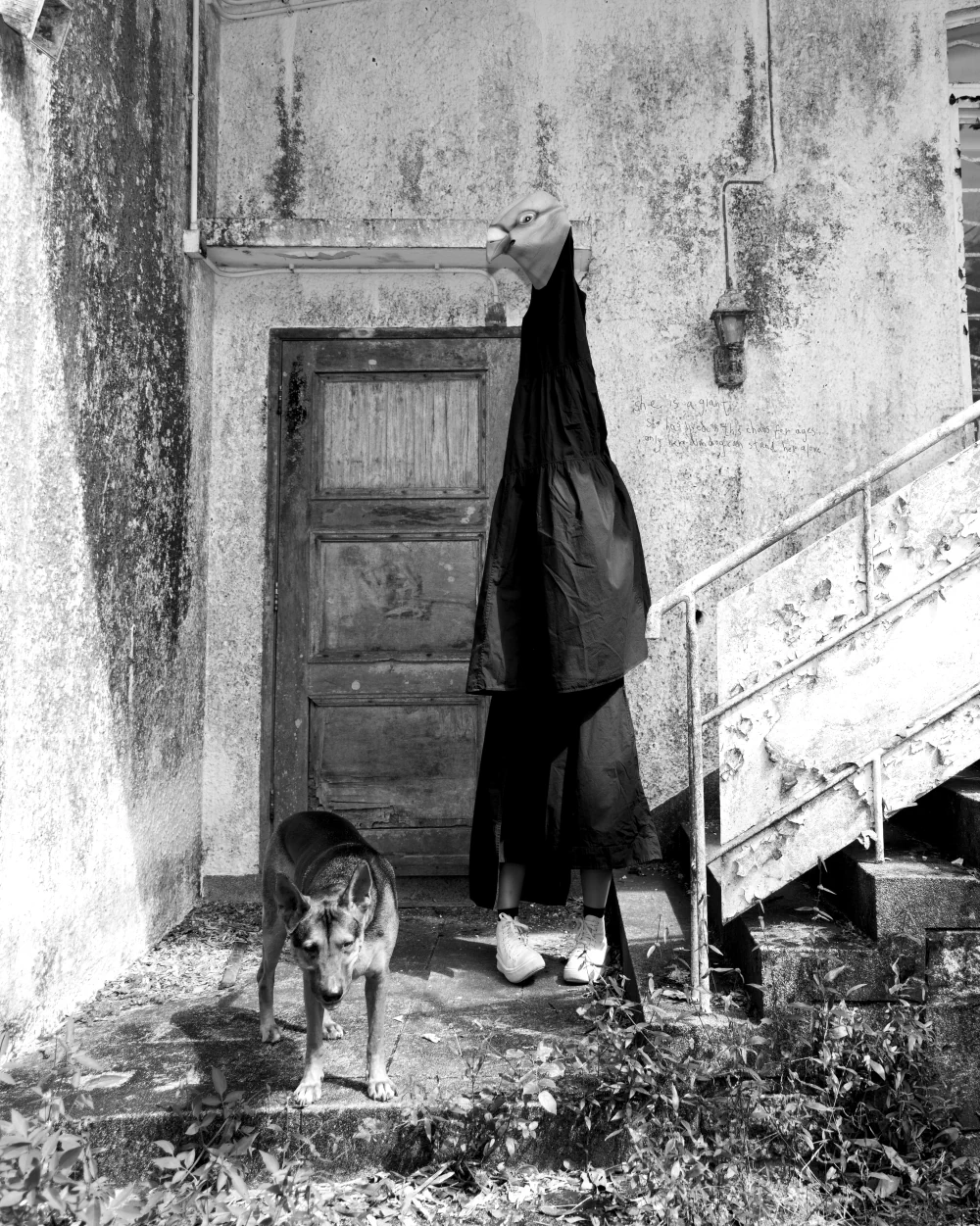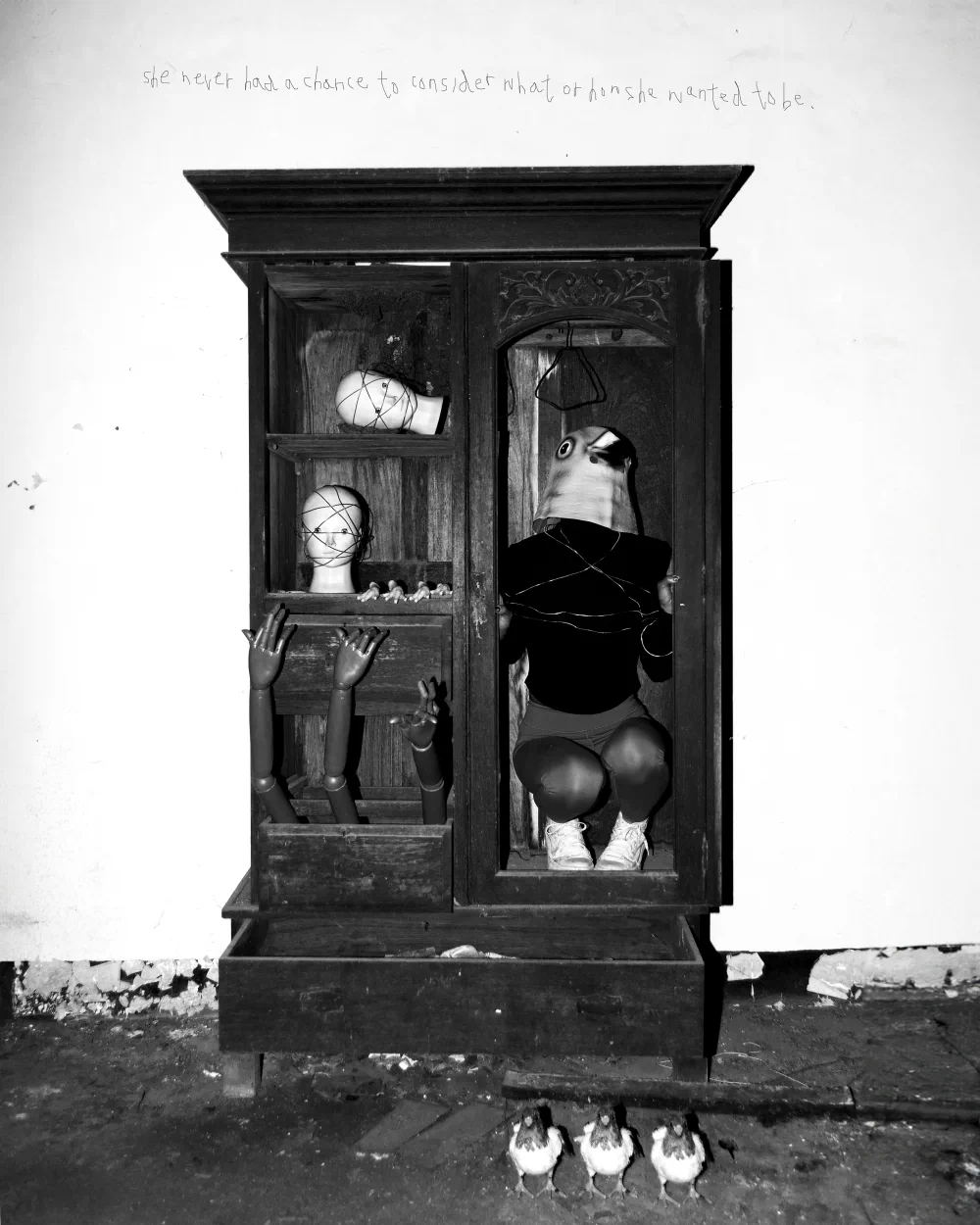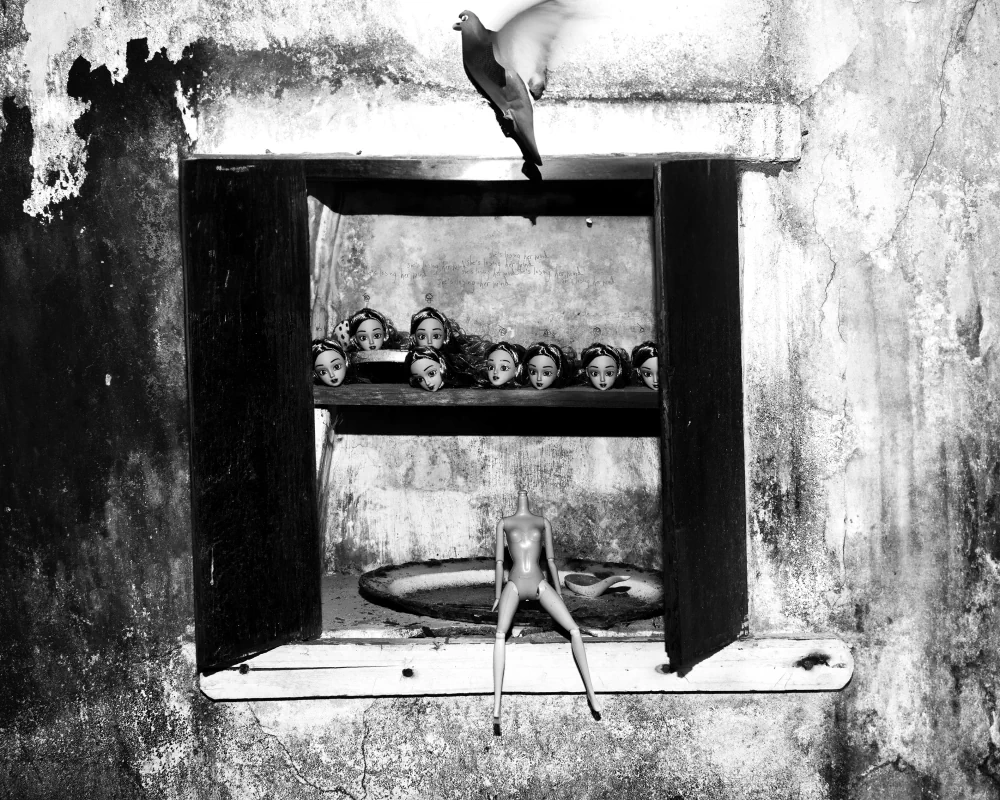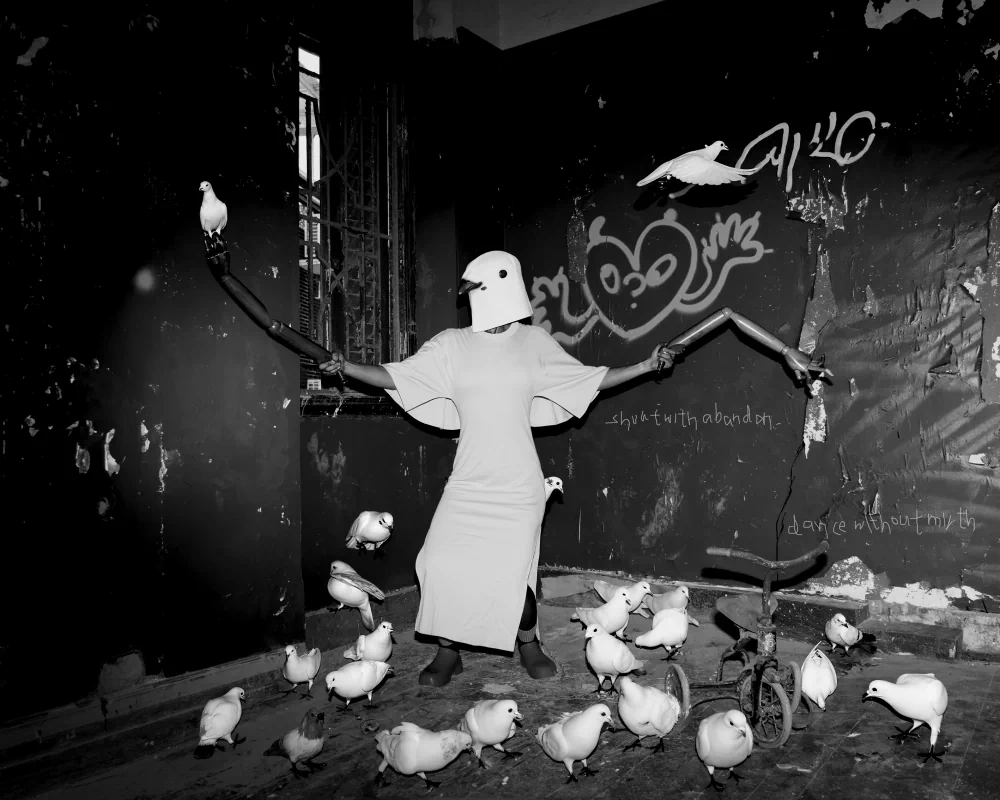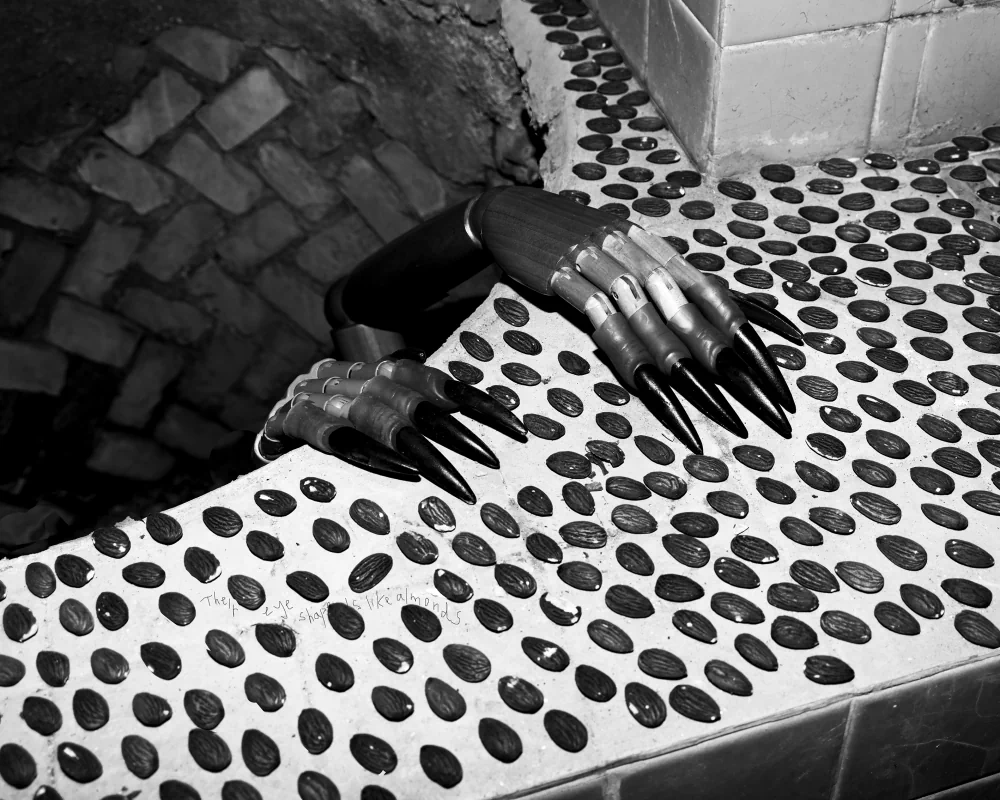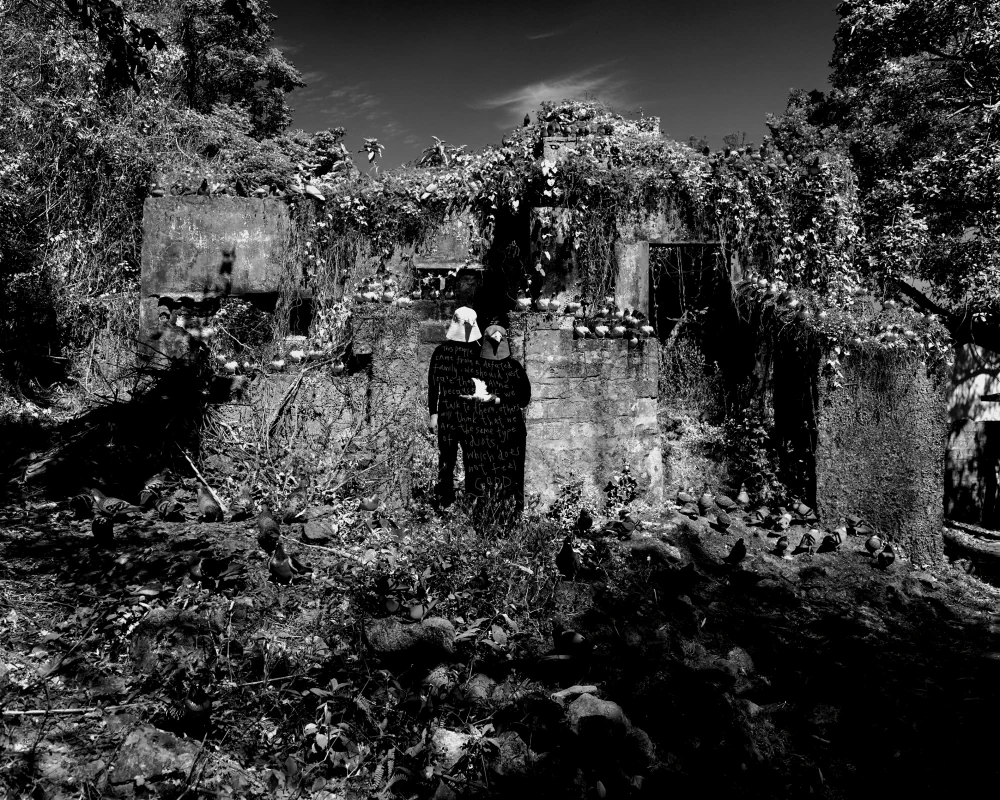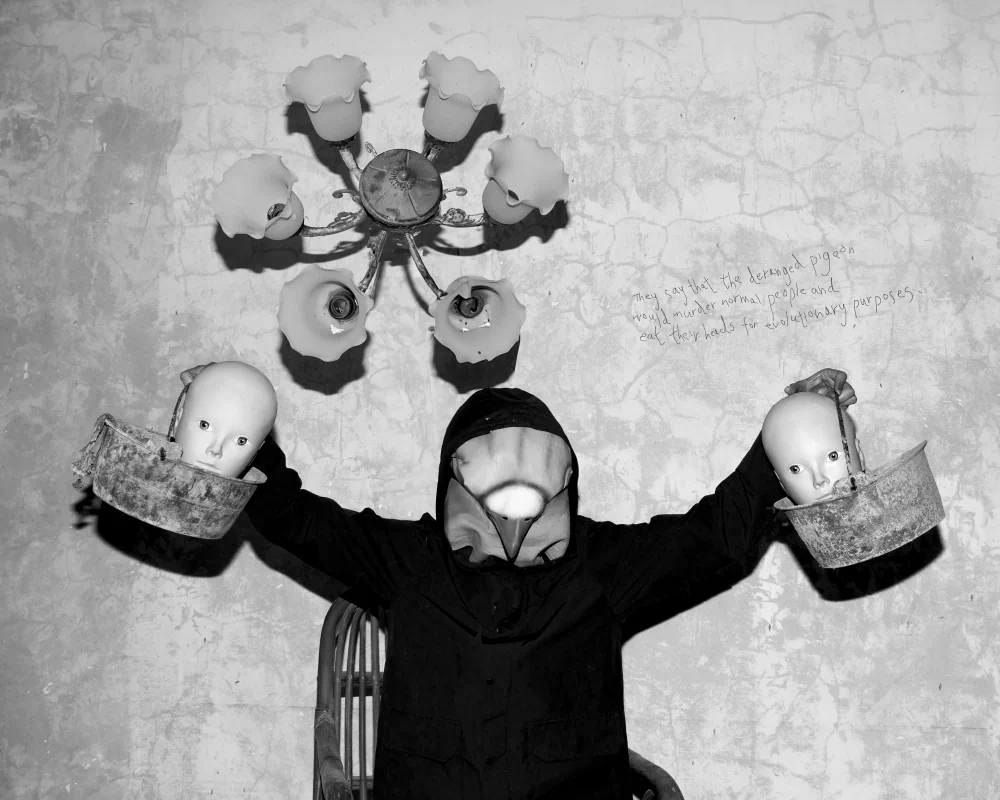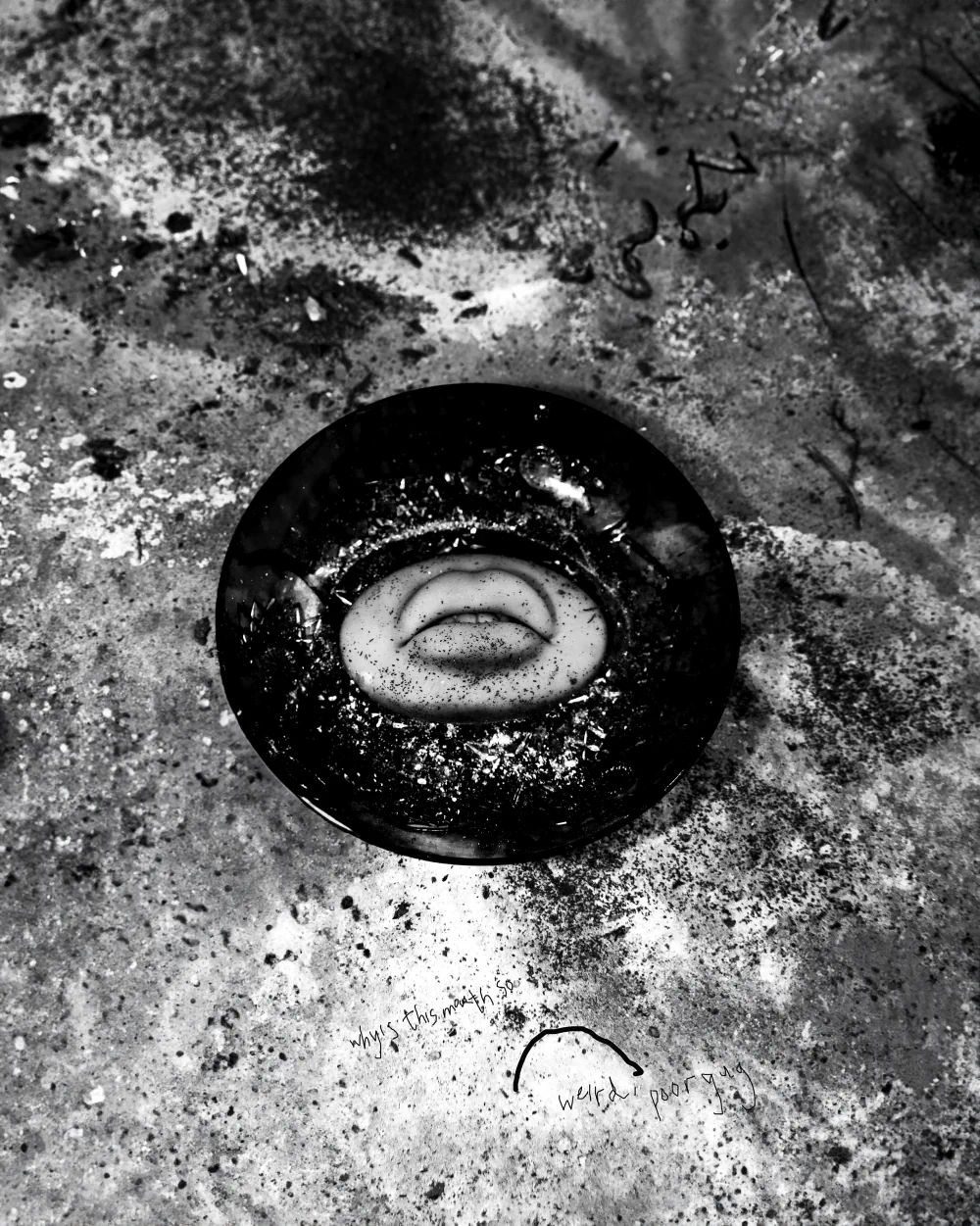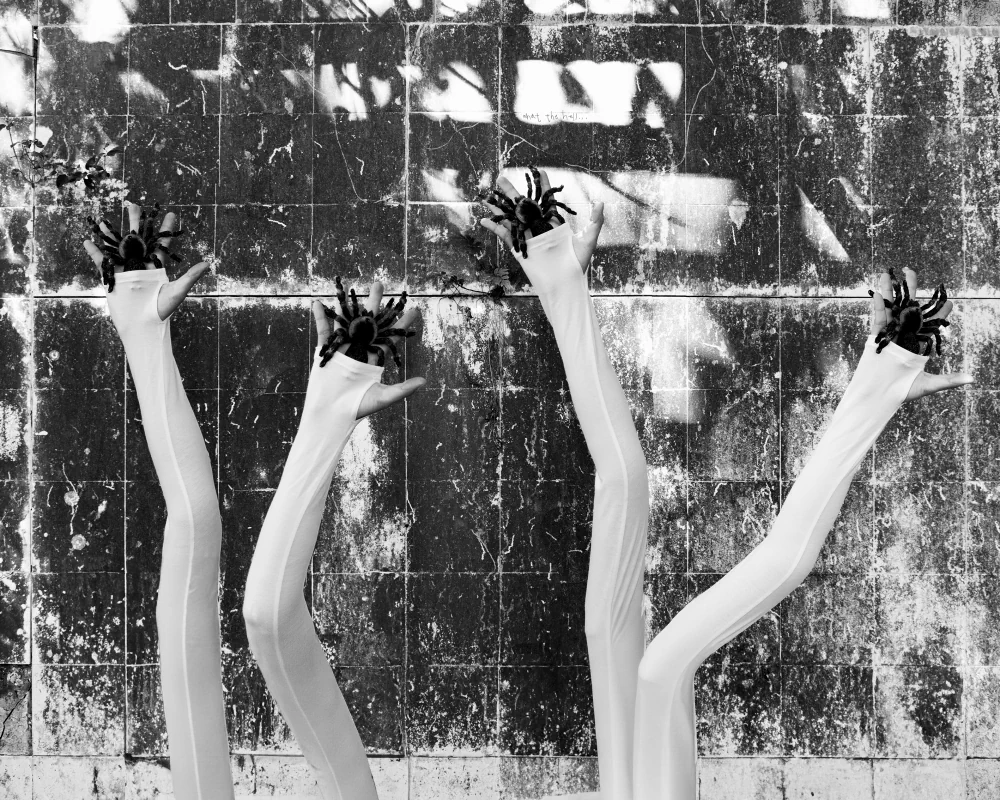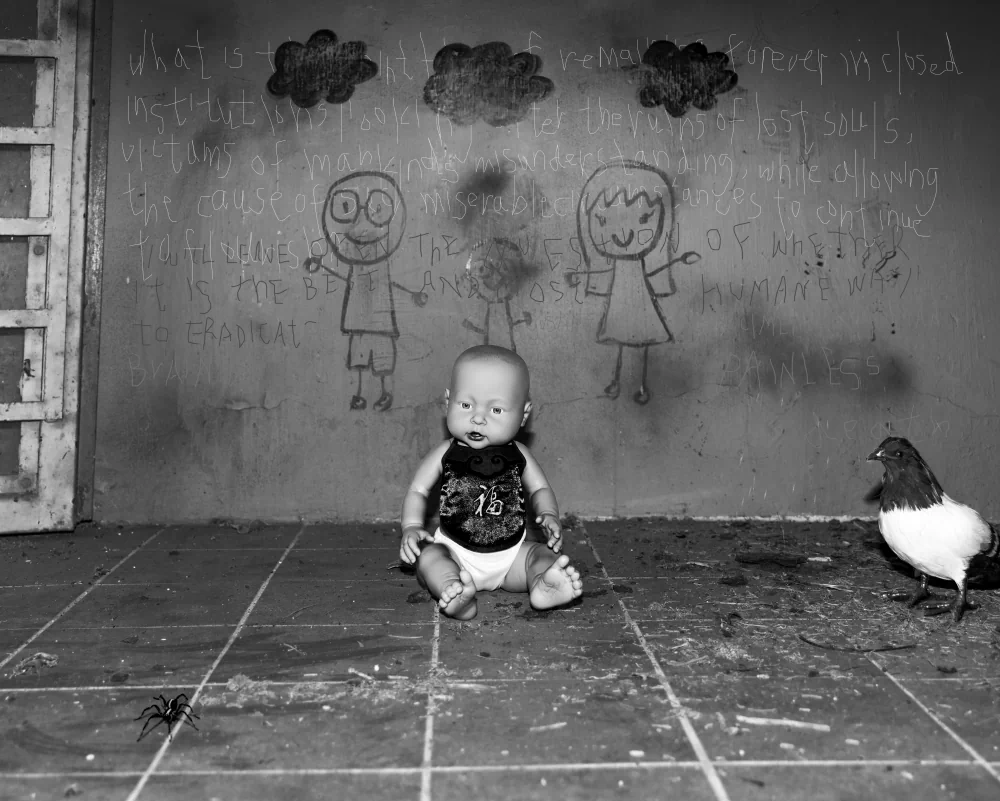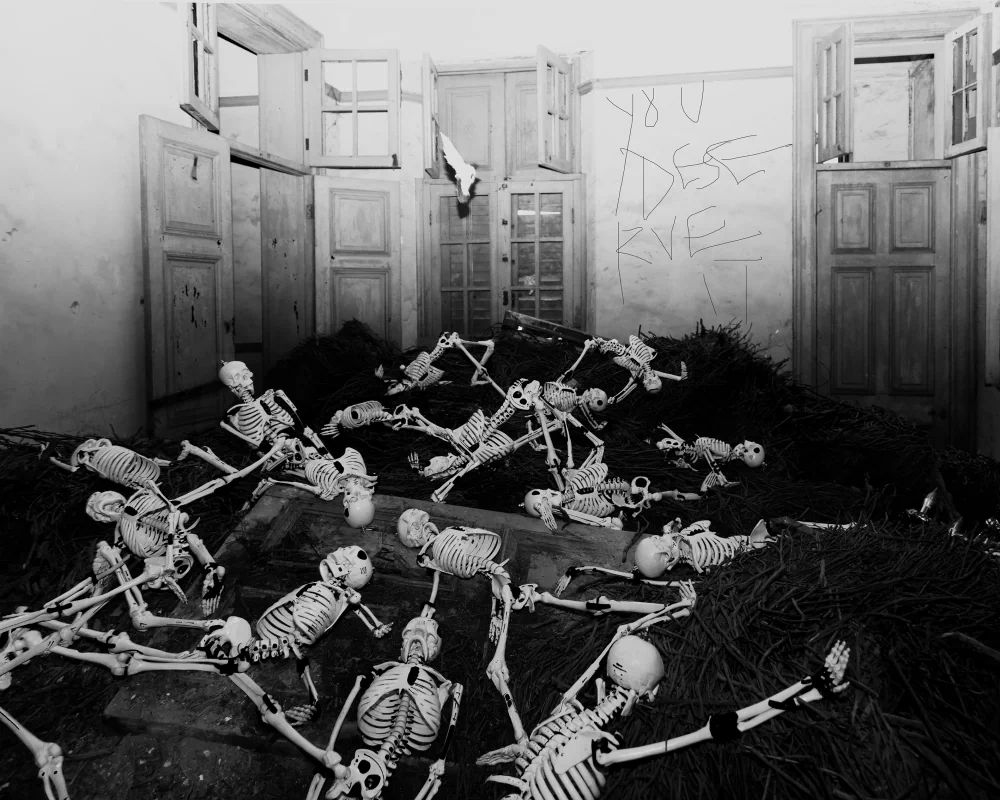


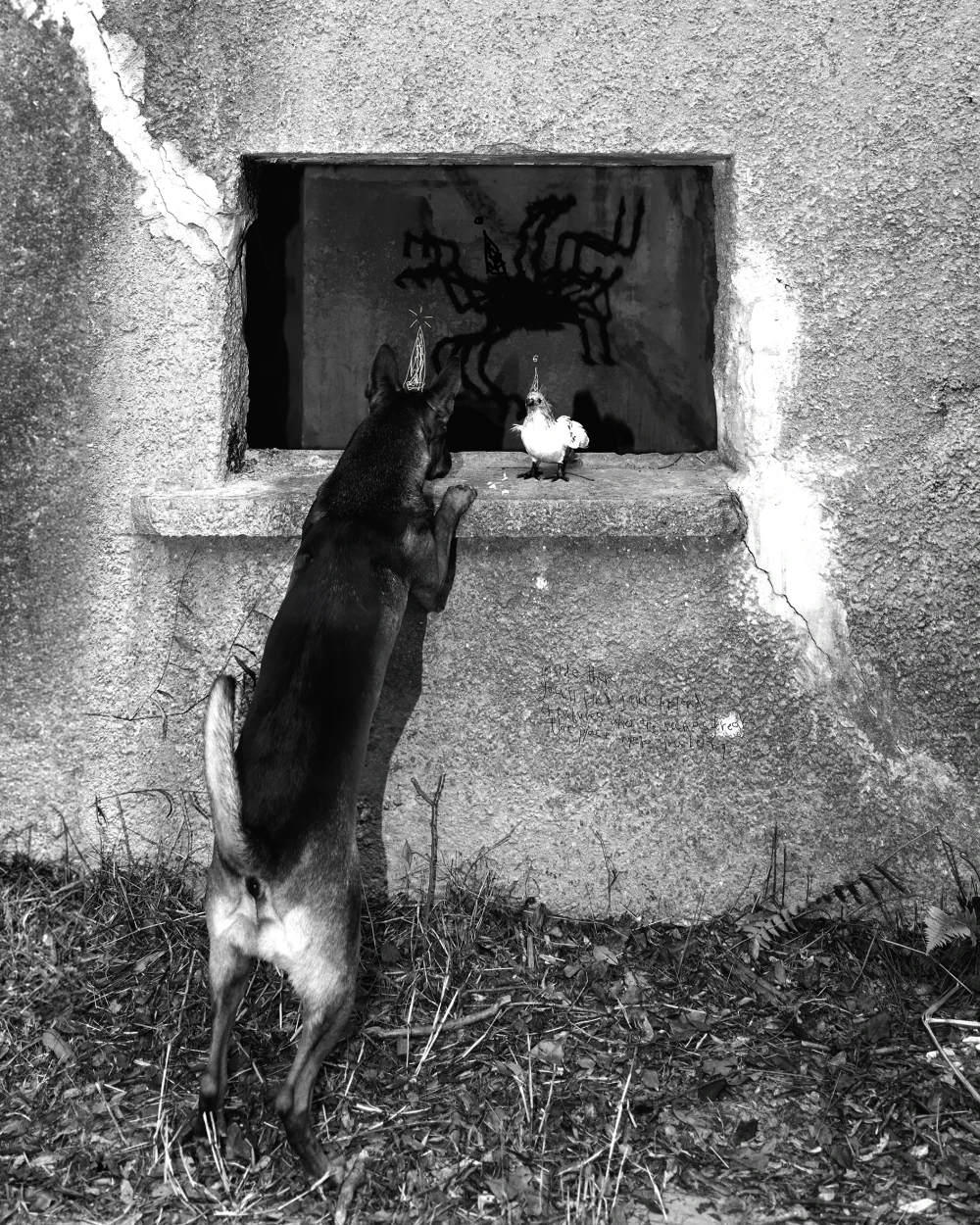
The Ruins of Lost Souls is a series of black-and-white collage images that involves the use of generative AI technology to produce surreal details.
It is inspired by research into traditional taboos, body discrimination, and the bullying of marginalized people explored in Hung’s previous series, The Skeletons in the Closet.
It is also a visual response to how Hung’s family’s health situation has influenced her exploration of her own identity and existence in recent years.
In 2016, Hung’s family was diagnosed with a genetic disease, Marfan syndrome. Hung and all of her family members underwent blood tests. She was the only family member who received a negative result for the disorder. Hung was surprised and confused by this news. Even though she was not a carrier of the disease, she felt that her family had been judged by medical authorities as “unwanted people” within the framework of eugenics.
This blow left Hung unsure of how to face herself and her family, and it also led her to question her identity within the family. While grappling with her marginalized identity, she began exploring abandoned sites—quiet places that helped her temporarily forget her worries. These places are described as “negative spaces,” as their existence is often unrecognized.
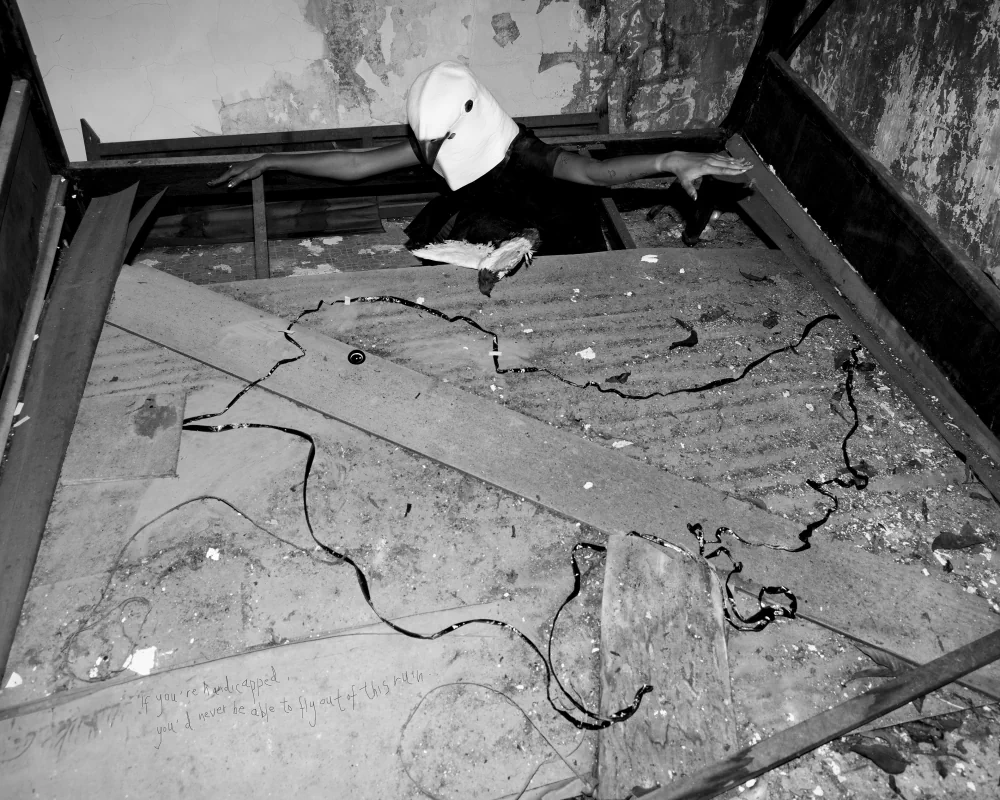
At first, she felt scared and uneasy when entering the ruins; however, this feeling gradually turned into curiosity and an extraordinary sense of calm. She eventually understood that her uneasiness stemmed from a lack of understanding of these places. Similarly, her discomfort regarding her family’s situation arose from a lack of understanding of genetic disease. The abandoned sites helped her realize that fear originates in ignorance, and that the act of viewing ruins can become a form of self-healing.
In addition to the metaphor of abandoned sites, the work also incorporates “pigeon” and “spider” masks, as well as other body props, to imitate the physical characteristics of patients with Marfan syndrome. These patients are sometimes referred to as “Pigeon Man” or “Spider Man” because of their unusually long bone structure, protruding sternum, curved joints, and drooping facial features. By performing these exaggerated appearances in front of the camera, Hung experiences the external gaze directed at her family members. Through this process, she comes to understand how traditional physiognomic concepts shape the way modern society perceives disability, and how these ideas are reflected in the persistence of body discrimination in contemporary culture.
About Fion Hung-Ching Yan
Fion Hung-Ching Yan (b. 1993) works primarily with staged photography and photo collage, presenting her work through installations and books. Her photographic practice challenges notions of humanity and is informed by the traditional stereotypes she encountered as a woman in Chinese society, family trauma, and conflicts experienced in everyday life. Within this framework, Hung is currently researching the concept of eugenics and how it has influenced society’s treatment and understanding of disability—particularly people with inherited genetic disorders—under capitalism and the industrial movement, both historically and in the contemporary world.
Hung is a visual artist, researcher, and art educator. She received a Bachelor of Arts (Honours) in Visual Arts from Hong Kong Baptist University in 2016 and completed a Master’s degree in Photography at the London College of Communication, University of the Arts London, in 2023. Her work has been exhibited internationally, including at the Chiang Mai Photo Festival 2017, Hong Kong International Photo Festival 2020, FORMAT Photo Festival 2020, and Copenhagen Photo Festival 2020. Her project The Skeletons in the Closet (2021–2022) was selected as a finalist for the Hahnemühle Student Award and was exhibited at Photo London in 2023. The project was also presented as a solo exhibition at South London Gallery as part of Peckham24’s programme in 2023. Hung currently teaches photography at the Academy of Visual Arts, Hong Kong Baptist University, and at The Education University of Hong Kong. [Official Website]