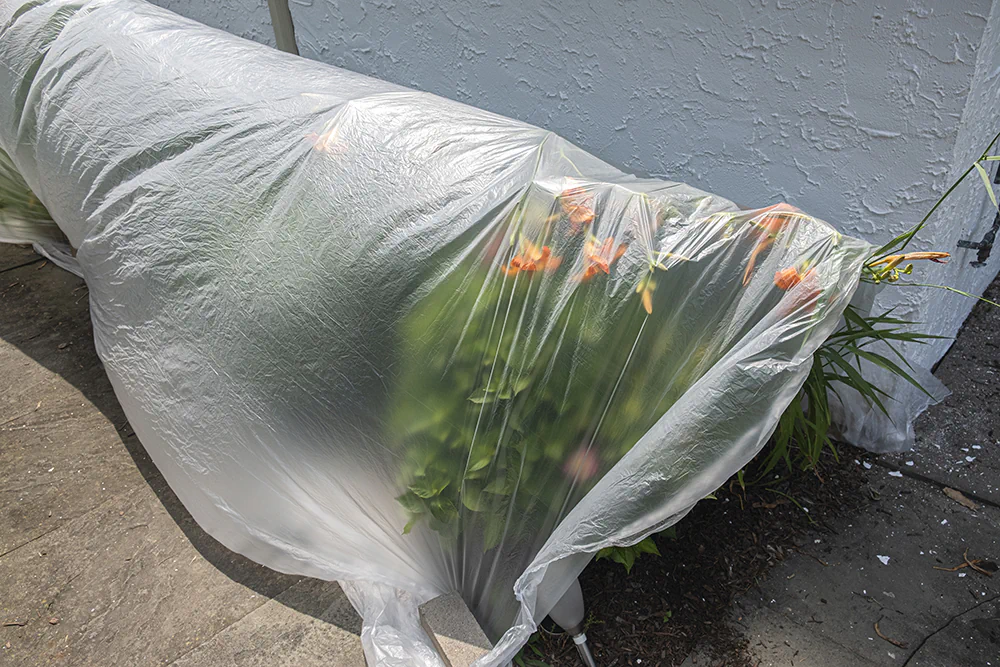
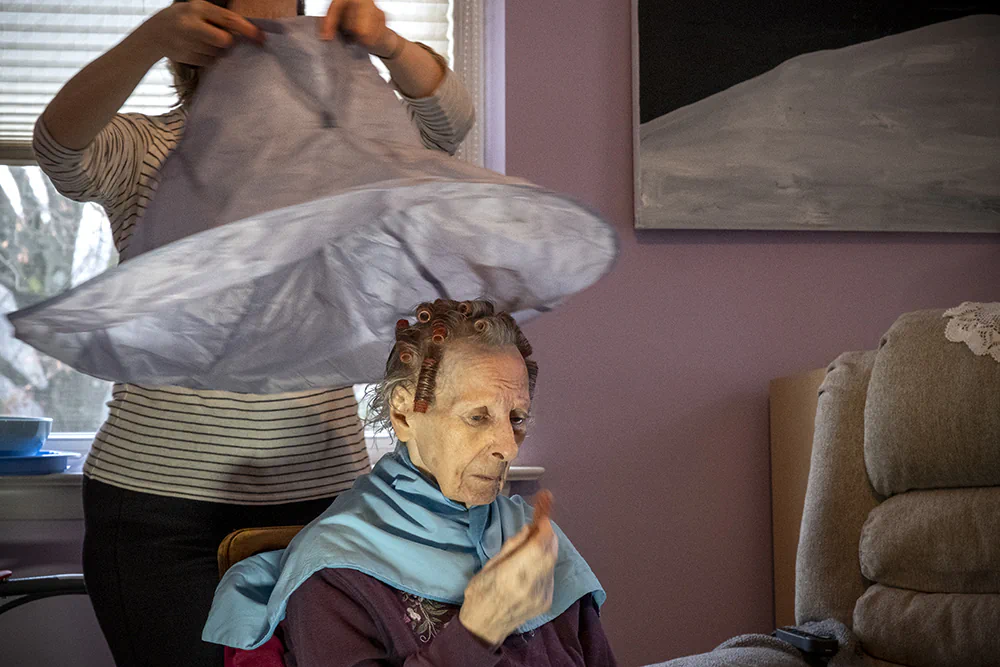
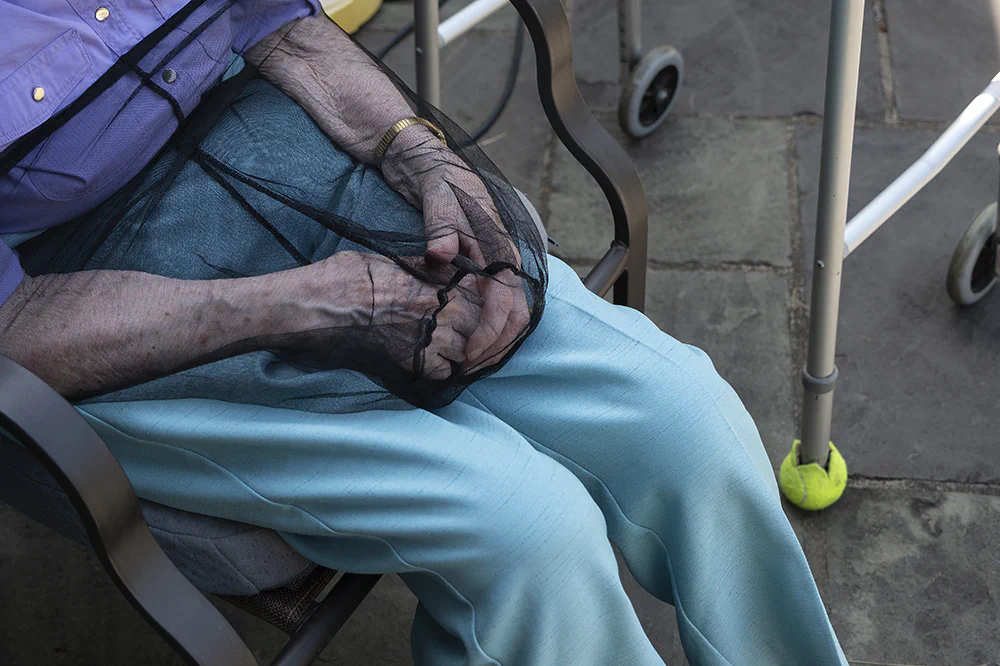
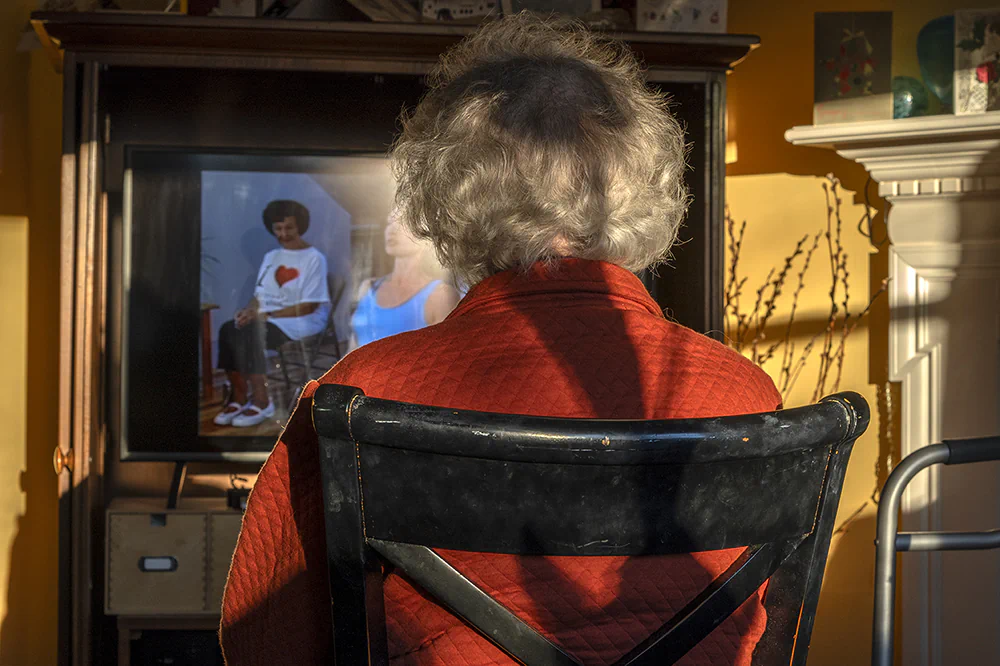
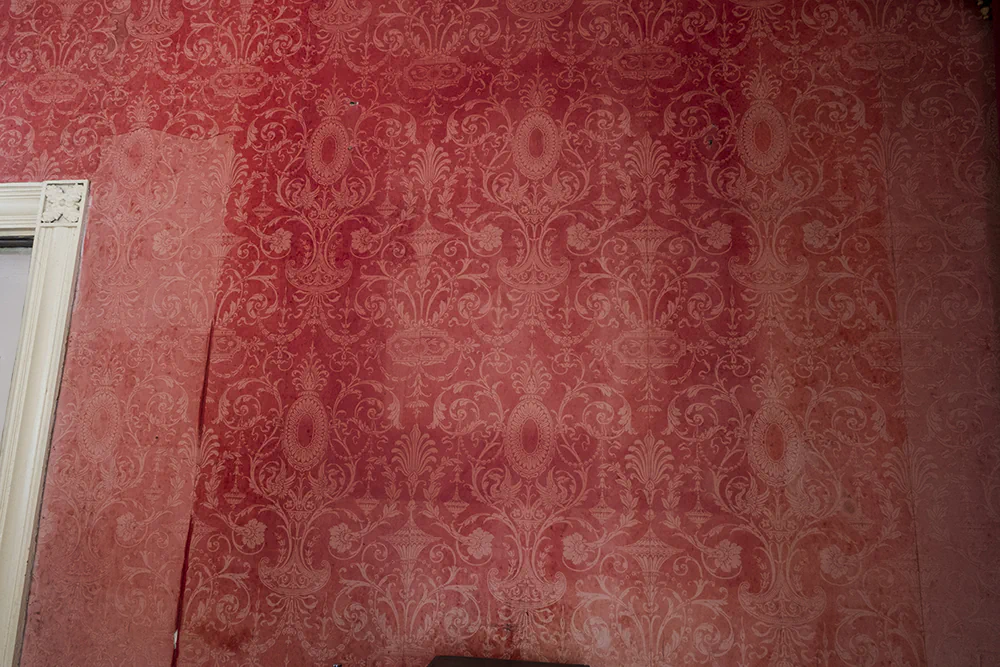
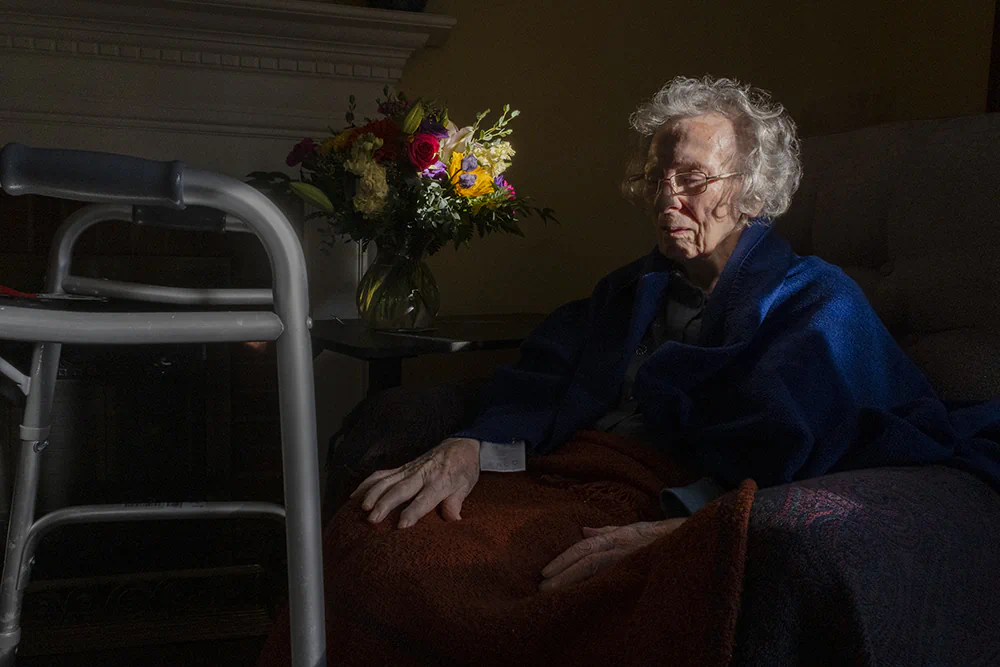
The complexities of aging—and the quiet, sustained labor of caregiving—often unfold beyond public view.
These experiences are deeply human, yet they rarely linger in the spaces where we are invited to look closely.
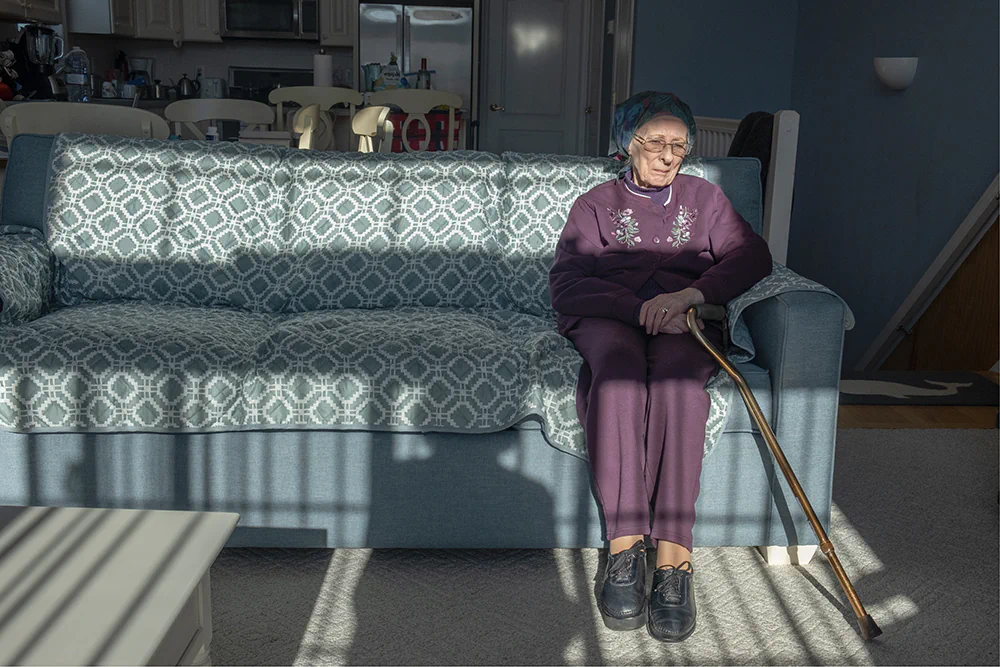
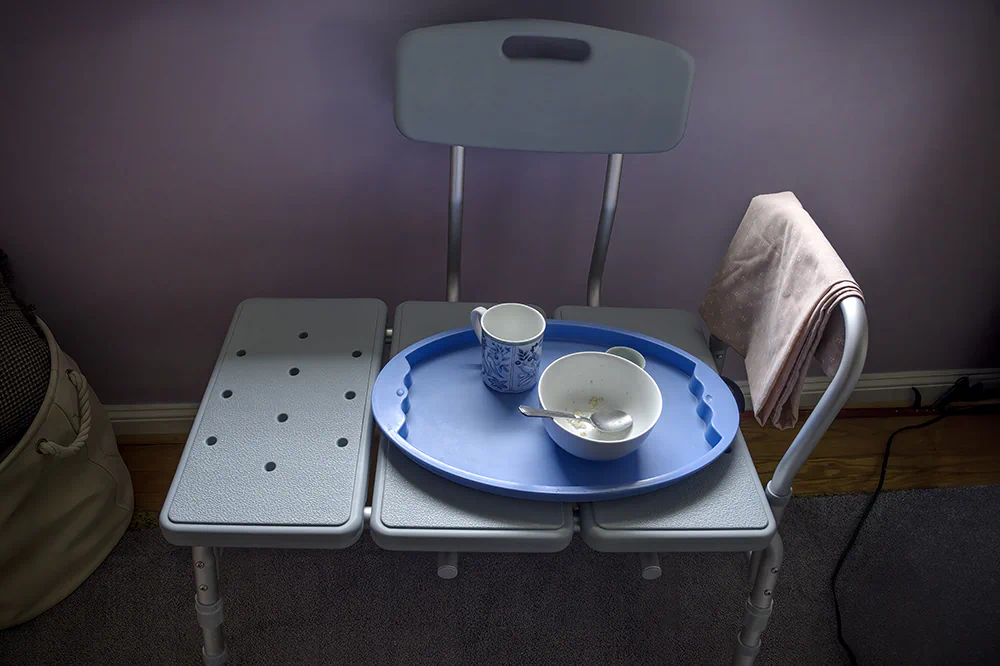
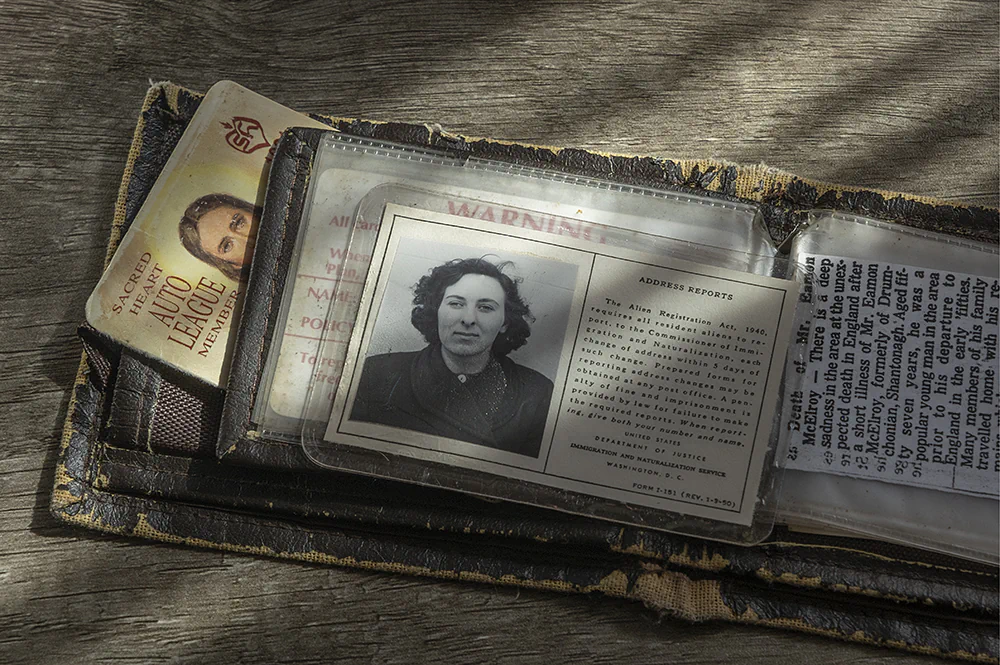
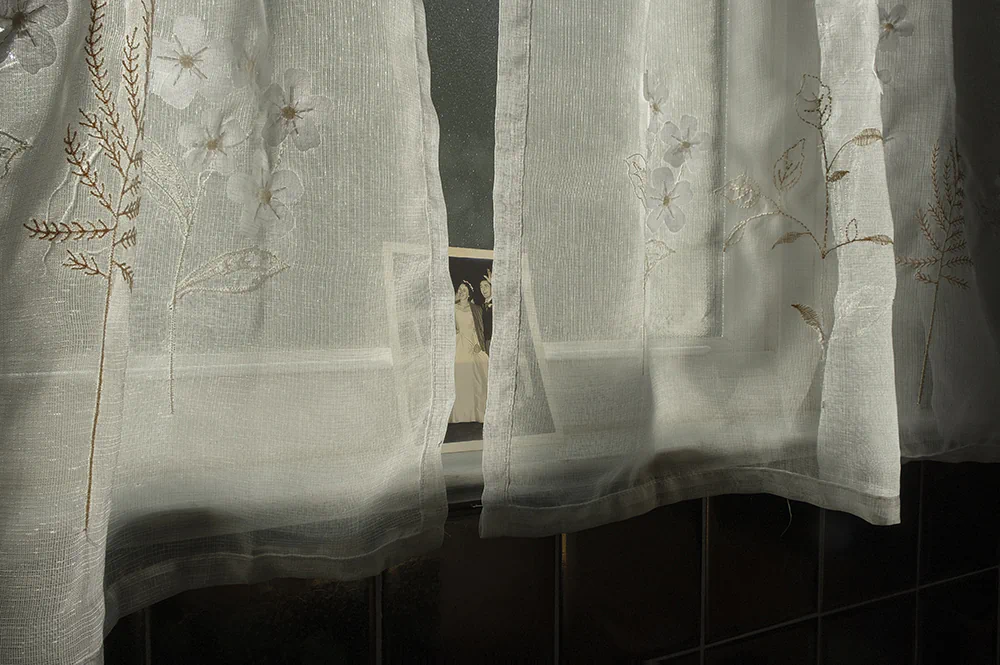
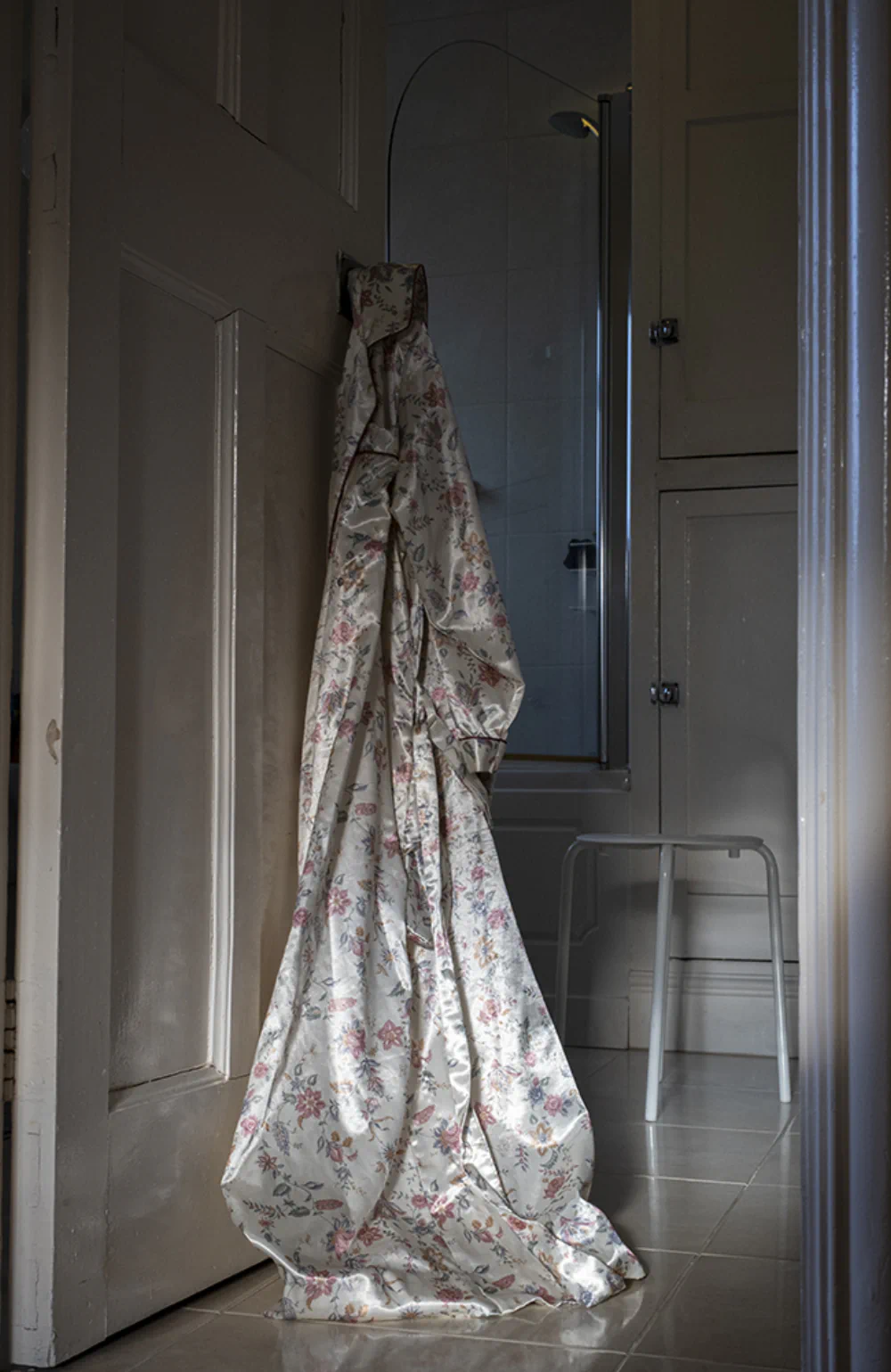
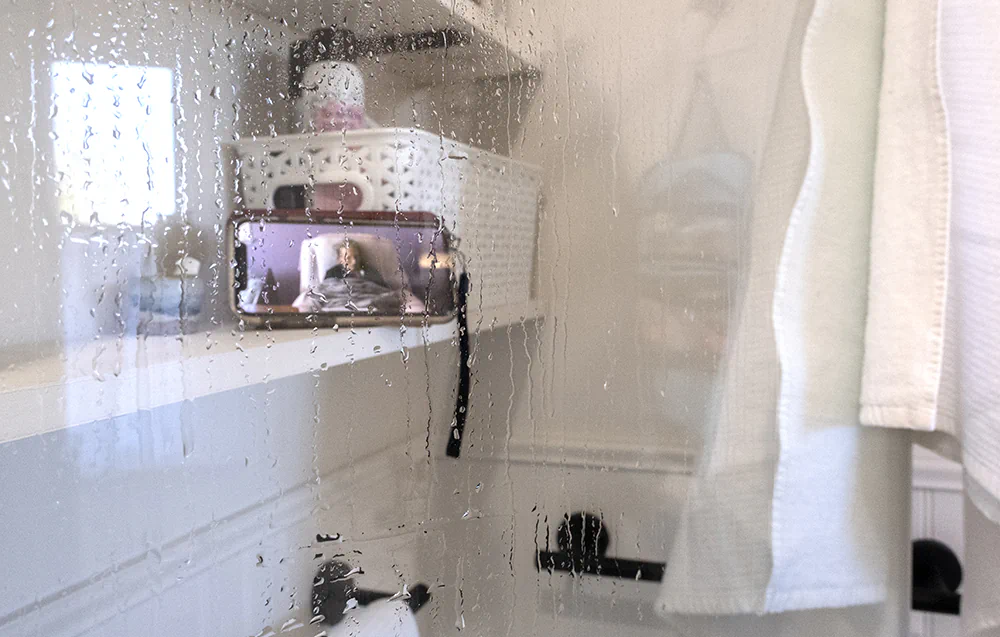
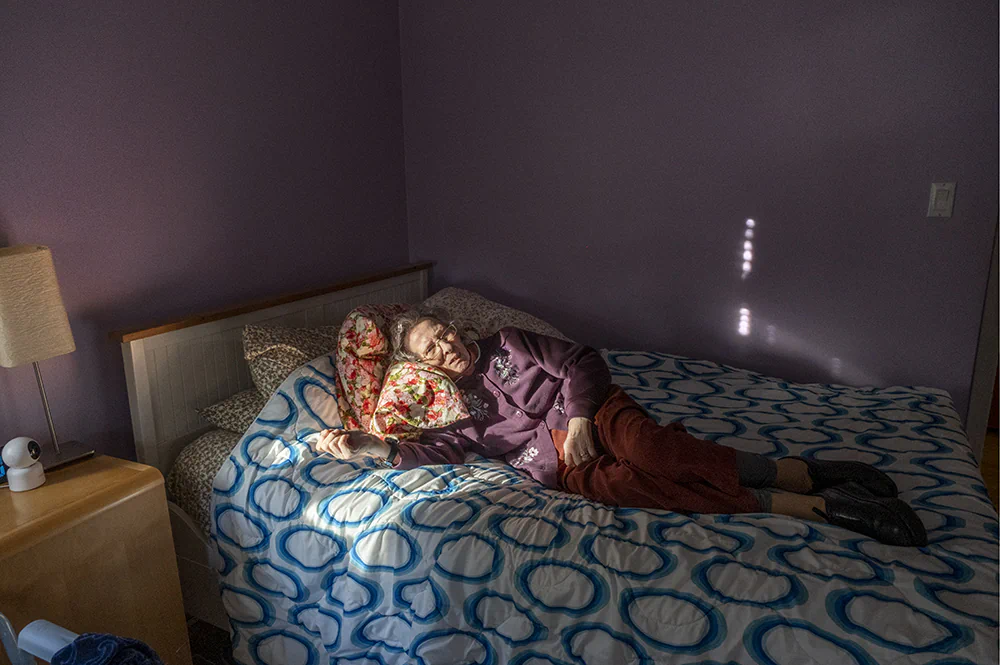
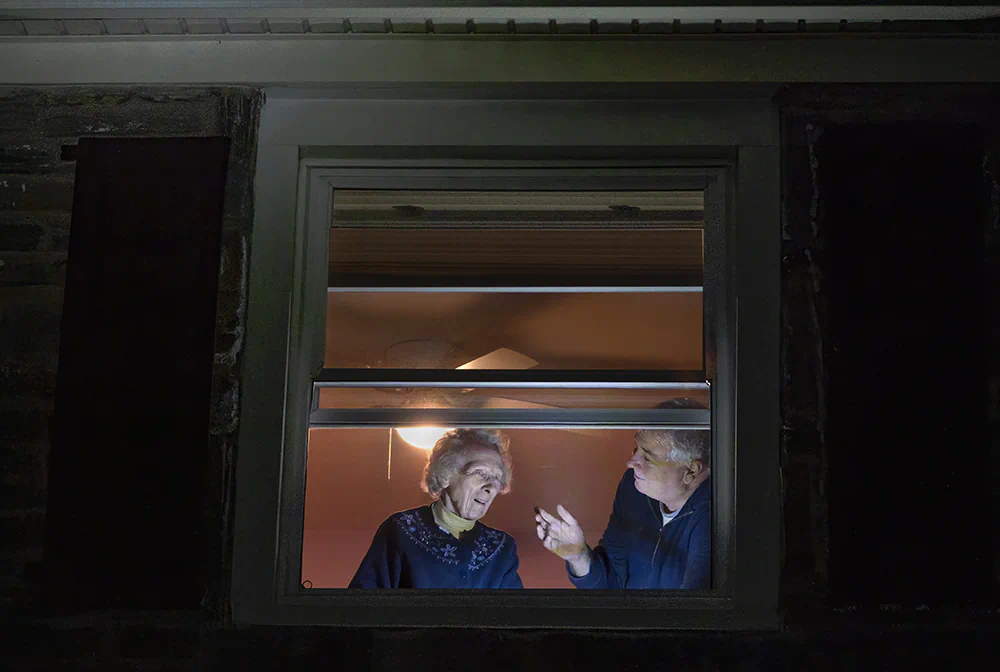
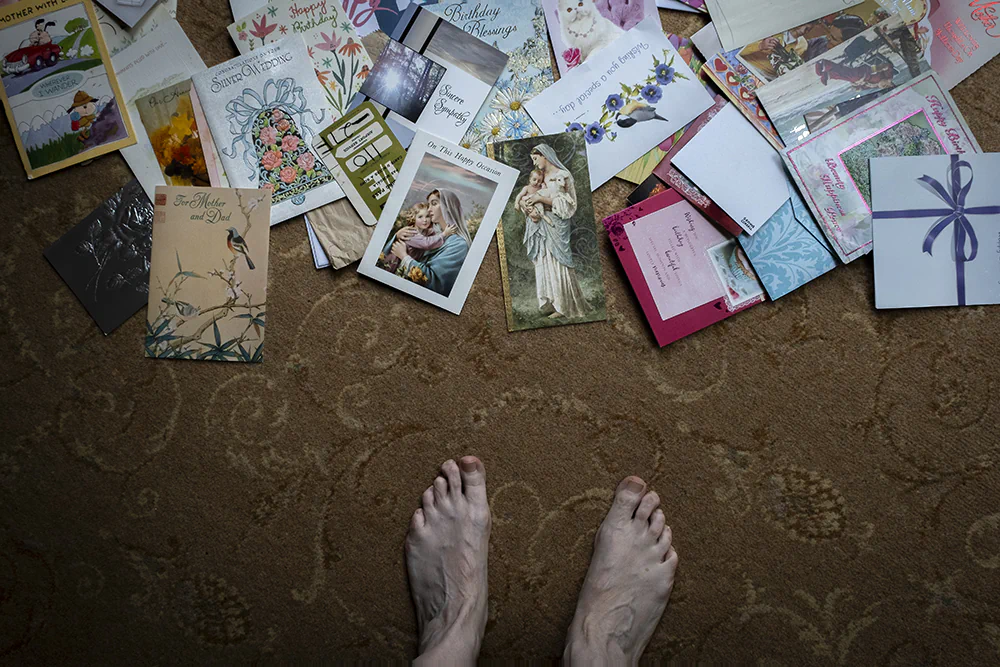
This selection of images comes from a larger body of work that emerged from my years as both daughter and caregiver to my mother, during the seven years she lived with me after moving from her home in Ireland.
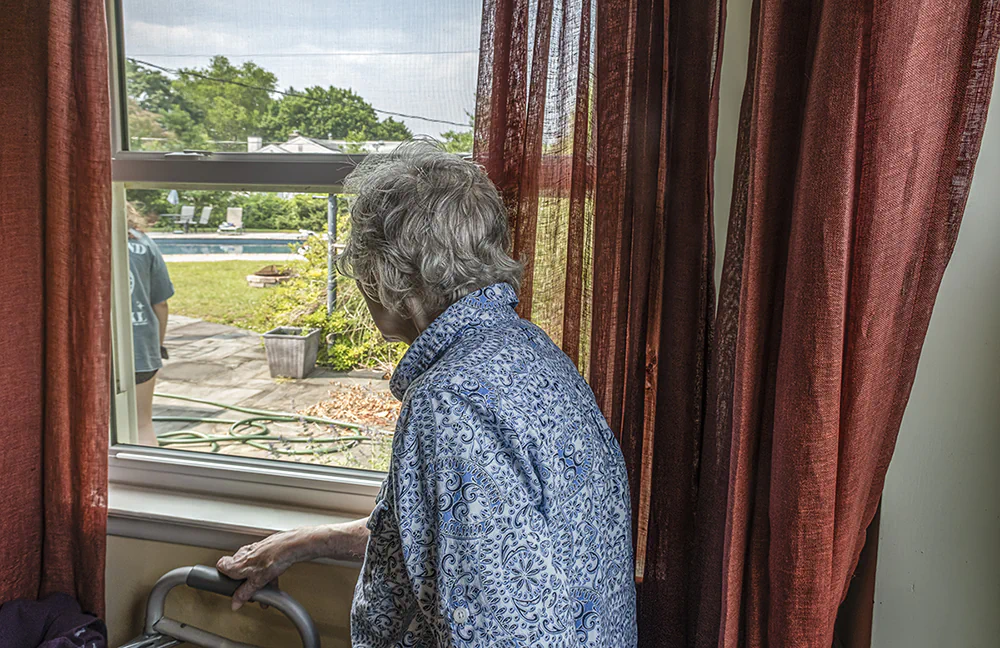
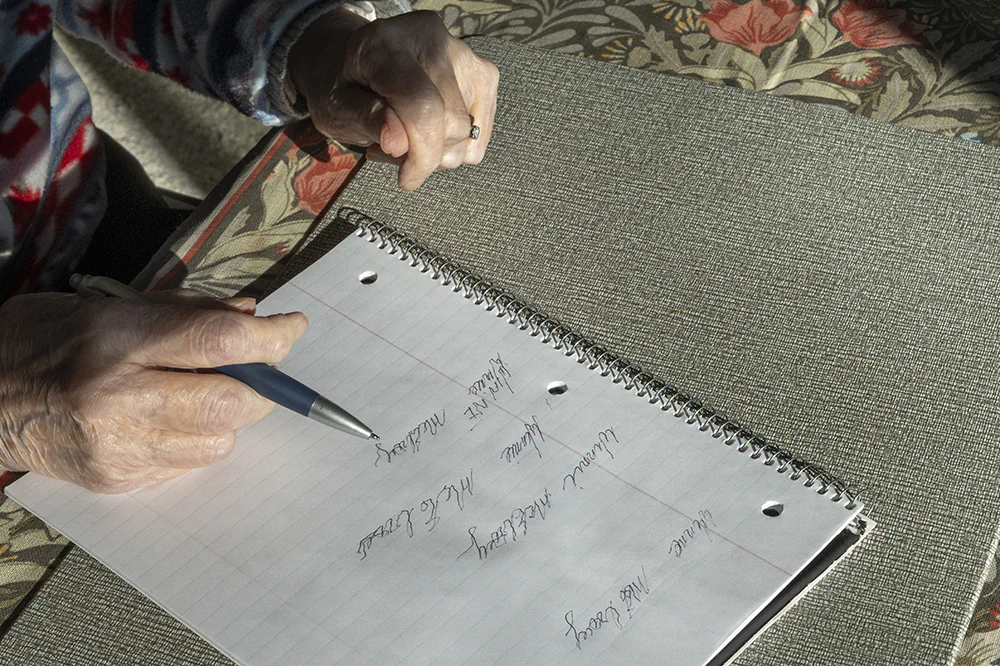
As she reached her ninety-fourth year, dementia, near blindness, and physical pain narrowed her world, even as her presence remained strong. Our days took on a shared rhythm shaped by care, repetition, and attention. Gradually, time itself began to behave differently—stretching, collapsing, looping back on itself. She often lived in two places at once, her memories drifting between the streets of Philadelphia and the green fields of Ireland.
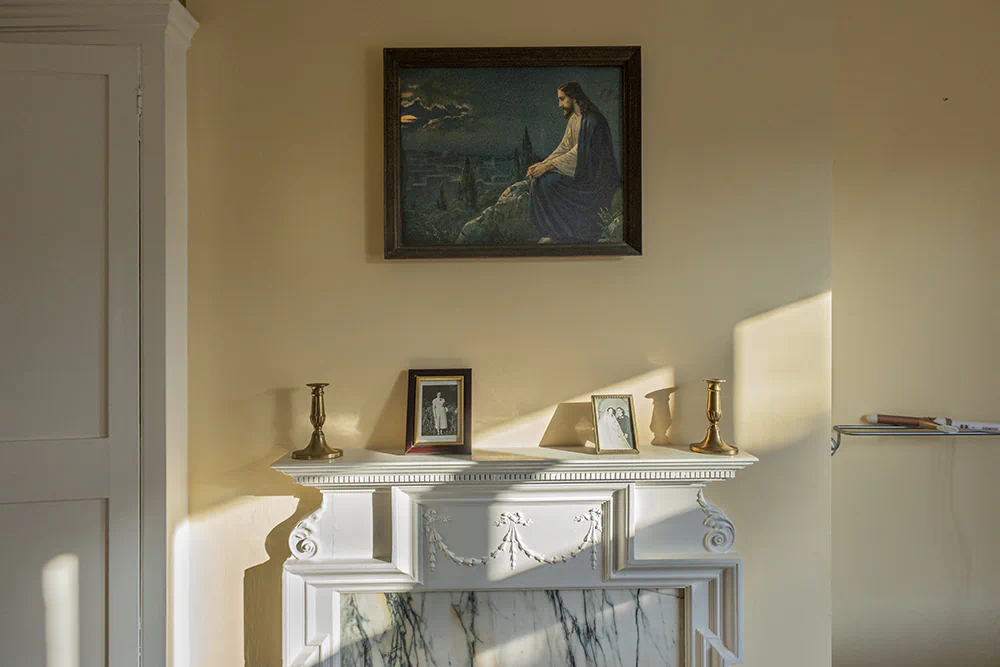
My mother’s shifting search for home brought into focus my own. We were both immigrants, though in different ways and at different stages of life. We had both crisscrossed the Atlantic, but in opposite ways. For generations, movement between Ireland and America shaped who we were—and how we understood belonging. Home was never singular or fixed; it was something carried, revised, and reimagined over time.
There was a period in my mother’s life when she understood that home could exist in two places—that she could live in one and long for another without losing either. Dementia unsettled that certainty. She began waking in states of confusion. Some days, home was Philadelphia. Other days, it was Ireland. And sometimes, it was somewhere just out of reach—a place she knew she should be, but could not find. The comfort of belonging to both places was gradually replaced by the distress of feeling untethered to either.
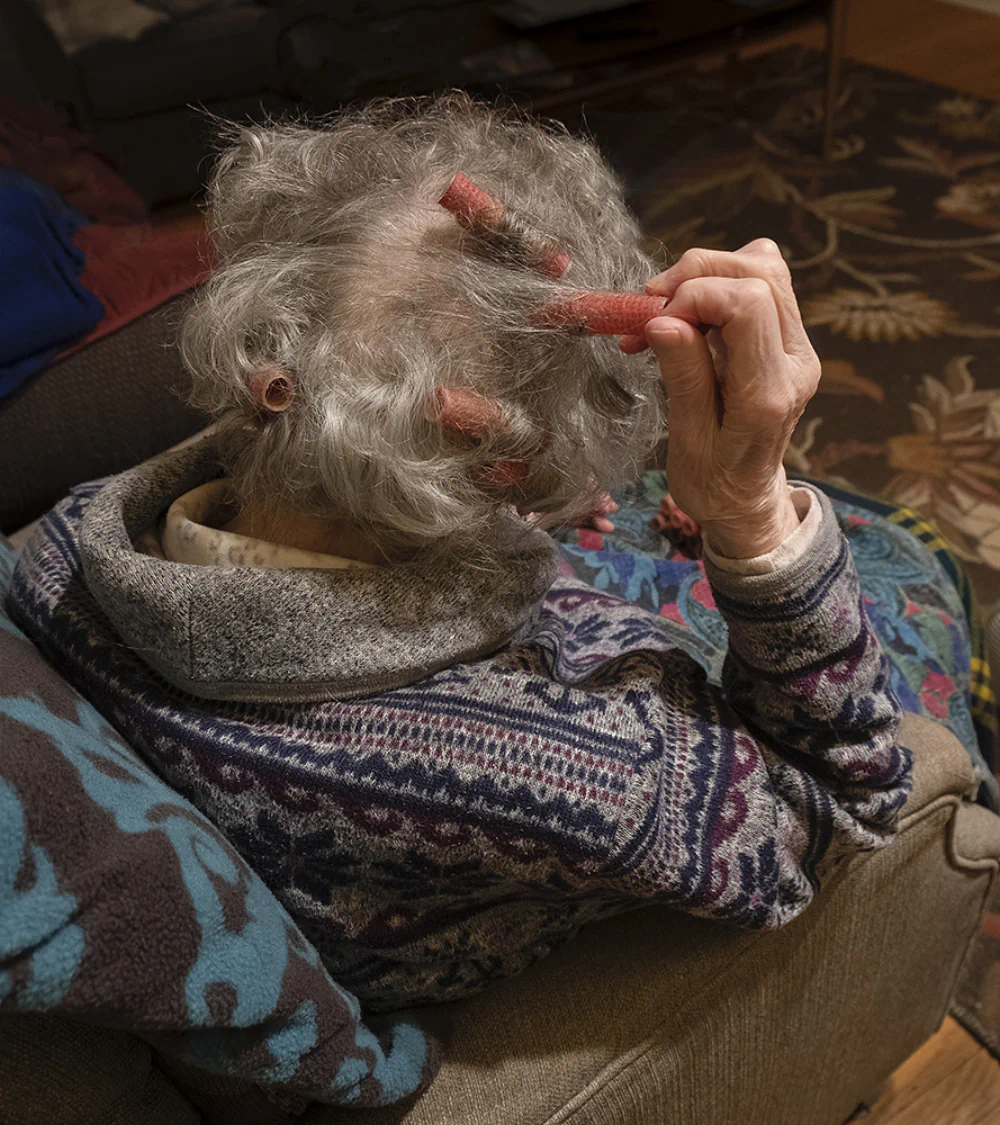
Making my mother the focus of a series of images was not an easy decision, but it became an unexpected gift. What began with hesitation evolved into a quiet collaboration. The camera allowed us to meet outside the fixed roles of caregiver and patient. It offered another way of being together—one grounded in trust, attention, and shared presence.
While I am not physically visible in these images, I am in every one of them. The intimacy present in the photographs grew out of lived experience, repetition, and mutual dependence. The truth of this work lies in attention rather than revelation. I photographed the experience of caregiving as it unfolded for us—across minutes, days, months, and years—attentive to what remained steady even as so much shifted
Since my mother’s passing, these images have taken on a different weight. They now hold traces of a relationship defined by closeness, responsibility, and care—without needing to declare it. This project is less about memory as something preserved, and more about presence—about the act of staying with someone, fully, in a time that cannot be fixed or extended. In honoring my mother’s life with dignity, I am also telling a story shared by many: of memory, aging, caregiving, migration, and loss; of searching for home; of lives shaped by migration; and of the quiet beauty found in the journey between then and now.