As much as he can, he tries to bring his lens closer to what makes up the essential yet often invisible pieces of the rural puzzle.
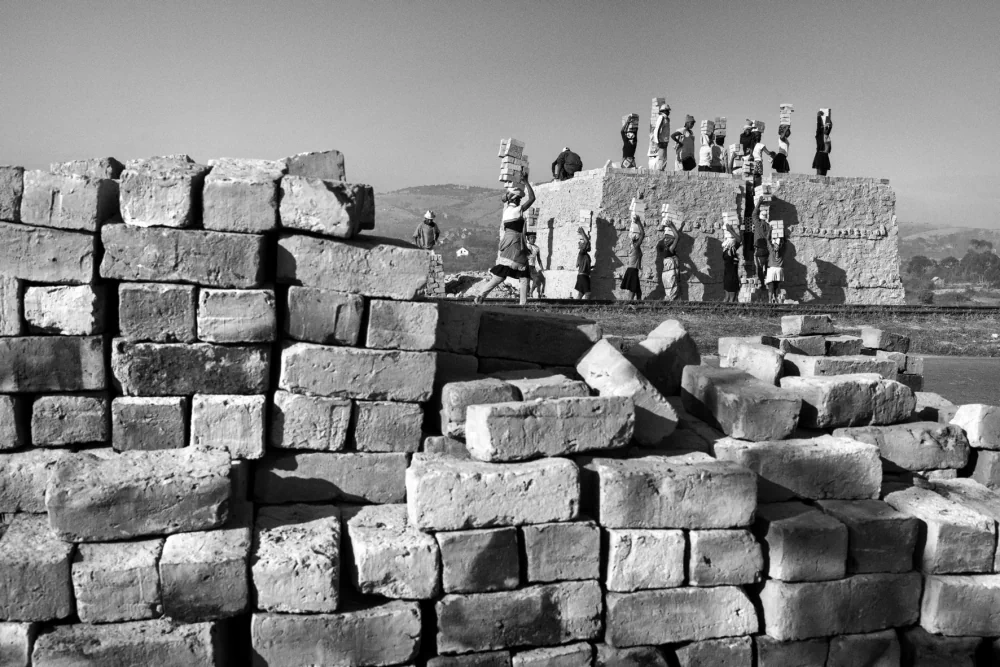
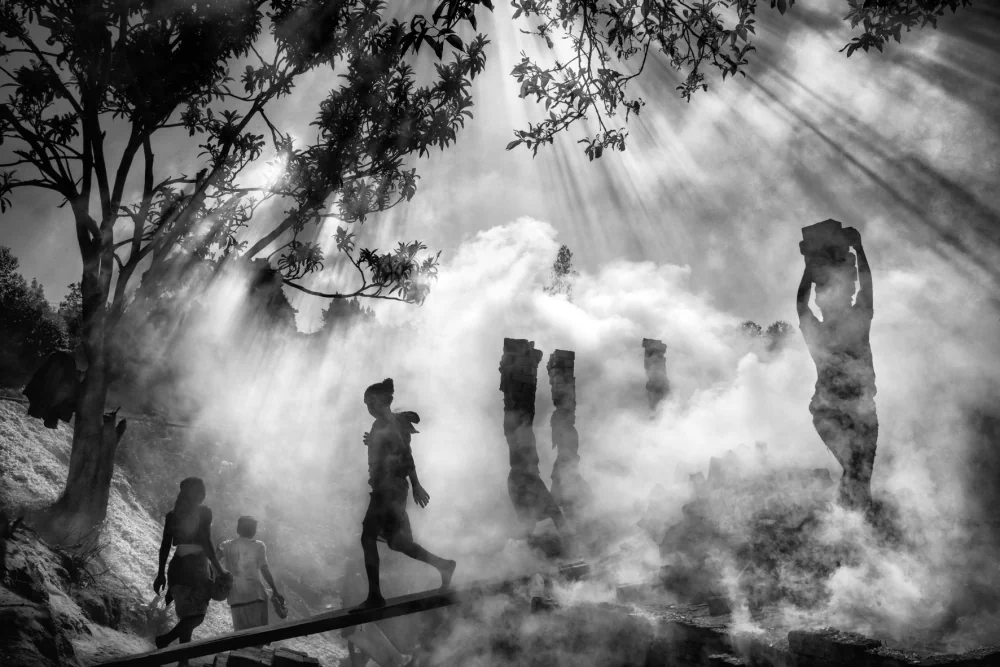
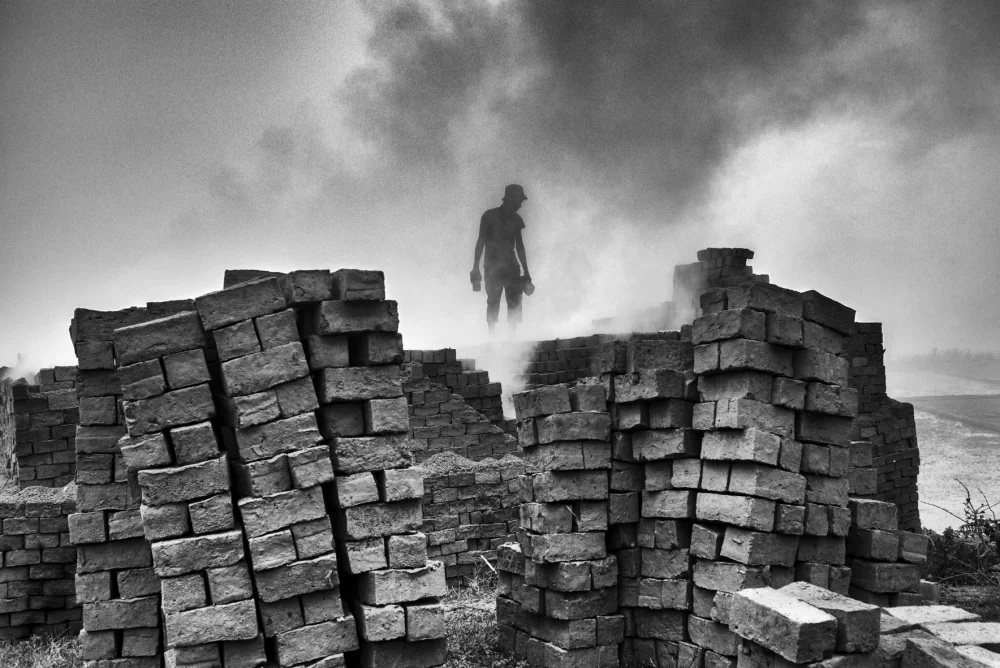
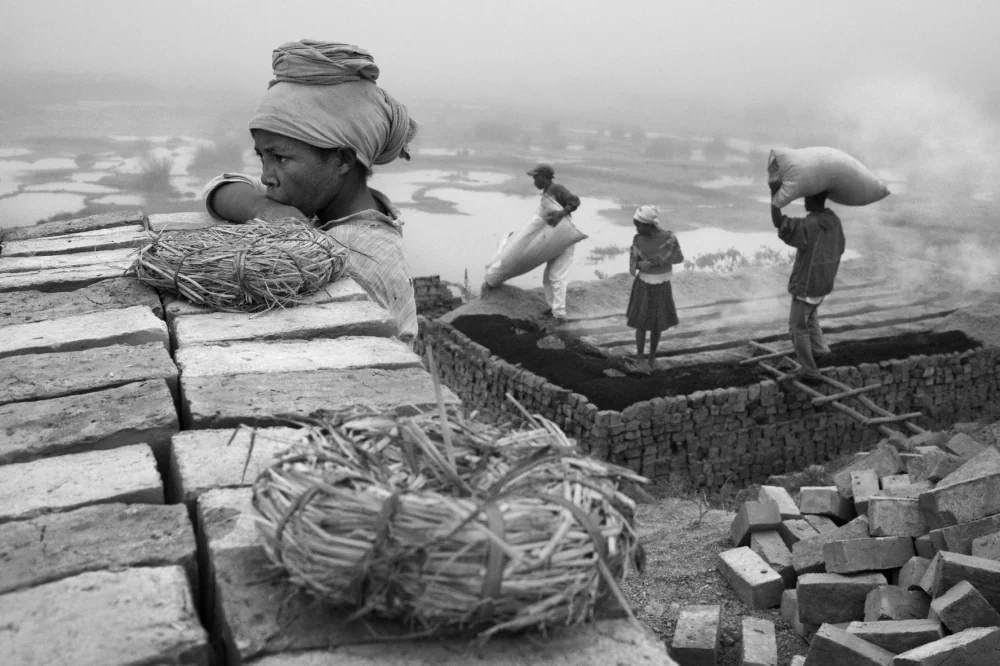
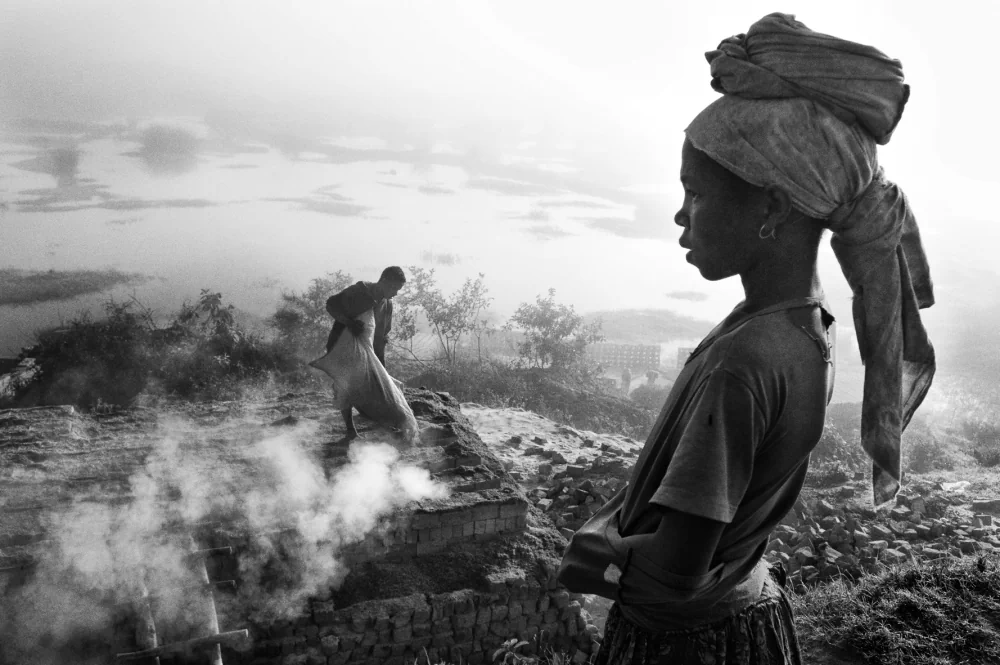
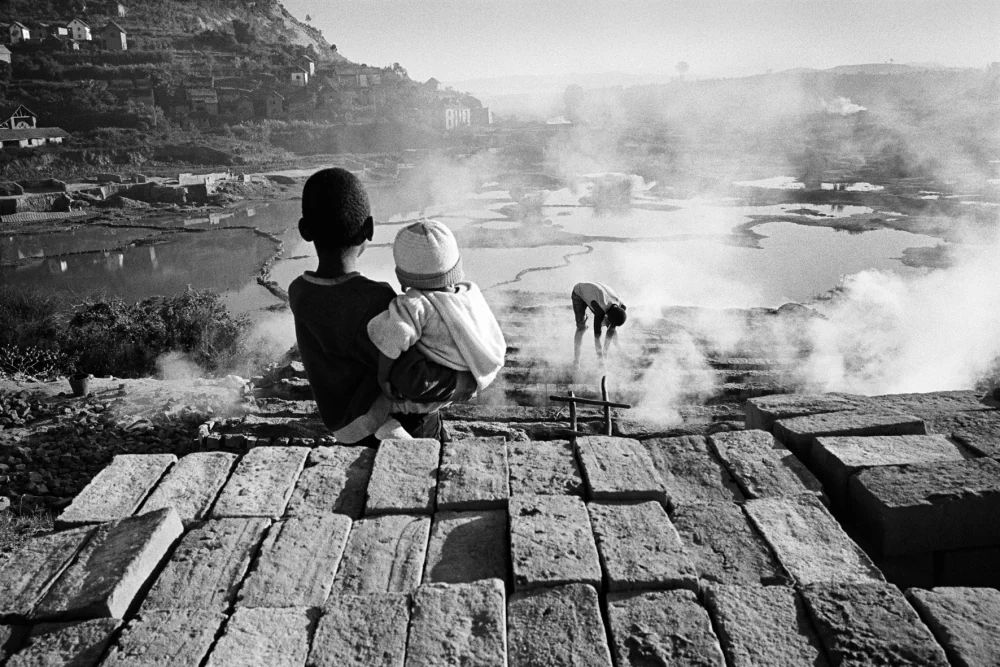
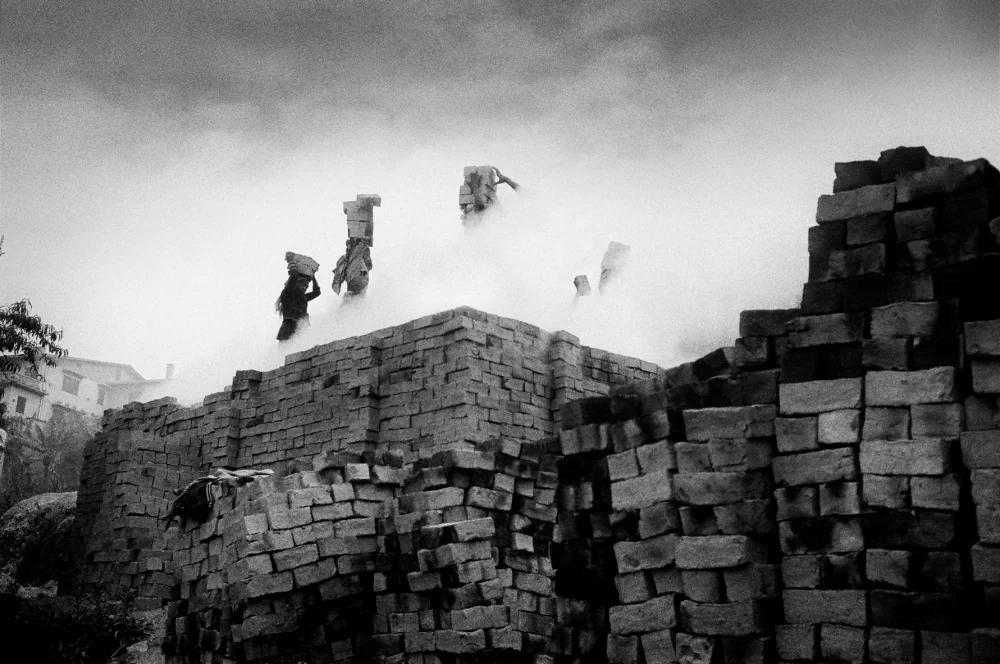
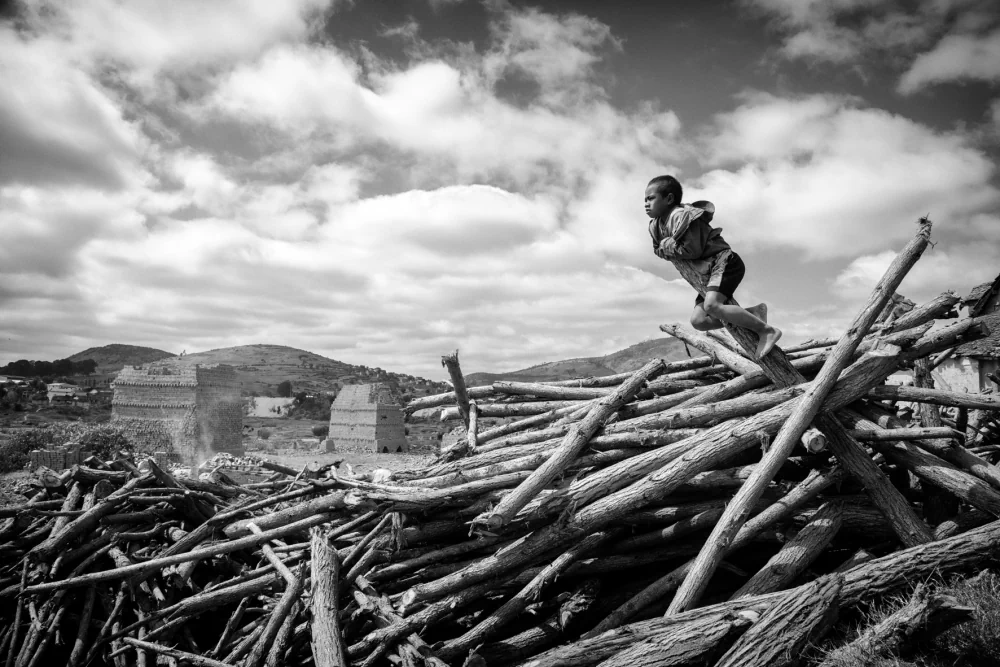
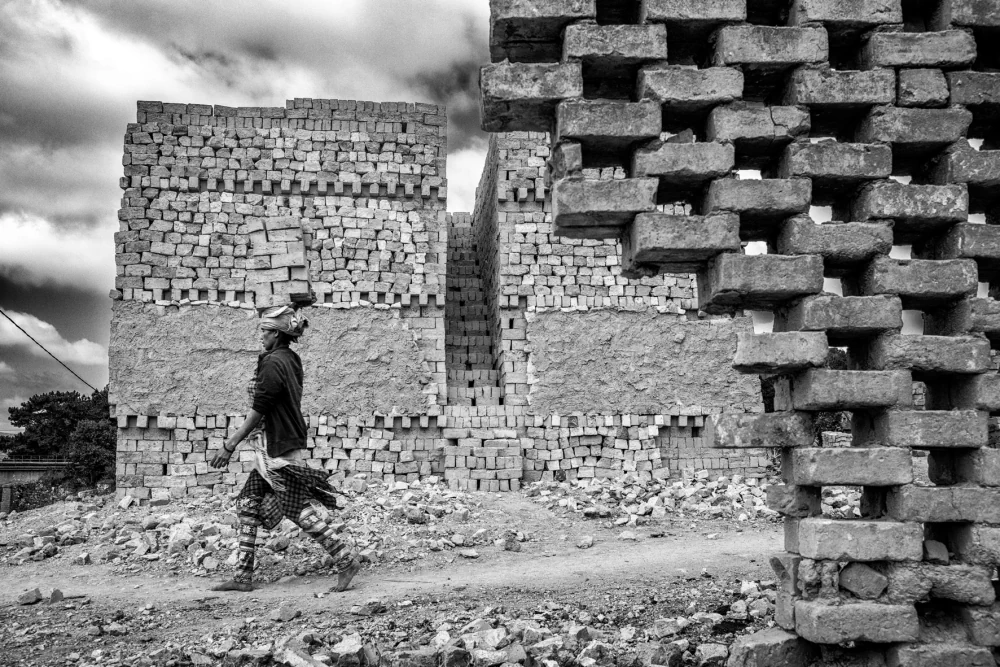
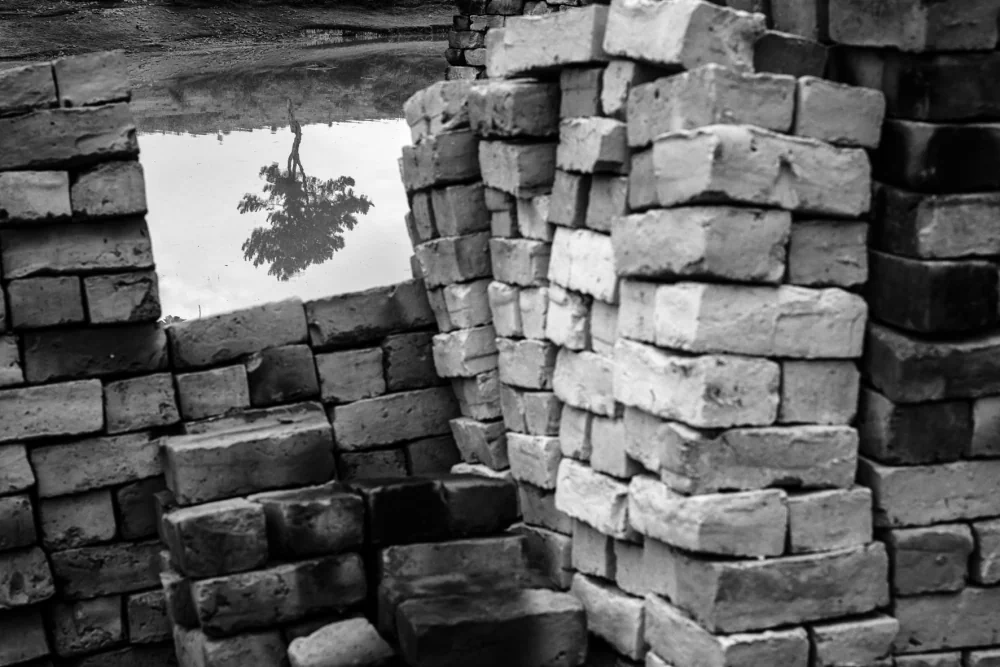
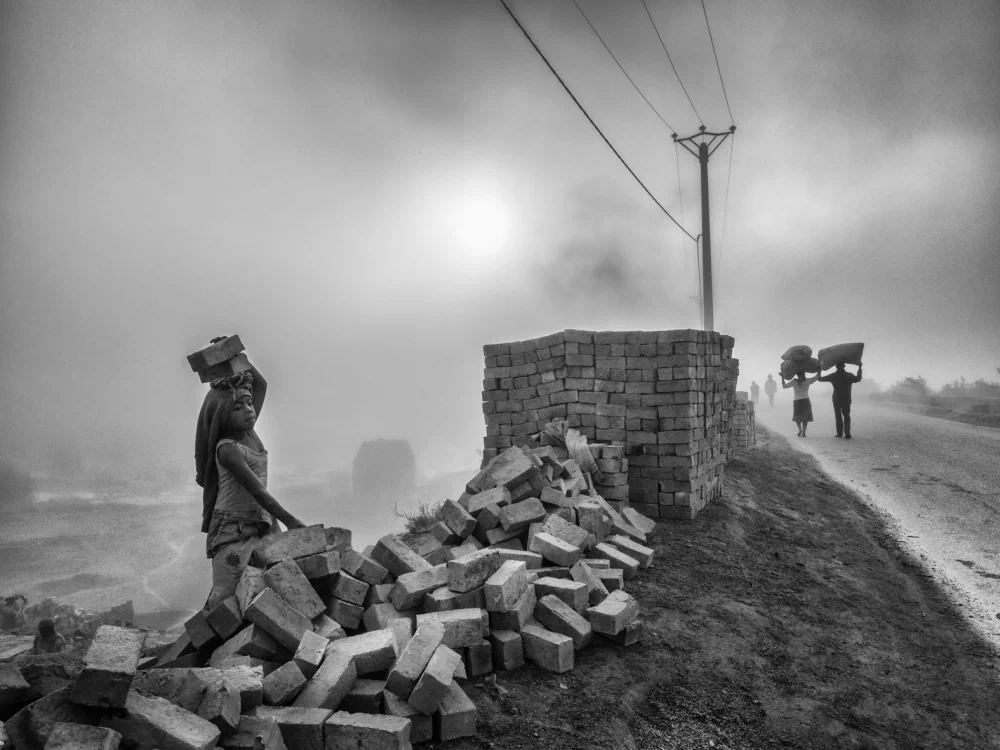
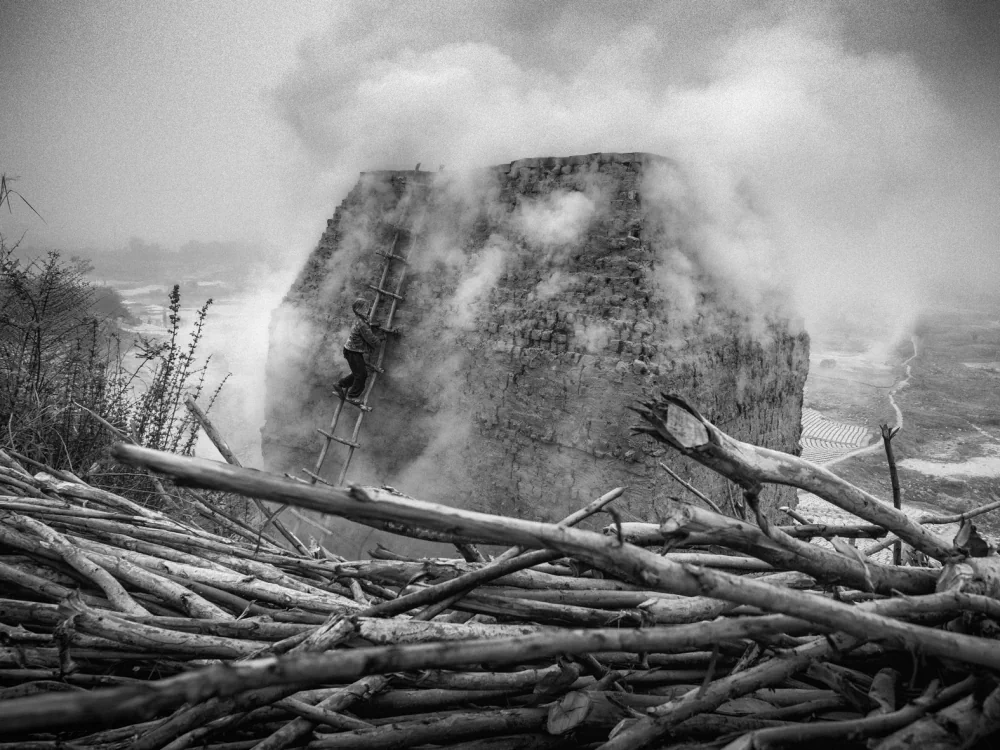
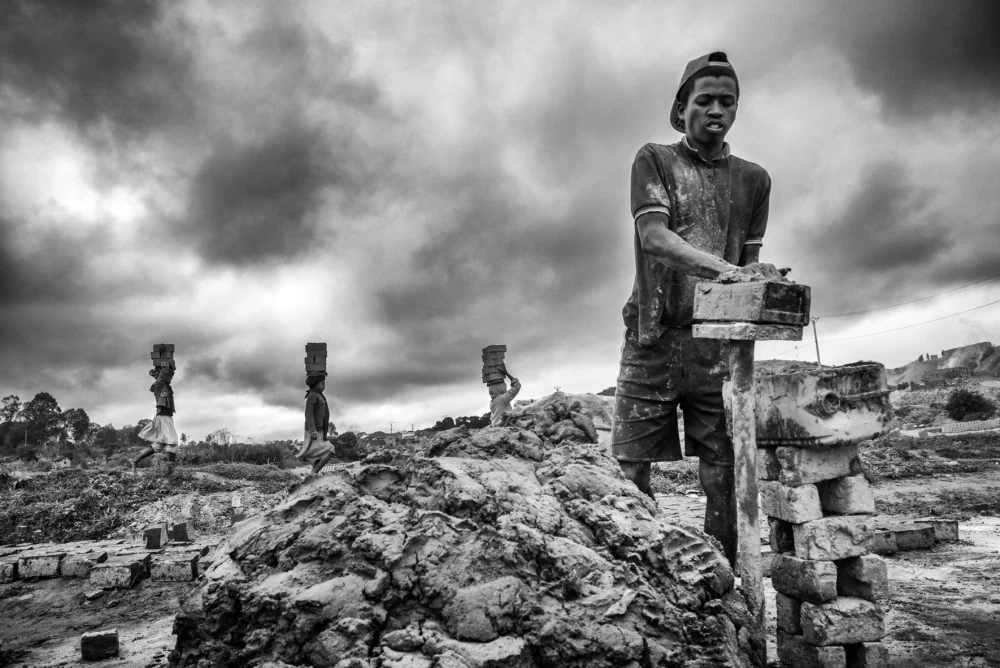
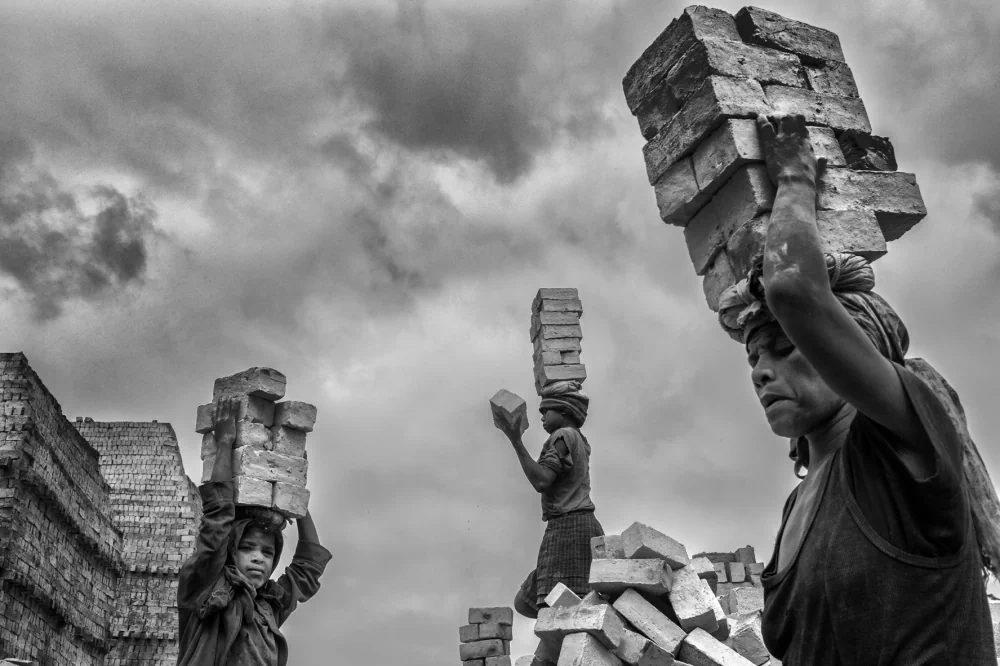
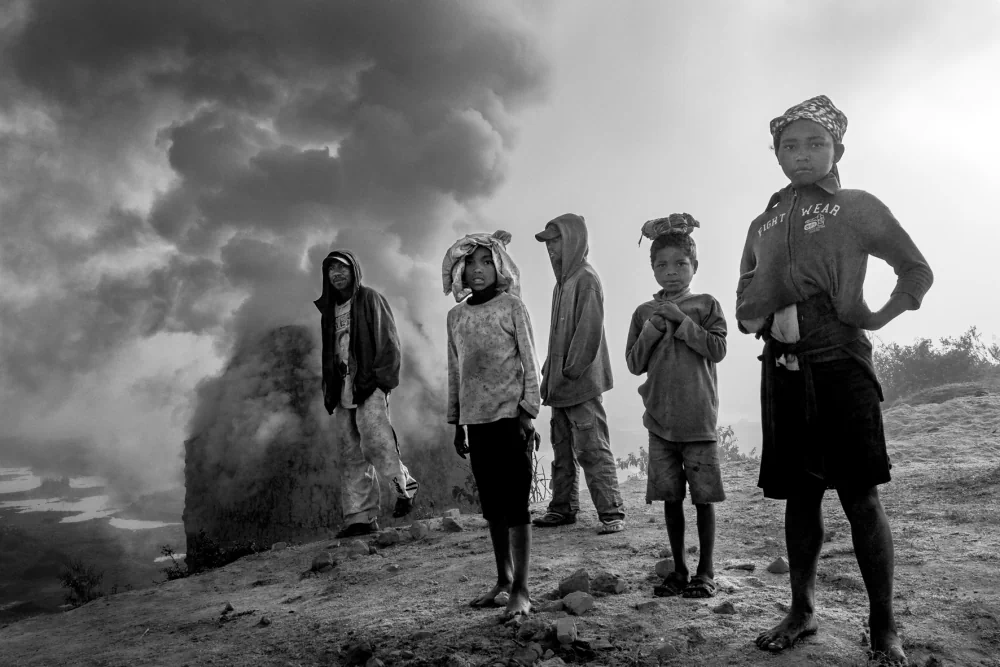
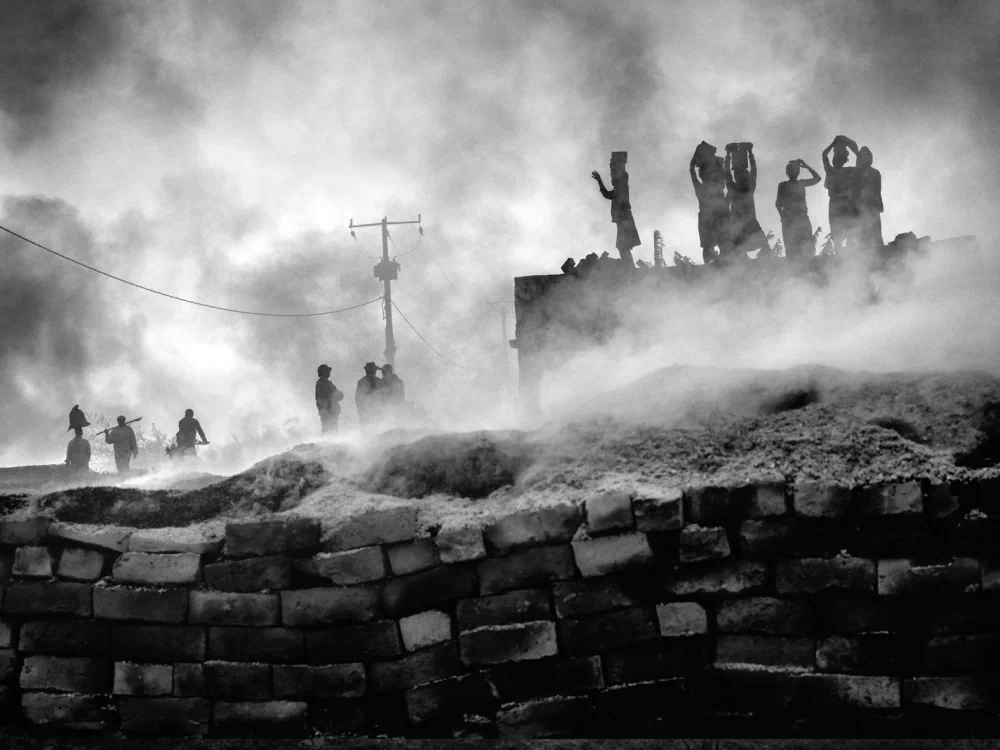
On the outskirts of Fianarantsoa, at dawn, brickmakers are already at work, before the heat becomes overwhelming.
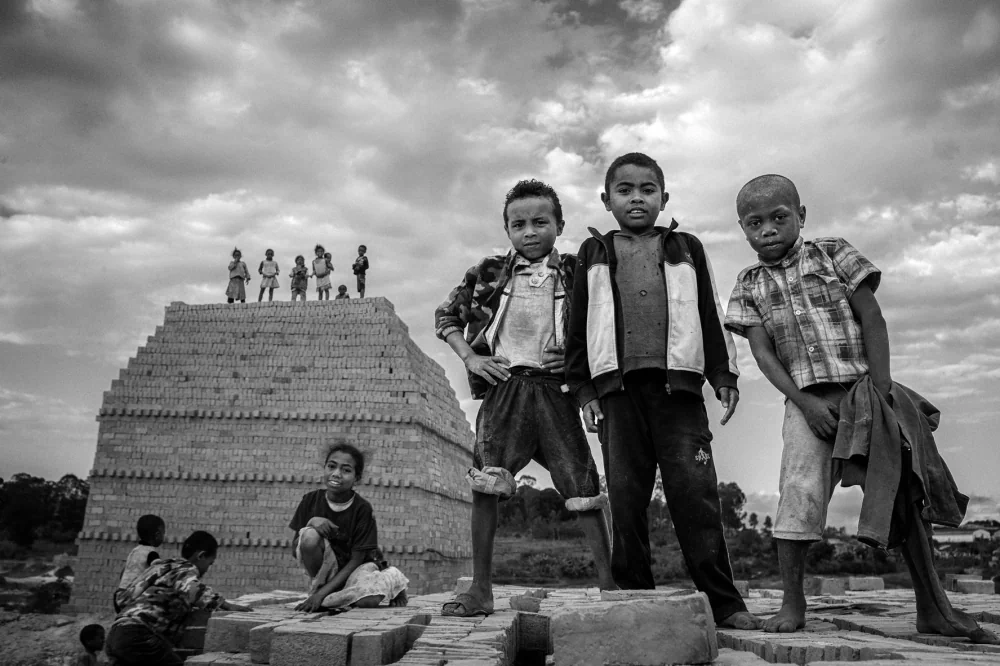
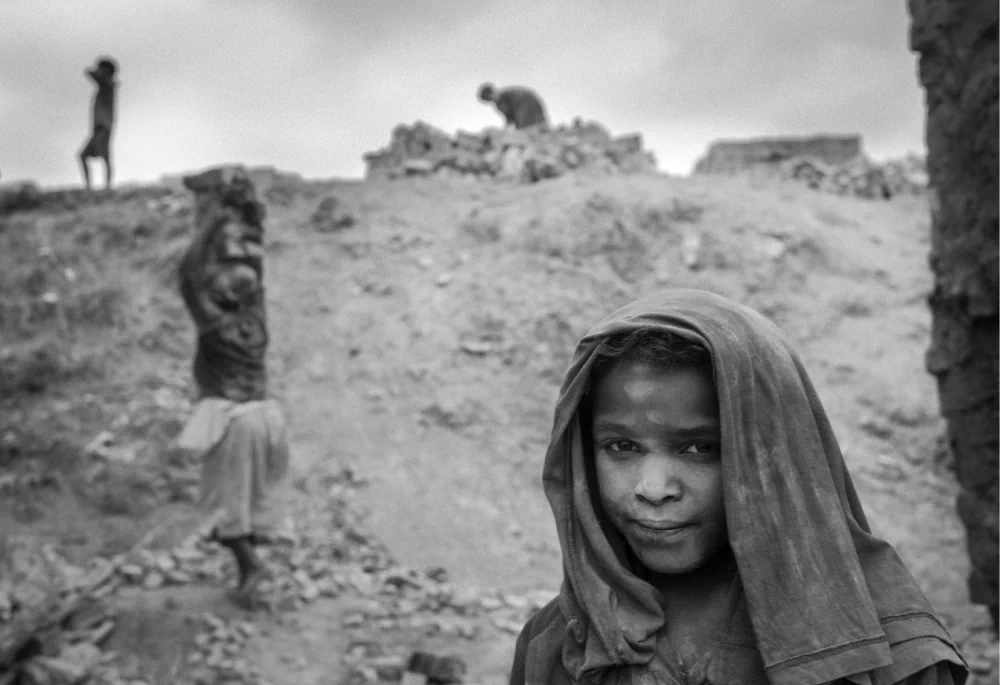
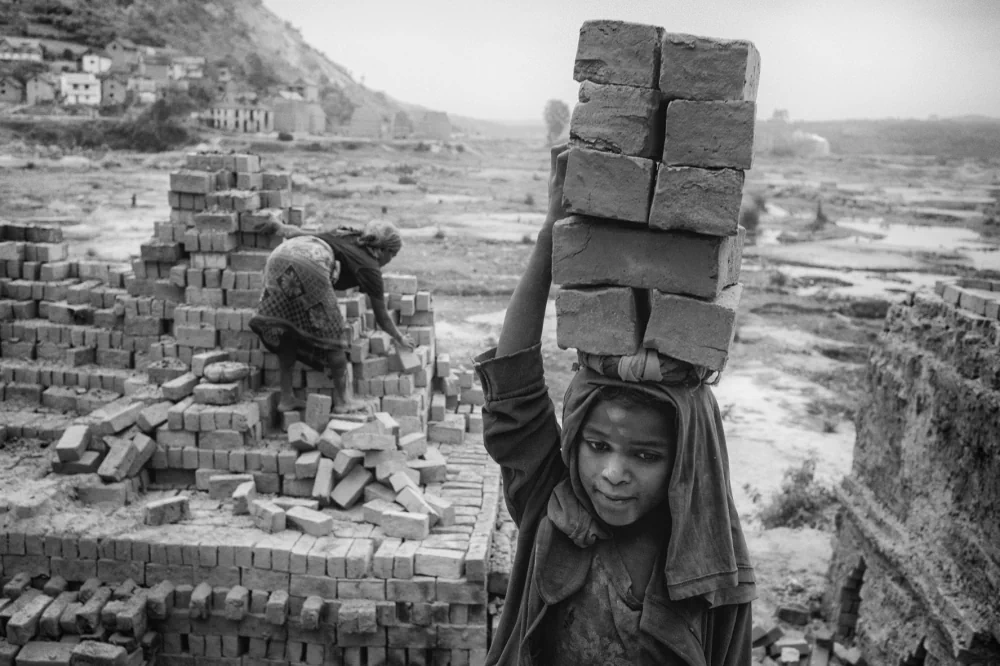
They are local people. Most of them grow rice, and once the season is over, they turn to brickmaking. It is there that he discovered entire families, sometimes even children who, before going to school, help their parents carry bricks. He remembers one morning, around eight o’clock: all the children left with their schoolbags after helping with the loading. It left a deep impression on him.
He then felt that he had to do something, to focus on these people, because they always work in the shadows. Yet often all it takes is to turn one’s head to see them there, by the side of the road. From the mid-1990s onward, he began to devote several photographic series to them, simply to bear witness to their presence and their work.
He has a deep admiration for what they do, and it is this admiration that he tries to convey in his images. This is not a miserabilist vision; it is a gaze of love and respect. Seeing him return almost every day with his camera, they eventually said to themselves, “This man cares about us.” That is how he was able to photograph them with tenderness.
About Pierrot Men
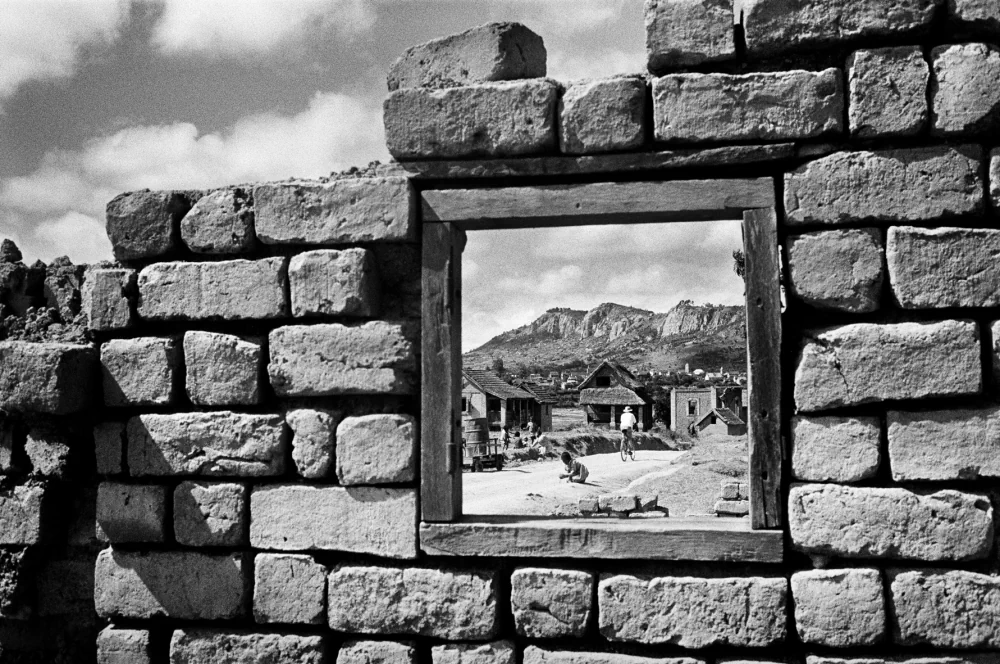
Born in November 1954 in Midongy-du-Sud on Madagascar’s east coast, Pierrot Men lives and works in Fianarantsoa, where he runs the city’s largest photographic laboratory, Labo Men. His relationship with photography began in 1974, when he opened his first lab, although for many years it remained secondary to his primary passion, painting. For seventeen years, photography served mainly as both an artistic and financial support to his painting practice through portraits, baptisms, and wedding commissions. A turning point came when a close friend candidly told him that the photographs he used as references for his paintings were stronger than the paintings themselves. From that moment on, he abandoned painting to devote himself entirely to photography.
Recognition followed quickly. In 1994, he won the Mother Jones photography competition in San Francisco, receiving a Leica camera that has accompanied him ever since. This marked the beginning of international recognition, reinforced by major awards such as the Jeux de la Francophonie in 1997 and the UNEP/Canon Prize in 2000. His work has since been widely exhibited and published.
Pierrot Men’s photography sits at the crossroads of reportage and personal authorship, deeply rooted in humanism. His images, discreetly and carefully composed, convey the dignity of his subjects and a constant sense of wonder toward his surroundings. Although his work extends beyond the Indian Ocean, it remains inseparable from Madagascar itself. As he states, “I never photograph better than what I know,” and through these fragments of everyday life, he captures the essence of a country and the enduring soul and unity of its people. [Official Website]