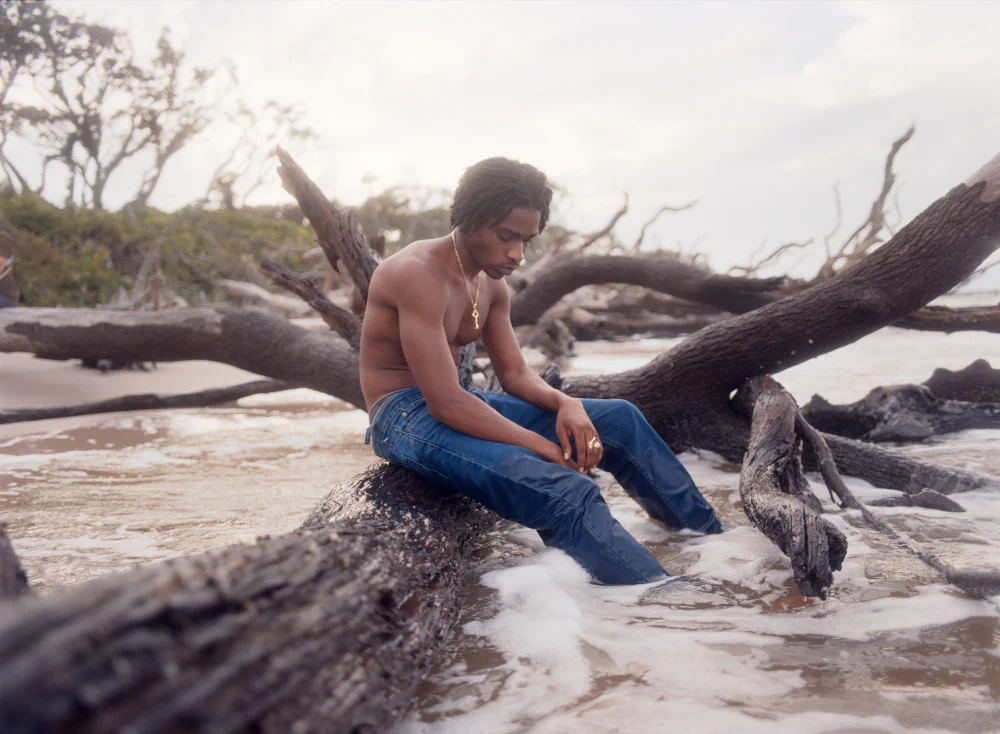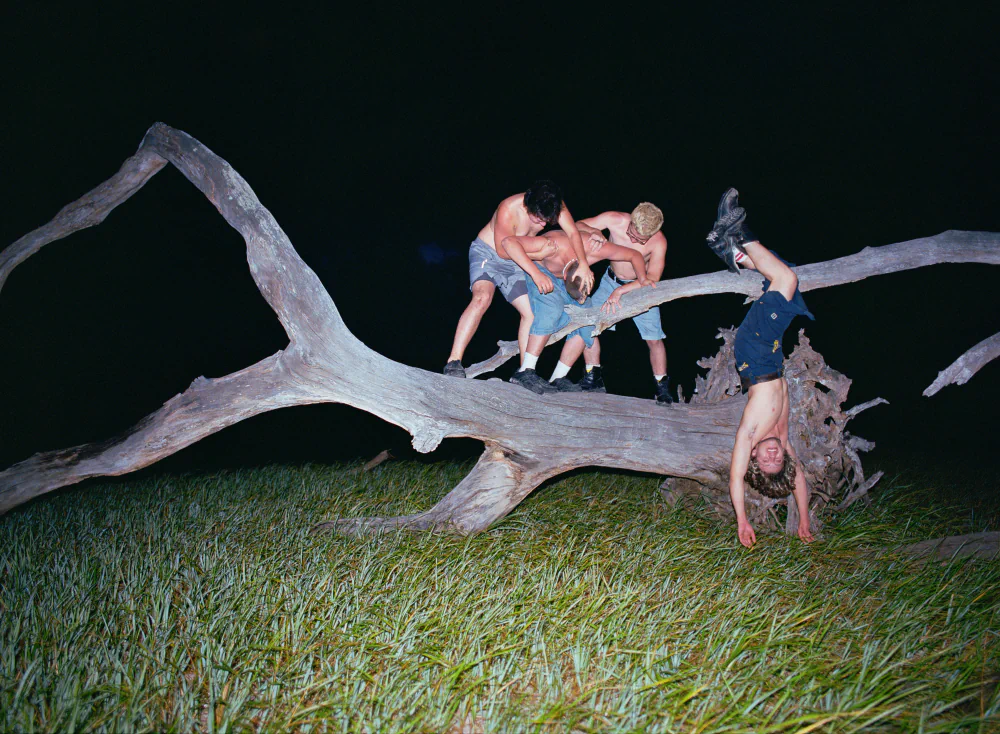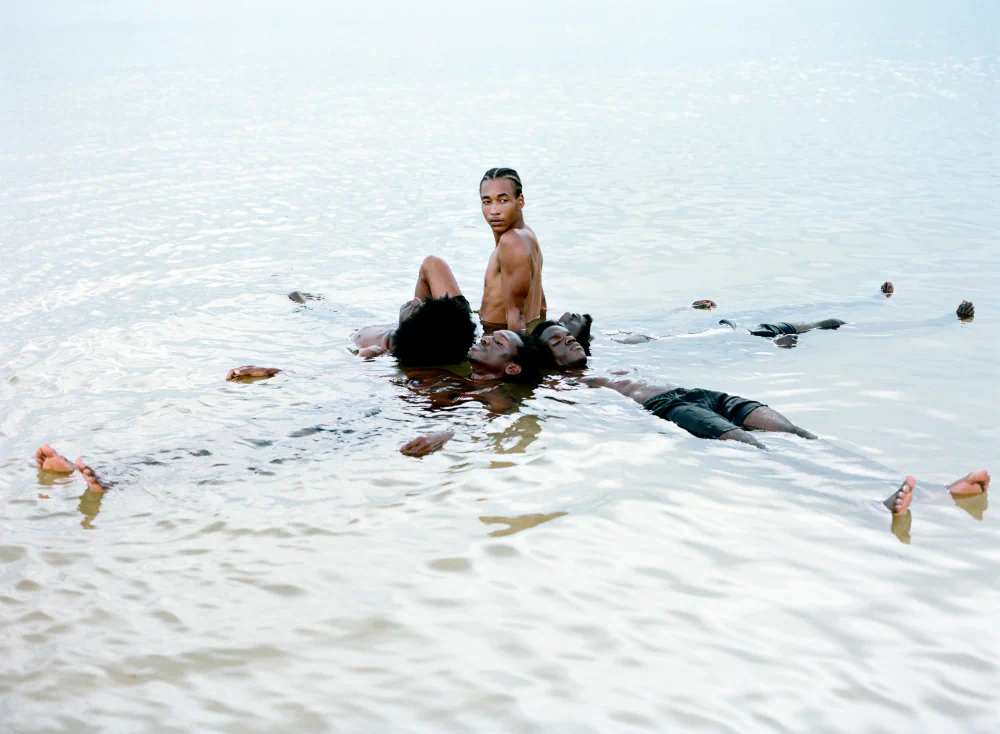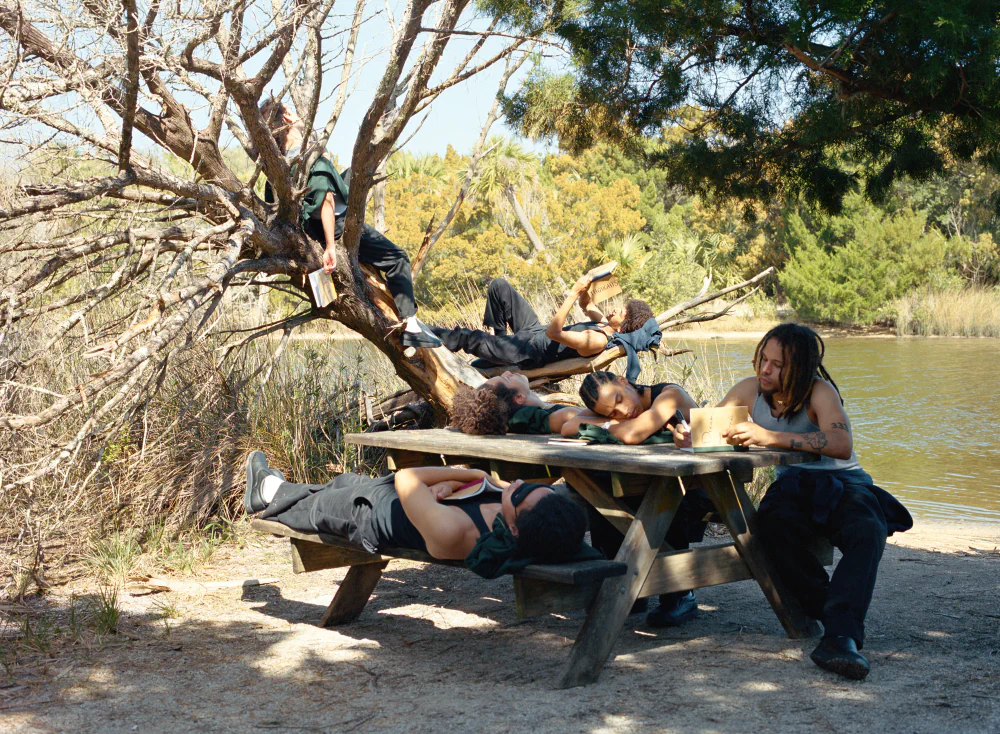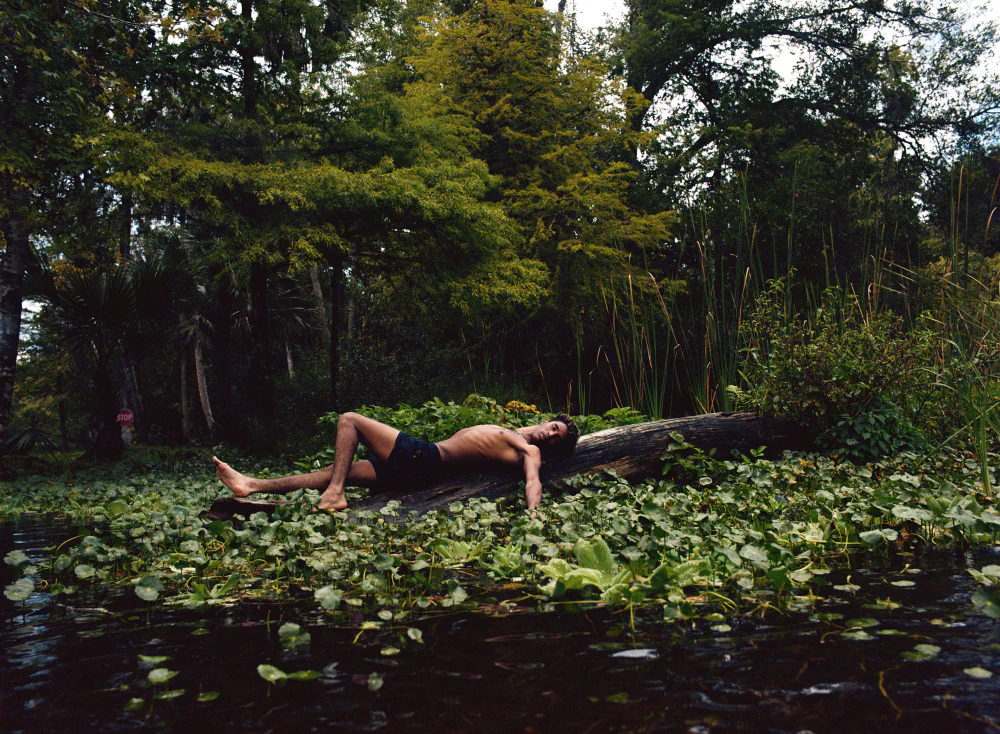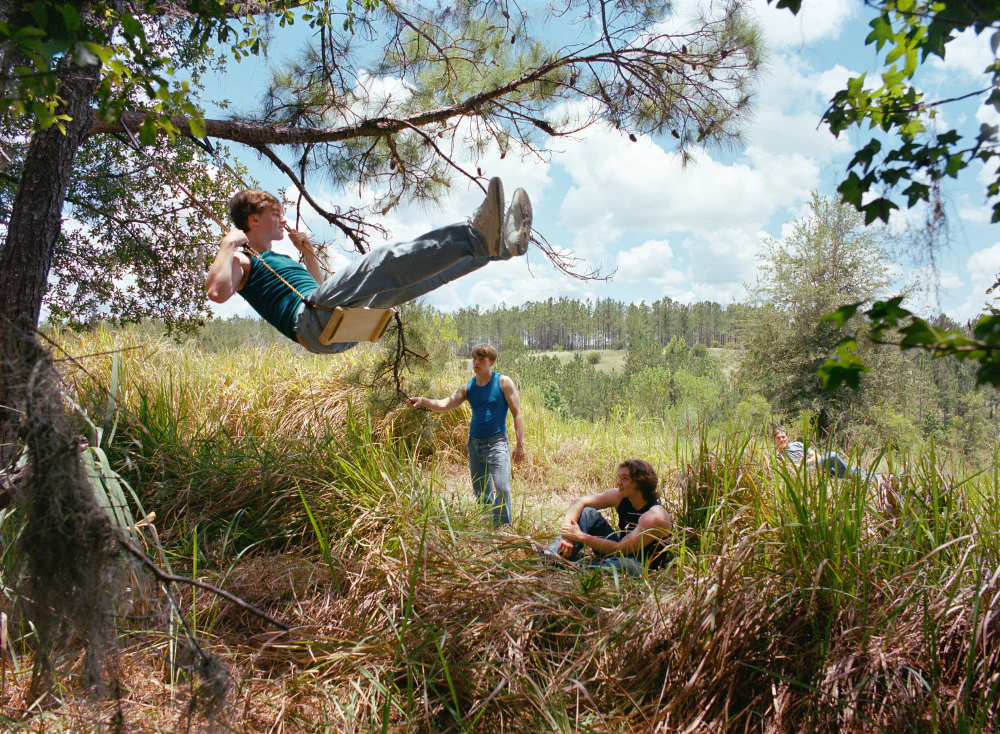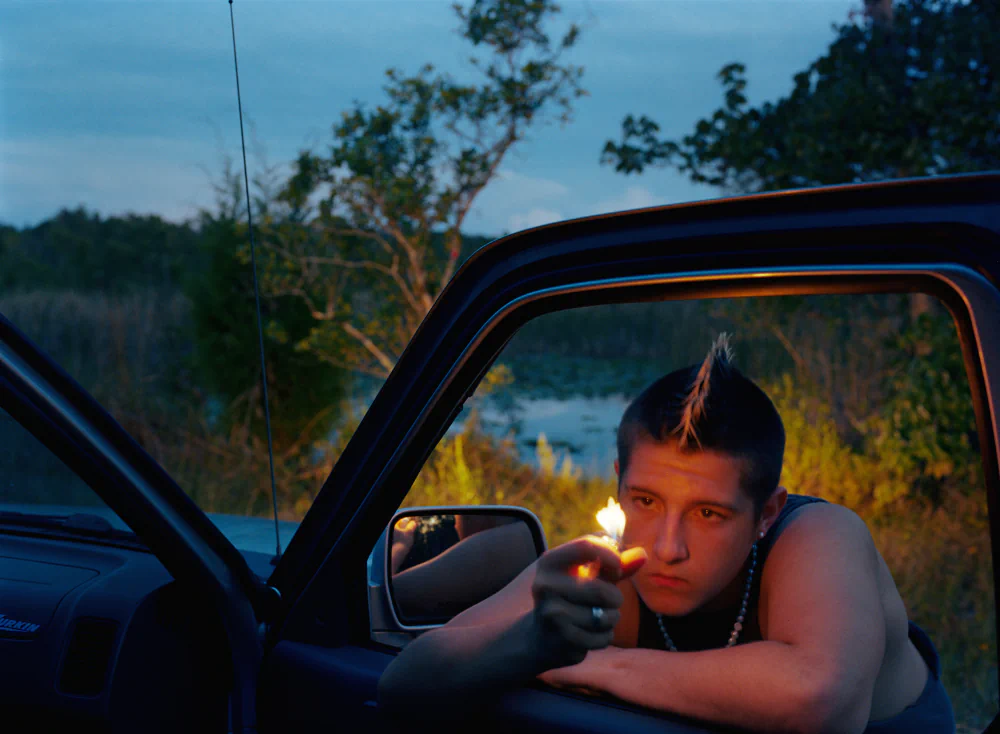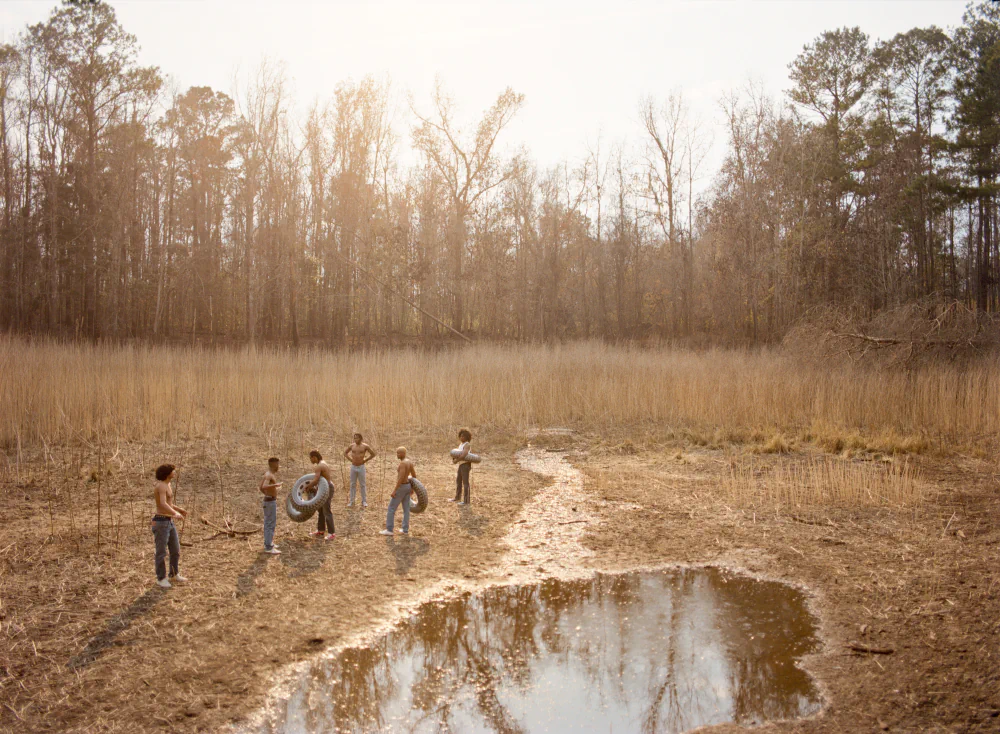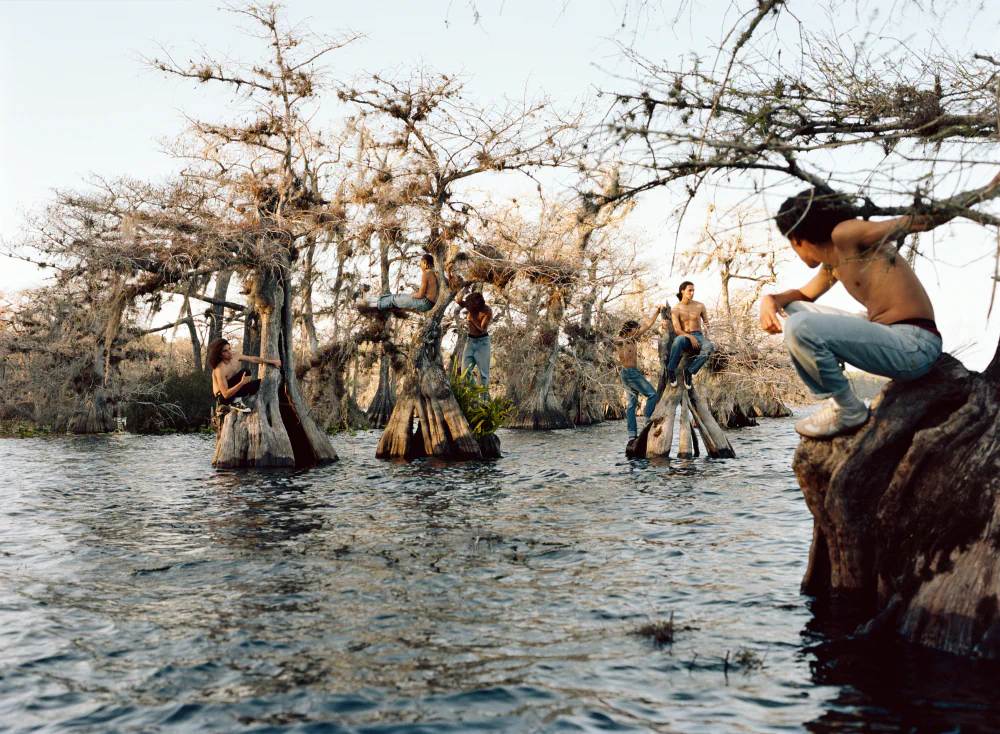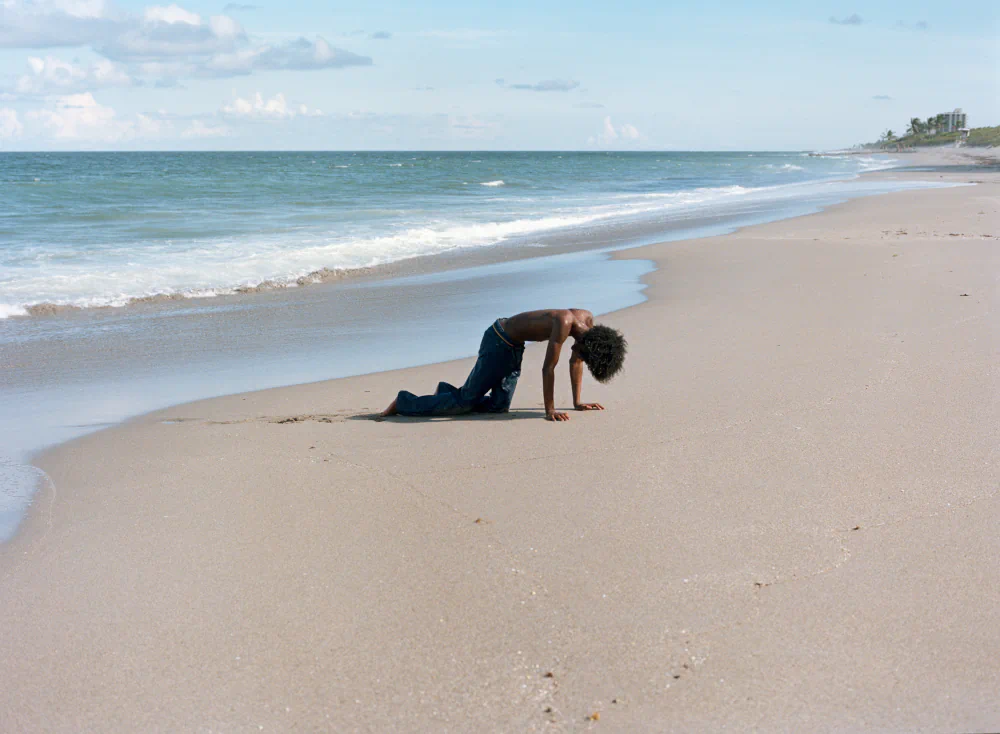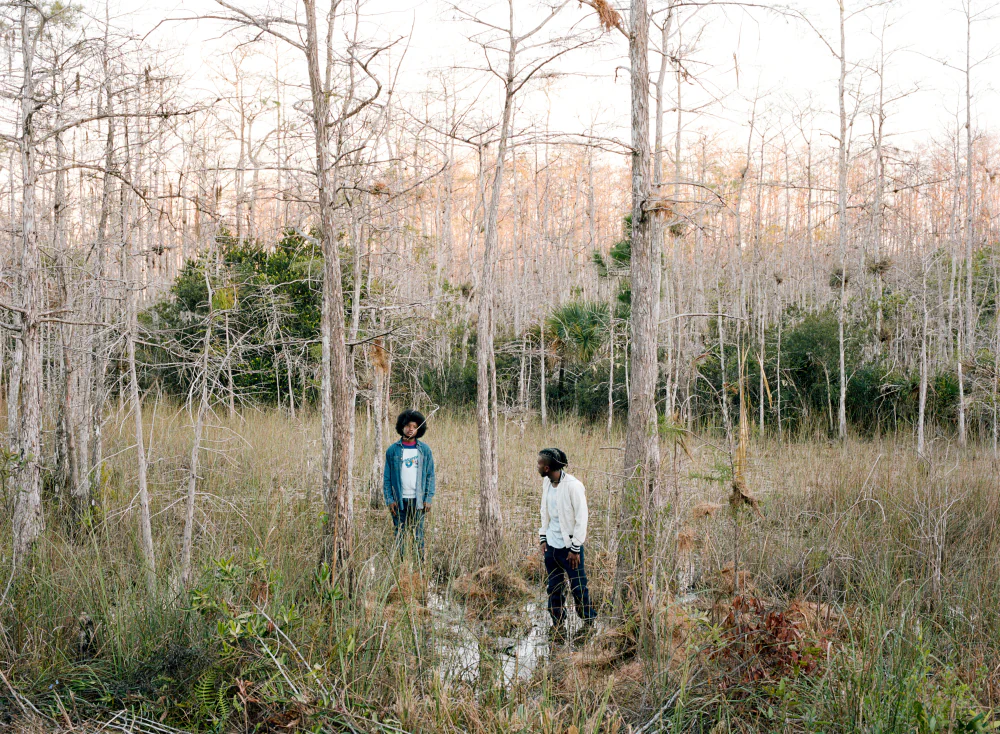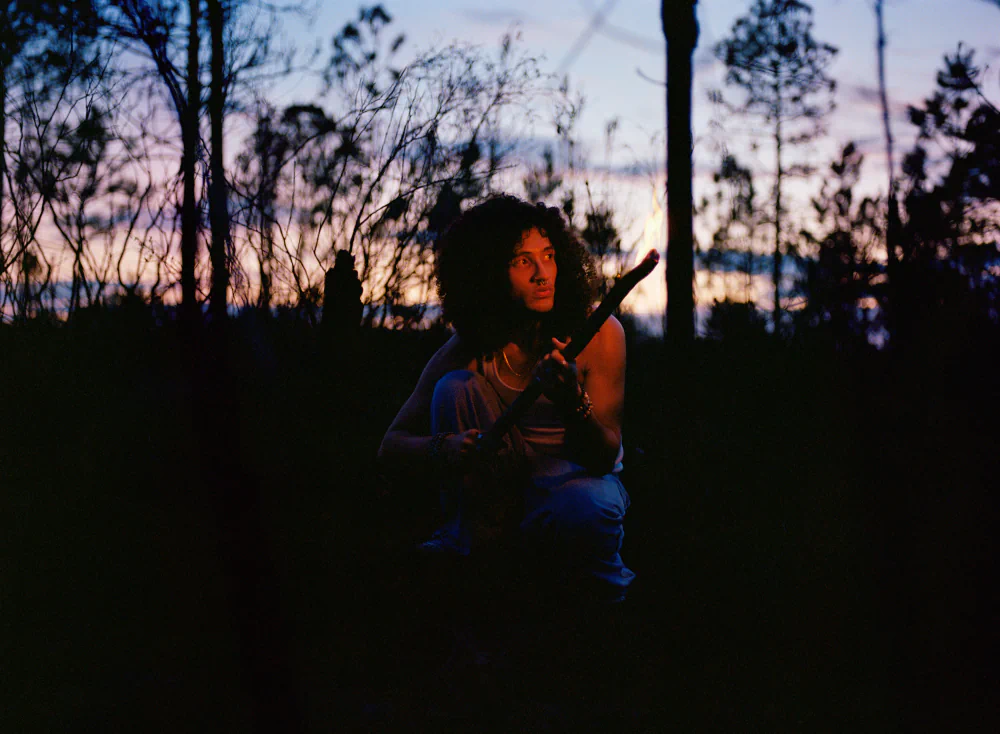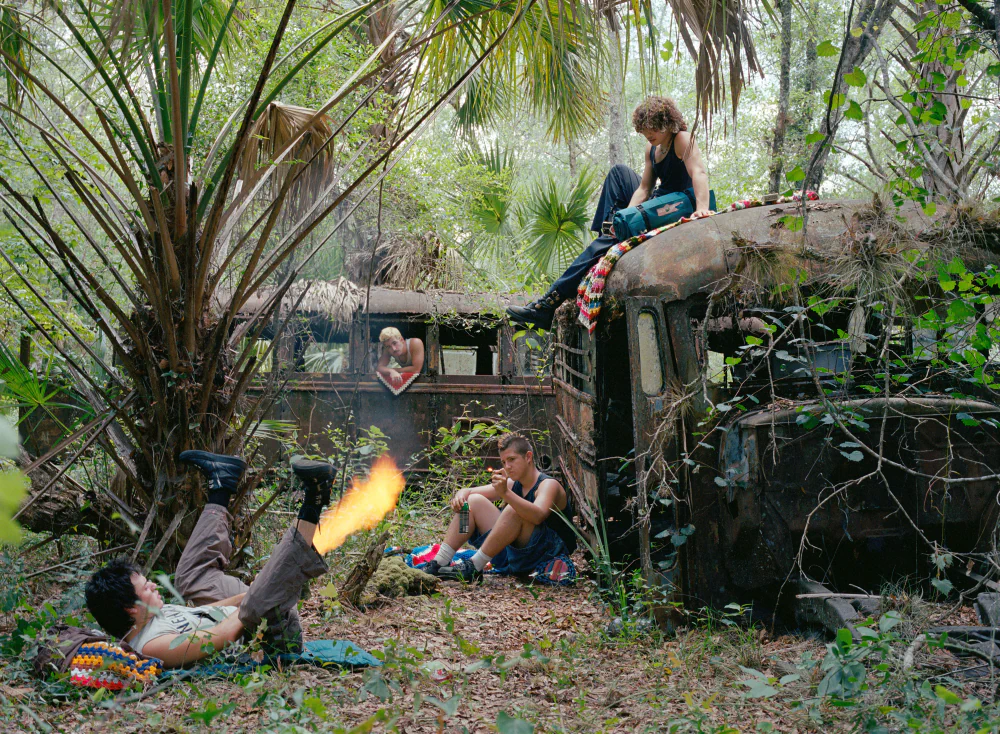

Florida Boys, an ongoing photographic project by Josh Aronson, examines how the American landscape participates in the formation of identity, particularly masculinity, belonging, and coming of age in the contemporary South.
Made between 2020 and 2025, the work unfolds across Florida’s springs, swamps, beaches, forests, and backroads, using staged narrative photography to reconsider how young men are seen in relation to place.
Rather than framing masculinity through power or conquest, Aronson turns toward quieter states of being: rest, play, vulnerability, and collective presence.
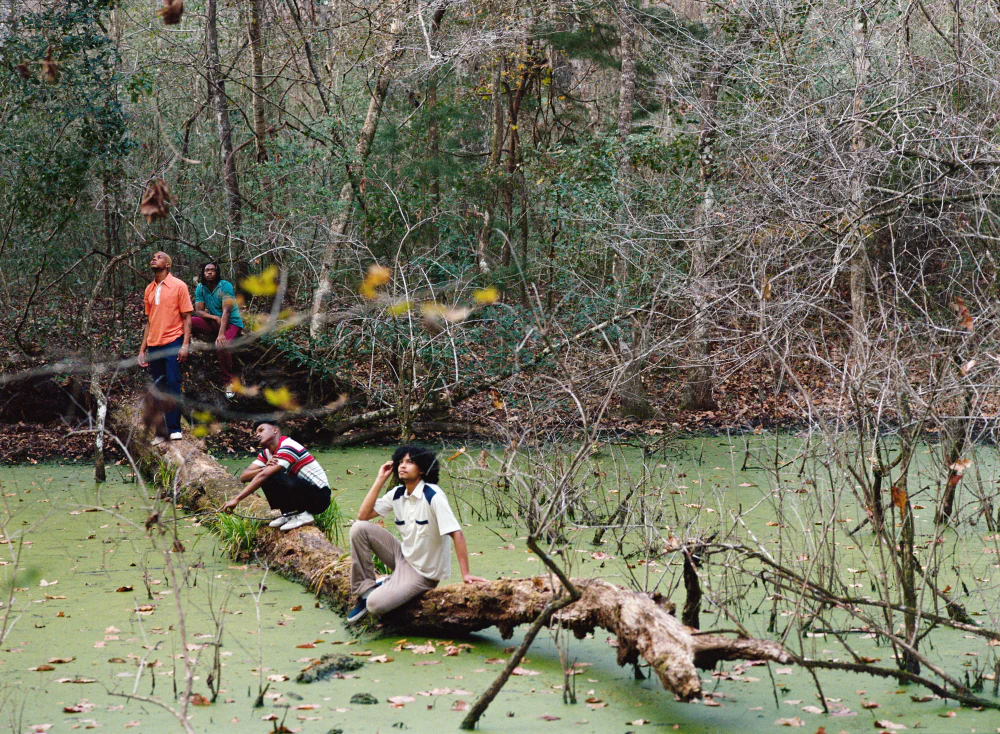
The project centers on groups of young men, many of them first-generation or immigrant youth from Miami, who are brought together to collaboratively construct scenes in natural environments. These locations are not incidental. Florida’s landscapes have long occupied a mythic position within American visual culture, shaped by histories of frontier mythology, leisure, extraction, and escape. In Aronson’s photographs, these same terrains become sites for reimagining who belongs within them and how they might be inhabited. Springs, swamps, and beaches operate not as backdrops, but as active forces that shape gesture, mood, and narrative.
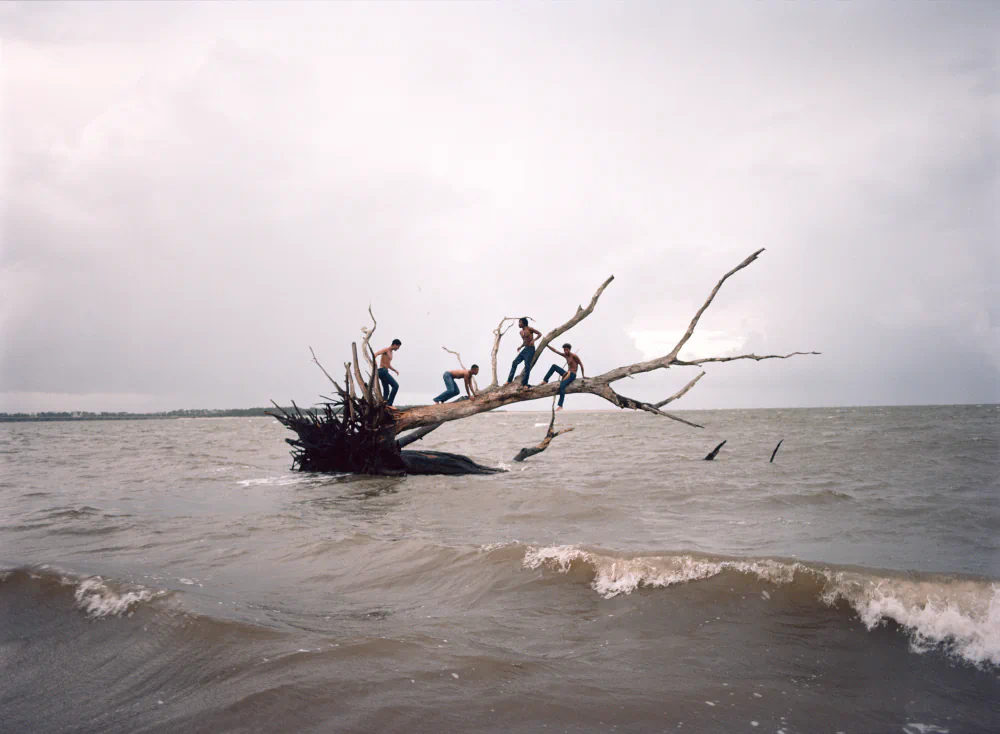
Aronson works within the tradition of staged narrative photography, carefully planning each image through scouting, research, and compositional sketches before arriving on site. Yet the resulting photographs resist rigidity. The scenes are developed collaboratively, with participants contributing to the shaping of gestures, relationships, and dynamics within the frame. This process foregrounds shared authorship and challenges the extractive tendencies historically embedded in representations of the American South. Photography here becomes a social space, built through trust and conversation rather than surveillance or control.
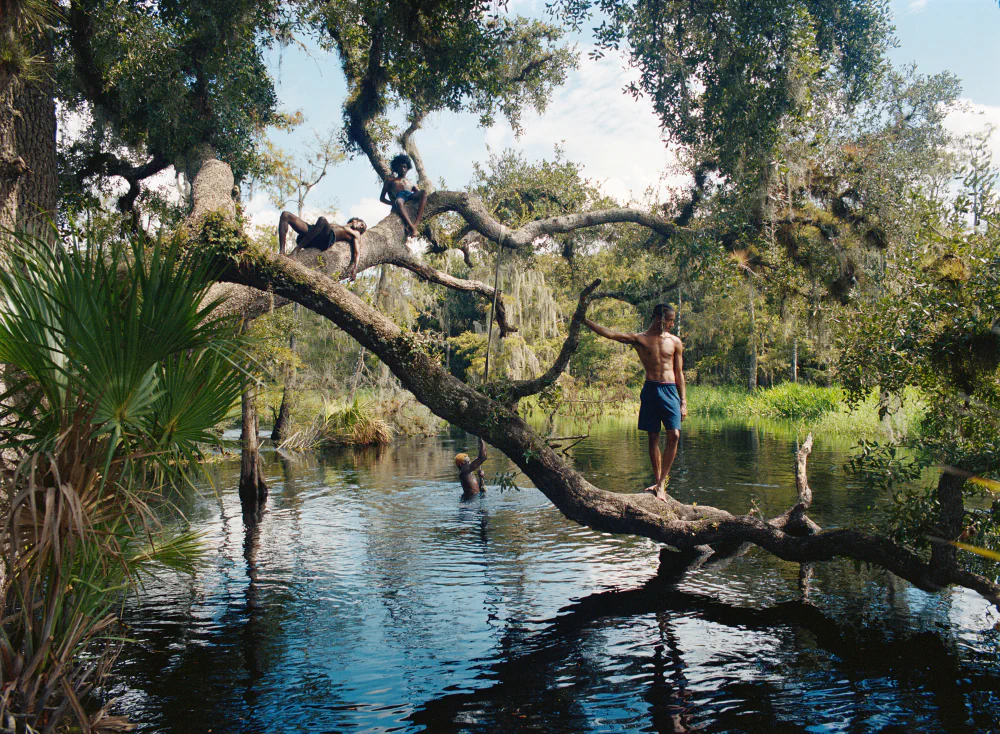
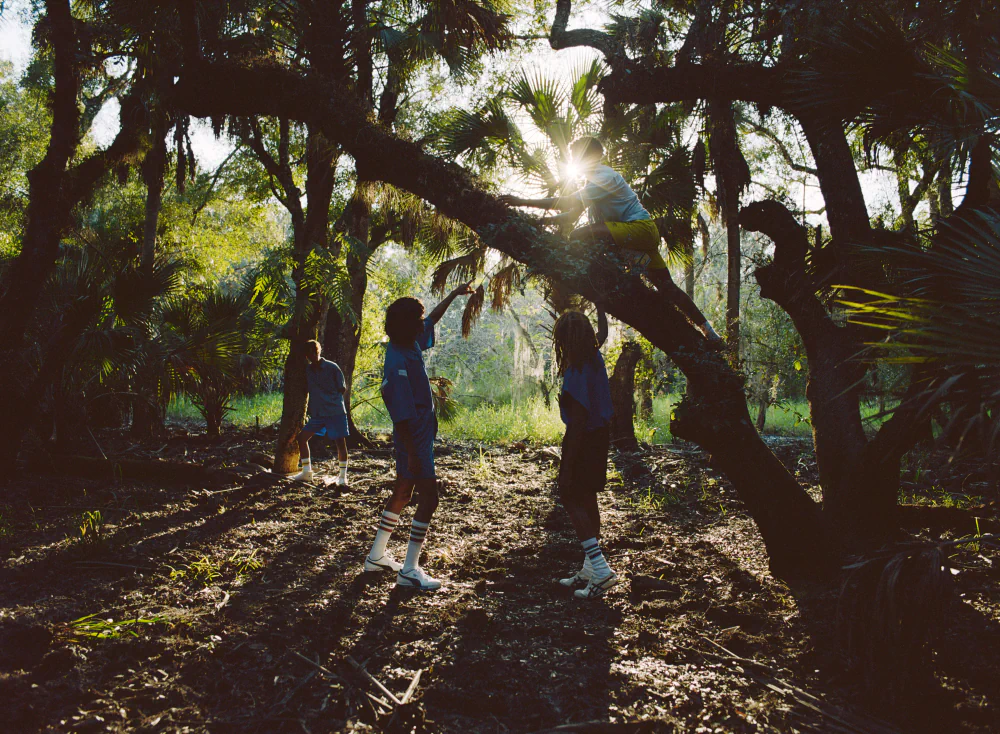
The images exist in a space between documentary and fiction. While the participants play versions of themselves and the locations are real, the scenes are intentionally constructed. This ambiguity allows the photographs to function as speculative propositions rather than fixed statements. Boys float together in water, recline beneath sprawling trees, or gather around decaying structures. These moments feel suspended in time, neither fully resolved nor overtly dramatic, suggesting that transformation often occurs quietly, through proximity and shared experience.
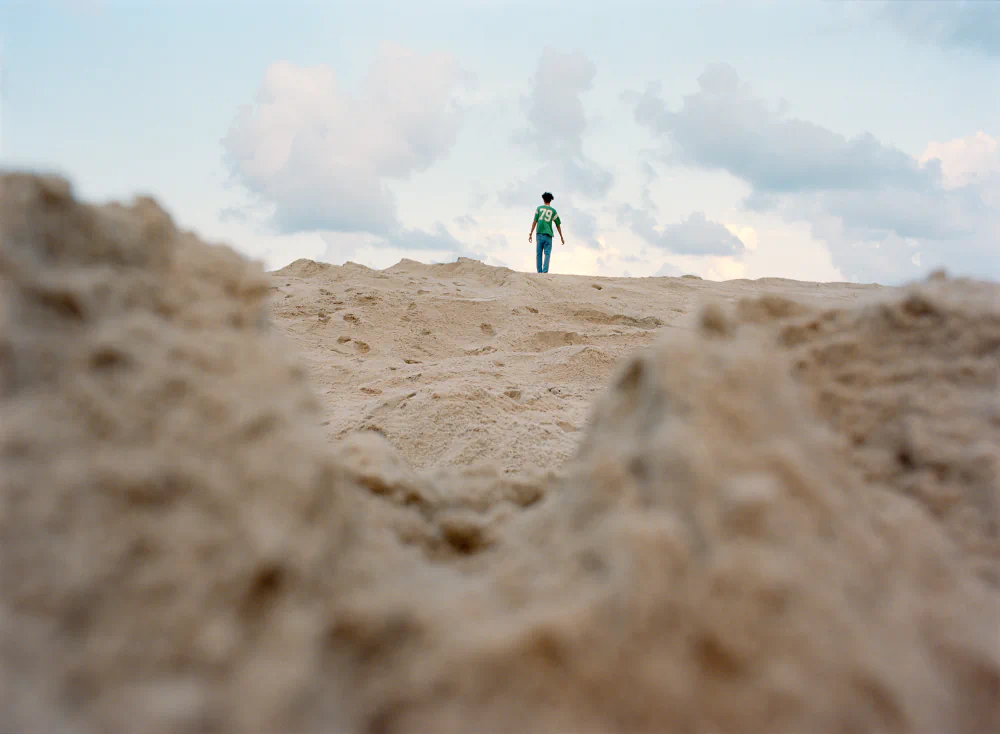
Landscape is central to how meaning is produced in Florida Boys. Florida’s environment is lush, unstable, and increasingly threatened—qualities that mirror the emotional register of the work. Springs evoke vulnerability and renewal. Swamps carry histories of concealment and survival. Beaches suggest leisure while also recalling displacement and erasure. Aronson is attentive to how these spaces have historically been coded and who has been excluded from their representation. By situating young men, often men of color, within these environments, the project revises the visual language of the South and opens it to new forms of identification.
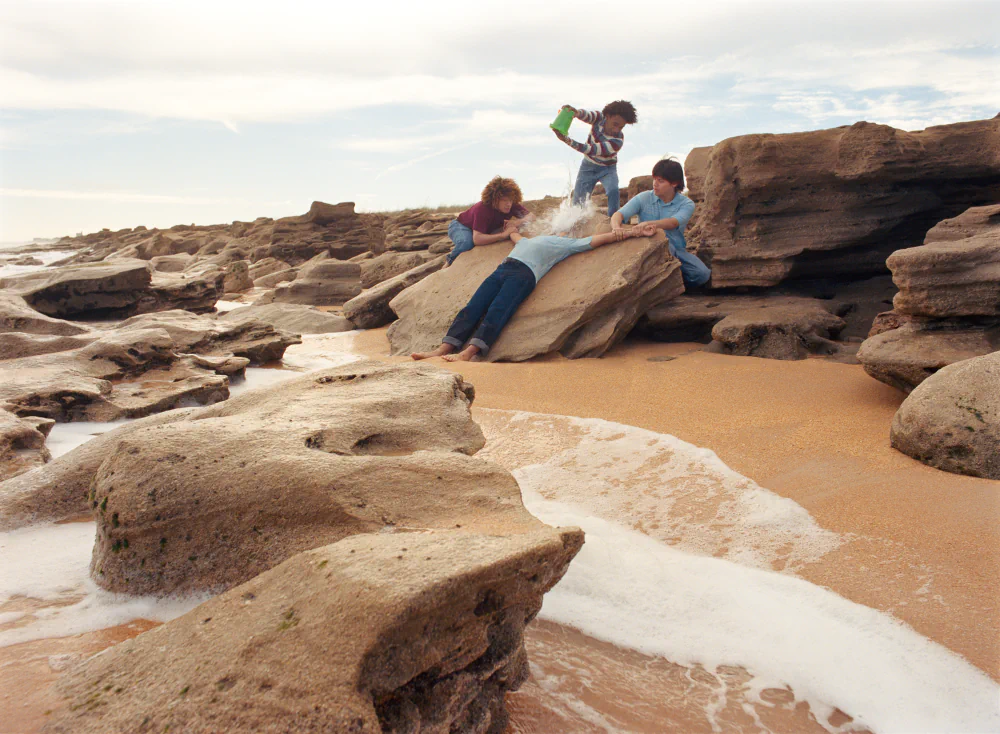
Aronson’s personal relationship to Florida informs the work without becoming its subject. Born in Toronto and raised in the state, he approaches the region with both intimacy and distance. Florida appears as a place shaped by fantasy and contradiction, marketed as paradise while bearing the weight of racial violence, environmental exploitation, and uneven access to land. Rather than addressing these histories directly, Florida Boys allows them to remain present in the background, held in tension with images of rest and connection.
The project draws from a broad lineage that includes Southern Gothic imagery, vernacular archives, and the history of staged photography. References to tableau traditions and coming-of-age narratives are evident, yet the work resists nostalgia. Familiar tropes are not reproduced so much as reconfigured. Masculinity is depicted as porous rather than fixed, shaped by environment and relationship rather than performance. Intimacy appears tentative and unresolved, allowing space for uncertainty and self-discovery.
Time is a crucial element in the project’s construction. Shot on film, the photographs incorporate delay and distance into their making. This temporal gap allows reflection to shape how scenes are understood, emphasizing memory and accumulation over immediacy. Over several years, Florida Boys has developed through road trips. Participants often meet for the first time during the making of an image, yet the photographs suggest a shared history that extends beyond the frame.
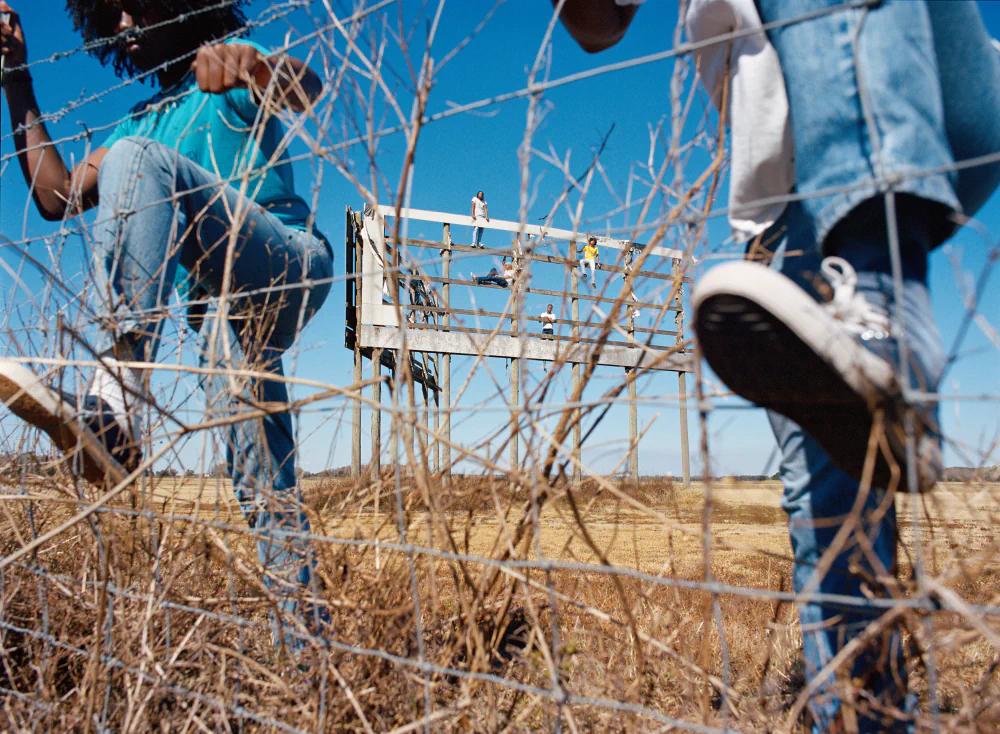
While rooted in a specific geography, Florida Boys addresses broader questions about how photography shapes cultural narratives around gender, youth, and place. Aronson approaches masculinity not as a problem to be solved or dismantled, but as something mutable, influenced by landscape and collective imagination. The project suggests that photography can serve as a site for revision, where inherited images of the American South are opened up and redistributed.
Florida Boys positions the landscape as a living and contested space where identity is continually negotiated. Through its carefully constructed yet emotionally open scenes, the project offers an alternate vision of boyhood, one grounded in tenderness, rest, and mutual presence. In doing so, Aronson proposes photography as a means of world-building—a way of imagining forms of belonging that have been historically withheld but remain possible.