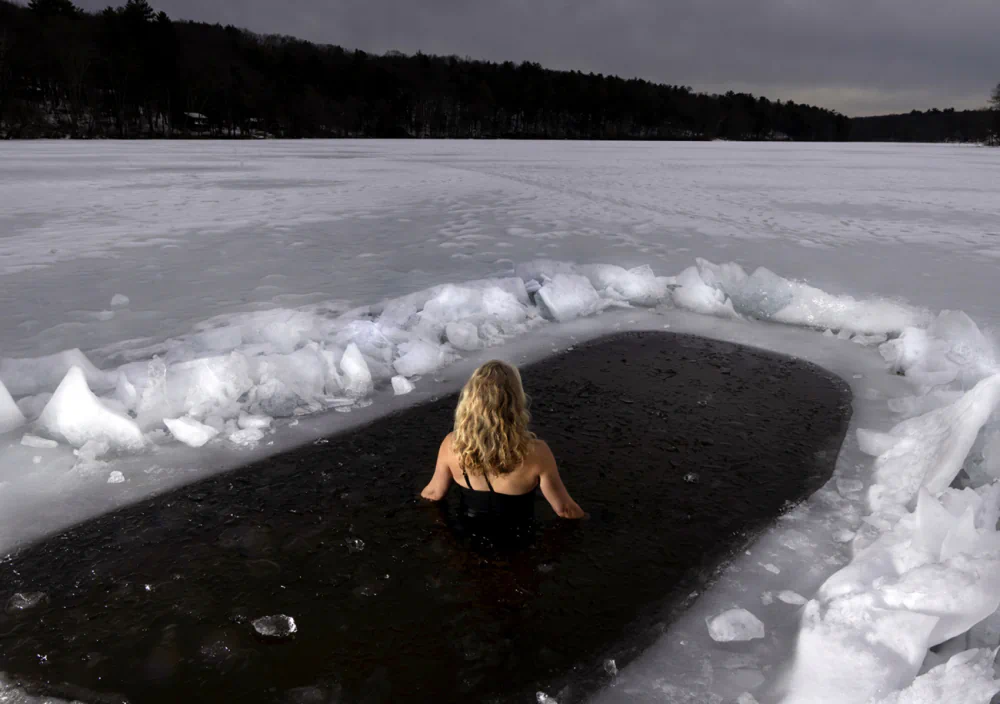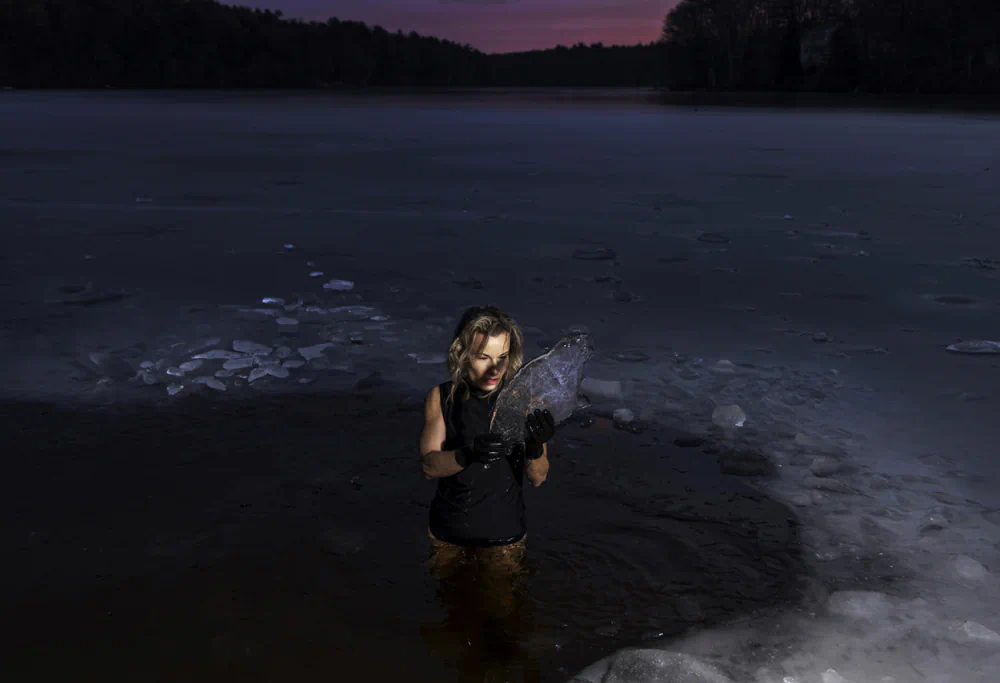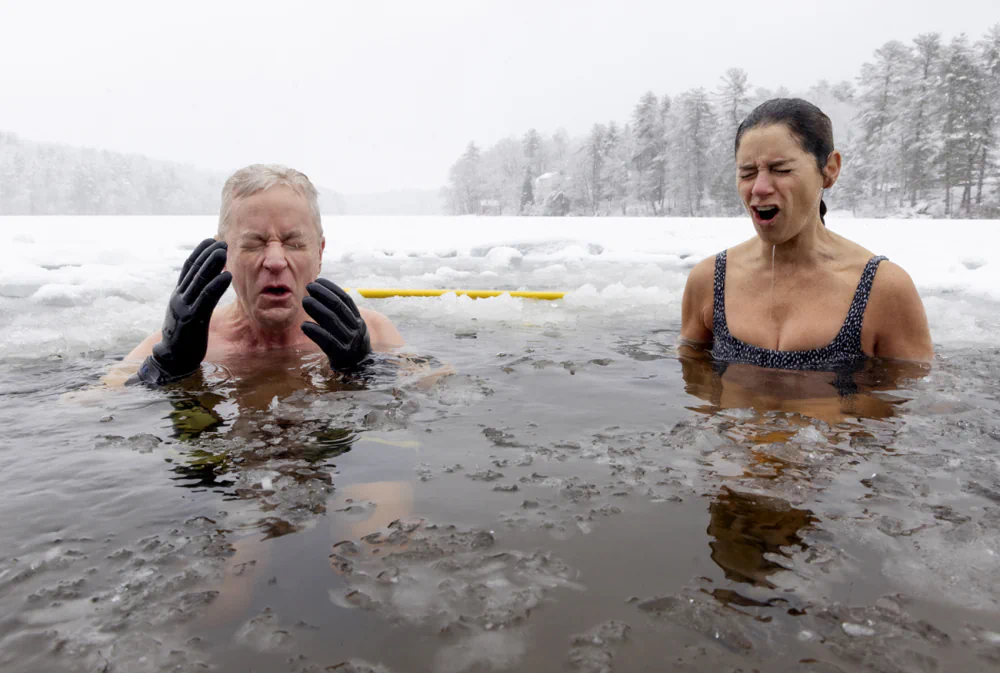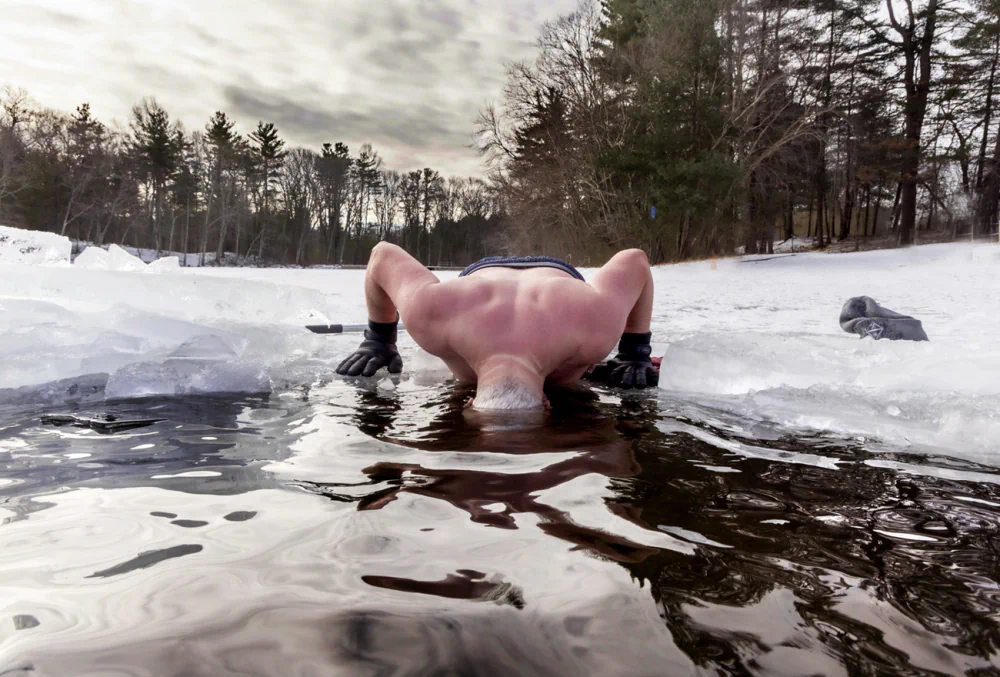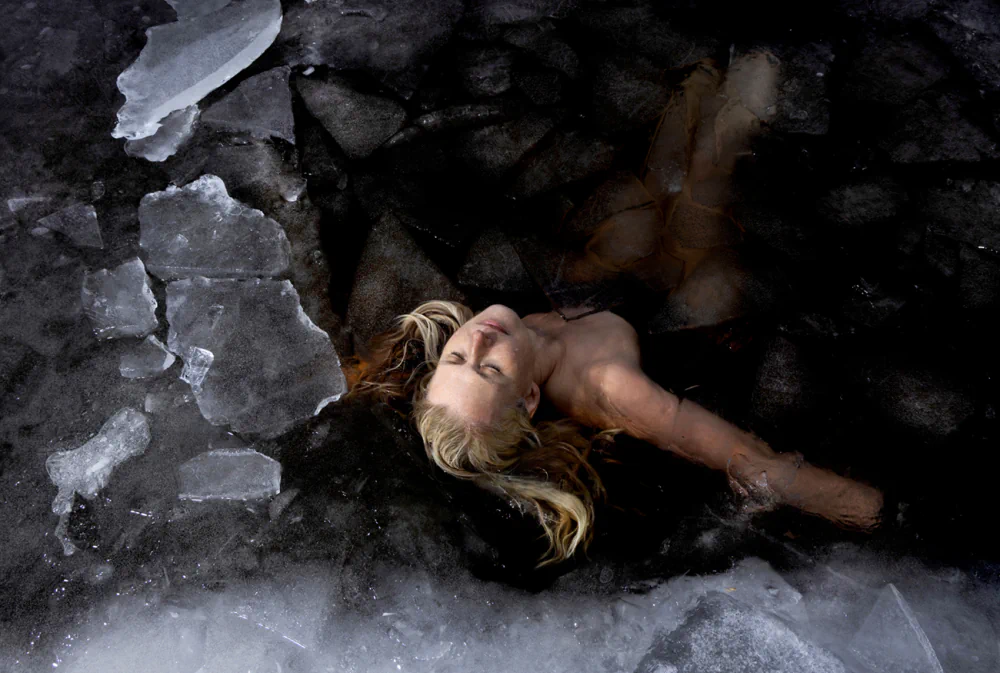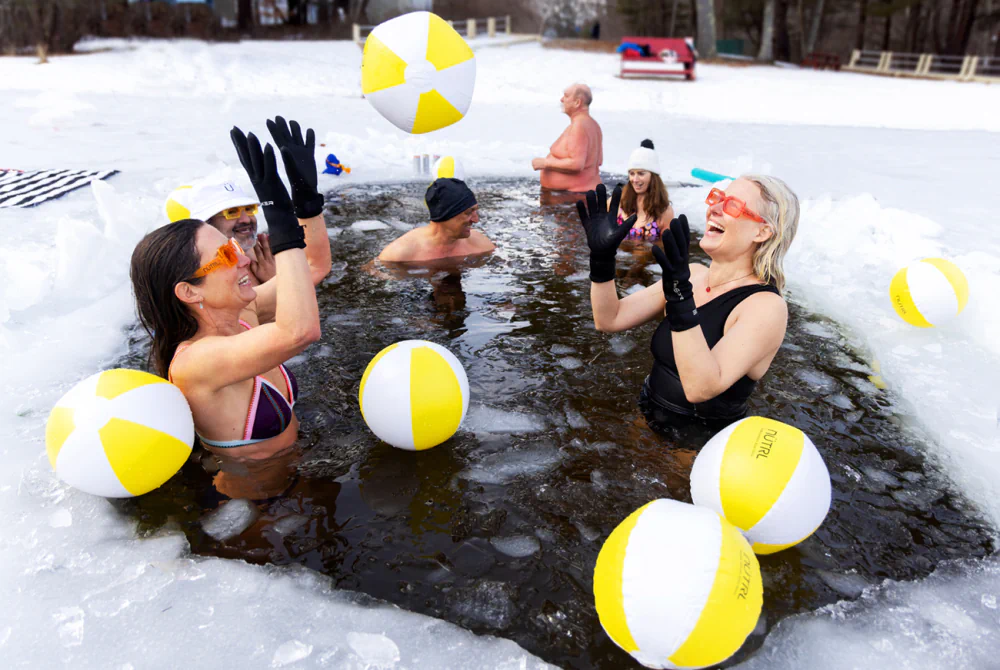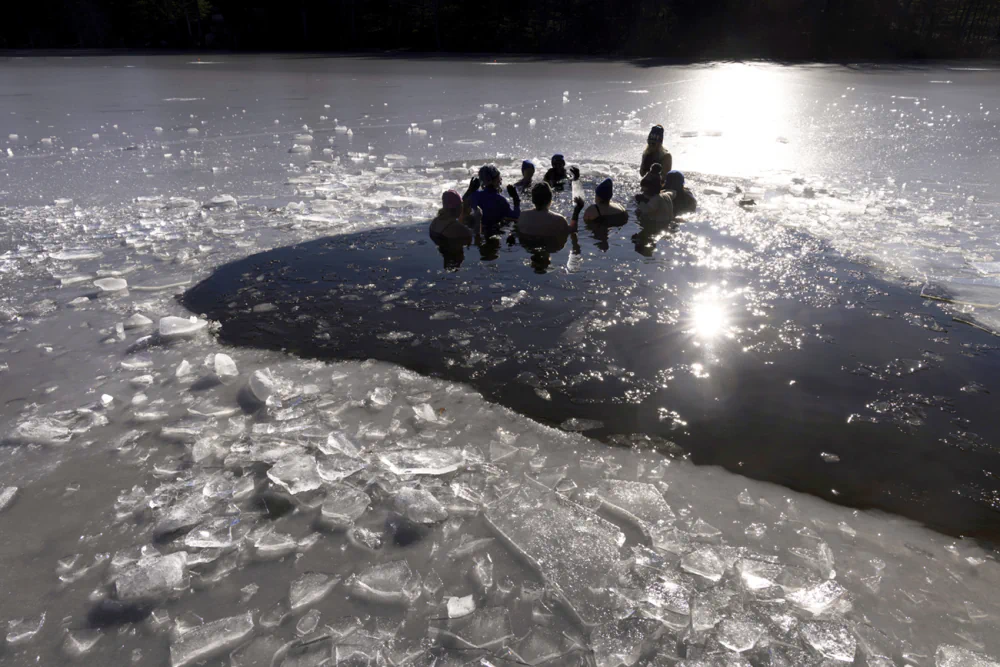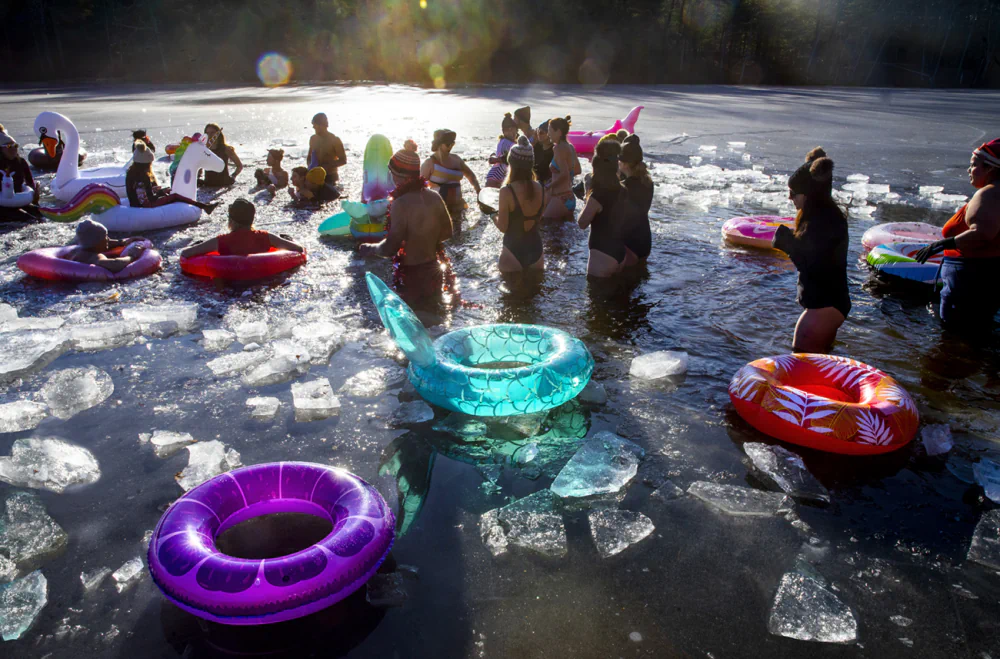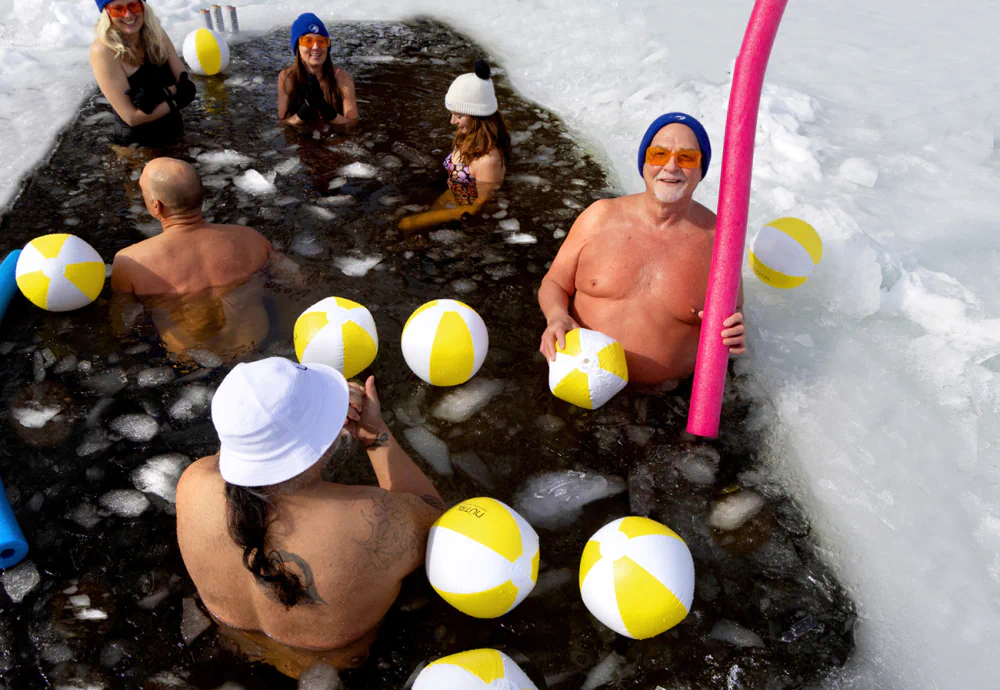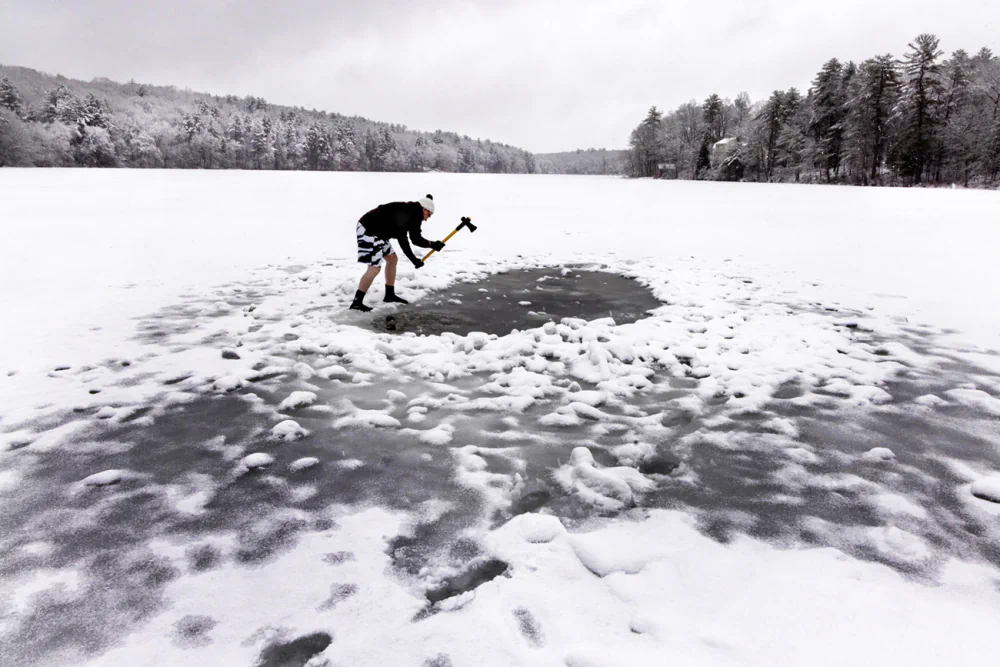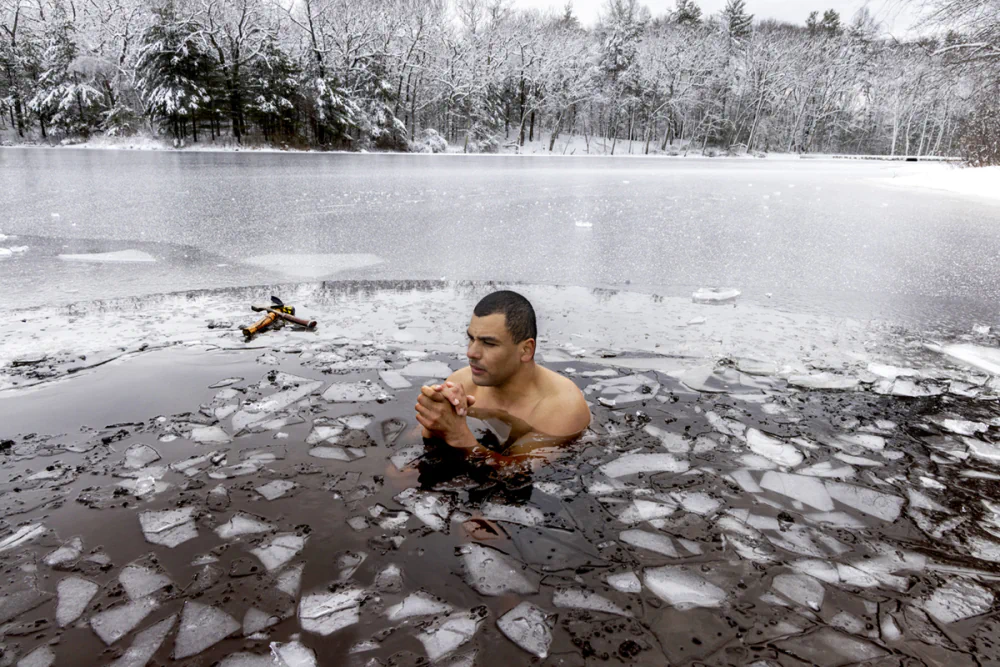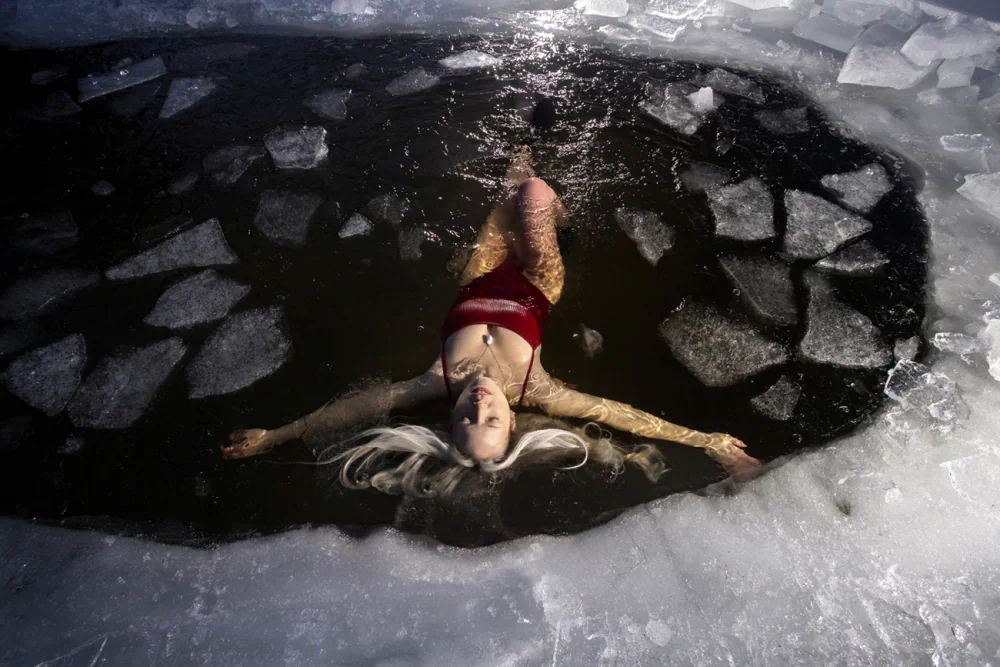

The small swimming hole varies in size from about six to ten feet wide throughout the winter, depending on the enthusiasm of the cold-water plungers chipping away at the ice each day.
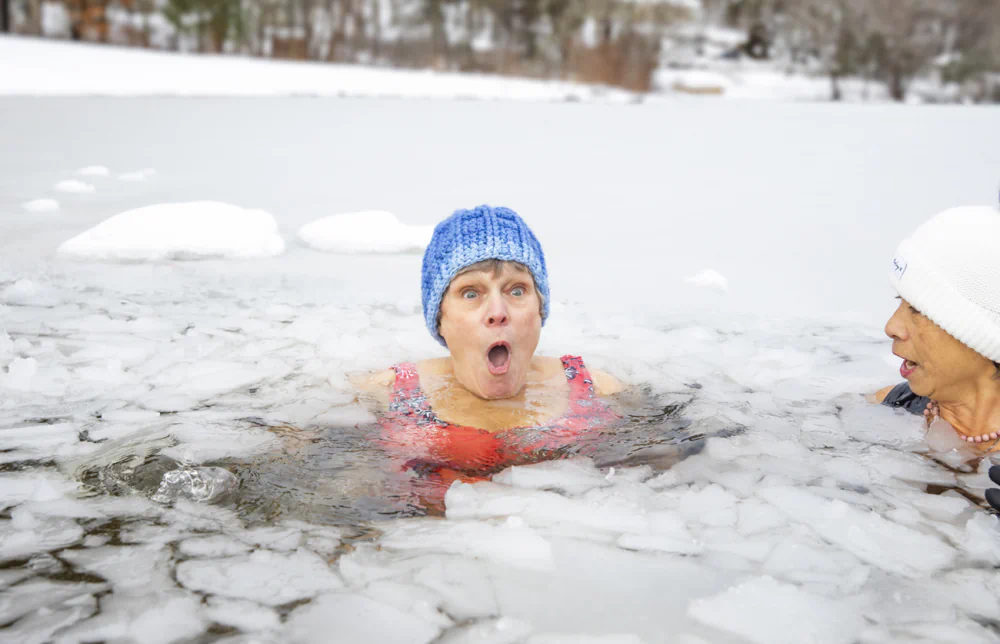
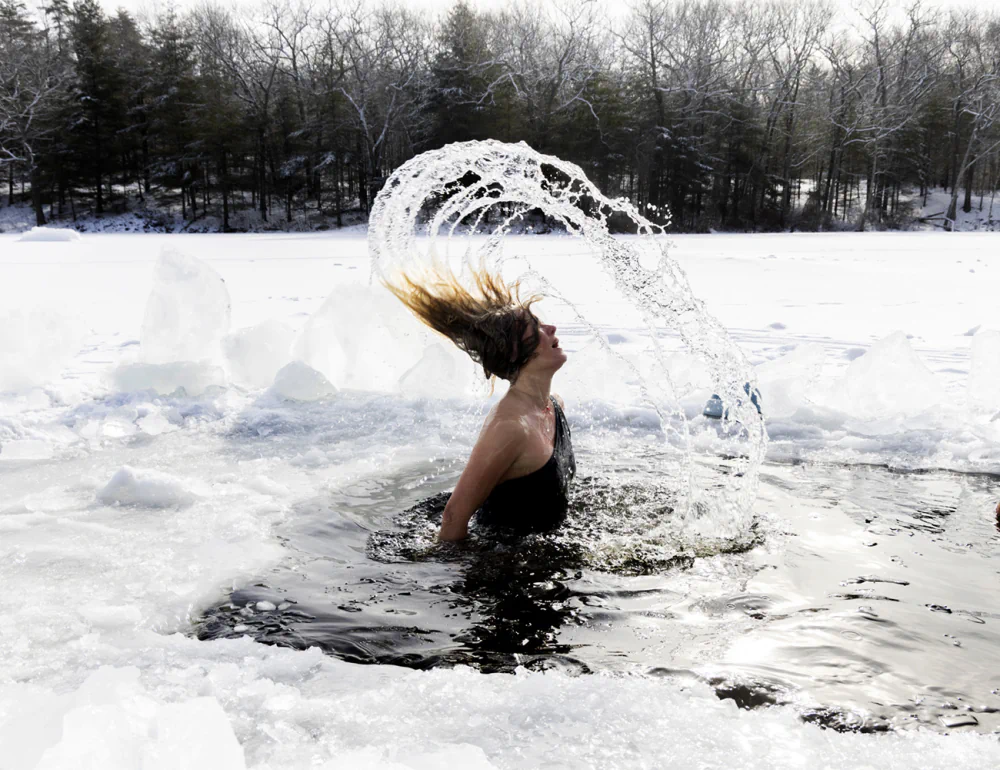
Yet the range of human experience within this small area is remarkable. In this limited space, there is both stillness and silliness.
There is quiet contemplation and laughter. There is discomfort and joy. The variety of expression and human experience I have captured in this tiny frozen area seems to stretch beyond its physical boundaries.
For three winters, I have been photographing a community of cold-water plungers as they gather daily at their frozen New England pond, break ice with axes and ice saws, and plunge into the freezing water for five to twenty-five minutes. A cold-water plunger myself, this is the first time I have so extensively photographed a community to which I belong. Being an outside observer is usually preferable for my photography projects, but in this case, it was necessary to be part of it—and not only because I needed to be in the water for the best shots. I also needed to understand how soaking in freezing water, approaching hypothermia, and then hurrying through the bitter winter wind toward warm towels and coats could actually be enjoyable.
I do understand it. My favorite part is the sound. Gliding through floating shards of ice sounds like wind chimes—a clinking crescendo with each stroke. The tone is always slightly different, depending on the size and density of the ice. But as remarkable as the sound is the fact that I can be painfully cold and still appreciate the ice’s musical quality. I can appreciate other things too: the snowy scenery, the blue sky, the laughter of my cold-water community. Discomfort does not have to overwhelm the entire experience.
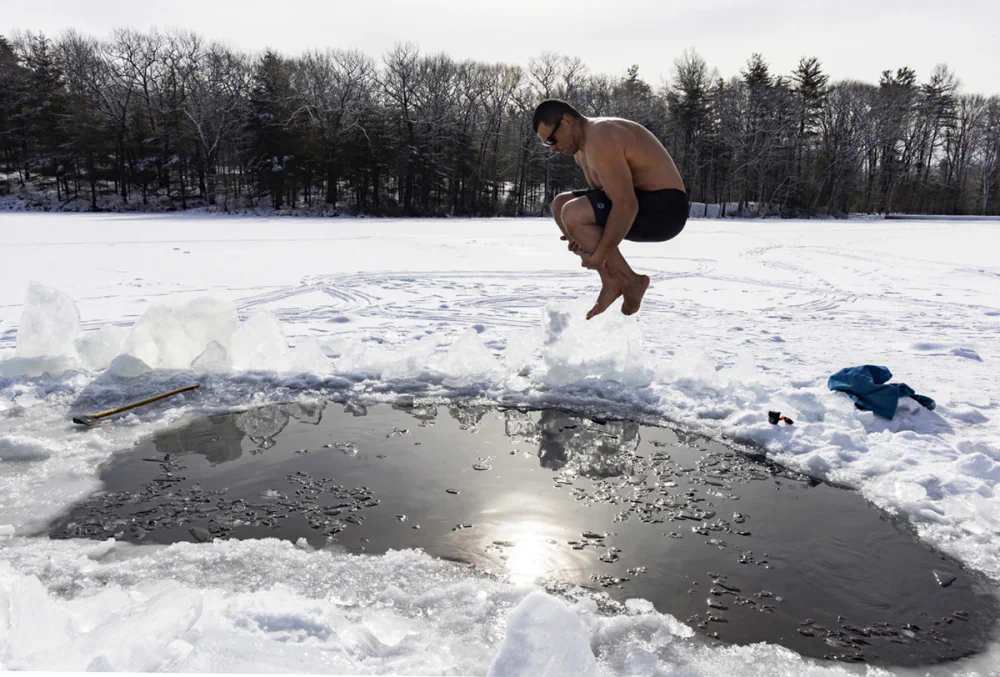
It is liberating to realize that it is okay to be cold. It is okay to be uncomfortable. Many of us were raised to fear the cold and discomfort. Mothers rushed over to button jackets on the way to the car. Grandparents warned of catching the flu in inclement weather. I was told many times that if I fell into a body of water in winter, I would die within minutes. Now I swim regularly in New England in January. Allowing my once-narrow expectations of comfort to expand has broadened my experience of being alive.
Members of the cold-water community at the New England pond (who call themselves the Diamond Dippers, in honor of the sparkling, gem-like shards of ice that adorn the frozen surface after breaking through) and visiting plungers from a coastal group called the Marblehead Wolfpack often speak enthusiastically about the health benefits of cold plunging. Primarily driven by cold-induced vasoconstriction, or the narrowing of blood vessels, and reduced metabolic activity, the benefits of cold dipping can include reduced muscle soreness and inflammation, improved circulation, enhanced immune function, and potential boosts in metabolism.
But to me, the greatest benefit is being part of a community that has broken through our very narrow definition of what is comfortable—within cultures dominated by climate-controlled, indoor lifestyles—and normalized immersion in what appears to be an inhospitable environment. There is great freedom in doing what you once believed was impossible. Breaking through the ice expands the boundaries of contemporary human experience and fosters a deeper appreciation for the diamond-adorned—and far less inhospitable—natural world.
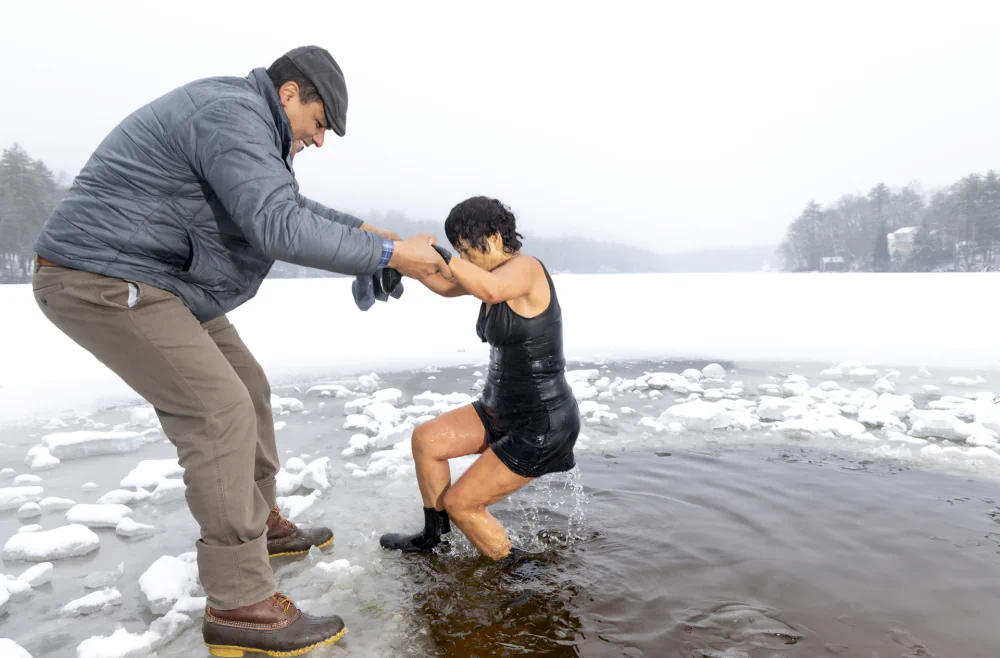
About Laurie Swope
A self-taught fine art and editorial photographer, Laurie Swope began her career as a small-town newspaper reporter and photographer in New England, later continuing as a freelance photojournalist for various publications. She credits her years working for daily newspapers and covering diverse and often overlooked subjects for shaping her passion for documenting lesser-known communities.
Laurie’s fine art photography ranges from portraiture to landscape and unconventional lifestyles. Her work has been exhibited in galleries in Venice, Siena, Athens, Crete, Johnson City, Texas, Boston, Winchester, and Marblehead, Massachusetts.
Her long-term project Through the Ice documents a small community of daily cold-water immersion enthusiasts as they gather, break ice, and plunge into a frozen New England pond throughout the winter season. As a practitioner of cold-water immersion herself, this project marked the first time Laurie became a member of the community she was documenting. She cold plunges several times each week year-round, both in the ocean and in a nearby pond.
Laurie lives in a small New England town with her husband and two teenage sons. [Official Website]