Lee Friedlander’s work is often described through its surface complexity: crowded frames, obstructed views, reflections, shadows, visual noise.
Yet beneath this apparent disorder lies one of the most rigorous and coherent visions in twentieth-century photography. Friedlander did not photograph the world as something open, neutral, or available for description. He understood photography as a closed system, a self-referential language governed by its own rules, limits, and internal logic.
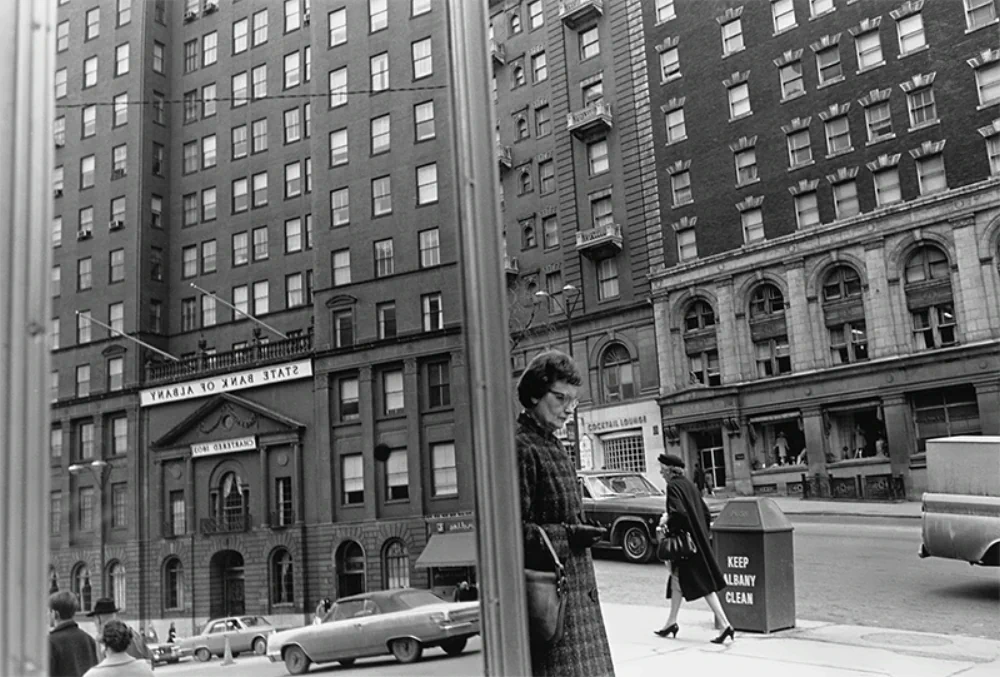
From the beginning, Friedlander rejected the idea of photography as transparent window. His images do not pretend to offer access to reality. Instead, they insist on mediation. The camera is always present, even when it is not visible. Frames within frames, mirrors, signs, fences, and reflections constantly remind us that seeing is structured, filtered, and conditioned by the apparatus and by the photographer’s position within the scene.This insistence turns photography inward. Rather than using the camera to clarify the world, Friedlander uses it to expose the mechanics of representation itself. The photograph becomes less a document of what is “out there” and more a record of how seeing operates. In this sense, photography does not function as a bridge to reality, but as a system that refers back to its own processes.
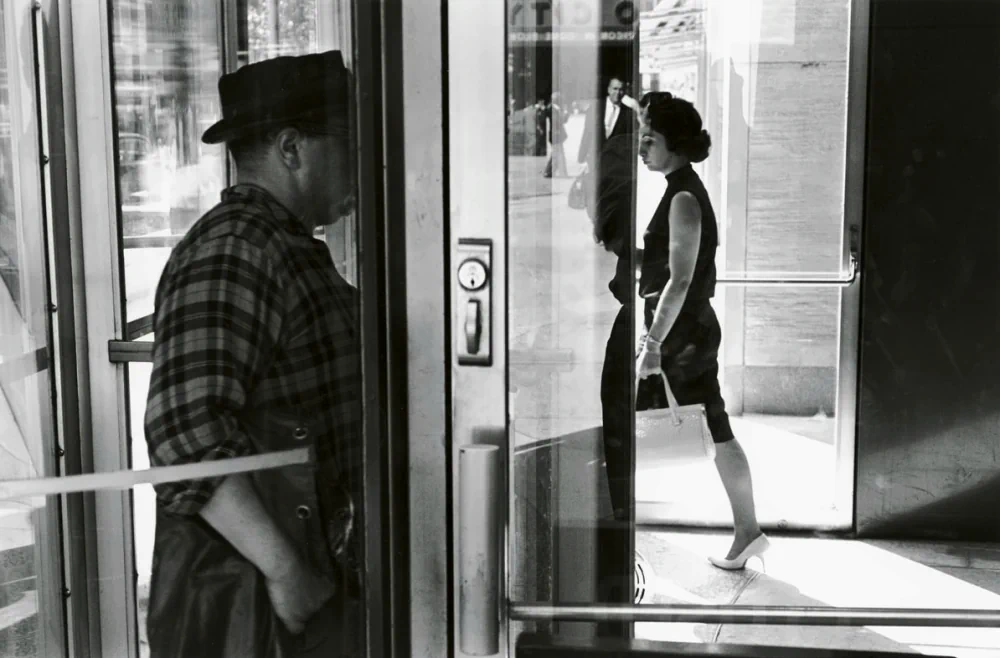
Friedlander’s frequent use of shadows, including his own, is emblematic of this position. The photographer appears not as an omniscient observer, but as a fragmented presence embedded in the image. His shadow does not assert authorship in a heroic sense; it complicates it. It signals that the photograph is not neutral and cannot escape the conditions of its making.
The closed nature of this system is also evident in Friedlander’s relationship with space. His photographs rarely offer clear entry points or visual hierarchy. Foreground, middle ground, and background collapse into a single plane of competing information. Nothing guides the eye smoothly. The viewer must navigate the image actively, accepting confusion as part of the experience.
This resistance to visual clarity is not a rejection of meaning, but a rejection of simplification. Friedlander does not believe that photographs should resolve themselves easily. The world, as filtered through photography, is messy, layered, and contradictory. To present it otherwise would be dishonest. The closed system of photography mirrors the closed systems of perception and interpretation through which we engage with reality. Signs, texts, and photographs within photographs play a crucial role in this logic. Friedlander repeatedly incorporates images of images, representations of representations. Billboards, posters, television screens, windows, and mirrors populate his work. These elements fold the image back onto itself, reinforcing the idea that photography does not escape representation, but multiplies it.
In doing so, Friedlander dismantles the romantic notion of photographic originality. His images do not seek uniqueness through spectacle or novelty. They emerge from repetition, from working the same visual problems over decades. The system is closed not because it is static, but because it is self-contained. Meaning arises from internal consistency rather than external reference. This approach has ethical implications. By refusing to present the world as transparent or fully accessible, Friedlander avoids the illusion of mastery. He does not claim to know his subjects completely or to reveal hidden truths. Instead, he acknowledges distance, obstruction, and limitation as fundamental conditions of seeing.
Friedlander’s work also challenges the viewer’s role. Looking at his photographs is not a passive act. The image does not deliver its content smoothly. It demands effort, patience, and participation. The viewer becomes part of the system, negotiating meaning within the same constraints that shaped the photograph.
In an era increasingly dominated by photographic clarity, immediacy, and legibility, Friedlander’s vision feels almost oppositional. His photographs resist the idea that images should communicate quickly or efficiently. They do not seek agreement or emotional consensus. They exist to think with, not to consume.
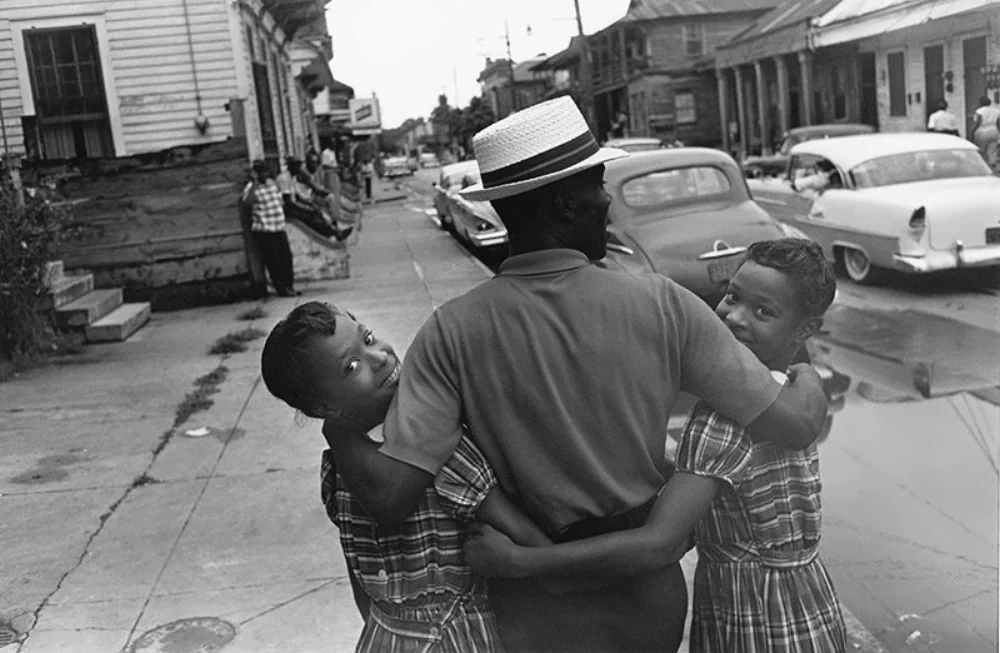
This is why Friedlander’s work remains so influential. Not because it offers a style to imitate, but because it proposes a way of understanding photography itself. A medium that does not simply record the world, but constructs it according to its own internal logic. A medium that reveals its limits rather than hiding them.
To see photography as a closed system is not to deny its connection to reality. It is to acknowledge that this connection is always mediated, structured, and incomplete. Friedlander’s photographs make that mediation visible. They refuse illusion and replace it with awareness. In the end, Friedlander does not ask us to look harder at the world. He asks us to look harder at photography. And in doing so, he exposes the medium not as a transparent tool, but as a complex, self-aware system of seeing.