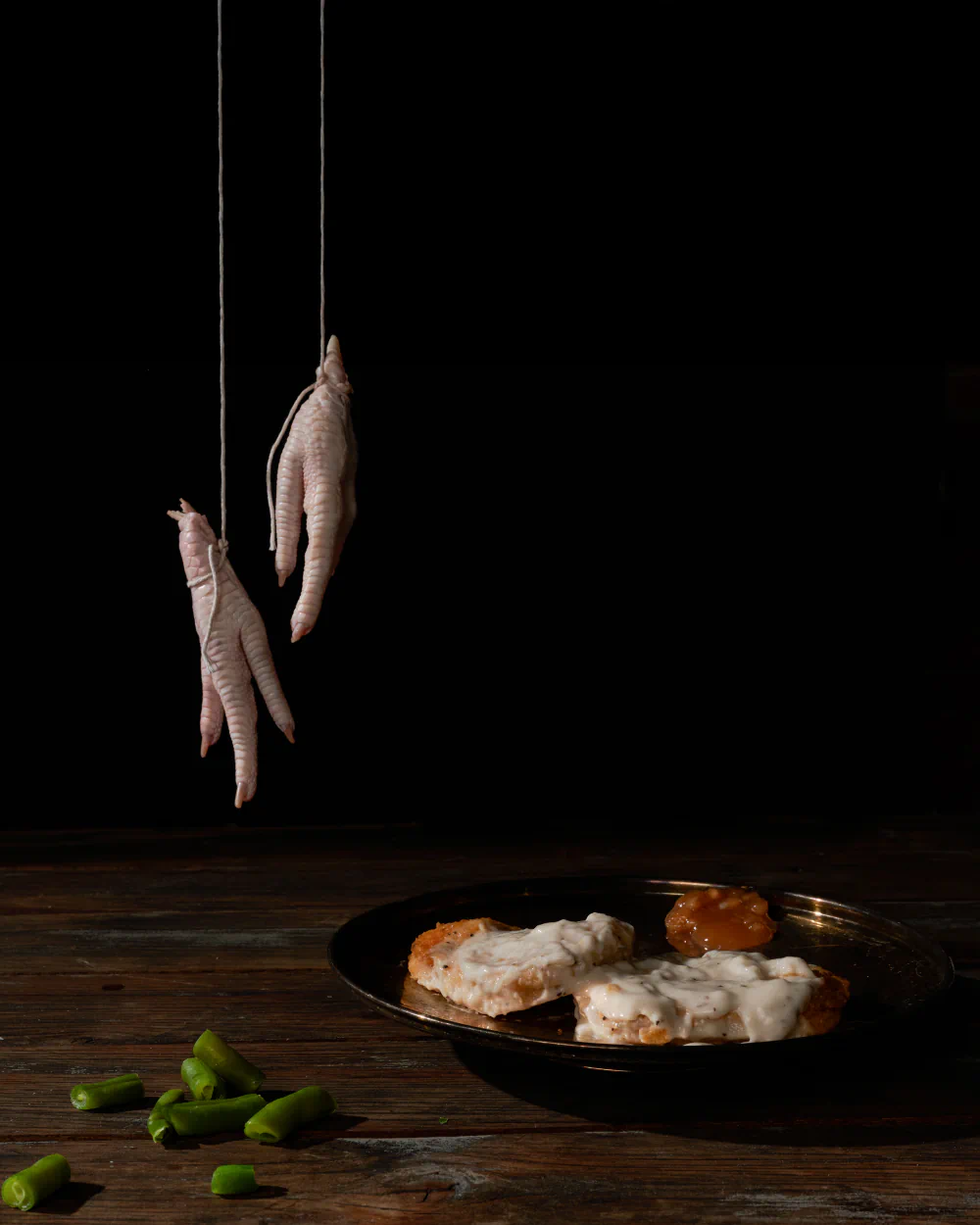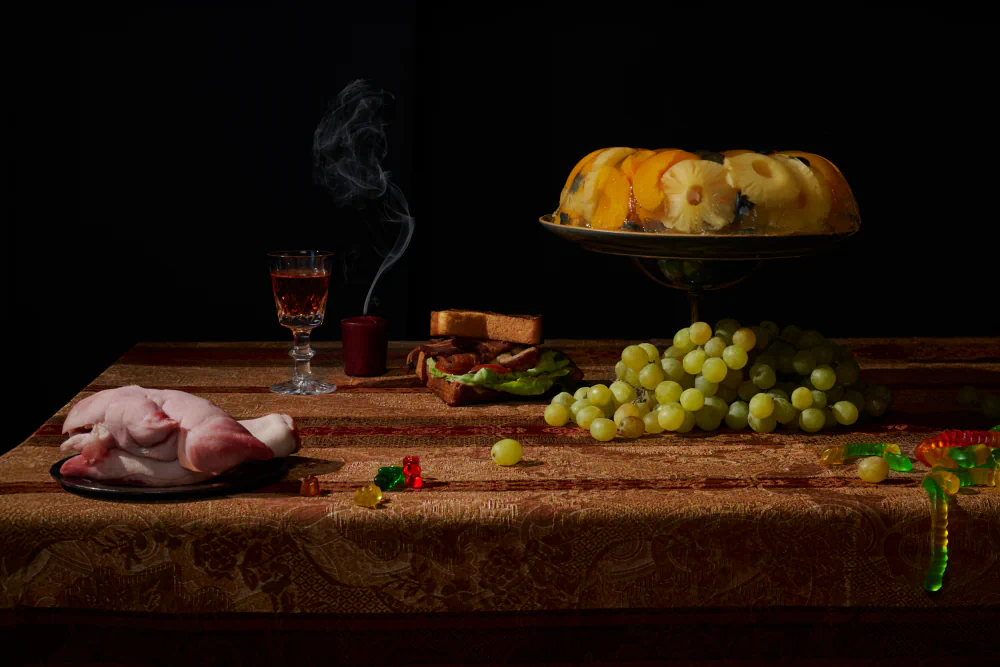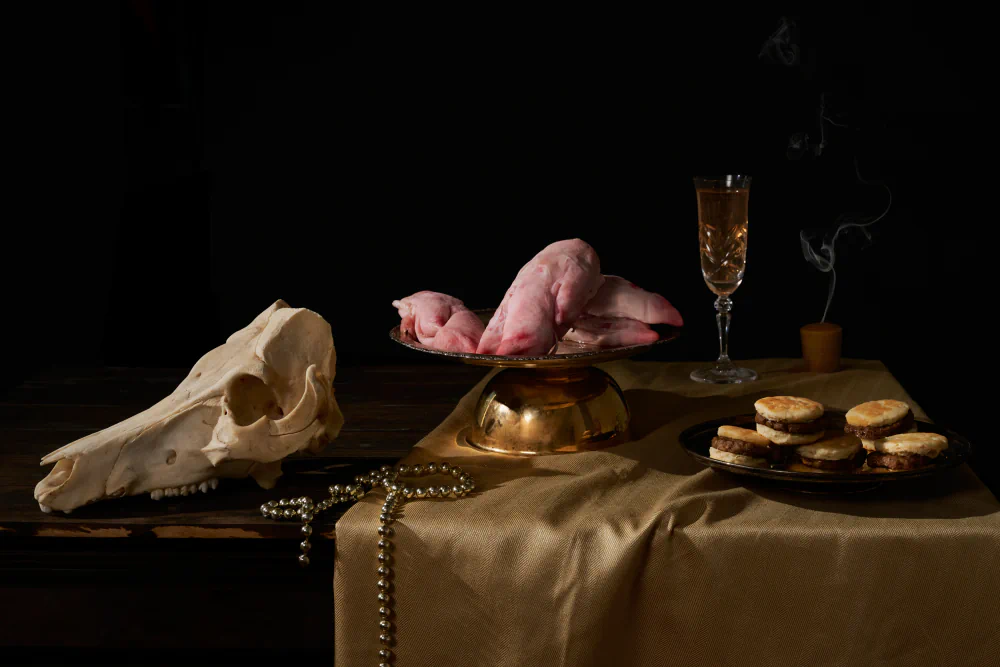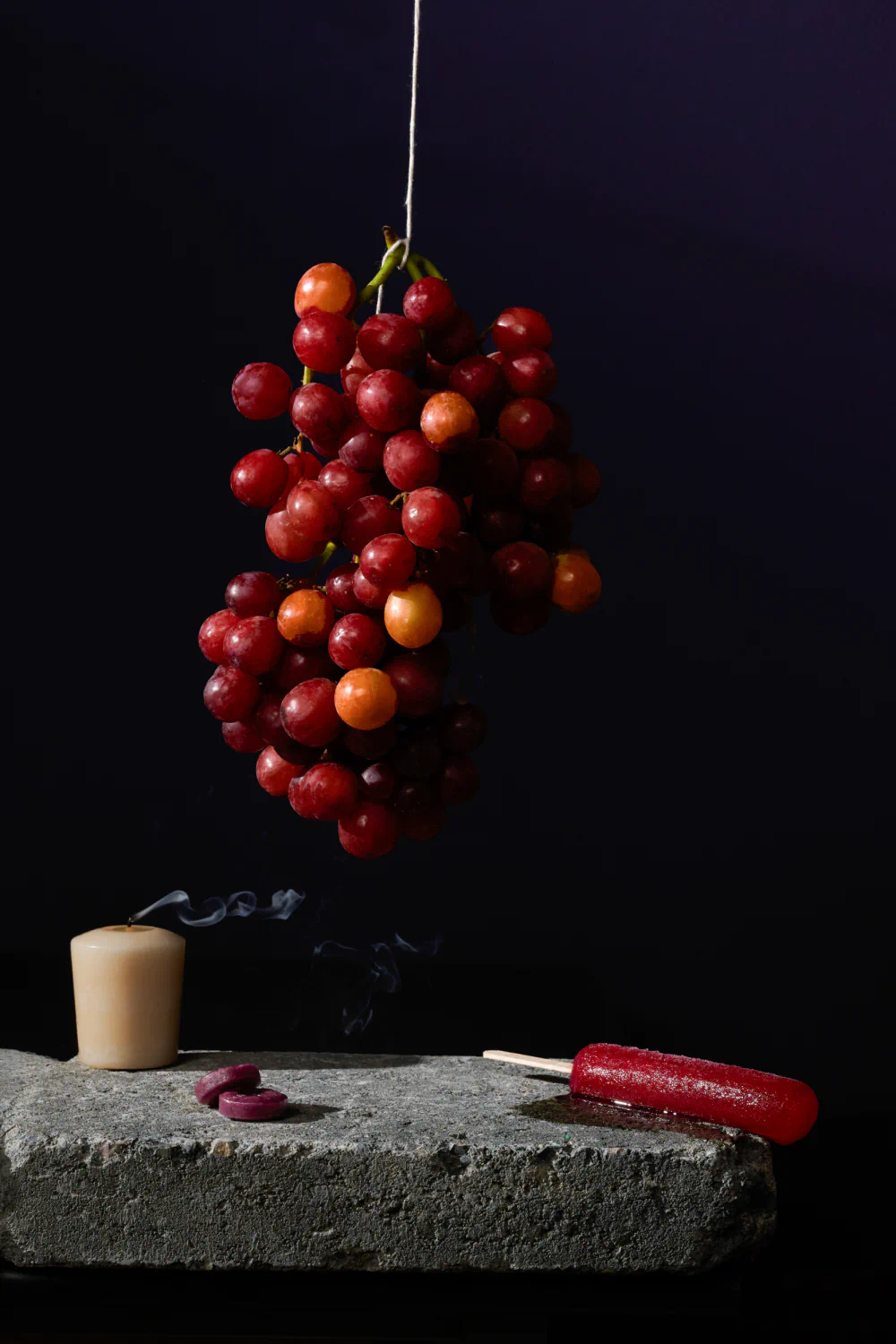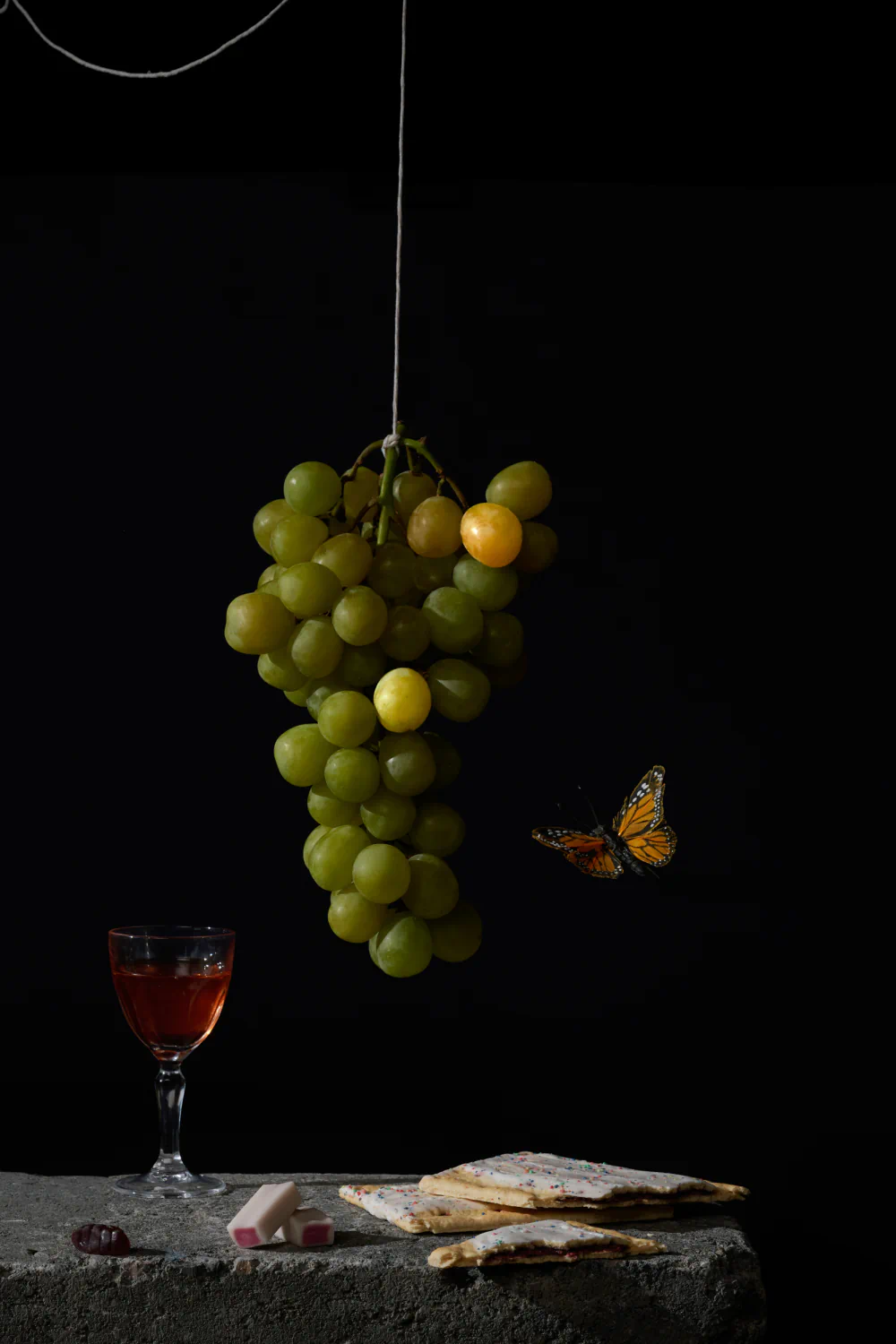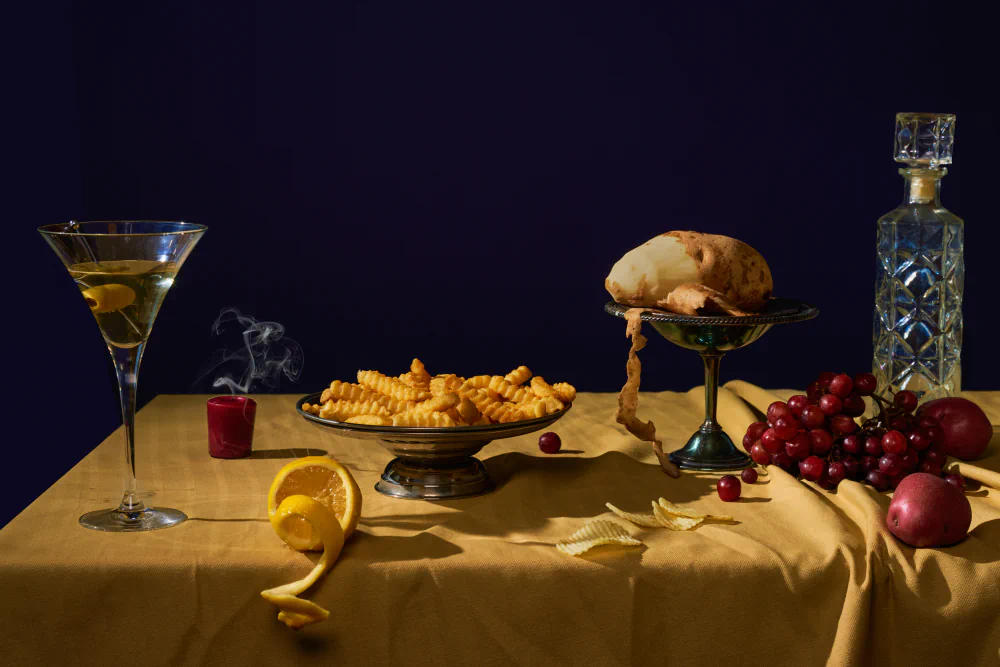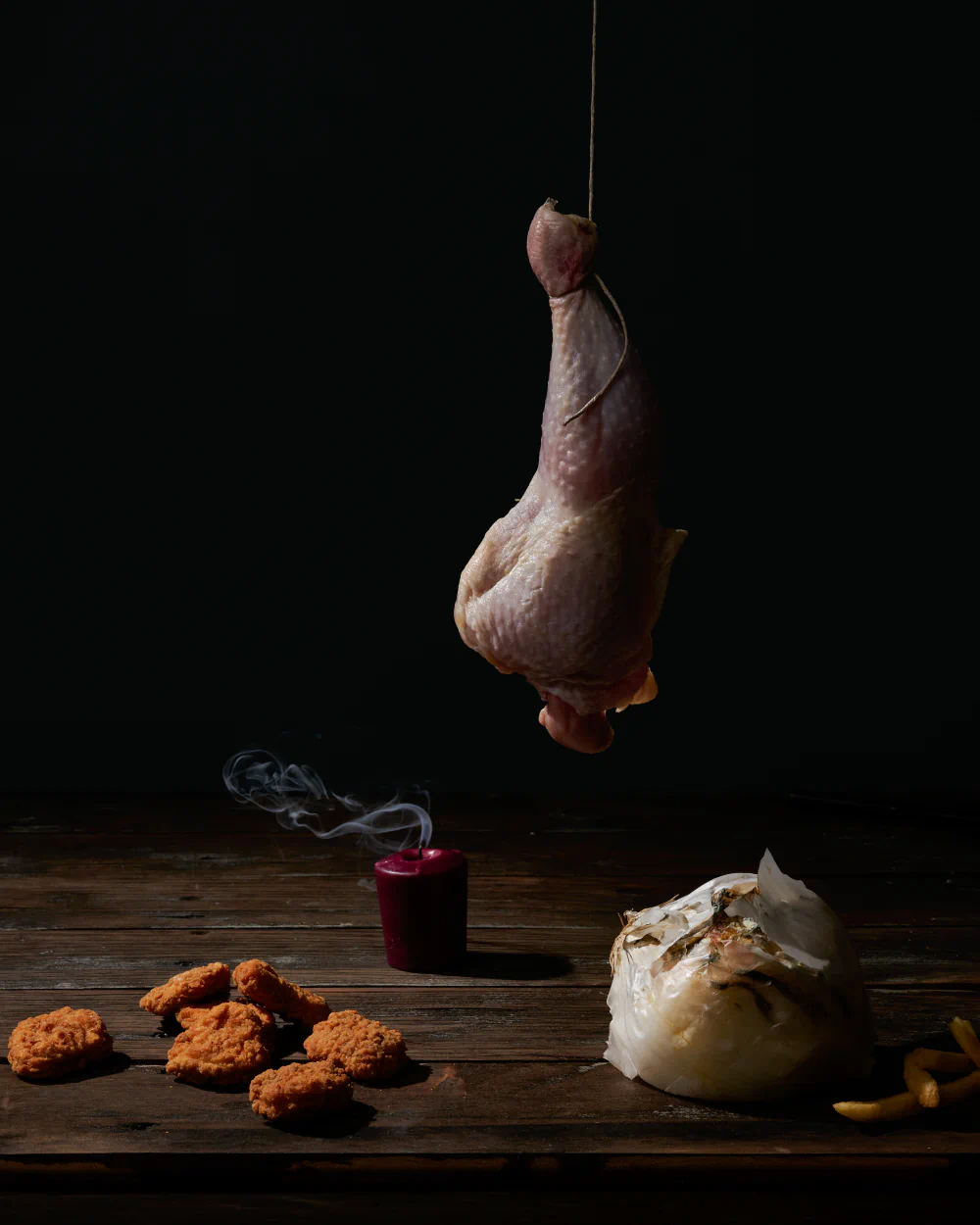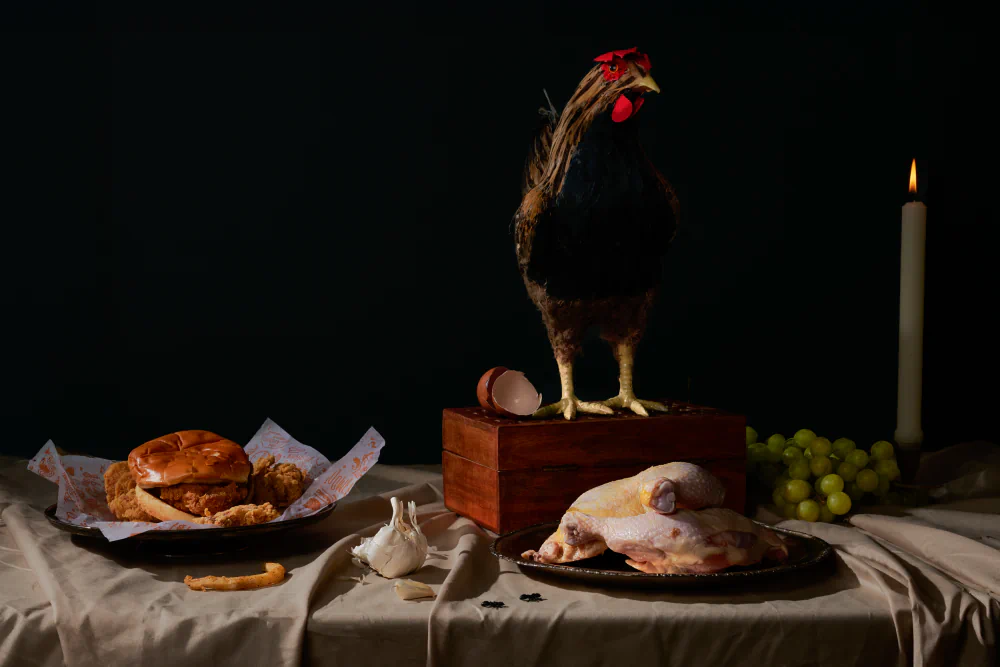
This body of work reflects on mortality, the human condition, and our culture’s obsession with materialism.
Through imagery inspired by Dutch and Spanish painting, it expresses the transience of our existence by exploring our shared relationship with food.
As Western culture evolved after the Industrial Revolution, food became factory-based and increasingly processed. People chose convenience over nutrition, giving rise to the fast-food industry. Today, there are places, particularly in American inner cities, where this is the only kind of food people have access to. As a result, many of us have lost touch with the food chain. This work explores that disconnection through imagery of the raw source materials that make up engineered food.
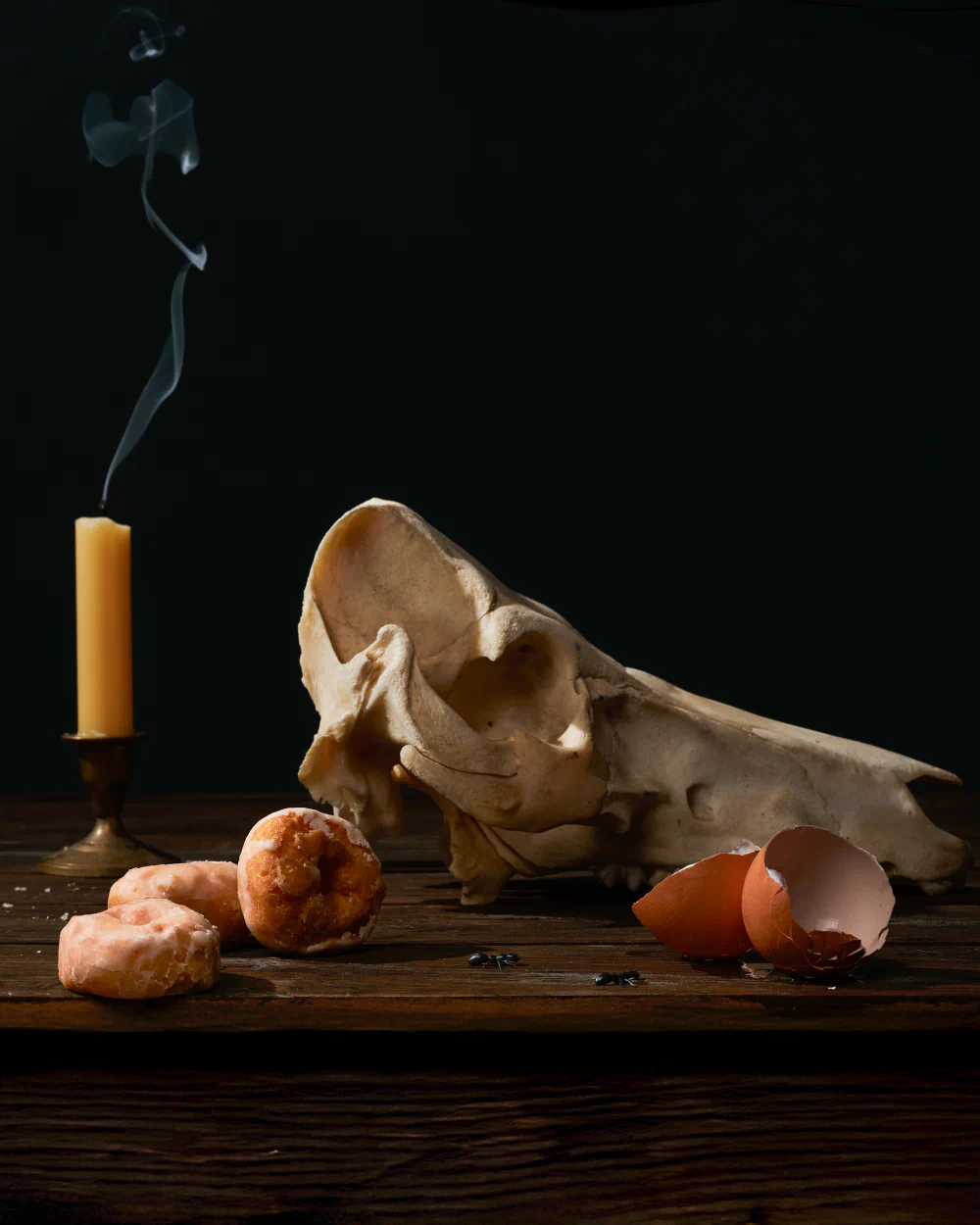
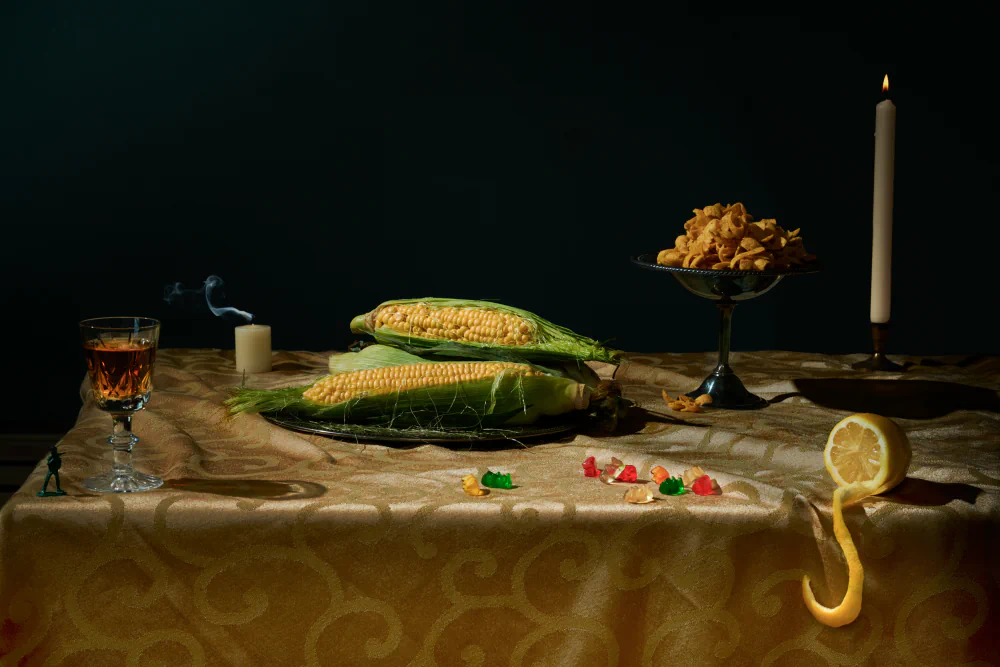
In the 16th and 17th centuries, artists in the Netherlands created Vanitas still-life paintings that presented objects representing earthly possessions and consumption as a warning to the soul that such things would not provide spiritual salvation. Vanitas compositions often included what appeared to be random objects of their time, such as candles, silver platters, and exotic foods. These items were symbolic representations of the futility of life’s pleasures, forming moral lessons. Many works contained representations of death, most notably the human skull, making them memento mori and illustrating the inevitability of mortality. This work draws on similar themes using contemporary objects.
At the same time in Spain, artists created related imagery in Bodegónes, paintings of traditional pantries filled with vegetables and game. These still lifes reflected the growing importance of material possessions and their relationship to food.
These historical works are a key source of inspiration, as contemporary consumerism closely parallels the cautionary themes found in Vanitas and Bodegónes. Beyond their warnings, these paintings can also be understood as meditations on the fleeting nature of existence and reflections of a shared human experience.
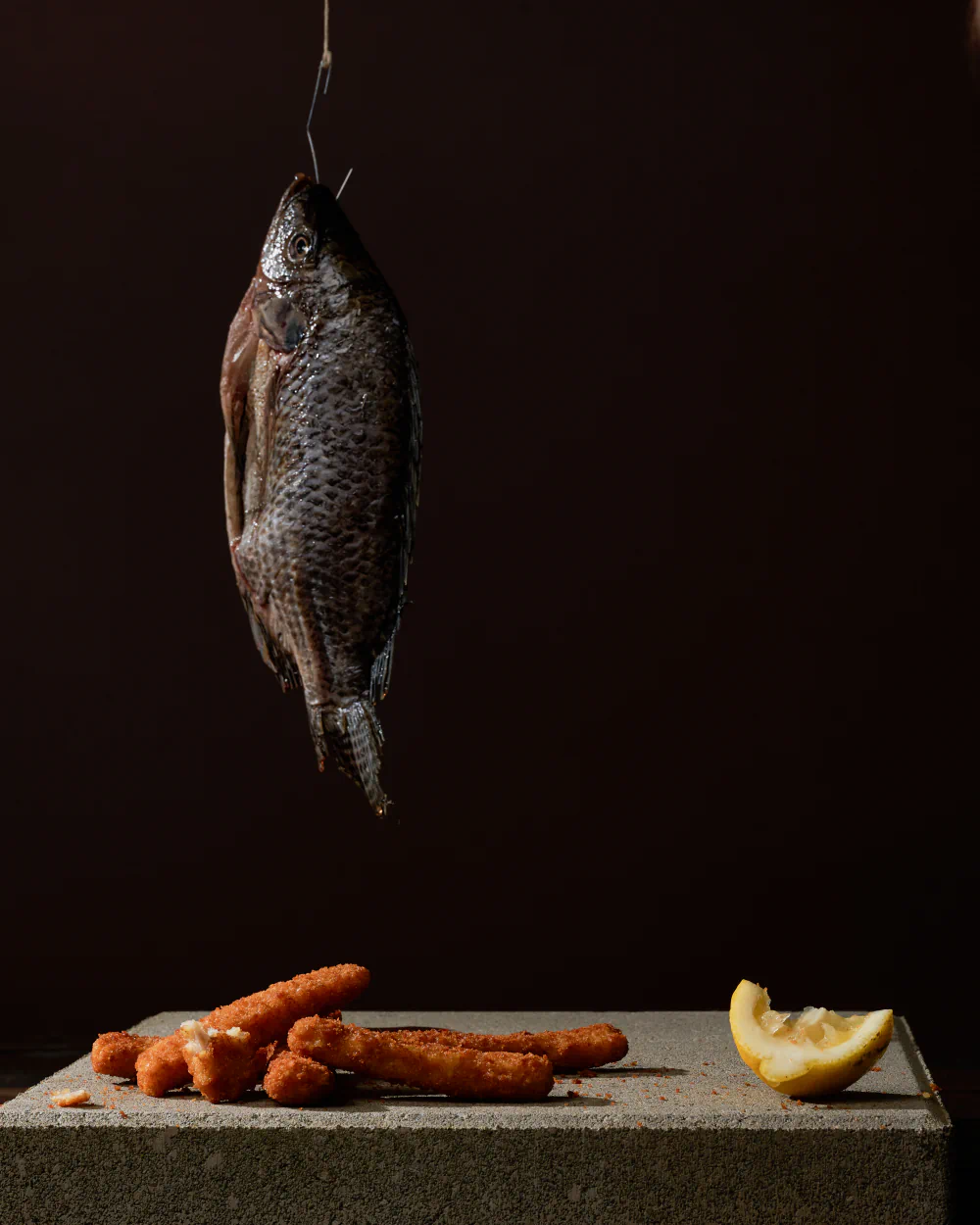
Drawing on their baroque lighting and use of chiaroscuro, the photographs are populated with meticulously chosen items, such as animal parts like pig’s feet or chicken legs, alongside fast or processed foods derived from the same animals.
By creating photographs that explore the origins of the modern Western diet and the abundance of processed food, the work aims to construct narratives around food sources, exposing both the beauty and the grotesque aspects of the natural world.
Although the images contain elements of humor by elevating the mundane, such as Starbucks or Burger King, the message remains serious. The intention is for both the humor and the rich lighting to draw the viewer in, encouraging reflection on the deeper meaning beneath the surface.
About Liz Obert
Liz Obert is a lens-based artist with a BFA from the College of Santa Fe and an MFA from Washington State University. She lives and works in Santa Fe, New Mexico, USA. Her work has been exhibited nationally and internationally, with showcases in Spain, France, and Hungary. In 2025, she won the Pollox Award for Fine Art Photography and the 1839 Award for Photographer of the Year in Still Life, was a finalist in the Soho Gallery Portfolio Competition, and received an honorable mention from Foto Slovo. Recently, her work has been exhibited at venues including Blue Sky Gallery’s Pacific Northwest Viewing Drawers, Gallery 114 in Portland, Oregon, and the Limassol Apothikes Papadaki Arts Centre in Cyprus.
She has participated in artist residencies across Portugal, France, and Hungary. In September, she will attend the Pine Meadow Ranch Residency in Sisters, Oregon. Her work has been published in outlets such as The Missouri Review, Slate, The Huffington Post, and, most recently, The Eye of Photography, as well as on the cover of Oregon Humanities Magazine.
Alongside her artistic practice, she works professionally as a food photographer. [Office Website]