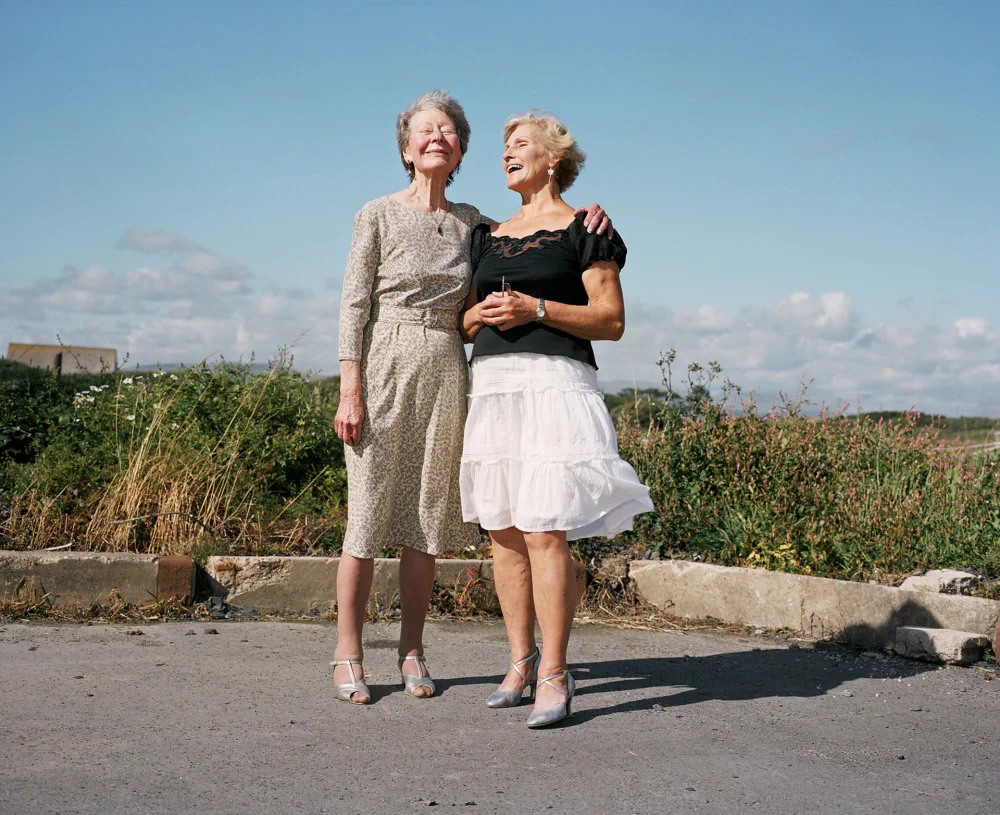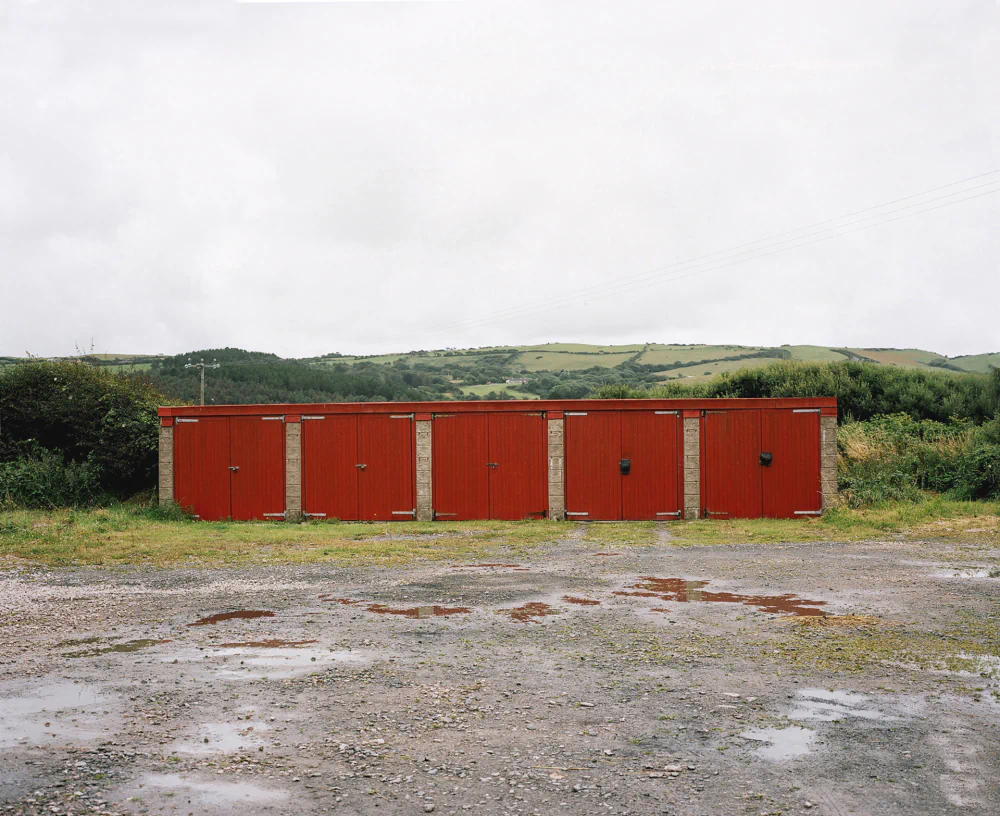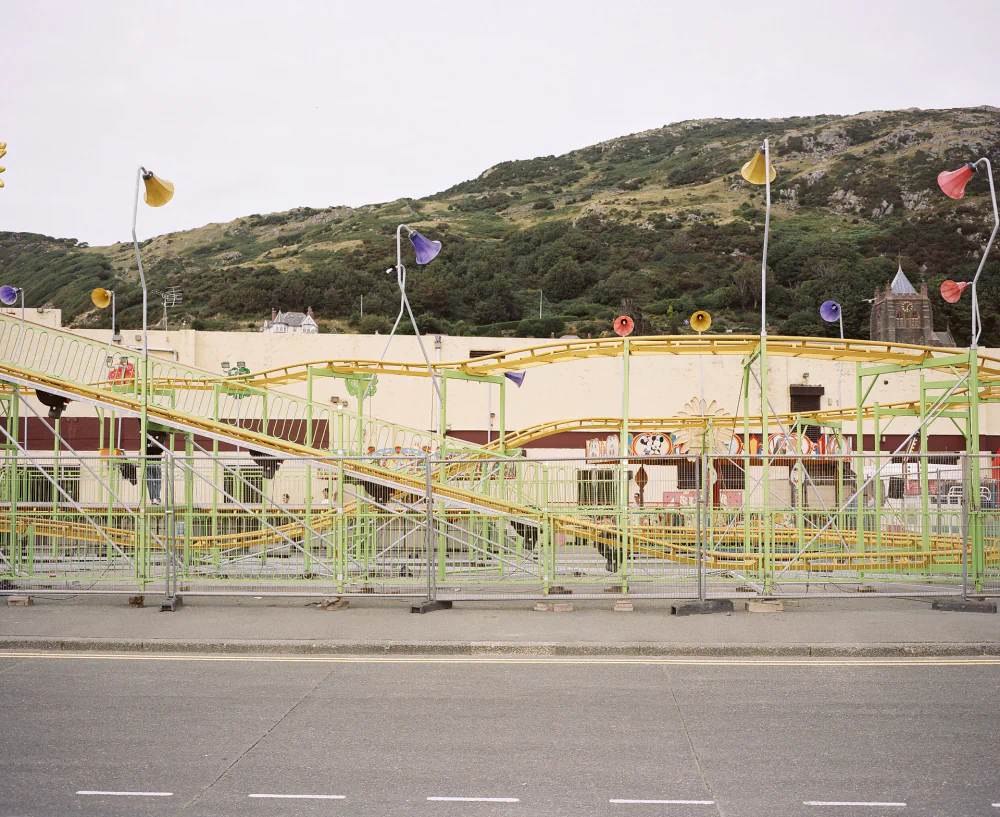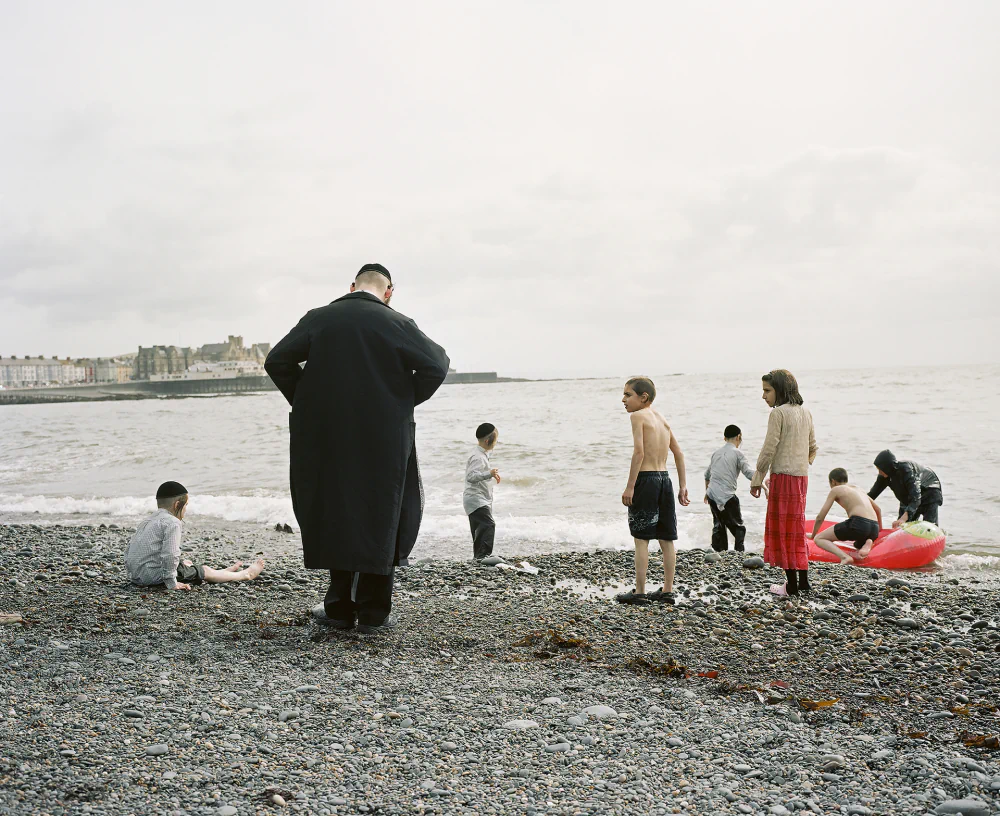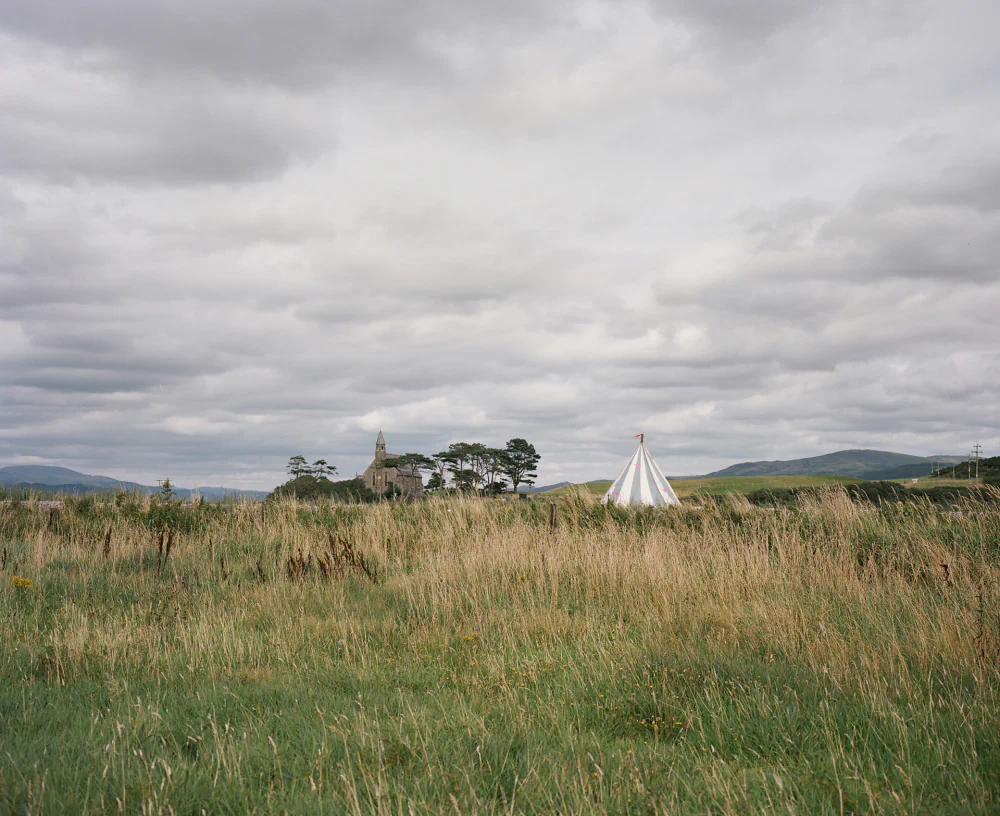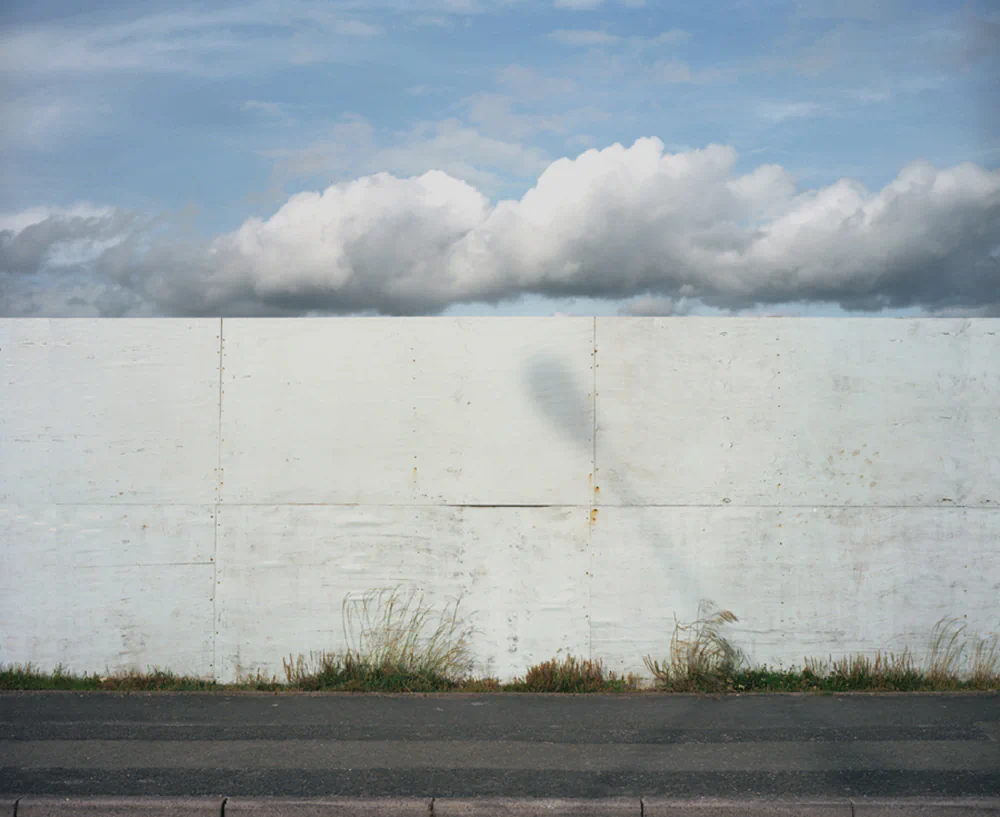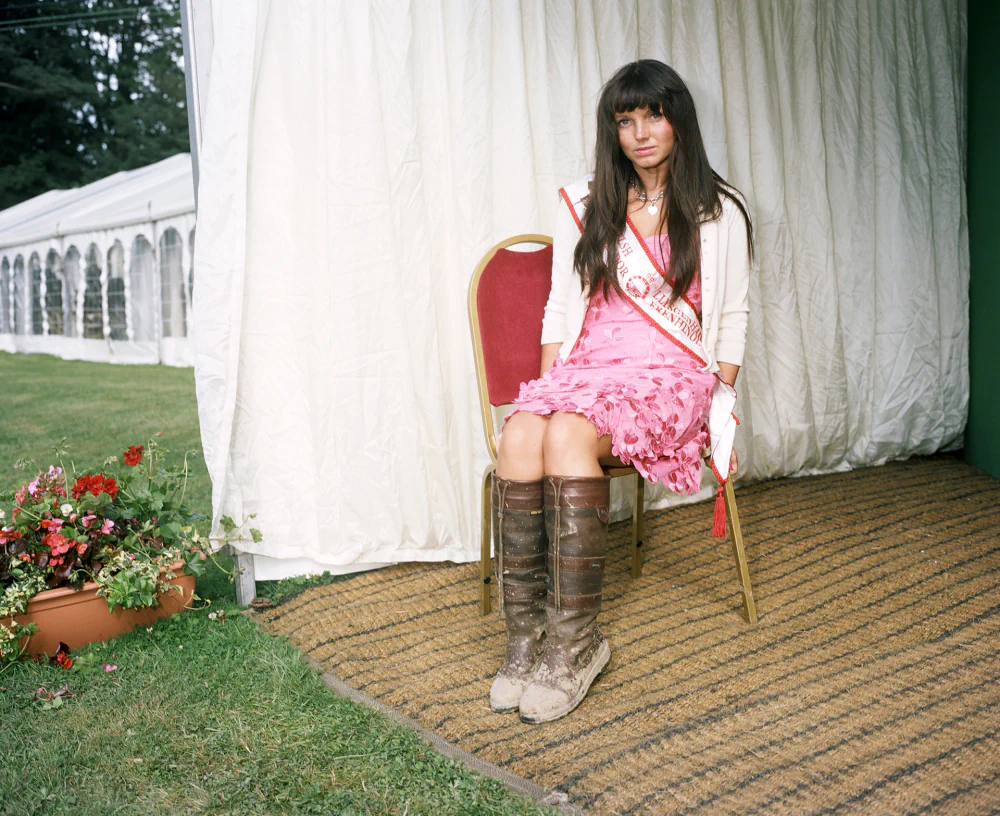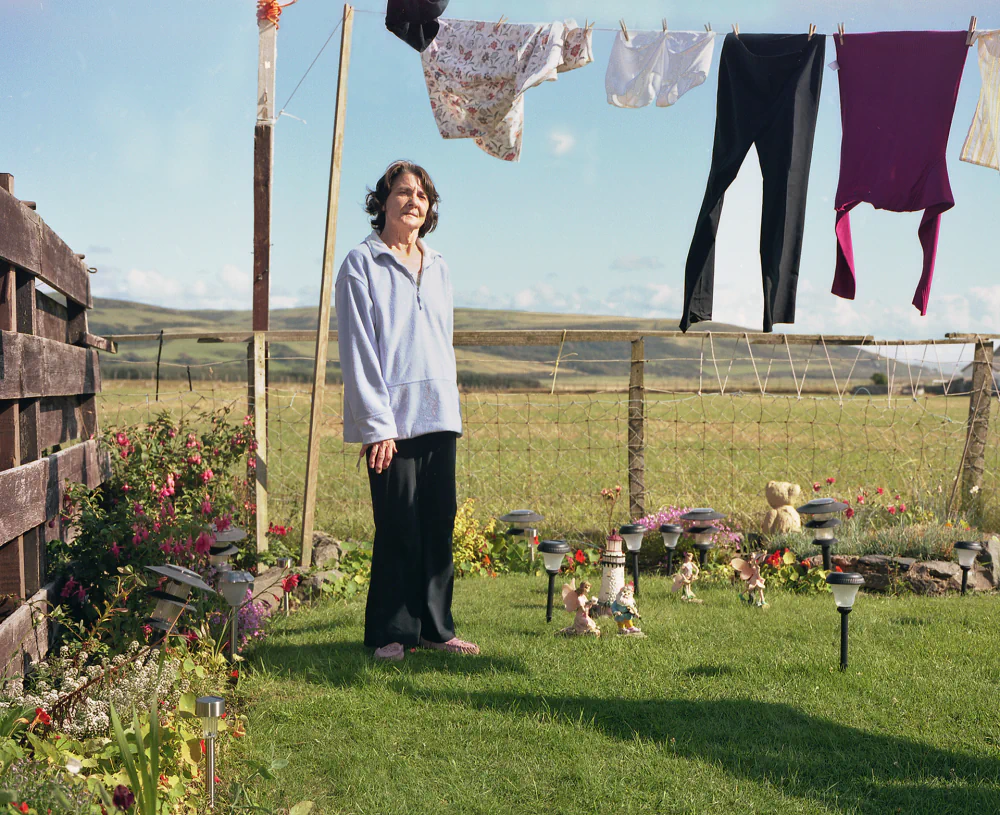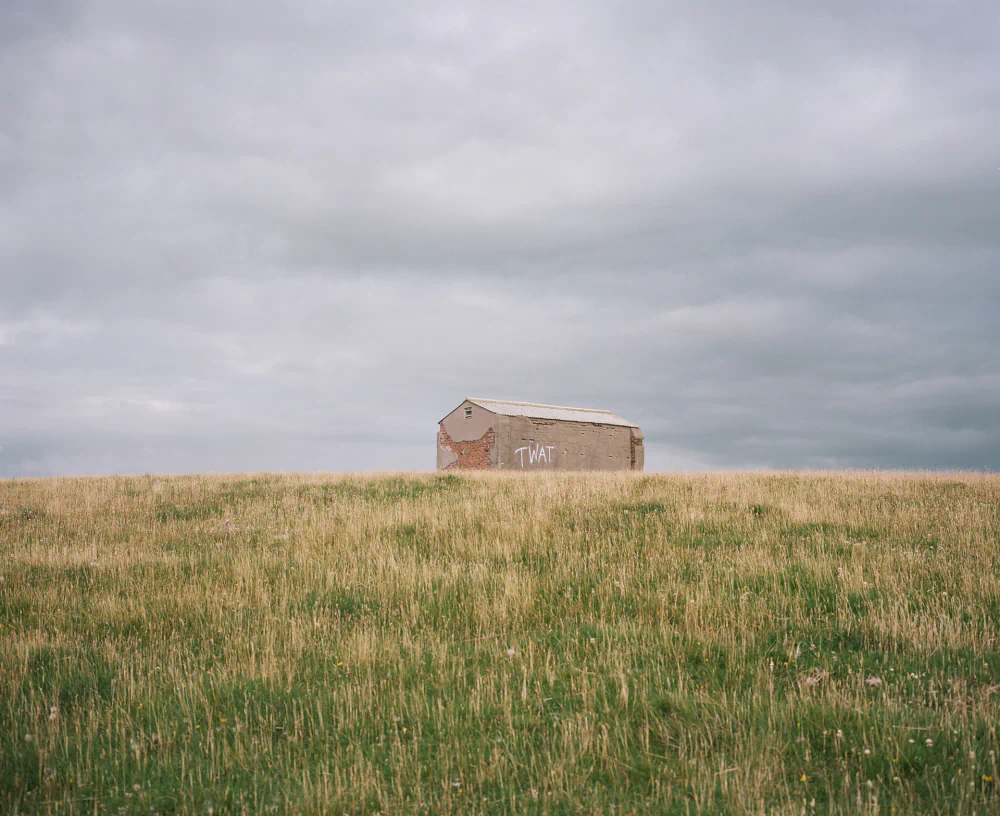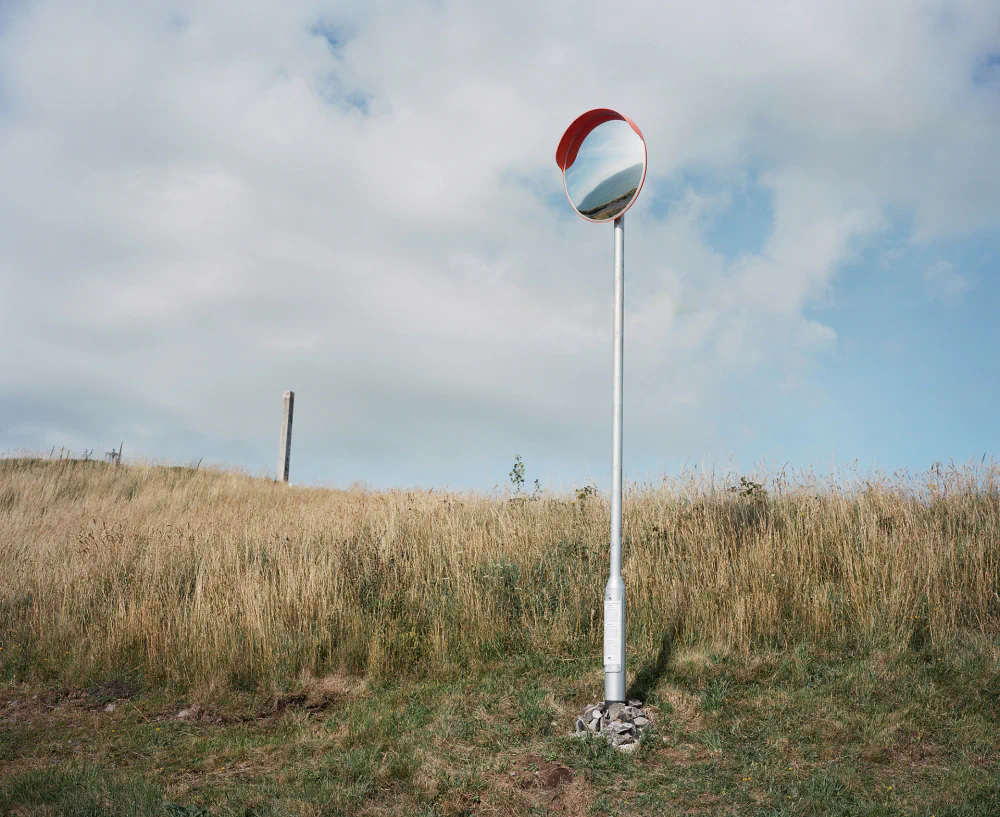

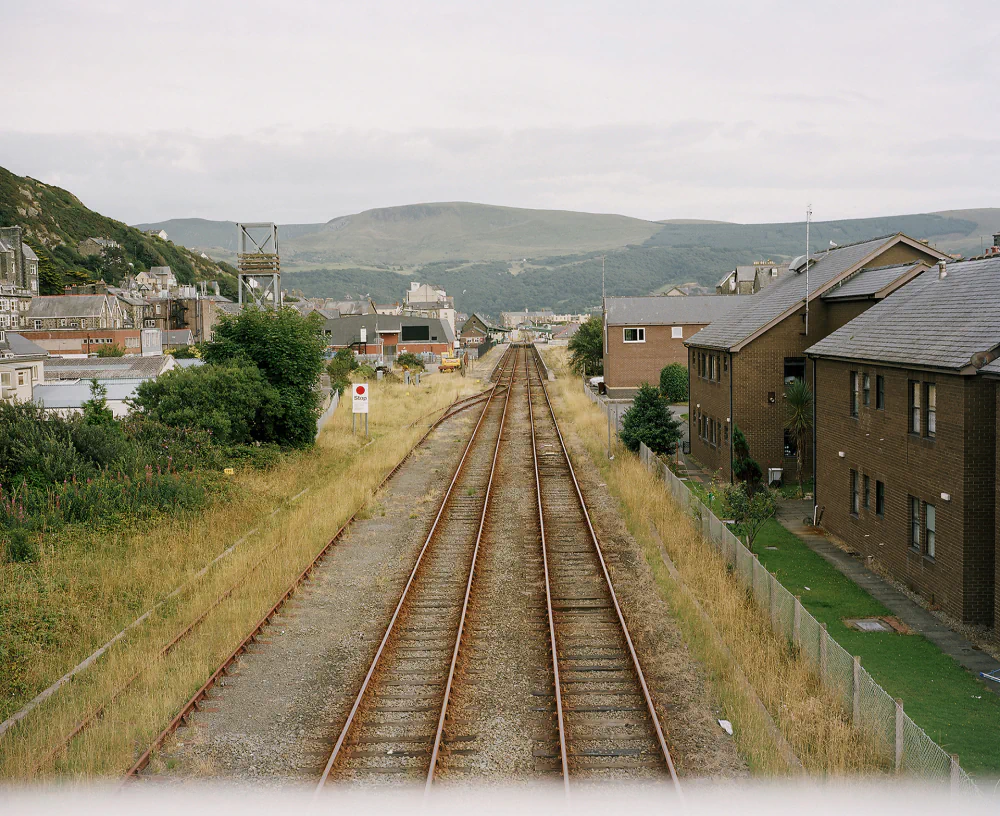
The imagery in The Submerged was produced in Mid Wales, in a coastal and hilly area located at the end of the railway line.
“There is a beach on the west coast of Wales where, as the tide retreats, strange shapes emerge from the sand. Black snouts, wizened arms, and many-limbed lumps push out of the shallows.
They could be the tentacles of mythical monsters, or drowned sailors making landfall, or the remains of a lost civilisation. In truth, the shapes are tree stumps of oak, pine, birch, and hazel—the remnants of a forest that was submerged around 1500 BC as sea levels rose, preserved in peat. At low tide, the petrified forest is unveiled, and this inspired the title of South African photographer Michelle Sank’s project, The Submerged.
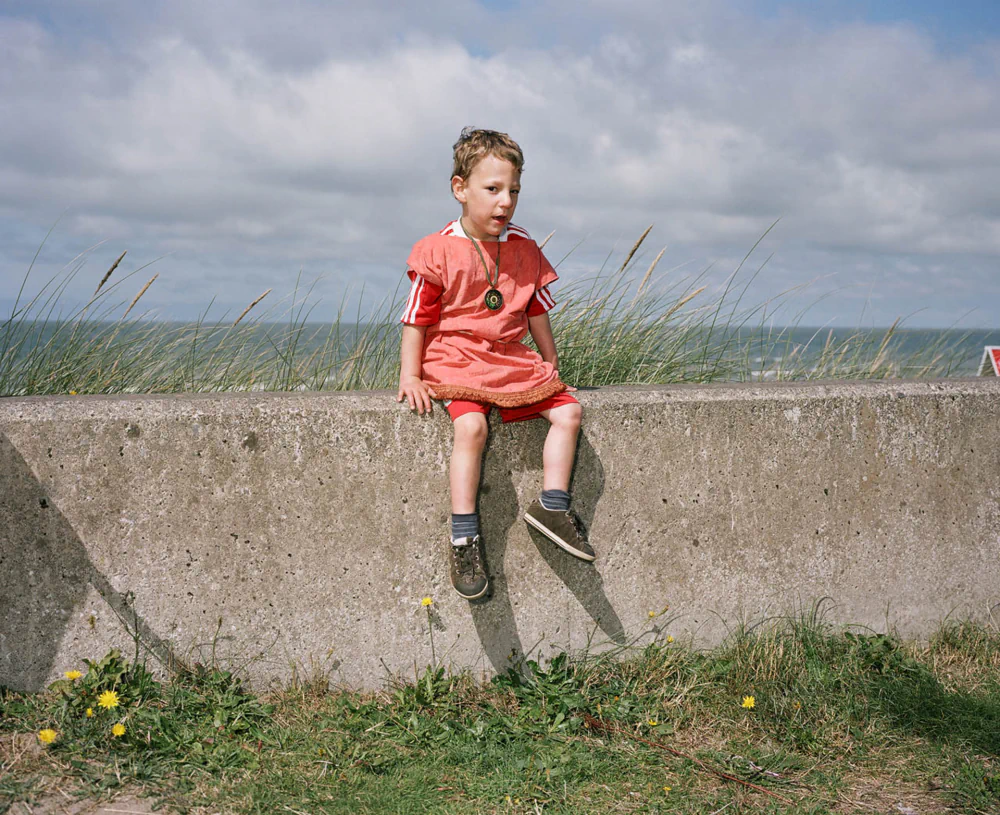
The images were mostly taken along the stretch of coastline between Ynyslas, a small seaside village, and Aberystwyth, a university town at the end of the train line. During a summer residency at Aberystwyth Arts Centre, Sank made the images by walking or driving through the area and stopping whenever she saw something that struck her—a boy, for example, sitting on the sea wall, wearing Roman fancy dress over his football kit. “I’m a bit like a hunter when I’m working,” she says. “I wait for things to come to me.”
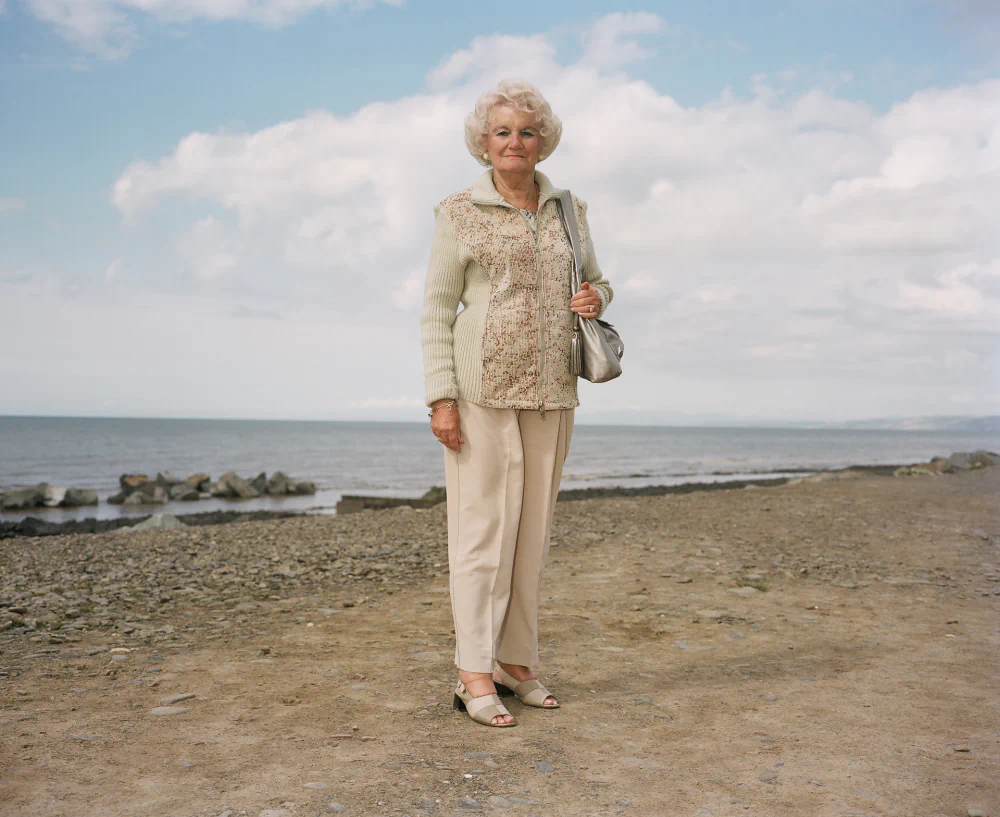
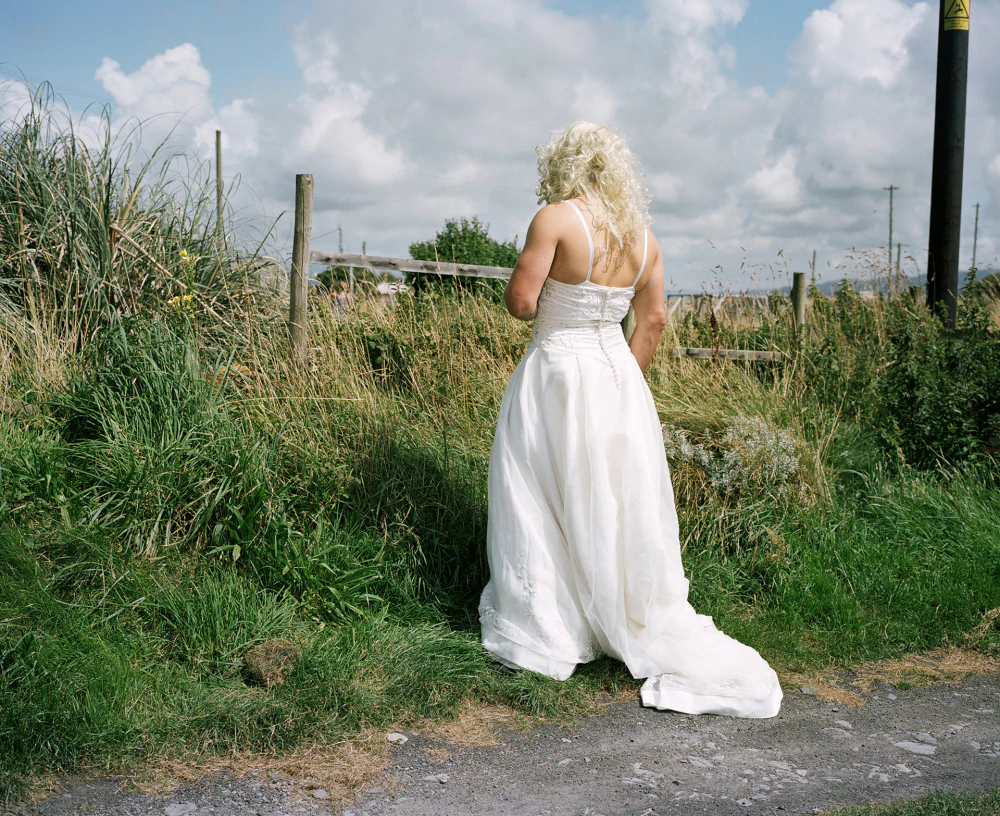
Sank’s images celebrate the variety of the world she found herself living in. “All kinds of people, all kinds of landscapes,” she says. In fact, it is more often than not the skyscapes, or more accurately the cloudscapes, that dominate. Constantly shifting in shape, texture, and colour, with skies like these it is not surprising that we find endless ways to talk about the weather. In Sank’s images, the characters always have an attitude toward the environment, either battling it or becoming part of it. In one, we see a smartly dressed woman with her silver handbag, pantsuit, sky-blue mascara, and, as Sank puts it, a “wonderful, retro hairstyle, mimicked by the clouds behind her.”
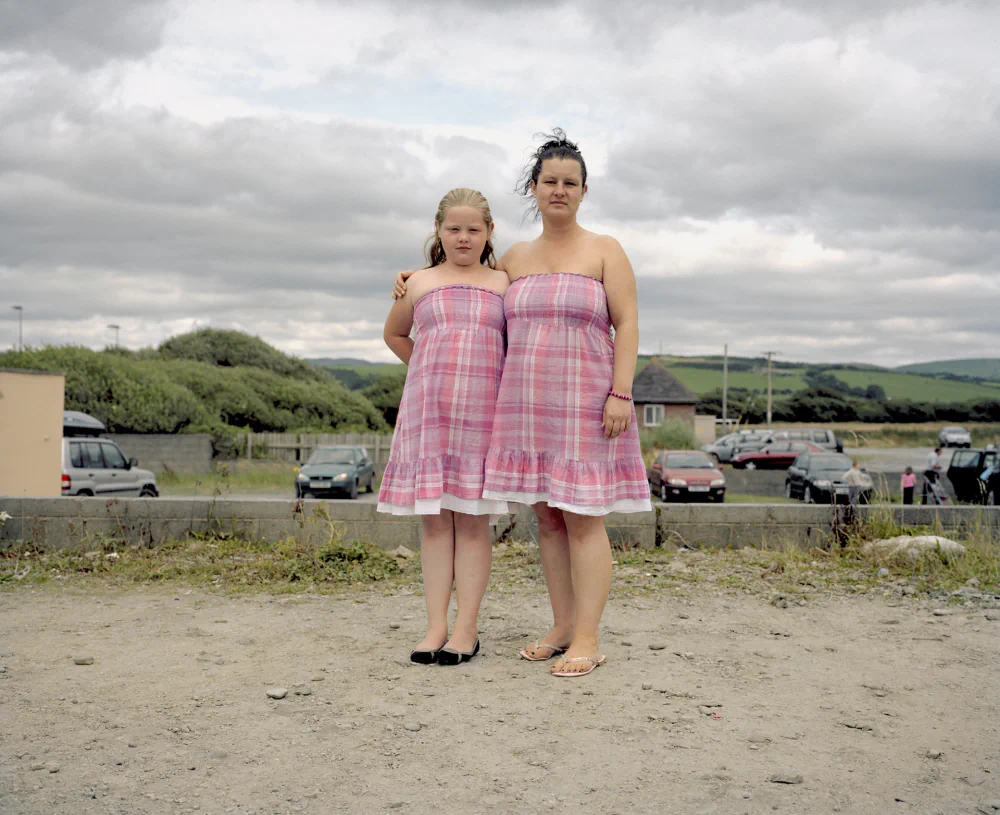
For other characters, summer is a state of mind more than a matter of meteorology. They believe in summer even when it is cold and grim: a boy in his board shorts works up the will to swim in a slate-grey sea; a mother and daughter in matching pink summer dresses and flip-flops pose in a dusty car park.
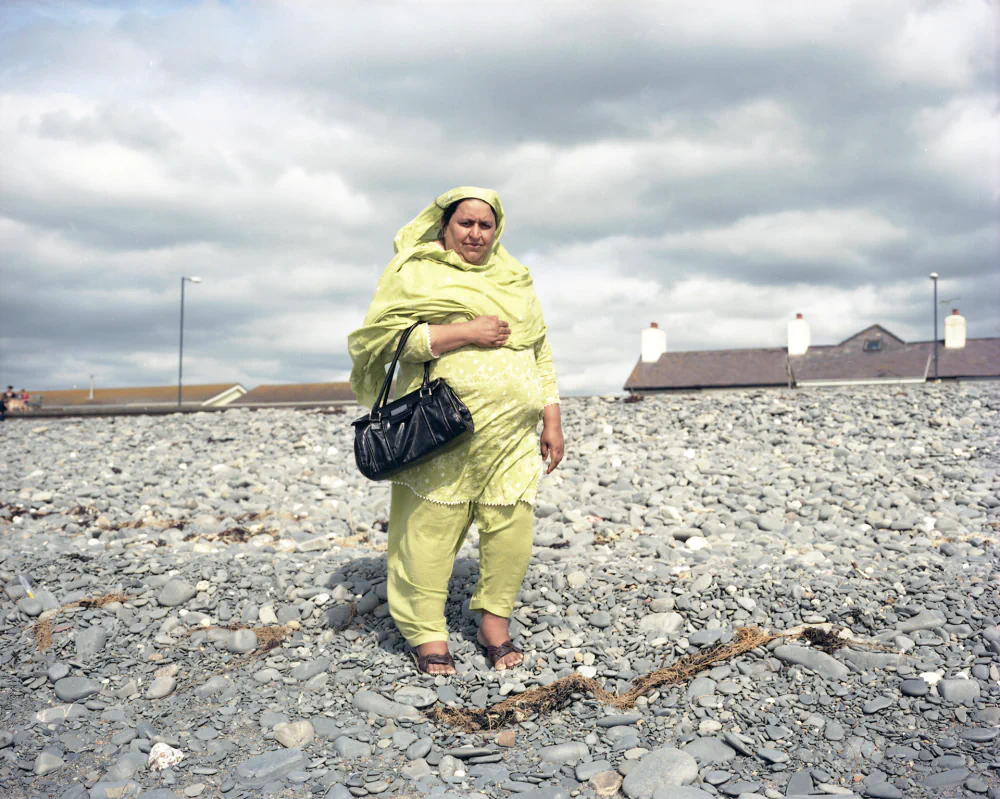
Brought up during the apartheid era, Sank left South Africa in the late 1970s and, a decade later in 1987, moved to Britain. Her upbringing in South Africa has, she says, given her an eye for the unusual, especially when faced with the “greyness of the rocks, the sand, the man-made monuments.” Finding colour in bleakness captures an idea at the heart of a British summer: a liking for a little hardship. In one image, a woman in a yellow salwar kameez stands on the rough, pebbled beach beneath a pebble-coloured sky, bracing herself against the wind. Sank recalls that the woman and her family, visiting Borth from Wolverhampton, were playing ball games on the beach. This is heroism.
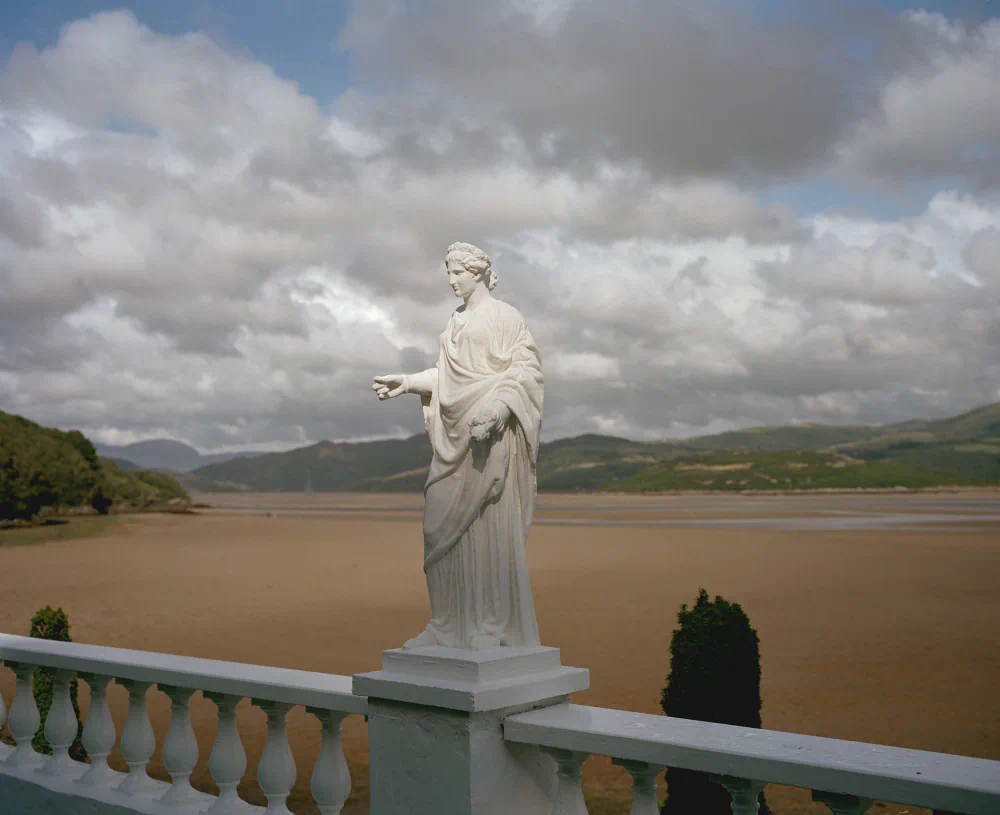
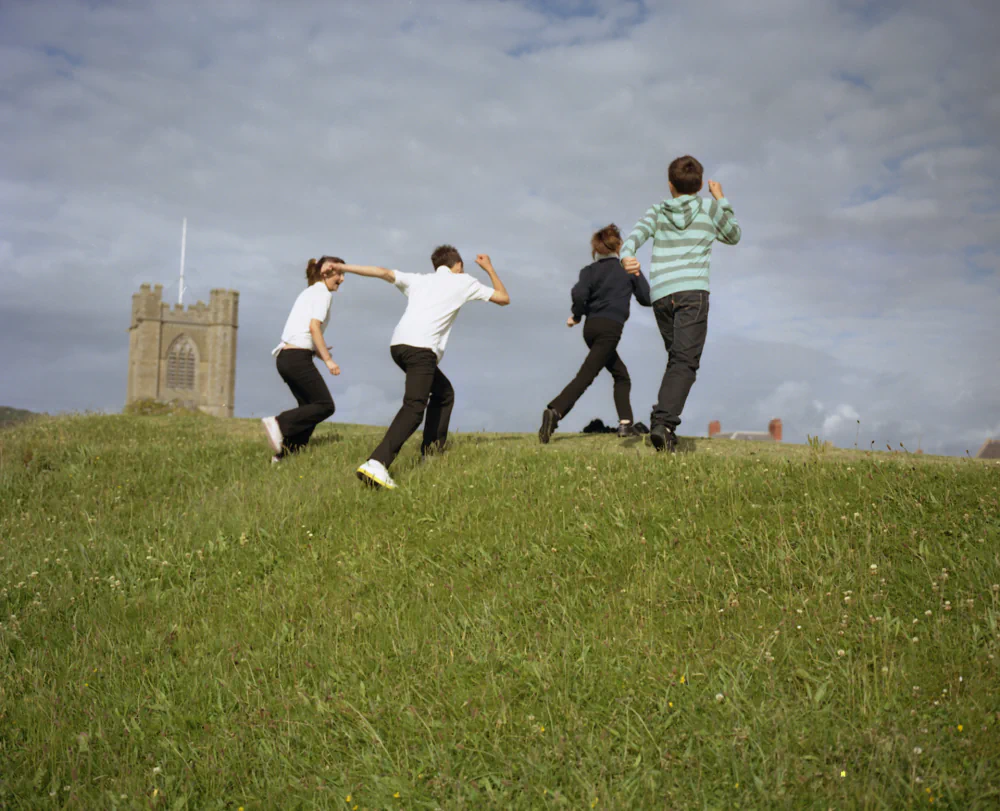
So, for all the battened-down skies, these images are celebratory. Four children running up a verge, their arms caught mid-sprint and pumping the air, evoke the spirit of Henri Cartier-Bresson—a decisive moment captured. Whatever they have seen over the hill, it is something miraculous. Then there is the Roman-style statue standing before dark sand and cloud, its torso lit by sunlight. This image was taken at Portmeirion, a place built by architect Clough Williams-Ellis in the style of an Italian village. He wanted to prove that it was possible to build beautiful—and colourful—housing without defiling the natural landscape, a project not unlike Sank’s. The statue is incongruous, yes, but it also plays into the central motif of the work: something miraculous emerging from the gloop.
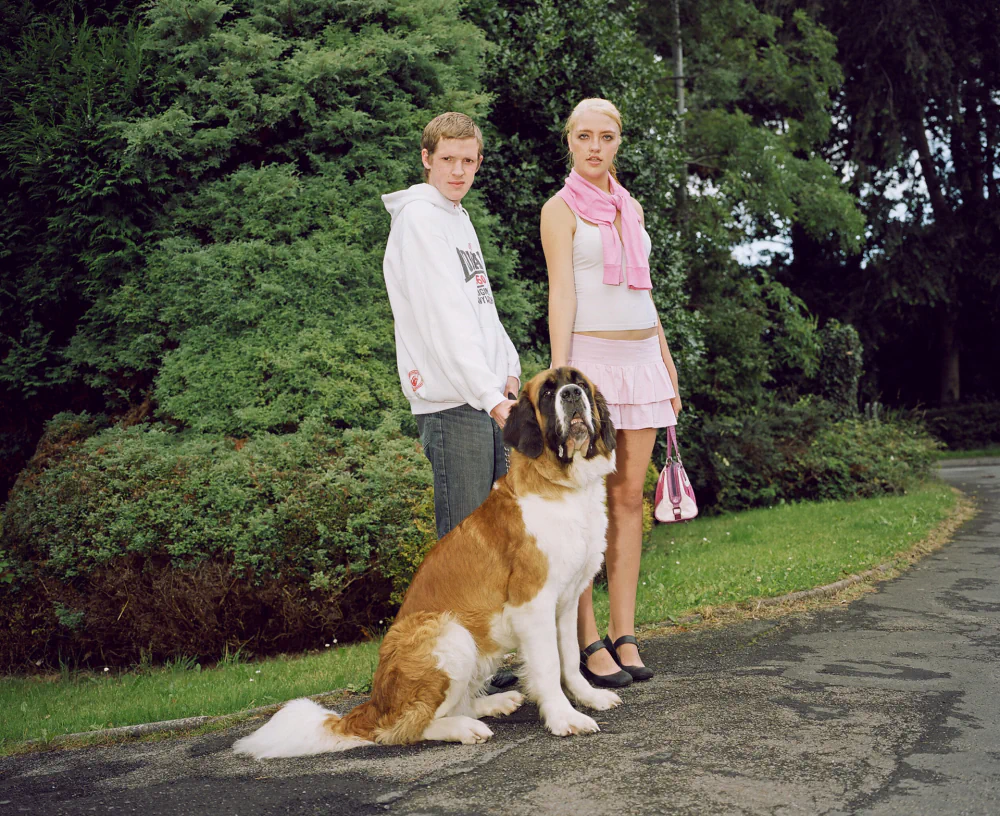
“I work intuitively,” Sank says, “to sense in that person, at that moment, something special. It may be a look on their face or the way they are in the environment, the way colour and light work with the figure to create some kind of psychic tension.”
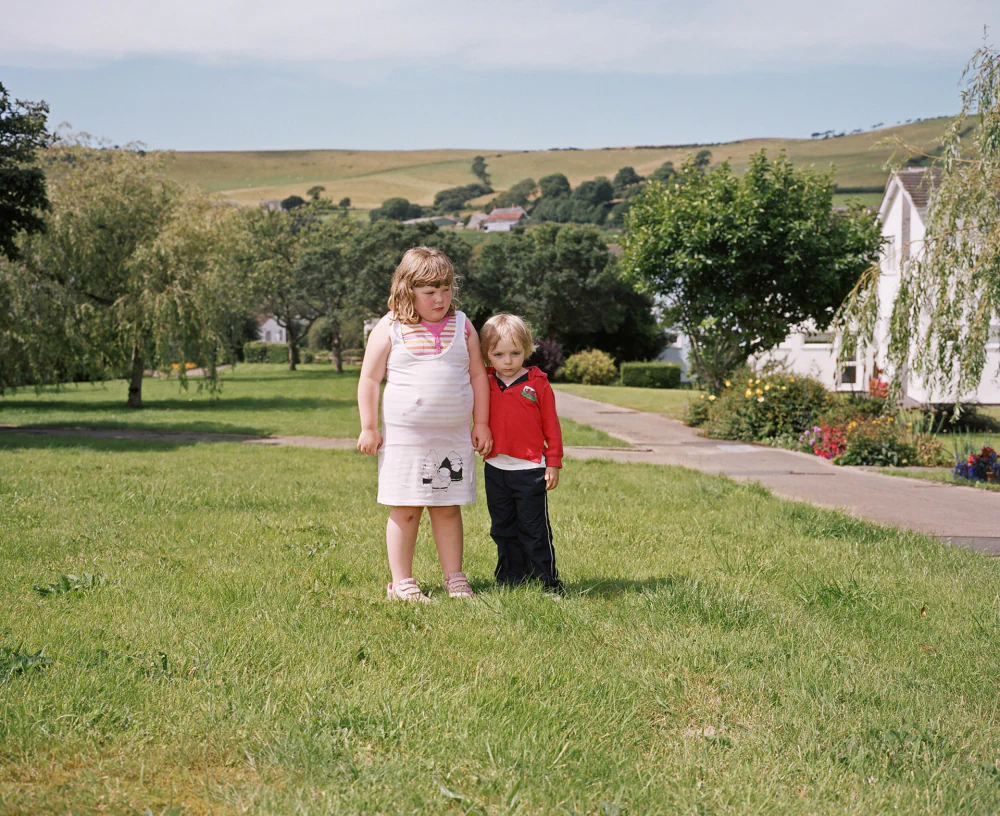
It is this tension that allows many of the photographs to imply a narrative: two young children, brother and sister, standing in an idyllic village. The girl is pigeon-toed, and there is a speck of blood on her knee, echoed by the bloom of red in the nearby flowerbed. The image moves into darker, almost fable-like territory. Two lost children wander into an idyllic village; without knowing why, they sense a threat in the well-kept gardens.
Sank recalls travelling by train to Aberystwyth to be interviewed for the residency. She was struck by the “openness and barrenness—it felt like some of the more desolate parts of America. There is something about contained environments that allows amazing things to emerge.”
The Submerged is published as a book by Schilt Publishing, Amsterdam.
About Michelle Sank
Michelle Sank was born in South Africa and settled in the UK in 1987. She cites her experience of growing up during apartheid and being the child of immigrant parents as formative influences on her interest in subcultures and the exploration of contemporary social issues and challenges. Her carefully crafted portraits merge place and person, creating sociological, visual, and psychological landscapes and narratives. Known initially for her work on youth culture, her practice has expanded into long-term projects that document communities and cultures in depth.
Sank completed a BA in Fine Art in Cape Town, where her work was recognised by the late David Goldblatt, who became a lifelong mentor.
Her photographs have been widely exhibited and published in the UK, Europe, Australia, Mexico, South Africa, and the USA. Her work is held in private and permanent collections worldwide, including the Open Eye Gallery in Liverpool, the Museum of Youth Culture in the UK, the Southeast Museum of Photography in Florida, and the Museum of Fine Arts in Houston, Texas.
She has undertaken numerous commissions and residencies for prominent galleries and magazines in Europe and the USA, and her work has received awards in many prestigious competitions, including the Taylor Wessing Prize, the British Journal of Photography, Head On Foundation, IPA Awards, LensCulture, and the Juliet Margaret Cameron Award for Female Photographers. She was recently a winner of Portrait of Britain, and in 2024 she won the Open Portrait category at the Sony World Photography Awards for her project Ballade, developed over a three-year period in Cape Town. She has also been awarded an Honorary Fellowship by the Royal Photographic Society. To date, Sank has published five books. [Official Website]