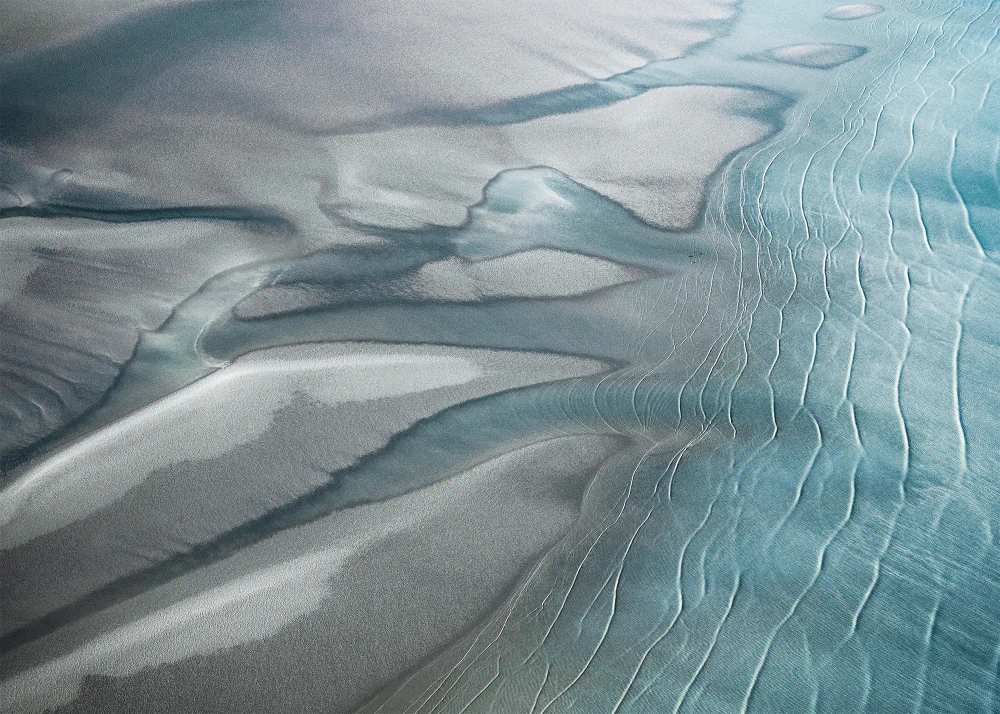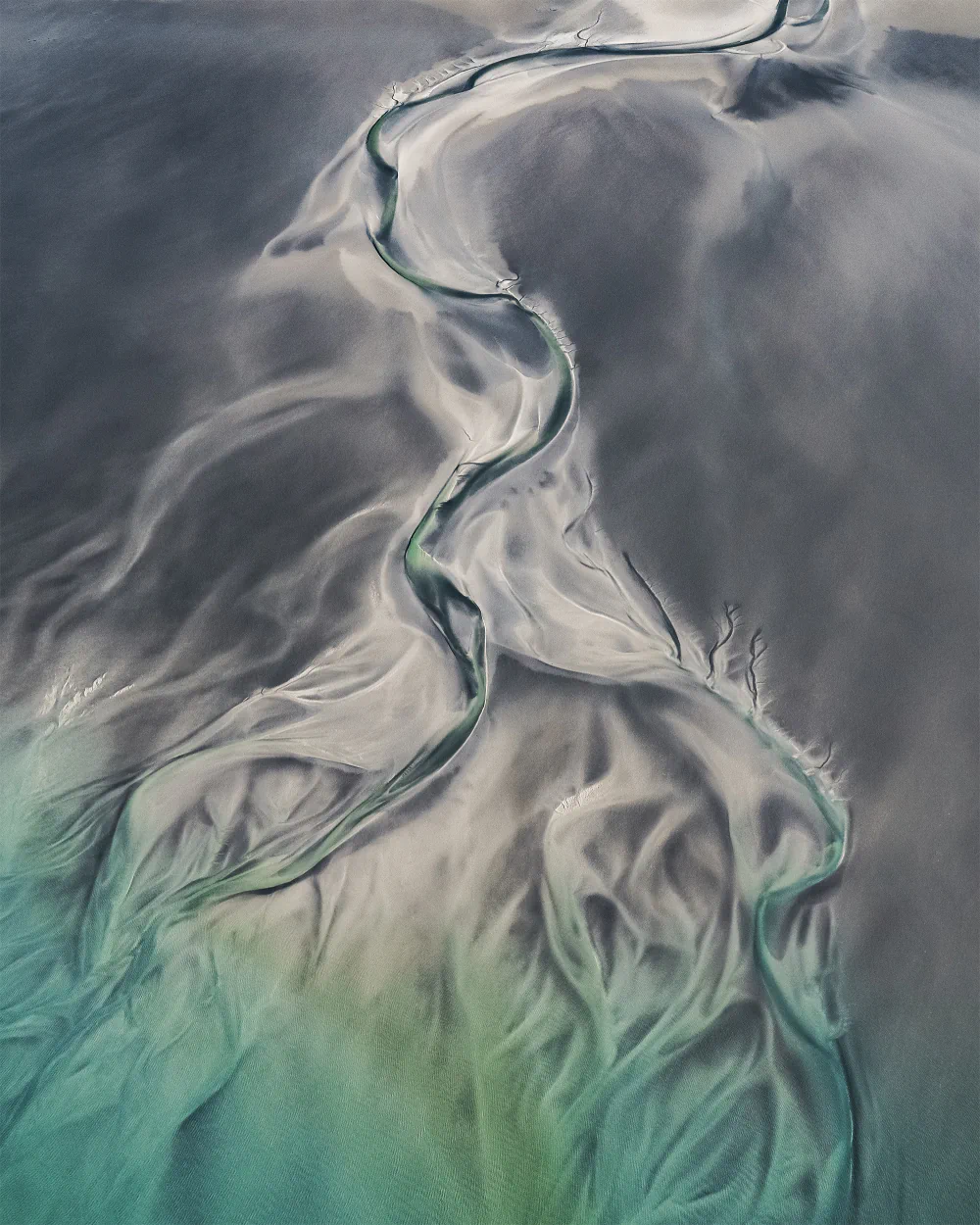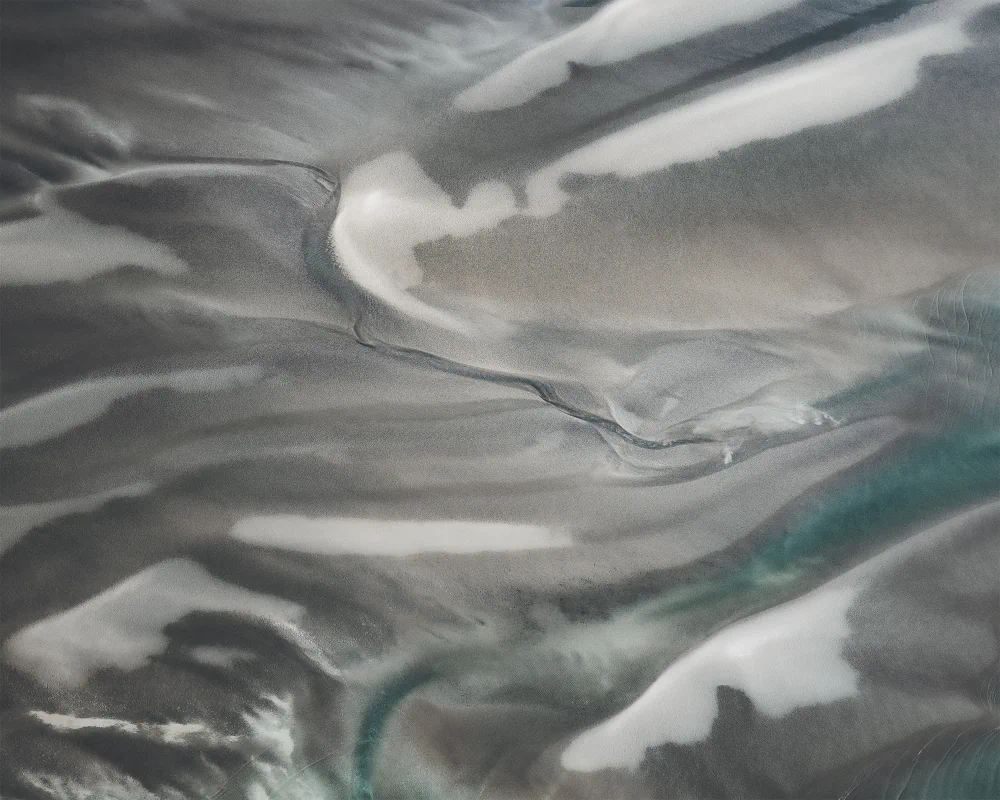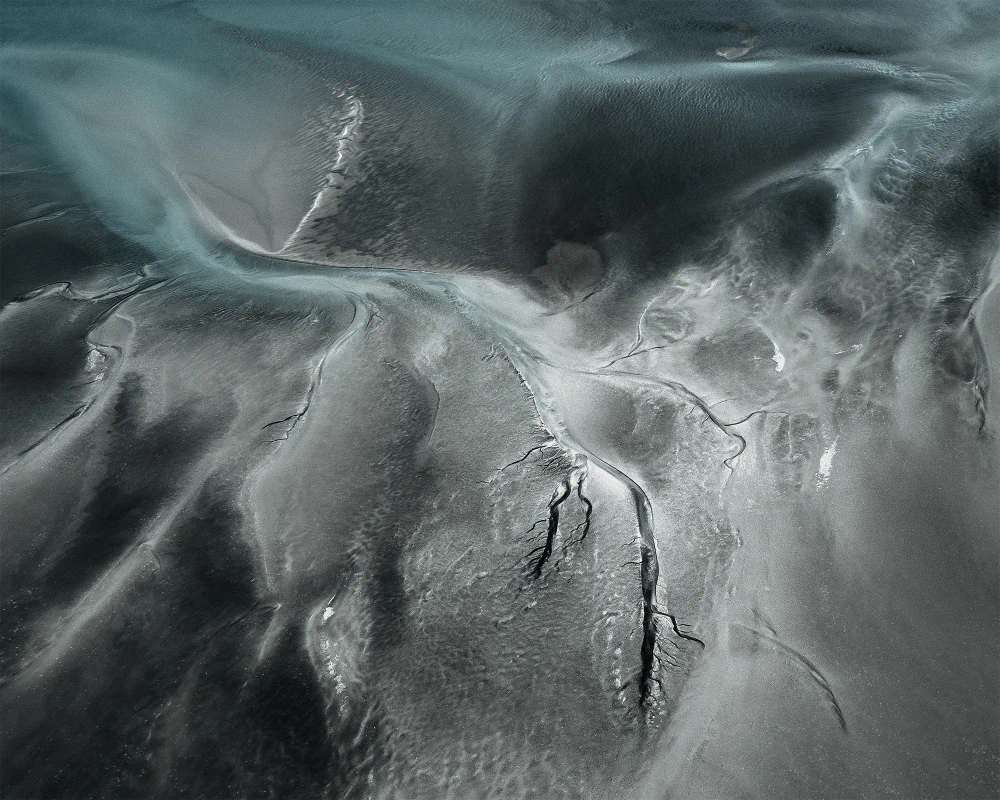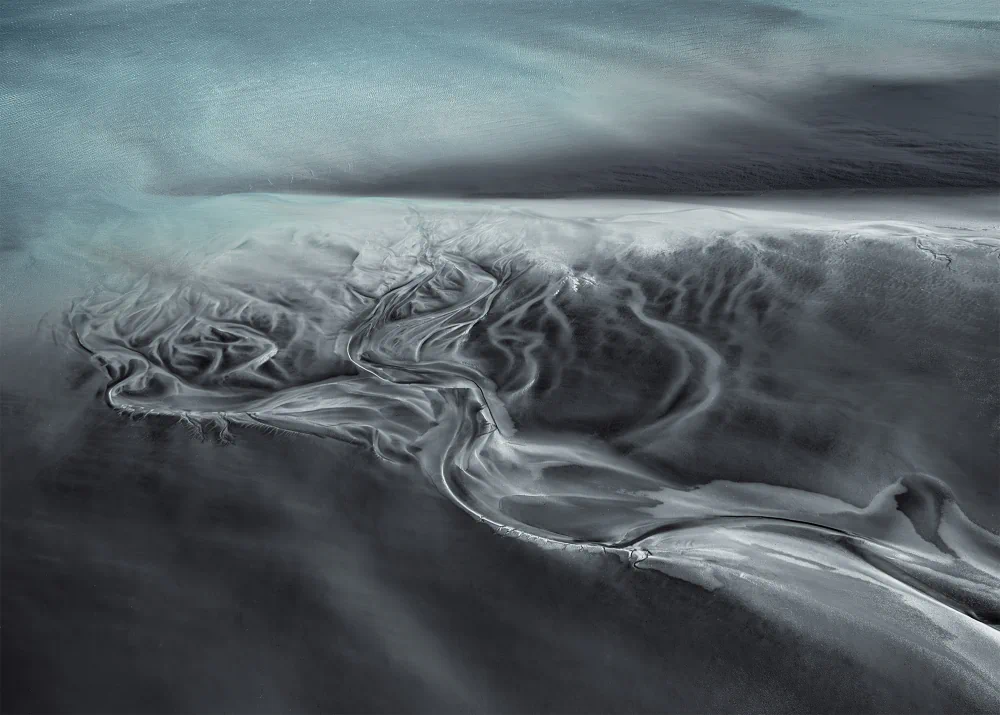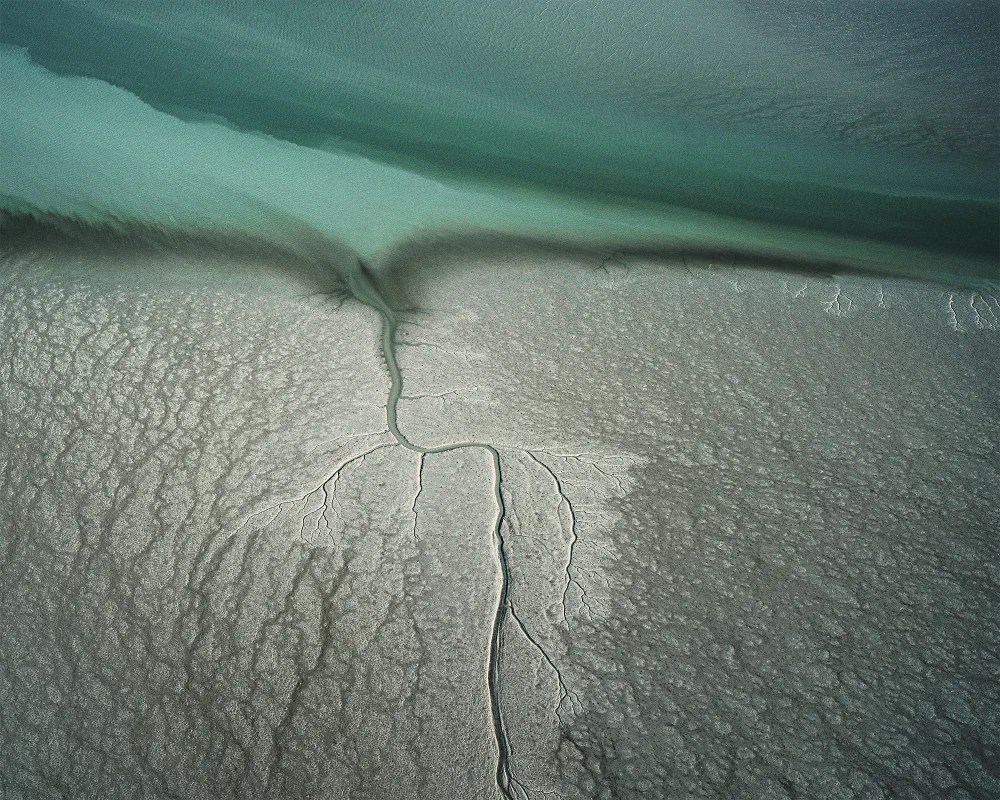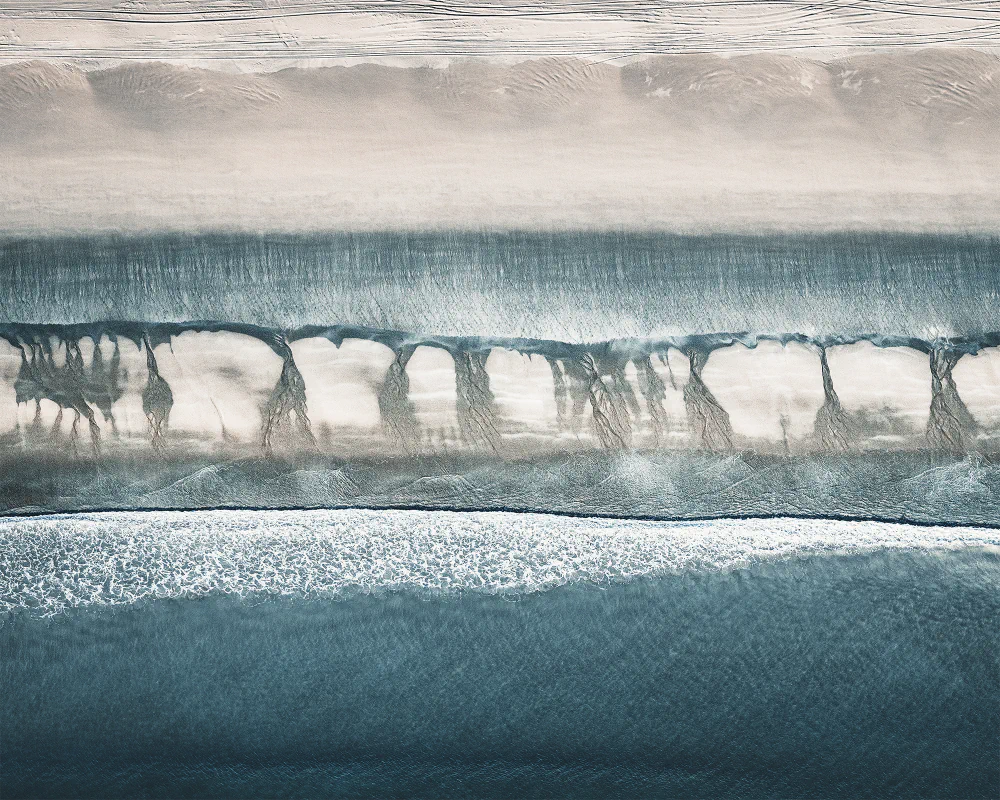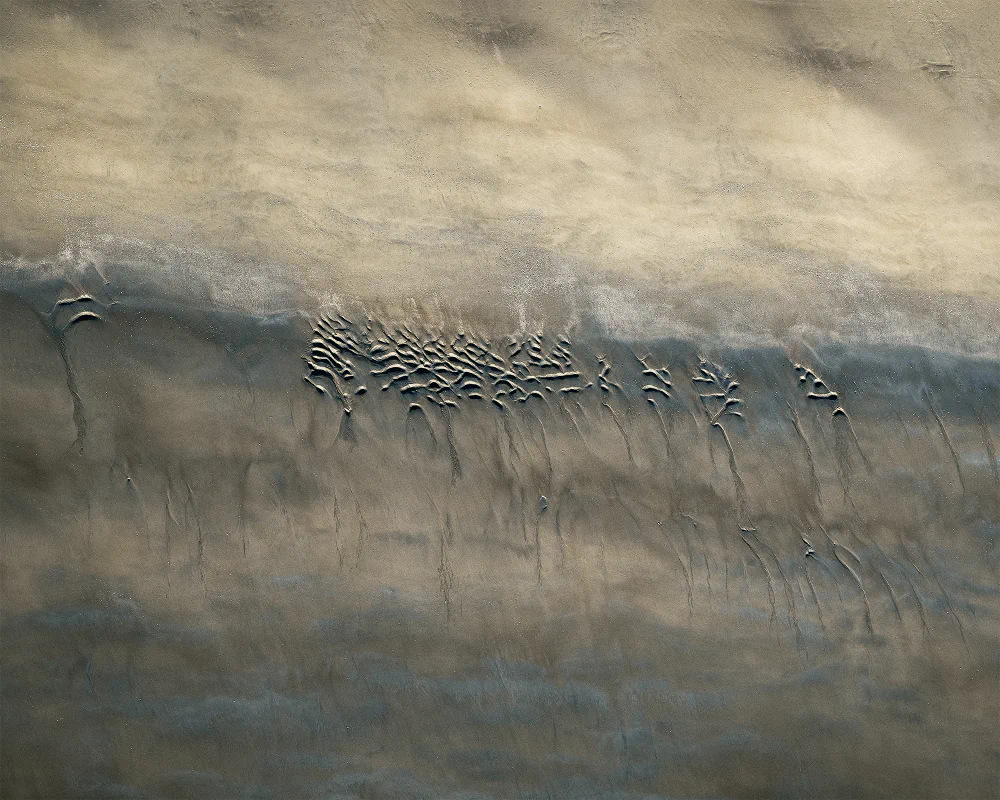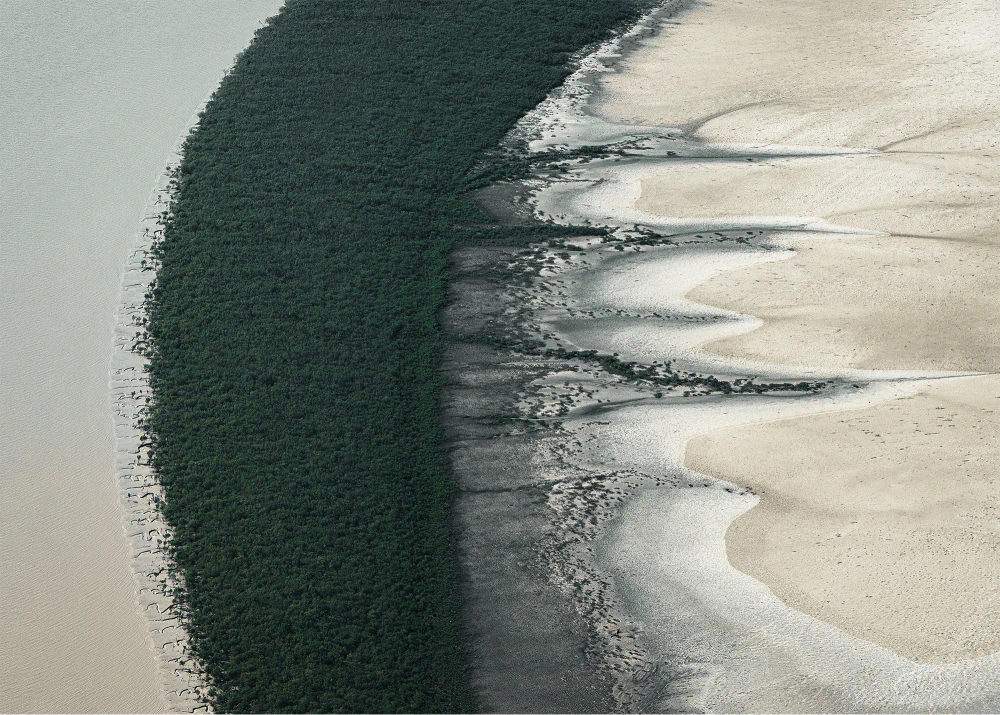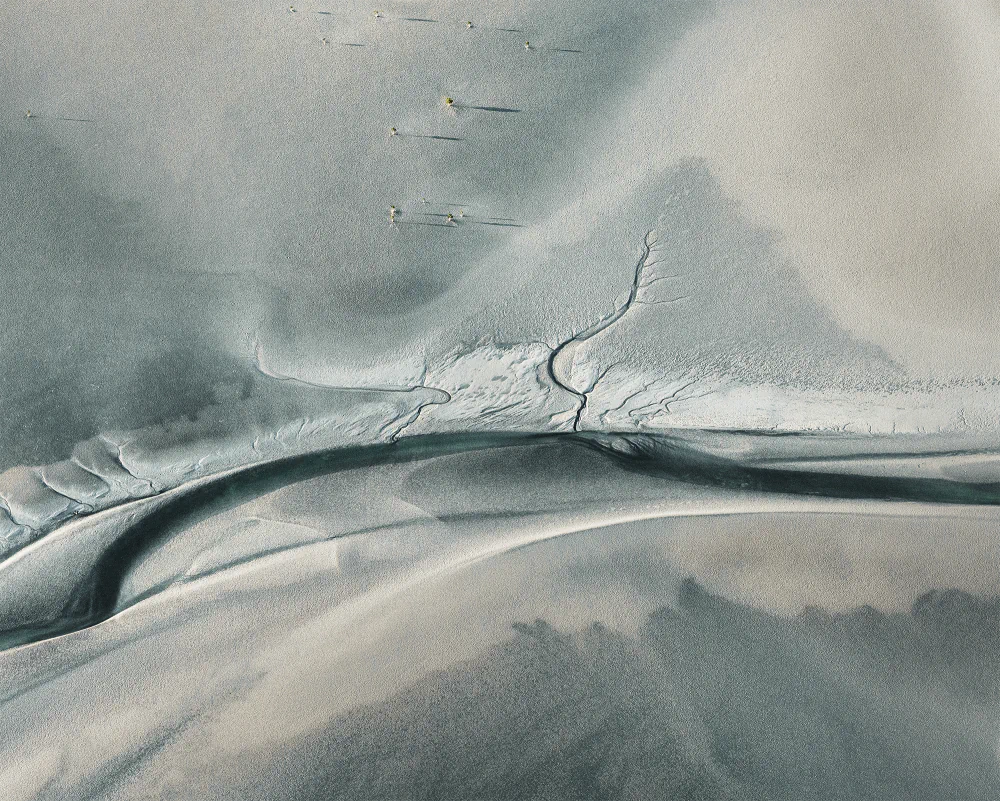


Roots is an abstract aerial photography series created from images taken in Western Australia.
Working from the air allows me to step away from the physical experience of the landscape and observe it from a bird’s-eye view.
From this perspective, the land no longer functions as a place to move through or occupy; it becomes a surface marked by time, pressure, and repetition. The aerial viewpoint transforms the ground into a visual field where scale dissolves and familiar references gradually disappear.
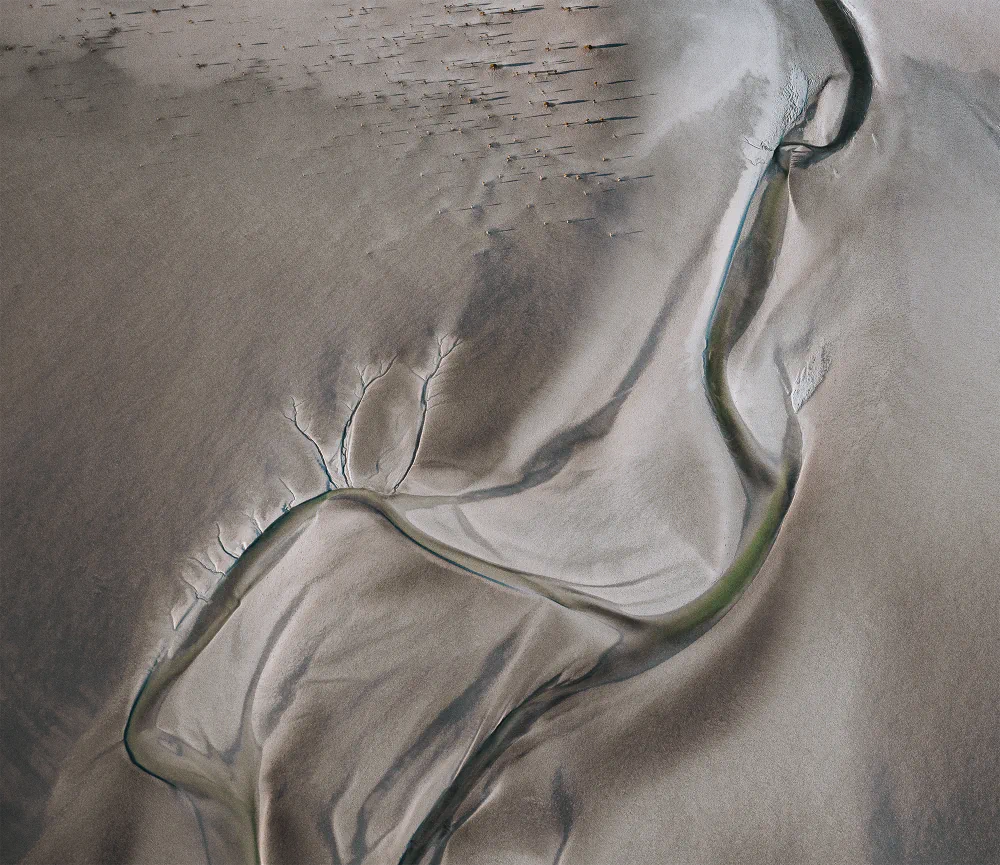
The title Roots refers to what lies beneath visibility: origins, foundations, and the invisible systems that connect everything together. Seen from above, the landscape reveals complex networks of lines and traces that resemble root systems spreading across the surface. Roads, paths, riverbeds, erosion lines, and subtle boundaries intersect and overlap, forming structures that feel organic, even when they result from human intervention. I am drawn to this ambiguity, to the space where it becomes difficult to distinguish what belongs to nature and what has been shaped by human presence.
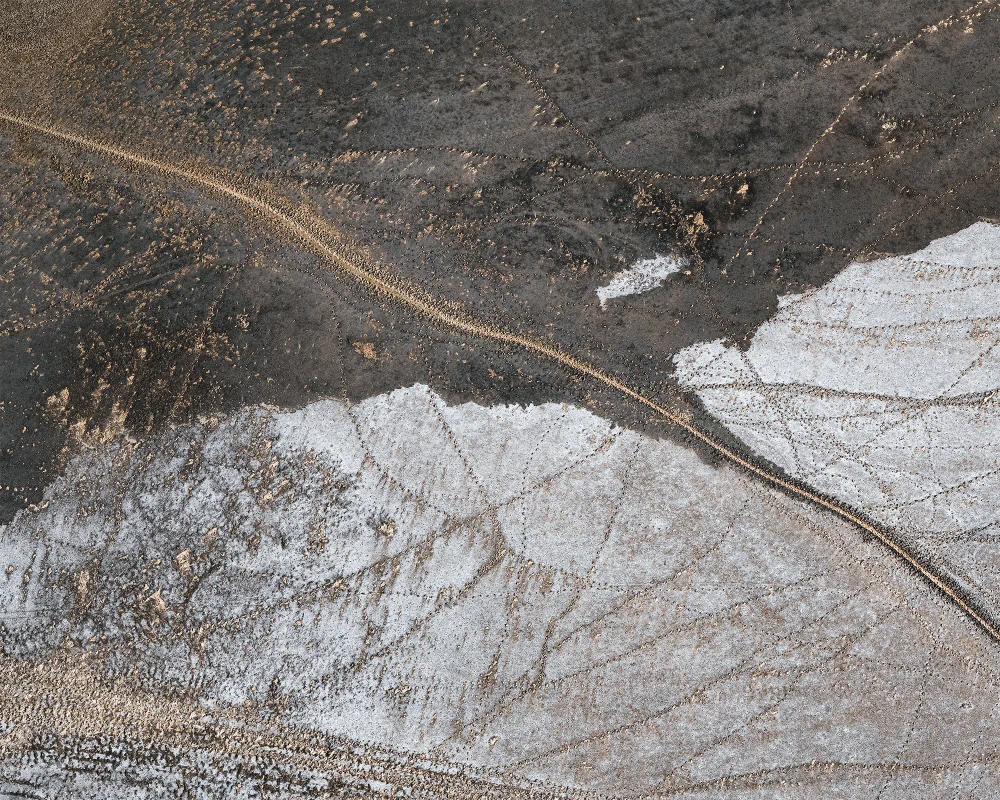
Abstraction is central to my practice. By removing the horizon and avoiding recognisable landmarks, I aim to create images that resist immediate understanding. Uncertainty is intentional. I want the photographs to be experienced slowly, allowing attention to drift across textures and forms. Scale becomes unstable: a line may suggest a path, a scar, or simply a mark on a textured surface. Orientation is lost, and the landscape shifts toward something more intuitive, closer to sensation than to description.
Color plays an essential role in this process. Rather than documenting the land realistically, I use color as a means of translation. Mineral tones, dusty hues, deep shadows, and occasional luminous contrasts help build a visual rhythm within each image. Light reveals layers, cracks, and subtle variations in texture, suggesting erosion, movement, and the passage of time. When working with these photographs, I often feel as though the land is breathing, quietly alive, shaped by forces that operate slowly and continuously.
Although the aerial perspective creates physical distance, the experience itself feels deeply intimate. Flying above these landscapes, I encounter patterns that cannot be perceived from the ground. From above, the land seems to reveal its memory. Traces accumulate rather than dominate: marks of circulation, weather, pressure, and repeated use appear without hierarchy. I do not seek to document these elements in a descriptive or analytical way. Instead, I observe them and allow them to coexist within the frame, forming a visual language of connections.
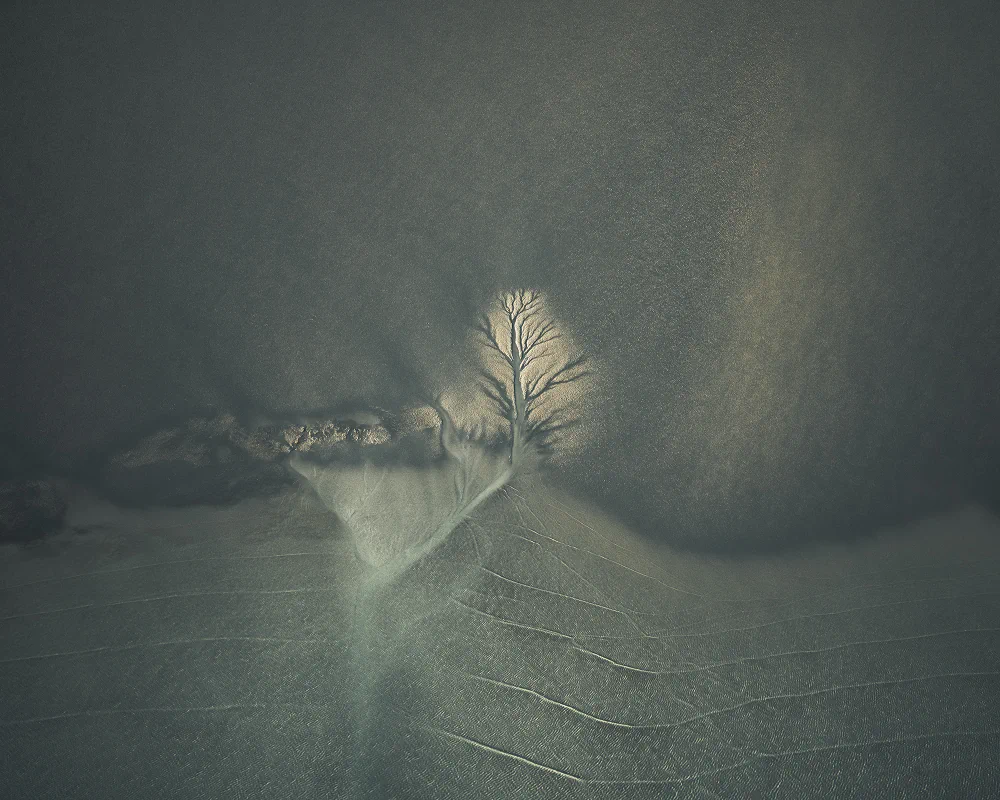
The series also reflects my interest in time. From the air, the landscape feels suspended between past and present. Some lines appear ancient, carved by natural forces, while others are clearly more recent. Yet from this distance, they share the same visual weight. Everything becomes part of the same surface, the same network. This flattening of time reinforces the idea of roots as something persistent, something that continues to grow and spread beyond immediate perception. Roots is also a reflection on belonging.
Roots anchor us, yet they remain hidden most of the time. By abstracting the landscape and avoiding specific points of reference, I wanted the images to move beyond geography. Although the photographs are taken in Australia, the series is not about a precise location. It speaks instead of a relationship to land that feels universal. Each image becomes an open space rather than a fixed place, allowing personal memories, origins, and emotional connections to emerge.
For me, this work is an invitation to slow down and to look differently. Through abstraction and aerial perspective, Roots reveals a quiet complexity within the landscape, a hidden order made of connections, repetitions, and fragile balances. Rather than describing a territory, the series opens a space for contemplation, where surface and depth are held together, and where the landscape is approached as a living archive of traces, connections, and slow transformations.
About Brigitte Bourger
Brigitte Bourger is a visual artist and photographer based in French Polynesia, originally from France, where she lived for over forty years. A pharmacist by training, she has devoted recent years to aerial and abstract photography, capturing the patterns, colors, and lines of natural landscapes and transforming them into poetic visual narratives.
Her work lies at the intersection of geography, environmental awareness, and contemporary aesthetics, often balancing representation and abstraction. Notable projects include Éphémères Impressions, a minimalist series that highlights the fragility of marine life in French Polynesia. Her eponymous book, published in France by Escourbiac, won first prizes at PX3 Paris and TIFA Tokyo.
She continues to develop internationally recognised projects examining the impact of environmental change on landscapes, bridging cultural and geographic contexts between France, the Pacific, and the wider world. [Official Website]