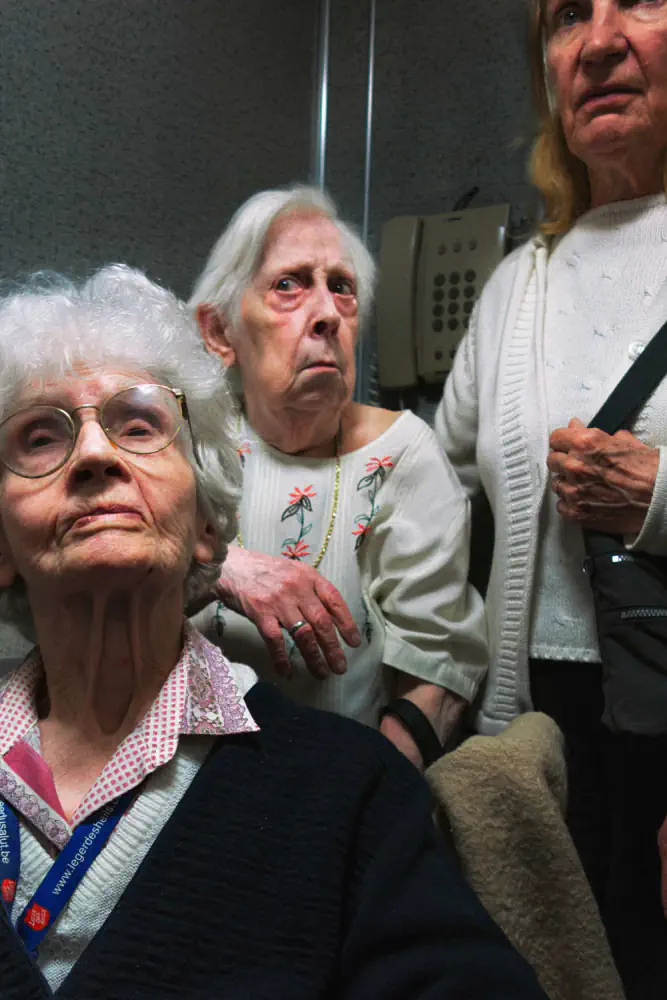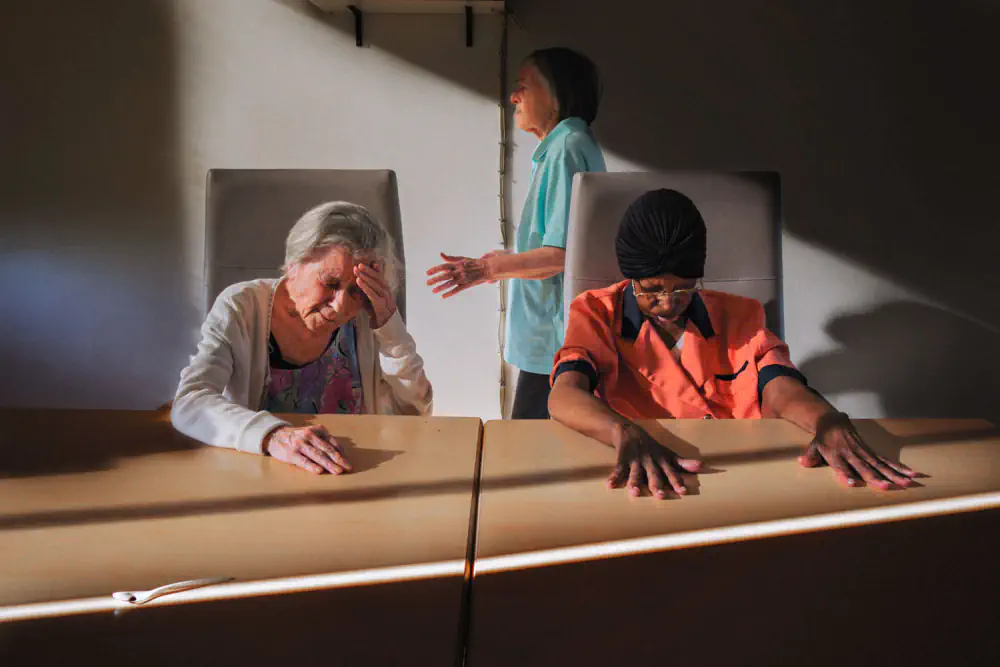

12:05 p.m. The residents stand sighing before the swinging doors of the dining hall. The ones in wheelchairs are up front, all in a row.
The able-bodied are in the back. Mr. Jacques, a newcomer, is first. Nobody cuts the line.
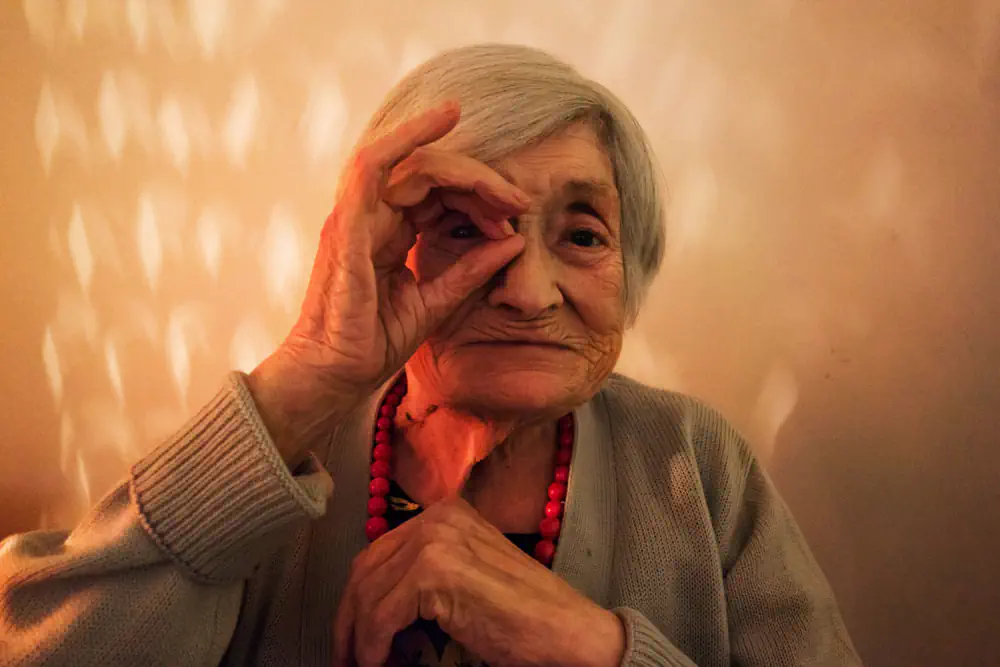
The doors finally open, and the soup is served. The white coats hand out “elastic napkins for adults,” which are really just jumbo bibs. Ms. Yvonne waves me over and asks me to help her tie her napkin around her neck. A former gym teacher, she’s a mischievous little woman, full of energy. I like her. She looks at me with a smile: “So how do you like it here with us old folks?”
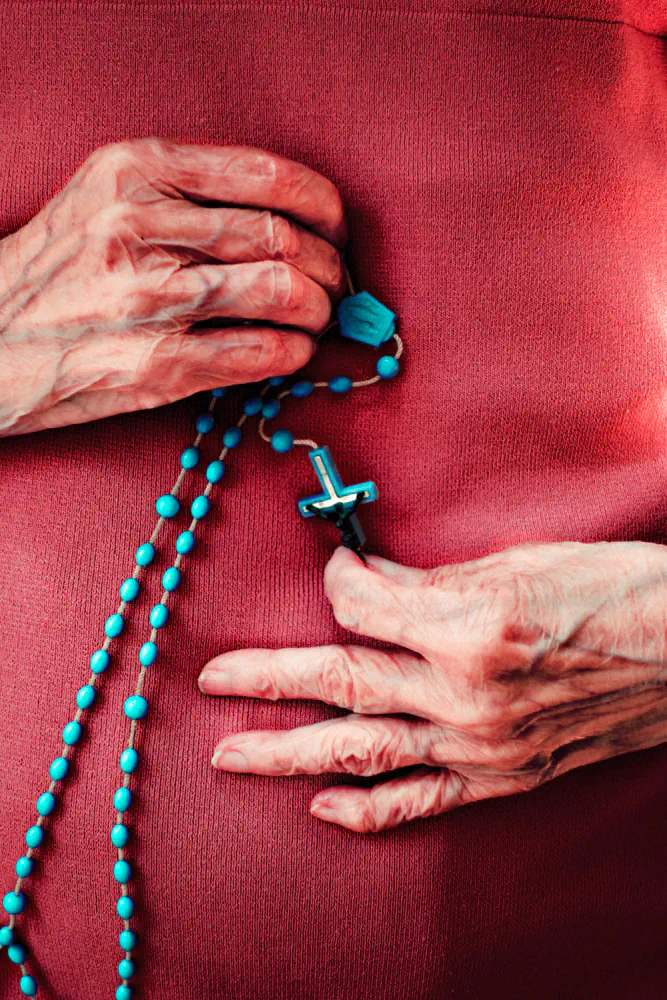
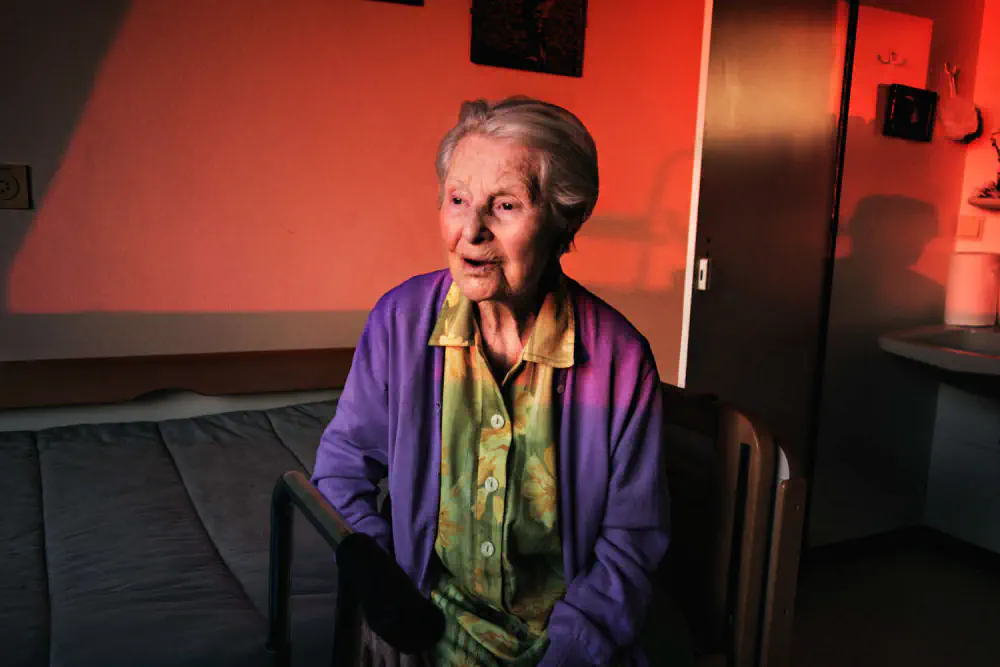
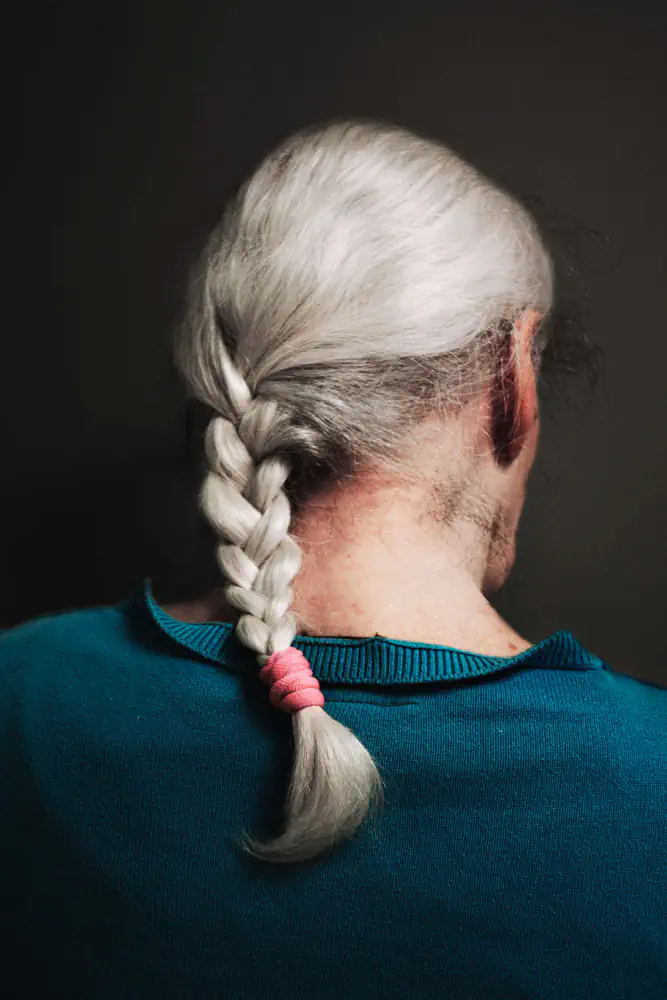
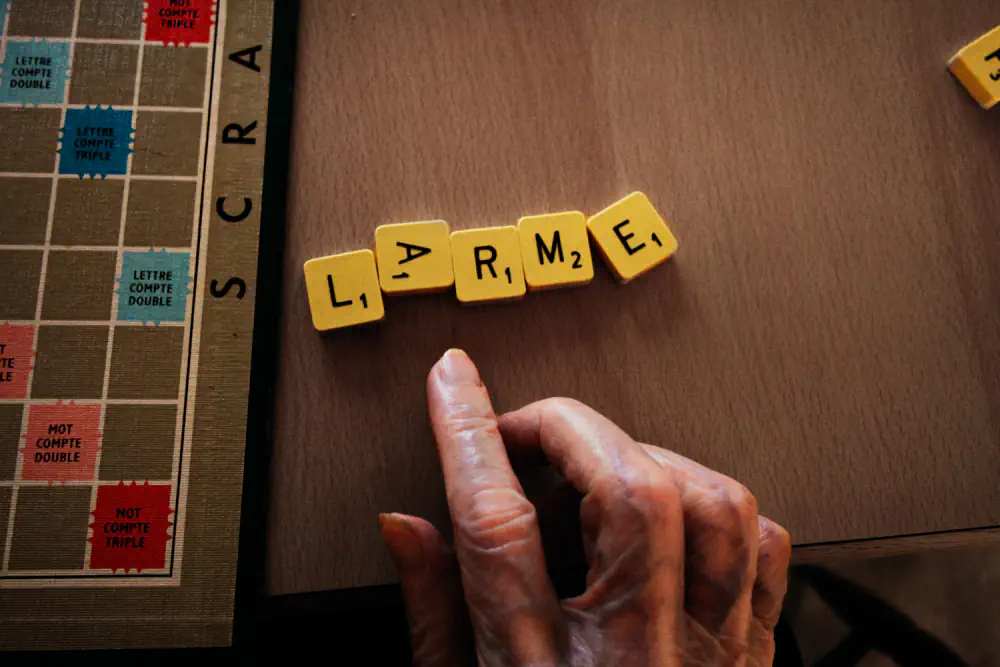
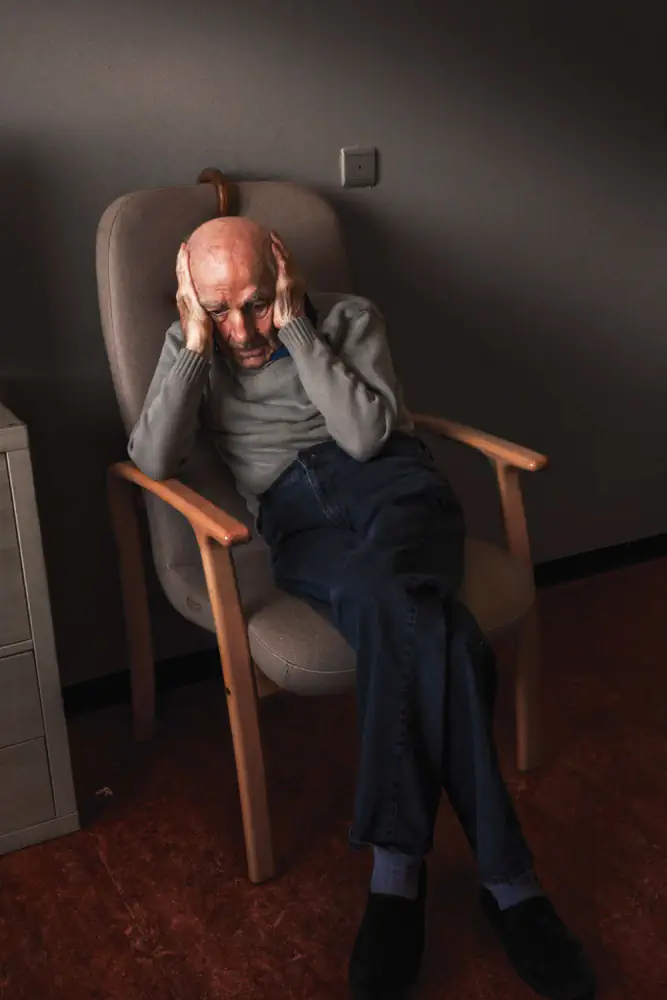
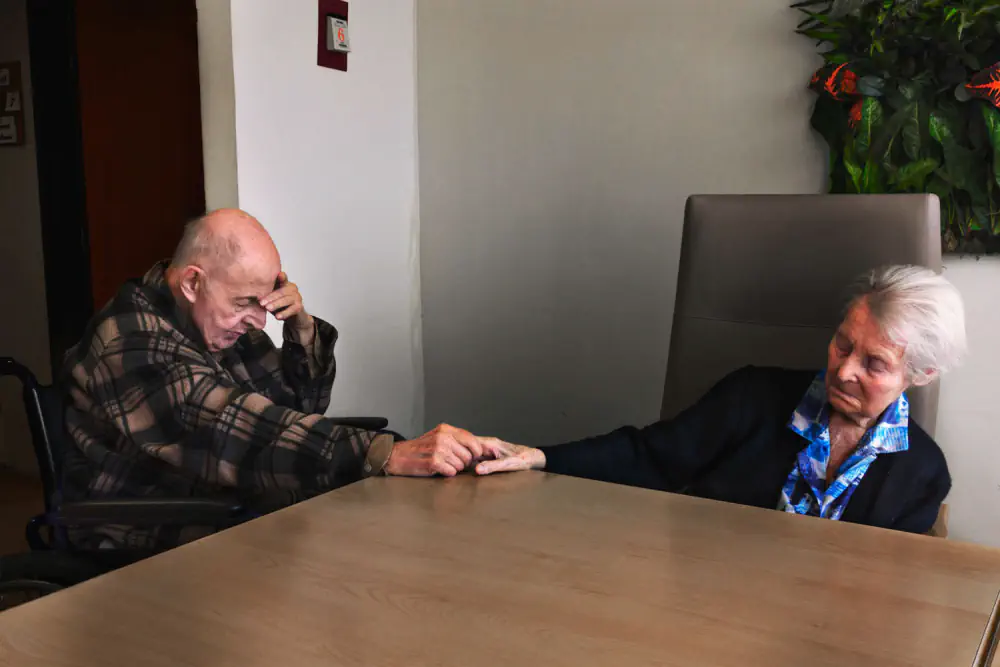
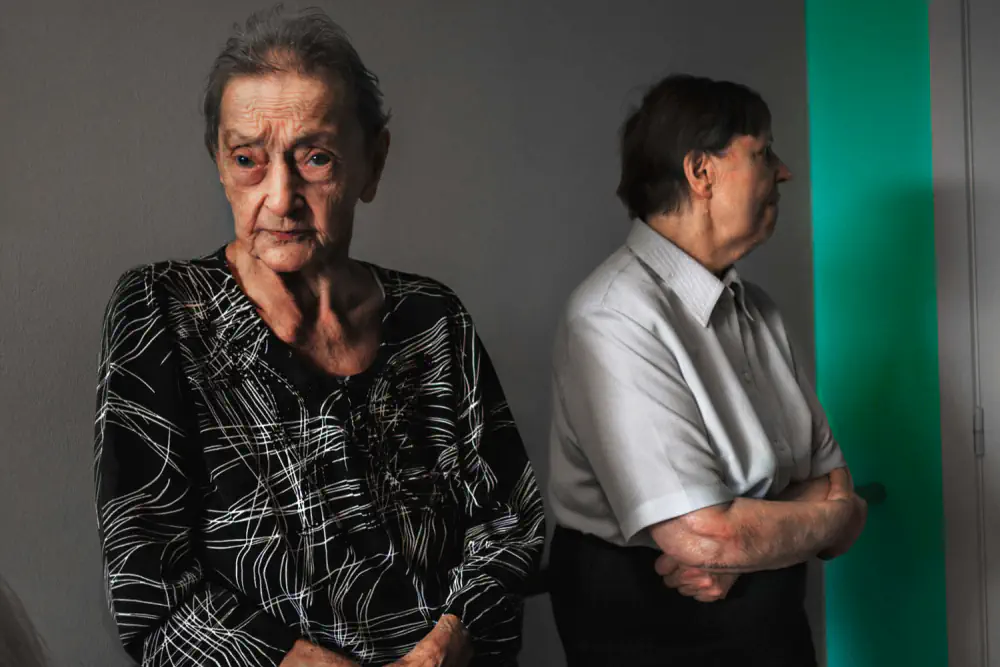
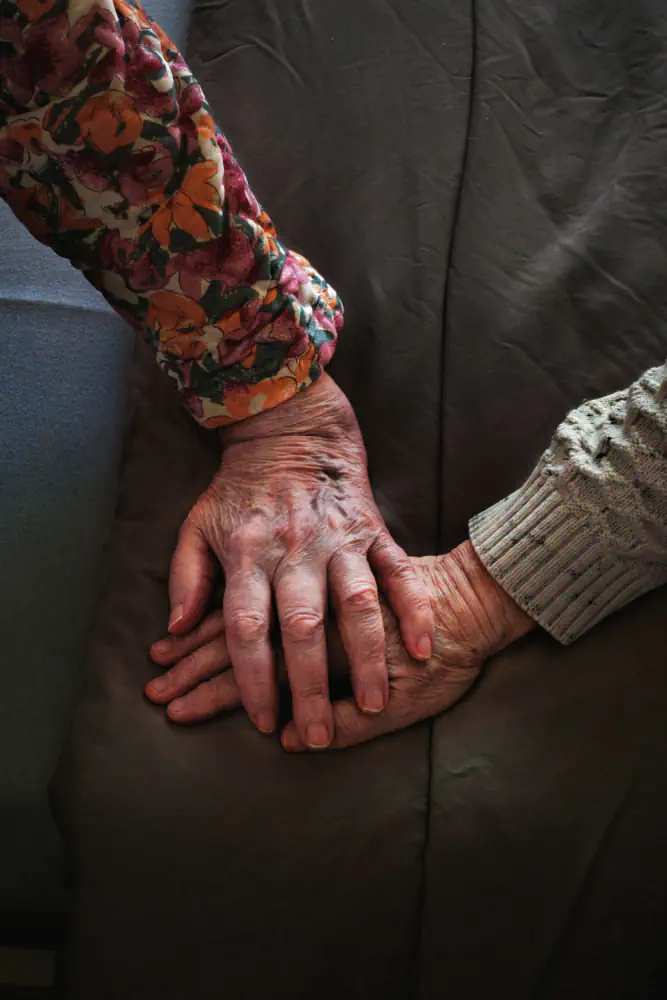
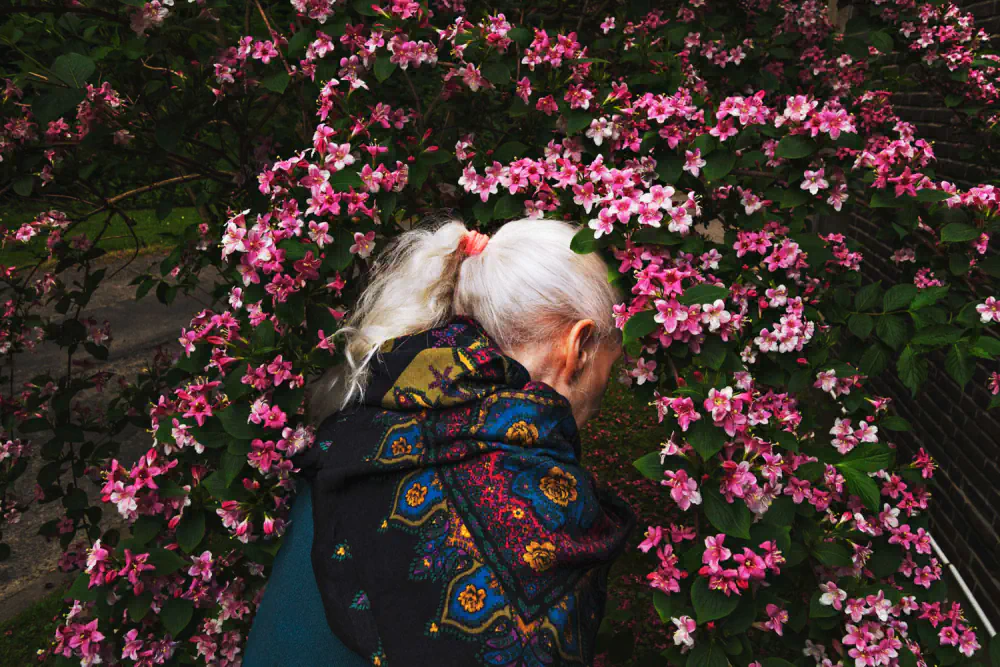
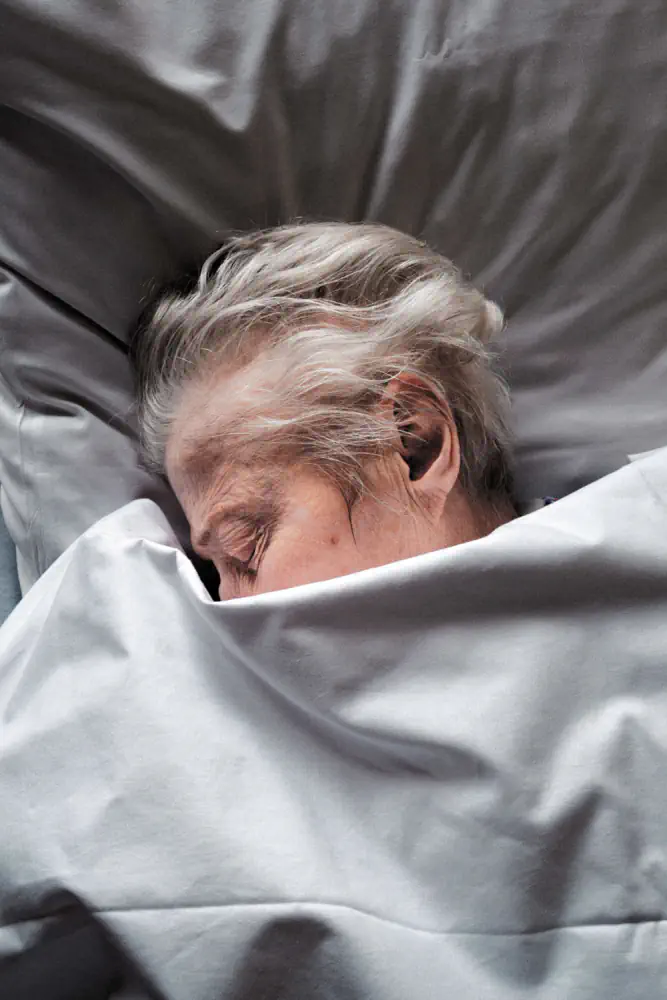
For this work, Lionel Jusseret immersed himself in the daily life of a nursing home for a period of six months. There, he encountered an invisible community that, despite itself, finds itself on the margins of society.
These men and women, born between 1920 and 1945, are known as the Silent Generation. Having lived through World War II, they experienced hardship and worked hard throughout their lives. Reputed for their lack of assertiveness, they are often described as fatalistic and conventional.
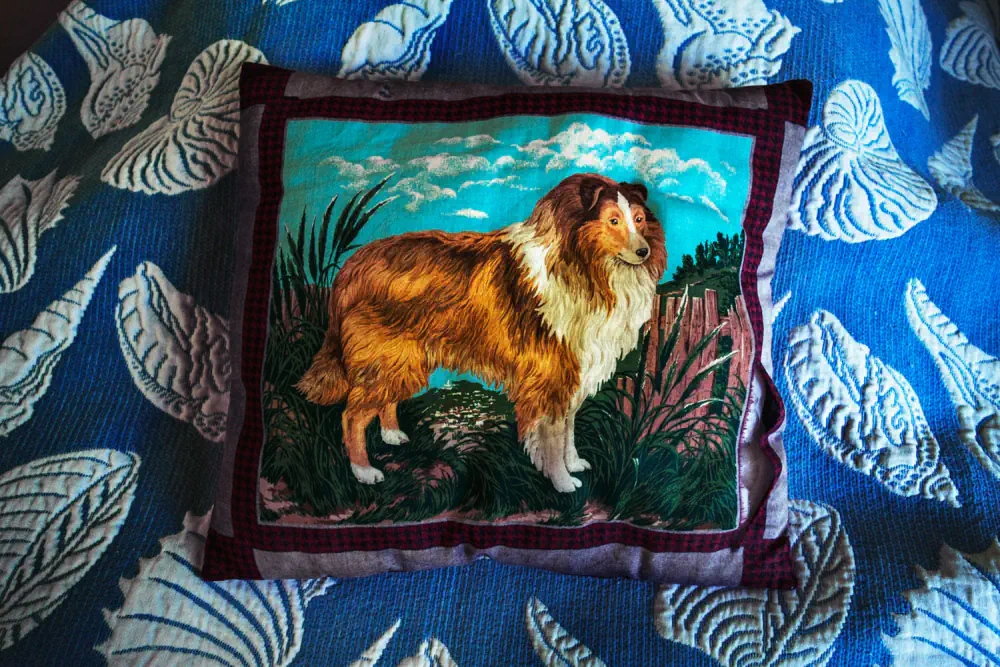
This sweeping and simplistic vision pays little tribute to these grandmothers and grandfathers, whose world of flowery wallpaper echoes our childhoods and our emotional and collective memories.
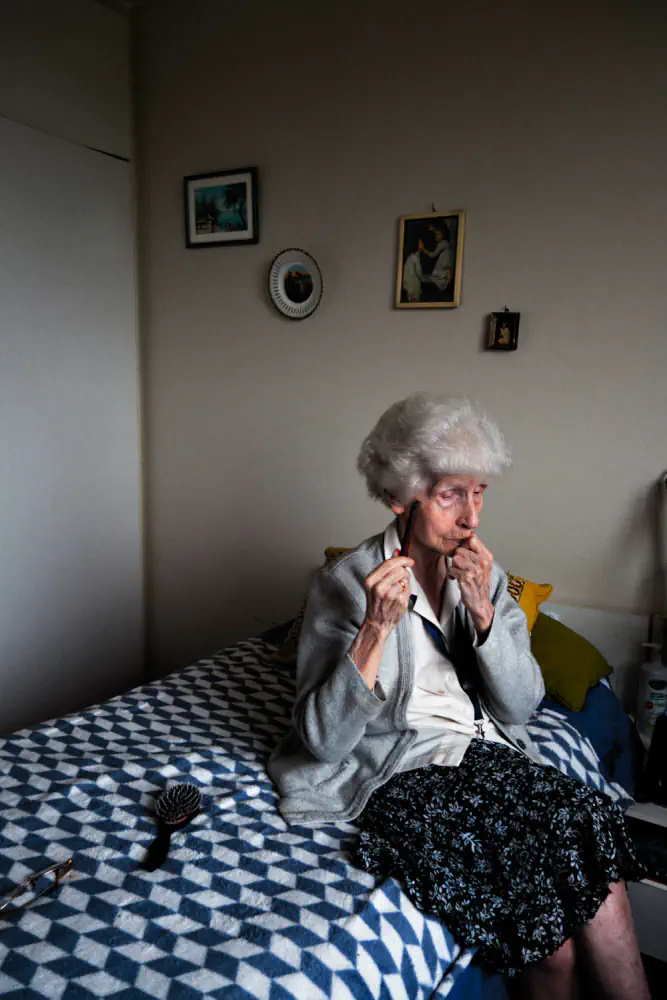
Old age is no longer valued in industrialized societies; it is the victim of negative stereotypes that stem from Western values—performance, achievement, and productivity—which are, in fact, very much geared towards youth. Old age is devalued in favor of younger generations.
“Society cares about the individual only insofar as he is profitable. The young know this. Their anxiety as they enter into social life matches the anguish of the old as they are excluded from it,” Simone de Beauvoir wrote in 1970.
This cultural image and social discrimination on the basis of age are unable to meet the true needs and expectations of a person who has grown old, is ignored, and is finally relegated to exclusion.
The nursing home thus seems to be THE social response to the problems of ageing.
The silver economy is profitable. Paradoxically, nursing homes are among the rare places where the person paying is not the one making the decisions.
“My daughter was worried about me being at home alone, so now I’m here”; “they changed my seat at the table”; “people come into my room several times a day without asking my permission and without knocking”; “they bathe me without even talking to me”; “they dress me without asking my opinion about the choice of clothes”; “they push me in my wheelchair without telling me where they’re taking me”; “they feed me while chatting with a colleague across from them”; “I’d like to be able to take a nap, but I have to stay seated”; “sometimes I’m not hungry and they force me to eat”; “I’m thirsty and I wait ages for someone to fill my glass”; “due to the lack of personnel, I’m left in discomfort for hours and no one comes to change me”; “I can wait days without having the privilege of taking a shower”; “I can wait hours before being able to go to the toilet”; “I can stay in bed in my pajamas all day.”
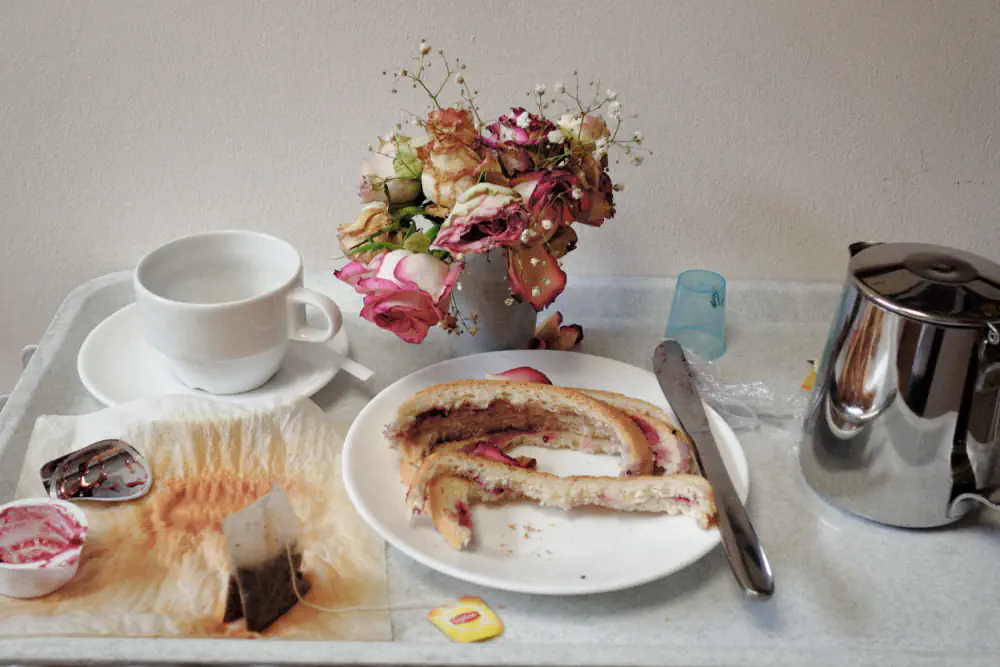
Such major failings, which were observed in certain establishments and exacerbated by the COVID-19 pandemic, have served to raise questions and lift the veil on the real living conditions of our elders.
Largely hidden, institutional treatment—with its dehumanizing protocols and intrinsic mechanisms of reification—once again found itself grappling with the reality of “making do,” thus abandoning residents to a lack of choice in the face of all-powerful healthcare rules.
After the mass distribution of antidepressants came neuroleptics, followed by chemical and/or physical restraints.
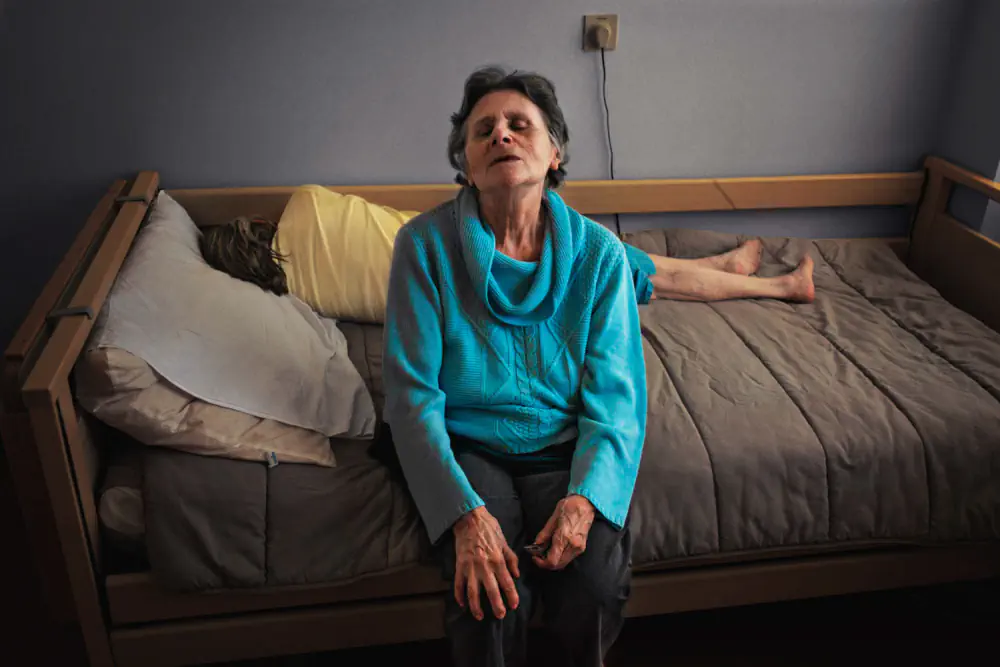
Locked in their units or confined to their rooms, they spend long hours waiting in front of their TVs or staring at cold white walls, day after day.
Imprisoned in their bodies, struggling with mental disorders and chronic conditions, they find themselves in a draconian environment that has severed their last ties to their loved ones.
“When nursing homes become a prison, there remains symbolic death, i.e. the development of senile dementia,” explains psychiatrist Jean Maisondieu.
Nowadays, it is socially accepted that an elderly person will not die at home surrounded by family, but rather alone, isolated, and in silence.
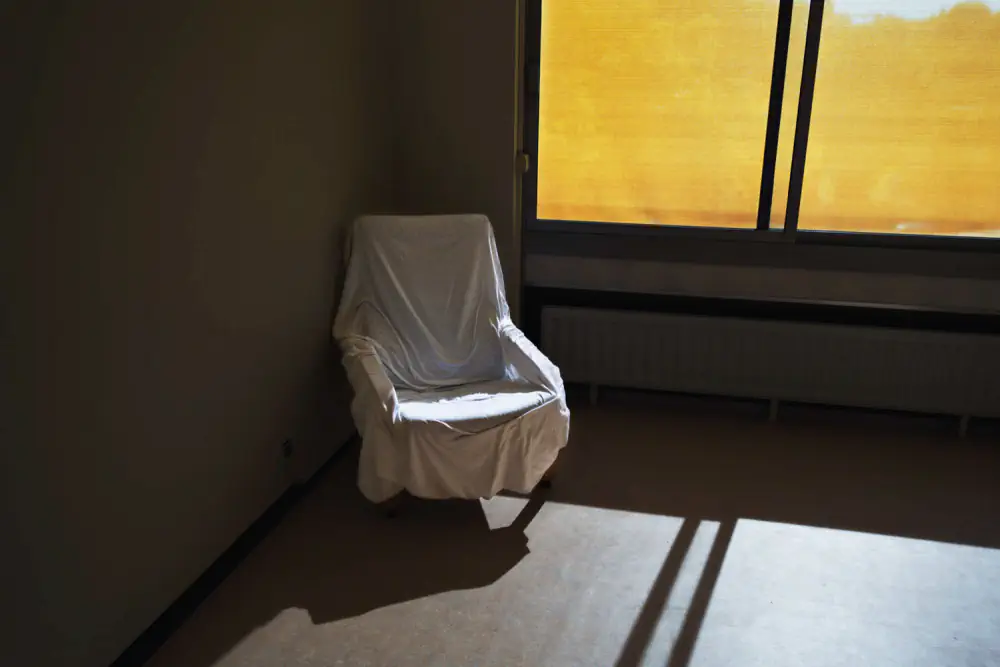
Some nursing homes discreetly remove the bodies of the deceased through the service door. The room is then cleared in preparation for the imminent arrival of his or her replacement.
The residents once again adapt to this cruel absence. Nursing staff hide their tears, thus maintaining an “appropriate” professional distance, the sacrosanct doctrine established by the institution.
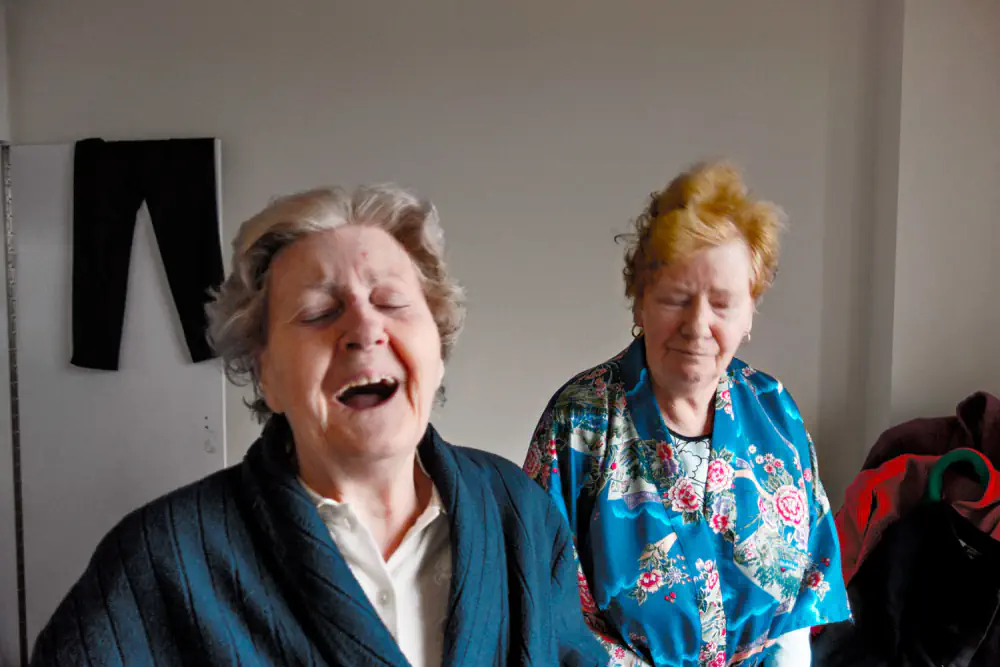
By exposing the devastating number of COVID-related deaths among the institutionalized elderly population, the press has also shown how families have been unable to support their loved ones humanely.
What was invisible became, for this brief moment in time, strikingly apparent: today, the choice of how one lives the end of one’s life and dies very rarely belongs to the person concerned.
Like the dying themselves, families are effectively alienated from the medical profession—the true master of death—which, according to French historian Philippe Ariès, strives to ensure that the patient’s death is acceptable and can be tolerated by those who survive them.
But for an elderly person who is dependent on these dehumanizing places, death may actually be eagerly awaited and experienced as a release.
The Silent Generation is taking its leave, and this book pays homage to it. It is a testimony to the conditions surrounding the end of life, and it raises questions.
Why are so-called developed countries no longer capable of caring for their elders with dignity?
No one wants to spend the end of their life alone and abandoned.
As we wait for those whose turn it is next, for our parents, and finally for ourselves, this is one question among many that we will have to answer.
About Lionel Jusseret
Born in Belgium in 1989, Lionel Jusseret is a documentary photographer whose internationally recognized and awarded work combines an anthropological perspective with a distinctive use of color.
After graduating from INSAS, a Belgian film school, in 2012, Jusseret began photographing children with autism at the French association J’interviendrais. In his search for unpredictable and spontaneous images, he works within the intimacy of his subjects’ lives. After eight years of immersion, he completed his first series, Kinderszenen, which was published as a book by Éditions Loco in 2020.
More recently, Jusseret has worked in a retirement home, developing close relationships with elderly residents living with Alzheimer’s disease for his series Les Impatientes. The project was published as a book by Éditions Loco in June 2022.
In recent years, he has also collaborated with several farming families in order to create a portrait of a new generation of farmers in France and Belgium. This documentary project, Kolostrum, initially developed as part of the artist residency Le Champ des Impossibles in the Perche region of Normandy.
Lionel Jusseret currently lives in Brussels. [Official Website]